The Real Bottom Line: GM's EV Tax Credit Advantage in 2026
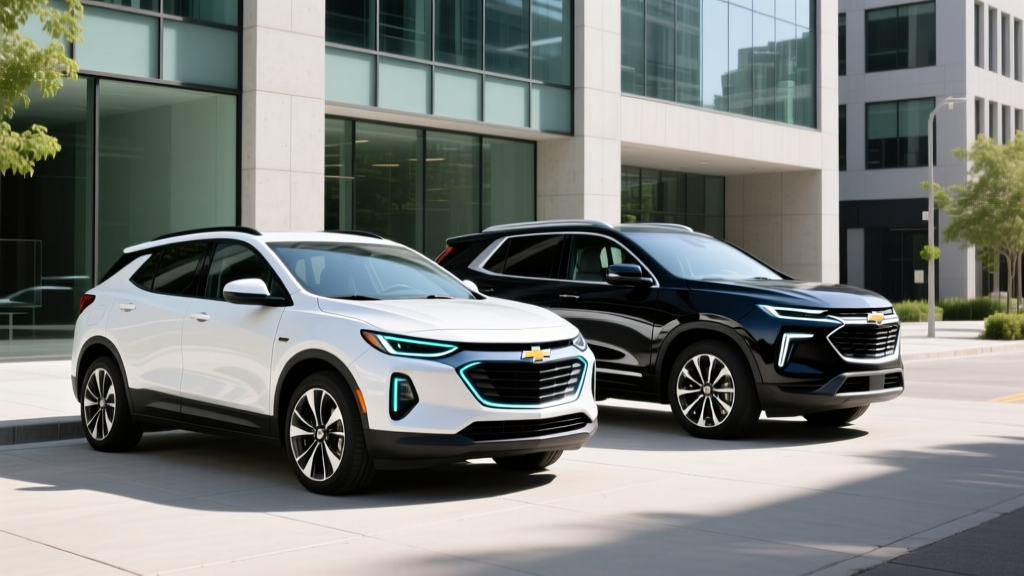
General Motors made a calculated bet in 2024: shift battery sourcing and assembly to qualify for the full federal EV tax credit under IRS §30D, then pass that advantage to buyers as point-of-sale discounts. By the 2026 model year, that strategy has matured. The Chevrolet Equinox EV and Blazer EV — GM's volume electric offerings — both carry MSRP pricing designed to clear the federal credit's vehicle-price caps while sourcing batteries from LG Energy Solution's US plants.
But the GM EV tax credit impact extends well beyond the sticker price. To understand what you actually pay over five years, you need to reconcile the $7,500 credit against higher insurance premiums, home charging installation, real-world range efficiency, and EV depreciation curves that have stabilized but still lag some gas counterparts. Below, we run the full ownership math on the 2026 Equinox EV 3RS (the volume trim) and show exactly where GM's credit advantage translates to wallet savings — and where it doesn't.
EPA Range: 319 miles (FWD) | Battery: 85 kWh usable, NMC chemistry
Peak DC Fast Charge: 150 kW (10–80% in ~30 min) | Level 2: 11.5 kW
0–60 mph: ~8.0 sec | 213 hp (FWD) / 288 hp (AWD)
MSRP: $41,900 (FWD 3RS) | Battery Warranty: 8 years / 100,000 miles
Real-world range caveat: Expect ~265–285 miles on mixed highway driving; subtract 15–25% in sub-freezing temperatures.
Federal Tax Credit Eligibility: Does a GM EV Qualify?
The IRS §30D Clean Vehicle Credit offers up to $7,500, split into two halves: $3,750 for battery components manufactured in North America, and $3,750 for critical minerals sourced from the US or free-trade-agreement partners. For 2026, GM's Ultium battery platform — assembled with LG cells at facilities in Ohio and Tennessee — is structured to satisfy both requirements on the Equinox EV and Blazer EV.
However, qualifying for the credit depends on three buyer-side constraints that eliminate a significant portion of shoppers:
- Income caps: Modified AGI ≤ $150,000 (single), $225,000 (head of household), $300,000 (married filing jointly)
- MSRP caps: ≤ $55,000 for sedans; ≤ $80,000 for SUVs, pickups, and vans — the Equinox EV and Blazer EV both clear these limits on most trims
- Battery sourcing: Both the critical-minerals and battery-component prongs must be met for the full $7,500 (GM's Ultium platform currently satisfies both)
- Point-of-sale transfer: You can elect to transfer the credit to the dealer at purchase, reducing your out-of-pocket price immediately — the dealer then claims the credit from the IRS
- One credit per VIN: The vehicle must be new, purchased for personal use, and primarily driven in the US
The practical impact: a buyer purchasing the $41,900 Equinox EV 3RS FWD who meets the income threshold and elects the point-of-sale transfer effectively pays $34,400 before destination and dealer fees. That places it in direct competition with well-equipped gas crossovers like the Toyota RAV4 XLE — a price parity GM could not have achieved without the credit.
Five-Year Total Cost of Ownership: The Full Math
Sticker price is only the entry point. A genuine comparison requires modeling five years of fuel, insurance, maintenance, and depreciation against a gas-powered baseline. We use the 2026 Toyota RAV4 XLE AWD ($33,500 MSRP, 30 MPG combined) as the comparison vehicle, and the Equinox EV 3RS AWD ($44,600 MSRP before credit) driven 12,000 miles per year.
| Cost Category | 2026 Equinox EV 3RS AWD | 2026 RAV4 XLE AWD (Gas) |
|---|---|---|
| Purchase Price (after $7,500 credit) | $37,100 | $33,500 |
| Fuel / Charging (5 yrs, 60,000 mi) | $3,240 | $7,000 |
| Insurance (5 yrs) | $9,750 | $7,500 |
| Maintenance (5 yrs) | $1,800 | $3,500 |
| Depreciation (est. 5-yr residual) | $18,550 | $13,400 |
| Total 5-Year Cost | $70,440 | $64,900 |
Assumptions: Electricity at $0.15/kWh (national residential average) with the Equinox consuming 3.0 miles/kWh (real-world adjusted from its EPA-rated efficiency). Gasoline at $3.50/gallon. Insurance based on national EV average premiums from major carriers. Depreciation based on current EV resale-value tracking data showing mainstream EVs retaining ~50% of post-credit value at year five.
The gap narrows considerably when you factor in the credit, but the Equinox EV still carries a ~$5,500 five-year premium in this scenario — driven primarily by higher insurance and steeper depreciation. Buyers who drive more miles annually (15,000+) or who have access to cheaper electricity (solar, time-of-use rates below $0.10/kWh) can close or reverse this gap.
Charging vs. Gas: The Per-Mile Cost Advantage
This is where the GM EV tax credit impact meets daily driving economics. The Equinox EV's real-world efficiency hovers around 3.0 mi/kWh on mixed driving (the EPA rates it at approximately 97 MPGe combined, which translates to roughly 3.4 mi/kWh under ideal test conditions).
| Scenario | Equinox EV (per mile) | RAV4 Gas (per mile) |
|---|---|---|
| Home charging @ $0.15/kWh vs. gas @ $3.50/gal | $0.050 | $0.117 |
| Home solar / off-peak @ $0.08/kWh | $0.027 | $0.117 |
| Public DC fast charging @ $0.40/kWh | $0.133 | $0.117 |
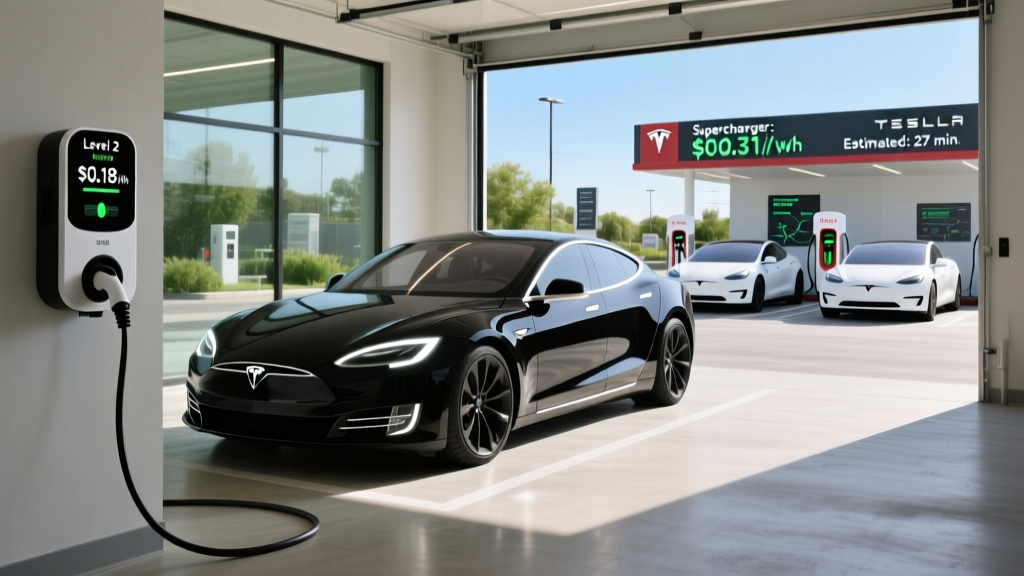
The takeaway is unambiguous: home charging is dramatically cheaper than gasoline, saving roughly $0.067 per mile (or ~$800/year at 12,000 miles). But if you rely exclusively on public DC fast charging — at networks like Electrify America or EVgo where rates often hit $0.35–$0.48/kWh — the EV actually costs more per mile than a 30-MPG gas crossover. This is the single biggest variable in the GM EV ownership equation, and it makes home Level 2 charging access nearly essential to realizing fuel savings.
For the Equinox EV, a home Level 2 charger (240V, 48-amp circuit) delivers roughly 11.5 kW to the vehicle, adding about 34 miles of range per hour of charging. A full overnight session easily replenishes a day's driving. Installation costs typically run $800–$2,000 depending on panel capacity and conduit distance — a one-time cost that pays for itself within 1–2 years of gas displacement.
Maintenance Savings: Fewer Parts, Real Dollars
EVs eliminate the maintenance categories that generate the most dealer service-department revenue: oil changes, transmission fluid, spark plugs, timing belts, and exhaust system repairs. The Equinox EV's Ultium powertrain has a single-speed reduction gear, no multi-speed transmission, and regenerative braking that drastically reduces brake pad wear.
| Service Item (5 yrs / 60k mi) | Equinox EV | RAV4 Gas |
|---|---|---|
| Oil changes (6–8 services) | $0 | $480 |
| Brake pads (front + rear) | $0–$200 | $600–$900 |
| Transmission fluid | $0 | $200 |
| Coolant, cabin filter, wipers, tires | $1,600 | $1,800 |
| Total Estimated Maintenance | $1,800 | $3,500 |
The ~$1,700 five-year maintenance savings is real but not transformative on its own. Where it compounds is in time saved and surprise-avoidance: no check-engine diagnostics, no transmission shudder concerns, and brake rotors that often last well beyond 100,000 miles thanks to regenerative braking handling the majority of deceleration.
One cost EV owners should budget for: tires. EVs are heavier (the Equinox EV weighs approximately 4,700 lbs vs. the RAV4's ~3,600 lbs) and deliver instant torque, which accelerates tire wear. Expect to replace tires every 30,000–40,000 miles rather than the 50,000+ typical on lighter gas crossovers. Budget $800–$1,200 per set for EV-rated touring tires.
Insurance: The Cost GM Can't Credit Away
EV insurance premiums remain 15–30% higher than equivalent gas vehicles, and this is the ownership category where GM's tax credit advantage is partially offset. The reasons are structural, not brand-specific:
- Higher repair costs: Battery pack damage in a collision often triggers total-loss thresholds. Even minor fender repairs can require high-voltage system safety checks by certified technicians.
- Parts scarcity: GM's Ultium platform is still scaling; body panels and structural battery tray components have longer lead times than mass-produced gas-car parts.
- Specialized labor: EV collision repair requires high-voltage safety certification, and fewer shops carry it — driving up labor rates.
- Vehicle weight: Heavier vehicles cause more damage to other cars in multi-vehicle collisions, increasing liability exposure for insurers.
For the Equinox EV, expect annual premiums in the $1,700–$2,200 range depending on your state, driving record, and coverage level — roughly $400–$500/year more than a comparably priced gas crossover. Over five years, that's an additional $2,000–$2,500 that directly erodes the tax credit's value.
Some insurers now offer EV-specific discounts (farmers, State Farm, and Progressive have introduced them in select states), and bundling with home insurance can narrow the gap. But plan for the higher premium in your budget.
Depreciation and Resale Value: The Stabilizing Trend
EV depreciation was punishing in 2023–2024, driven by Tesla's aggressive price cuts, rapid technology advancement making older models feel obsolete, and consumer uncertainty about battery longevity. By 2026, the curve has flattened for mainstream brands, though EVs still depreciate faster than the best-resale gas vehicles (Toyota, Honda).
Current data suggests a mainstream EV like the Equinox EV retains approximately 45–55% of its post-credit purchase price after five years. On a $37,100 effective purchase (after the $7,500 credit), that implies a 5-year depreciation of roughly $16,700–$20,400. The RAV4, by comparison, typically retains 55–65% of its $33,500 MSRP, yielding $11,700–$15,100 in depreciation.
Key factors that support GM EV resale values:
- 8-year / 100,000-mile battery warranty: At the five-year mark, a used Equinox EV still carries three years of battery coverage — a meaningful selling point.
- NACS adoption: GM's 2025 switch to the Tesla NACS connector means used GM EVs have full Supercharger network access, removing a major resale-value concern from the CCS era.
- Lithium price stabilization: Battery replacement cost fears have moderated as cell prices continue their long-term decline.
The depreciation gap between EV and gas is narrowing, but it remains a real cost. Buyers who plan to own for 8–10 years largely eliminate this concern, since the vehicle's residual value becomes a smaller percentage of total cost.
State, Local, and Utility Incentives: Stacking the Savings
The federal §30D credit is the headline number, but regional incentives can add $1,000–$5,000+ in additional savings depending on where you live and which utility serves you.
- Colorado: State EV tax credit up to $5,000 (income-dependent) — stackable with federal credit
- California (CVRP): Up to $7,000 for income-qualified buyers on vehicles under MSRP caps
- Utility rebates: Many utilities (PG&E, Xcel Energy, ConEdison, National Grid) offer $300–$1,500 rebates for home Level 2 charger purchase and installation
- HOV lane access: Several states grant single-occupant carpool lane access to EVs — a non-monetary benefit with significant commute-time value
- Property/sales tax exemptions: States like Washington, Oregon, and New Jersey exempt EVs from sales tax or offer reduced registration fees
For a Colorado buyer with access to the state credit plus a utility charger rebate, the effective cost of an Equinox EV 3RS could drop below $30,000 — a price point that makes the five-year ownership math decisively favorable versus gas.
Frequently Asked Questions
How much does it really cost to own a GM EV over 5 years?
For the 2026 Equinox EV 3RS AWD purchased at $37,100 (after the $7,500 federal credit), our model shows a five-year total cost of approximately $70,440 — including charging, insurance, maintenance, and depreciation. This is roughly $5,500 more than a comparable RAV4 gas crossover over the same period, primarily due to higher insurance and depreciation. High-mileage drivers (15,000+ mi/yr) and those with cheap home electricity can close or reverse this gap.
Do I qualify for the $7,500 federal EV tax credit on a GM vehicle?
You likely qualify if your modified adjusted gross income is ≤$150,000 (single) or ≤$300,000 (married filing jointly), you purchase the vehicle new, and the trim's MSRP falls within the cap ($55,000 for sedans, $80,000 for SUVs). The 2026 Equinox EV and Blazer EV are assembled in the US with batteries meeting both the critical-minerals and battery-component requirements. You can elect to transfer the credit to the dealer at purchase for an immediate price reduction. Always verify current rules at irs.gov before committing.
How much do I save on fuel and maintenance?
With home charging at $0.15/kWh, the Equinox EV costs roughly $0.05/mile to fuel versus $0.117/mile for a 30-MPG gas crossover — saving about $800/year at 12,000 miles driven. Maintenance savings run approximately $1,700 over five years, primarily from eliminated oil changes, reduced brake wear, and no transmission service. Combined annual savings of ~$1,140 are typical for home-charging EV owners.
Are GM EVs more expensive to insure?
Yes — typically 15–30% higher premiums than equivalent gas vehicles. For the Equinox EV, expect $1,700–$2,200/year depending on your profile. Higher repair costs, specialized labor requirements, vehicle weight, and parts availability all contribute. This is an industry-wide pattern, not GM-specific. Shop quotes from multiple carriers and ask about EV-specific discounts.
How well do GM EVs hold their value?
Mainstream EVs like the Equinox EV currently retain approximately 45–55% of their post-credit purchase price after five years, compared to 55–65% for gas crossovers like the RAV4. GM's NACS connector adoption (full Supercharger access), 8-year battery warranty, and Ultium platform scale are supporting resale values. The depreciation gap is narrowing but remains a real ownership cost. Long-term owners (8+ years) largely sidestep this issue.
What if I can't charge at home?
Without home charging, the fuel-cost advantage of an EV largely disappears. Public DC fast charging at $0.35–$0.48/kWh makes the Equinox EV more expensive per mile than a 30-MPG gas car. If you lack home or workplace charging access, a plug-in hybrid like the Chevrolet Equinox PHEV (if available) or a conventional hybrid may be a more practical choice until charging infrastructure improves in your area.