The Quick Answer: What GM EV Production Cuts Mean for You
Bottom line: General Motors has reduced EV production targets and idled EV assembly lines at multiple plants through 2026, citing slower-than-expected demand growth and inventory buildup. For buyers, this means: (1) some trims and configurations face longer wait times or limited availability, (2) dealer lot inventory is uneven—some models sit unsold while popular trims are scarce, (3) GM and dealers are offering aggressive incentives (up to $9,000 combined on select 2025/2026 Equinox EV and Blazer EV trims), and (4) the federal §30D tax credit of up to $7,500 still applies to eligible models and buyers, but battery-sourcing rules tighten in 2026. If you're shopping for a GM electric vehicle this year, production cuts actually create leverage for negotiation on in-stock units—but choice of color, trim, and options may be constrained.
Why GM Scaled Back EV Output
GM invested over $35 billion in its Ultium-platform EV strategy, aiming to produce 1 million EVs annually in North America by 2025. The reality fell short. By late 2025, GM acknowledged it was building more EVs than the market was absorbing, leading to inventory gluts at dealers and subsequent production adjustments for 2026 model-year vehicles.
The key factors driving these cuts:
- Demand cooling: After rapid growth in 2022–2023, U.S. EV adoption slowed. High interest rates, sticker-price shock, and charging-infrastructure gaps kept mainstream buyers cautious.
- Inventory buildup: Models like the Blazer EV and Silverado EV accumulated 60–90+ days of supply at dealers—well above the 45-day industry target.
- Software and quality stumbles: The Blazer EV's launch was marred by infotainment bugs and build-quality issues that suppressed early demand and damaged word-of-mouth.
- Competition intensifying: Tesla's price cuts, Hyundai/Kia's strong Ioniq 5/EV6 offerings, and Ford's hybrid pivot squeezed GM's market share in key segments.
- PHEV pivot signals: GM announced it will reintroduce plug-in hybrid variants for select models, acknowledging that some buyers want electrification without full BEV commitment.
The production cuts primarily affect the Chevrolet Equinox EV (Orion Assembly, MI), Chevrolet Blazer EV (Ramos Arizpe, Mexico), GMC Sierra EV (Factory ZERO, MI), and Cadillac Lyriq (Spring Hill, TN). The Chevrolet Silverado EV and Cadillac Optiq have seen more modest adjustments due to newer launch timing.
Current GM EV Lineup: Specs, Pricing, and Availability
Here's where the 2026 GM EV lineup stands as of early 2026, with EPA data and manufacturer specs. Note that production cuts mean not every trim is readily available at every dealer.
| Model | Trim Range | EPA Range | Battery (kWh, Chemistry) | Peak DC Charge (kW) | 10–80% Time | 0–60 mph | Base MSRP |
|---|---|---|---|---|---|---|---|
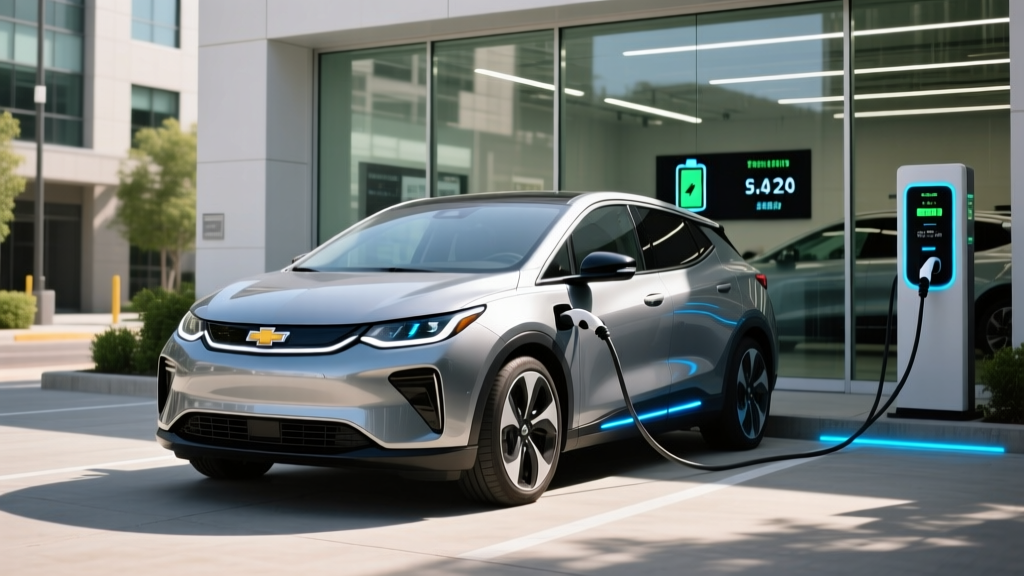
| Chevy Equinox EV | LT / RS / Launch | 285–319 mi | 85 kWh, NMC | 150 kW | ~28 min | 7.5–8.0 sec | $33,600 |
| Chevy Blazer EV | LT / RS / SS | 279–324 mi | 85–102 kWh, NMC | 190 kW | ~24 min | 3.9 sec (SS AWD) | $44,600 |
| Cadillac Lyriq | Tech / Luxury / Sport | 303–314 mi | 102 kWh, NMC | 190 kW | ~25 min | 4.6 sec (AWD) | $58,590 |
| GMC Sierra EV | Elevation / AT4 / Denali | 340–440 mi | 200 kWh, NMC | 350 kW | ~18 min | 4.3 sec (Denali) | $59,400 |
| Chevy Silverado EV | WT / RST / Trail Boss | 340–440 mi | 200 kWh, NMC | 350 kW | ~18 min | 4.5 sec (RST) | $57,900 |
Real-world range caveat: EPA figures assume mixed driving at moderate temperatures. Expect 15–25% range loss in sustained highway driving at 75+ mph, and 20–35% loss in sub-freezing winter conditions. A 319-mile Equinox EV may deliver ~240–260 miles on a cold-weather road trip. Plan charging stops accordingly.
The Cost Picture: GM EVs vs. Gas Equivalents
Production cuts haven't eliminated the fundamental cost equation of EV ownership. Here's a five-year total-cost-of-ownership comparison for the Chevy Equinox EV 2LT ($33,600 MSRP) versus the gas-powered Chevy Equinox AWD ($31,900 MSRP), assuming 15,000 miles/year, home Level 2 charging at $0.14/kWh, and gas at $3.40/gallon.
| Cost Category | Equinox EV 2LT | Gas Equinox AWD | 5-Year Difference |
|---|---|---|---|
| Purchase Price (MSRP) | $33,600 | $31,900 | +$1,700 (EV) |
| Federal Tax Credit (§30D) | –$7,500* | $0 | –$7,500 (EV) |
| Net Purchase (after credit) | $26,100 | $31,900 | –$5,800 (EV) |
| Fuel/Energy (5 yrs, 75k mi) | $3,675 | $7,045 | –$3,370 (EV) |
| Maintenance (5 yrs) | $1,800 | $3,600 | –$1,800 (EV) |
| Insurance (5 yrs avg) | $9,500 | $7,800 | +$1,700 (EV) |
| Depreciation (est.) | $14,200 | $12,600 | +$1,600 (EV) |
| Total 5-Year Cost | $55,275 | $62,945 | –$7,670 (EV saves) |
*§30D credit eligibility requires meeting income caps ($150k single / $300k joint), MSRP caps ($55k for SUVs), and battery critical-mineral/sourcing thresholds per IRS guidelines. Point-of-sale transfer is available at participating dealers. Verify your eligibility with a tax professional.
The EV wins on total cost primarily through fuel and maintenance savings, even accounting for higher insurance premiums and steeper depreciation. Production cuts and resulting dealer incentives can widen this gap further—some buyers are stacking federal credits with GM's own cash-back offers.
Real-World Ownership: What First-Time GM EV Buyers Need to Know
If you're considering a GM EV in this uncertain production environment, here are the practical realities that spec sheets don't capture:
Home Charging Is Non-Negotiable for Most Owners
GM EVs charge on Level 1 (120V) at roughly 3–4 miles per hour—adequate only if you drive under 40 miles daily and can plug in every night. A Level 2 home charger (240V, 48A circuit / 11.5 kW) adds roughly 35–40 miles per hour, fully replenishing an Equinox EV overnight. Expect to pay $800–$2,500 for a quality Level 2 unit plus professional installation, depending on your electrical panel. If your panel is at capacity (common in homes with 100A service), a panel upgrade to 200A adds $1,500–$3,500.
If you cannot install home charging (apartment, street parking, HOA restrictions), rely on public DC fast charging. At current Electrify America and EVgo pricing (~$0.40–$0.55/kWh), your "fuel" cost roughly doubles versus home charging, and you'll spend 25–35 minutes per session two to three times per week. This erodes the EV cost advantage significantly.
GM's NACS Transition Matters
Starting with 2025 model-year vehicles, GM adopted the Tesla NACS (North American Charging Standard) connector, replacing CCS1. This gives GM EVs native access to Tesla's Supercharger network—over 25,000 stalls in North America—without an adapter. If you're buying a 2024 model-year GM EV, it still has a CCS1 port and requires a GM-supplied adapter for Supercharger access. Confirm which connector your specific vehicle has before purchase.
Battery Warranty and Longevity
All GM Ultium-platform EVs carry an 8-year/100,000-mile battery warranty covering defects and capacity loss below 60% of original capacity. GM's NMC (nickel manganese cobalt) chemistry offers high energy density but is more sensitive to frequent 100% charging and extreme heat than LFP (lithium iron phosphate) batteries used by some competitors. For maximum battery longevity, charge to 80% for daily use and reserve 100% for road trips.
Common Misconceptions About GM's EV Pullback
| Myth | Fact |
|---|---|
| "GM is abandoning EVs entirely." | GM is reducing production volume and delaying some model launches, but continues to sell and develop Ultium-platform EVs. The company has also announced PHEV variants as a bridge strategy—not a full retreat. |
| "Production cuts mean my EV will lose all its value." | Depreciation on EVs is real (averaging 40–50% over 3 years per industry data), but this is driven more by Tesla's aggressive price cuts and rapid tech improvement than by GM's output adjustments. A lower purchase price (via incentives) offsets depreciation in absolute dollars. |
| "I can't get parts or service if GM cuts production." | GM is legally required to maintain parts availability for at least 10 years after a model's final production year. The Ultium platform shares components across multiple models, reducing parts-risk compared to a standalone model cancellation. |
| "The §30D tax credit is going away because of production cuts." | The federal credit is tied to battery-sourcing and critical-mineral requirements, not production volume. Eligible 2026 GM EVs still qualify. However, sourcing rules tighten annually—confirm current-year eligibility on irs.gov. |
| "GM EVs charge too slowly compared to Tesla or Hyundai." | The Equinox EV peaks at 150 kW (slower than Hyundai Ioniq 5's 240 kW), but the Sierra EV and Silverado EV support up to 350 kW on compatible chargers—among the fastest in production. Charge speed varies significantly by model. |
Decision Framework: Should You Buy a GM EV Now?
Buy a GM EV now if:
- You have home Level 2 charging access (or can install it).
- You qualify for the §30D federal tax credit (income under caps, filing status eligible).
- You find a well-equipped in-stock unit at a dealer offering stacked incentives (GM cash + dealer discount + federal credit).
- You drive 200+ miles daily and need 300+ miles of EPA range (Sierra EV, Silverado EV, or Equinox EV Long Range).
- You value Supercharger network access via native NACS (2025+ model years).
Wait or look elsewhere if:
- You can't charge at home and public charging in your area is sparse or expensive.
- You need a specific trim/color/options combination that isn't in stock and production timelines are uncertain.
- You drive primarily in extreme cold (below 10°F regularly) without a garage—consider a PHEV like the upcoming GM plug-in hybrid variants or a competitor with a heat pump standard.
- You're risk-averse about depreciation and want to wait for the next-generation Ultium improvements or solid-state battery models (expected 2028+).
- You want the fastest-charging midsize SUV in the segment—the Hyundai Ioniq 5 (240 kW peak, ~18 min 10–80%) or Kia EV6 (239 kW) outpace the Blazer EV's 190 kW.
Negotiating in a Production-Cut Market
Counter-intuitively, GM's production cuts can work in a buyer's favor on models where inventory already exceeds demand. Here's how to leverage the situation:
- Check dealer inventory online: Use GM's dealer locator to find in-stock units within a 100-mile radius. Models with 60+ day supply (Blazer EV, certain Equinox EV trims) have more negotiation room.
- Ask about GM incentive stacking: Some dealers combine the federal §30D point-of-sale transfer ($7,500) with GM's own customer cash (up to $2,000–$4,000 depending on model/month) and dealer discounts. The total can bring an Equinox EV 2LT under $22,000 net.
- Compare total cost, not monthly payment: A lower monthly payment on a higher-priced trim can mask a worse deal. Calculate the net cost after all credits and incentives.
- Verify the build date: Some "new" 2025 units have been sitting on lots for 6+ months. Ask about battery state of health and whether the vehicle was stored at proper charge levels. Request a pre-delivery battery diagnostic.
- Confirm §30D eligibility for your specific VIN: Not every GM EV qualifies. The dealer should provide the IRS-required seller report confirming battery sourcing compliance. Cross-check at fueleconomy.gov.
Frequently Asked Questions
Is GM discontinuing the Equinox EV or Blazer EV?
As of early 2026, GM has not announced discontinuation of any Ultium-platform EV. Production has been reduced and some shifts idled, but both models remain in the lineup. The Blazer EV continues to receive software updates addressing its early quality issues. If a model were to be discontinued, GM would typically honor all existing orders and maintain parts support for a minimum of 10 years.
Will GM EVs hold their resale value given the production cuts?
EV resale values across the industry have been under pressure, with 3-year depreciation averaging 40–50% according to IIHS and industry analysts. GM's production cuts may slightly support used values by reducing supply flooding, but the dominant depreciation drivers are Tesla's pricing, rapid battery tech improvements, and the federal credit reducing effective new-vehicle cost. Buying at a low net price (after incentives) is your best depreciation hedge.
Can I still order a custom-configured GM EV?
Custom orders are still possible through GM dealers, but lead times are unpredictable due to production adjustments. Some configurations (specific battery sizes, AWD vs. FWD, premium packages) may face 3–6 month waits, while others may be prioritized. Ask your dealer for the current estimated build window and whether your configuration is in an active production schedule.
Does the Chevy Equinox EV qualify for the full $7,500 federal tax credit?
The Equinox EV (MSRP starting at $33,600) is under the $55,000 SUV MSRP cap and has historically qualified for the full $7,500 credit when battery sourcing requirements are met. However, §30D critical-mineral and battery-component sourcing thresholds tighten each year. Confirm eligibility for your specific model year and VIN on the IRS clean vehicle credit page before purchasing.
Should I buy a GM EV or a Hyundai/Kia instead?
It depends on your priorities. Hyundai Ioniq 5 and Kia EV6 offer faster DC charging (240 kW vs. GM's 150–190 kW on SUVs), strong real-world efficiency, and proven reliability. GM EVs counter with native NACS/Supercharger access (2025+), competitive pricing on the Equinox EV, and strong truck/SUV options (Sierra EV, Silverado EV) that Hyundai/Kia don't match. Test-drive both and compare the net price after all incentives.
What happens to my GM EV warranty if production is cut further?
Your 8-year/100,000-mile battery and powertrain warranty, plus 3-year/36,000-mile bumper-to-bumper warranty, remain fully honored regardless of production volume. GM is a publicly traded company with ongoing service obligations. Even in a worst-case scenario where a specific model is discontinued, warranty coverage transfers to any successor entity and parts availability is federally mandated.