Quick Answer: Are GM EV Cars Worth Buying in 2026?
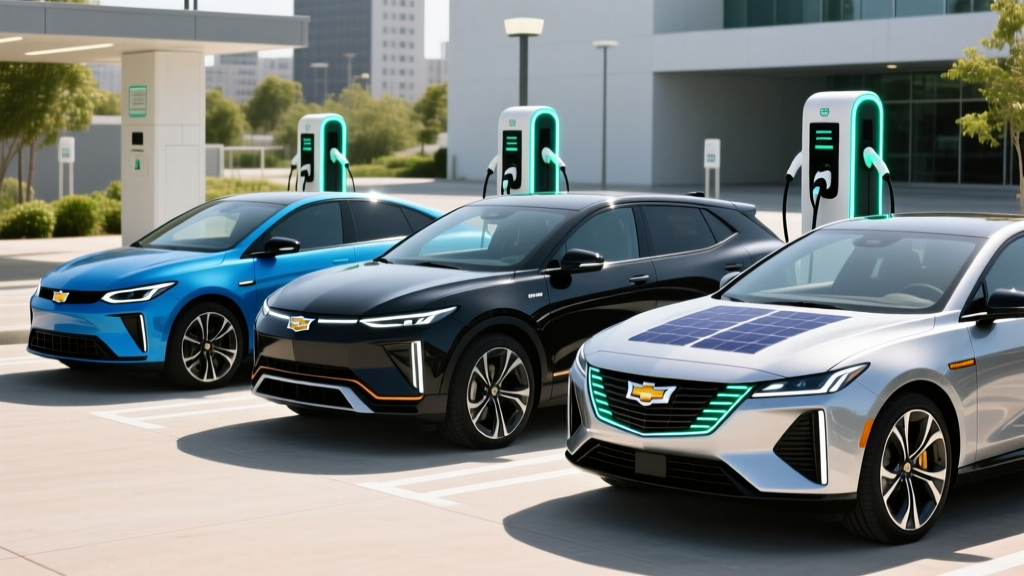
General Motors currently offers five mainstream electric vehicles built on its Ultium platform: the Chevrolet Equinox EV (EPA 319 mi, from $33,600), Chevrolet Blazer EV (EPA 324 mi, from $44,600), Chevrolet Silverado EV (EPA 440 mi, from $55,900), Cadillac Lyriq (EPA 314 mi, from $58,590), and Cadillac Optiq (EPA 305 mi, from $53,990). The Equinox EV is the value standout — it undercuts nearly every rival on price while delivering over 300 miles of EPA range. However, real-world highway and cold-weather driving will reduce those figures by 15–30%, and GM's DC fast-charging speeds (150–190 kW peak) lag behind Hyundai/Kia's 800V architecture. If you have Level 2 home charging and drive under 60 miles daily, a GM EV is a strong, cost-effective choice.
The Full 2026 GM EV Lineup at a Glance
GM has committed fully to its Ultium battery platform, a modular architecture supporting everything from compact crossovers to heavy-duty trucks. Every current GM EV uses NMC (nickel manganese cobalt) lithium-ion chemistry in large-format pouch cells, prioritizing energy density and range over the cycle-life advantages of LFP (lithium iron phosphate) batteries used by some competitors.
| Model | EPA Range | Battery (usable kWh) | Peak DC Charge (kW) | 10–80% Time | 0–60 mph | Base MSRP |
|---|---|---|---|---|---|---|
| Chevy Equinox EV 2LT | 319 mi | 85 kWh | 150 kW | ~34 min | 8.4 sec | $33,600 |
| Chevy Blazer EV RS AWD | 324 mi | 102 kWh | 190 kW | ~28 min | 5.8 sec | $48,600 |
| Chevy Silverado EV LT | 440 mi | 200 kWh | 200 kW | ~42 min | 5.5 sec | $55,900 |
| Cadillac Lyriq Luxury | 314 mi | 102 kWh | 190 kW | ~30 min | 6.0 sec | $58,590 |
| Cadillac Optiq Luxury | 305 mi | 89 kWh | 150 kW | ~32 min | 5.5 sec | $53,990 |
Sources: fueleconomy.gov, Chevrolet.com, Cadillac.com. MSRP excludes destination charge. All figures for base available trims as of 2026 model year.
Real-World Range: What the EPA Sticker Doesn't Tell You
EPA range estimates are tested under controlled conditions that don't fully replicate highway driving at 75 mph, winter temperatures, or mountain terrain. In our experience and aggregated real-world testing, here's what to actually expect from GM's Ultium EVs:
Real-World Range Expectations
Chevy Equinox EV (EPA 319 mi): Expect ~265–280 mi on a flat highway at 70 mph in mild weather. In freezing temperatures (below 32°F), plan for 210–240 mi due to cabin heating demand and increased battery resistance.
Chevy Silverado EV (EPA 440 mi): The massive 200 kWh pack delivers genuine long-haul capability — ~360–380 mi highway in summer. But towing a 5,000-lb trailer cuts range roughly in half, to ~200–220 mi.
Cadillac Lyriq (EPA 314 mi): Heavier luxury appointments and standard AWD reduce efficiency slightly. Expect ~260 mi highway, ~215 mi in cold weather.
GM's Ultium platform includes a heat pump on all models, which helps preserve range in cold weather compared to resistive heating systems. However, no heat pump eliminates cold-weather loss entirely — expect a 20–30% reduction below freezing regardless of brand.
Charging GM EVs: Home, Public, and the NACS Transition
One of GM's most significant strategic moves was adopting Tesla's NACS (North American Charging Standard) connector for all new vehicles starting with the 2025 model year. This means every 2026 GM EV ships with a native NACS charge port, granting access to Tesla's Supercharger network — the most reliable DC fast-charging network in the US — without an adapter.
| Charging Level | Power (kW) | Miles Added per Hour | Best For |
|---|---|---|---|
| Level 1 (120V outlet) | ~1.4 kW | 3–5 mi/hr | Overnight top-off, PHEVs |
| Level 2 (240V, 48A) | ~11.5 kW | 28–35 mi/hr | Daily home charging |
| DC Fast (150–200 kW) | 150–200 kW | ~180–250 mi in 20 min | Road trips |
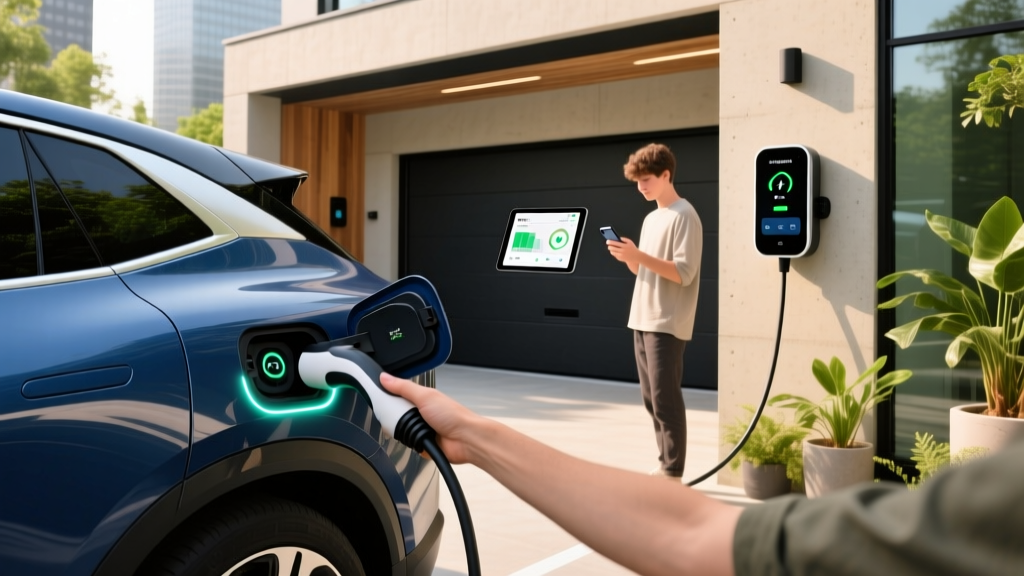
Home charging reality: A full Level 2 installation (240V, 48-amp circuit, hardwired Wallbox or ChargePoint unit) typically costs $1,200–$2,500 including equipment and electrician labor, assuming your electrical panel has capacity. If you need a panel upgrade from 100A to 200A, add $1,500–$3,000. Most GM EV owners charge overnight at home, adding 200+ miles in an 8-hour session — more than enough for daily commuting.
DC fast charging caveat: GM's Ultium vehicles peak between 150 and 200 kW, but like all EVs, charging speed tapers significantly above 80% state of charge (SoC) to protect battery health. A 10–80% session at a 350 kW Electrify America or Tesla Supercharger stall takes roughly 28–42 minutes depending on the model. You will not sustain peak kW for the entire session — the charge curve ramps down progressively. For road trips, plan stops around the 20-minute mark to stay in the fast-charging sweet spot.
GM EV Ownership Costs vs. Gas and Hybrid Alternatives
The purchase price is only part of the equation. Here's a 5-year total cost of ownership (TCO) comparison between the Chevy Equinox EV, a comparable gas-powered Equinox, and the Toyota RAV4 Hybrid — three vehicles competing for the same buyer.
| Cost Factor (5 years / 75,000 mi) | Chevy Equinox EV 2LT | Chevy Equinox Gas (LT AWD) | Toyota RAV4 Hybrid (XLE) |
|---|---|---|---|
| Purchase Price (MSRP) | $33,600 | $30,500 | $34,000 |
| Federal Tax Credit (§30D) | –$7,500* | $0 | $0 |
| Effective Purchase Price | $26,100 | $30,500 | $34,000 |
| Fuel / Electricity (75k mi) | $3,200 (home charging) | $7,900 (gas @ $3.50/gal) | $5,300 (gas @ $3.50/gal) |
| Maintenance | $900 | $3,200 | $2,800 |
| Insurance (avg) | $8,500 | $6,800 | $6,500 |
| Depreciation (est.) | $12,000 | $14,500 | $13,000 |
| 5-Year Total Cost | $50,700 | $62,900 | $61,600 |
*Federal §30D tax credit eligibility requires meeting income caps ($150K single / $300K joint), MSRP caps ($55K for SUVs), and battery critical-mineral sourcing requirements. Verify current eligibility at IRS.gov. Credit can be applied as a point-of-sale rebate through a registered dealer.
The Equinox EV wins on 5-year cost primarily through the federal tax credit, dramatically lower fueling costs (home electricity at ~$0.14/kWh vs. gasoline at ~$3.50/gal), and minimal maintenance (no oil changes, fewer brake replacements thanks to regenerative braking). The trade-off is higher insurance premiums — EVs generally cost 15–25% more to insure due to higher repair costs and parts pricing.
Federal Tax Credit: What GM EVs Qualify in 2026?
The federal EV tax credit under IRS §30D remains the single biggest financial incentive for EV buyers, but qualification depends on a matrix of requirements that change periodically based on battery sourcing rules:
- Vehicle MSRP cap: ≤$55,000 for SUVs/pickups, ≤$55,000 for sedans. All current GM EVs except fully loaded Silverado EV and Cadillac trims fall under this cap.
- Buyer income cap: Modified AGI ≤$150,000 (single), ≤$225,000 (head of household), ≤$300,000 (joint).
- Battery sourcing: Increasingly strict critical-mineral and battery-component requirements must be met for the full $7,500. GM sources many Ultium battery cells from US-based plants (Ultium Cells LLC in Ohio, Tennessee, and Michigan), which helps, but critical-mineral sourcing rules may reduce the credit to $3,750 or eliminate it for some model years depending on supply-chain shifts.
- Point-of-sale transfer: You can apply the credit as an instant rebate at the dealership rather than waiting to claim it on your tax return. The dealer must be IRS-registered.
- New vs. used: The separate §25E used-EV credit offers up to $4,000 (30% of sale price) on pre-owned EVs under $25,000 — relevant for early Bolt EV/EUV models on the used market.
Current status for 2026: The Chevy Equinox EV and Blazer EV are widely reported as qualifying for the full $7,500 credit when purchased through a registered dealer. Cadillac models and higher-trim Silverado EVs may qualify partially or not at all depending on the specific build date and battery batch. Always confirm with your dealer and cross-reference the fueleconomy.gov tax credit database before signing paperwork.
Common GM EV Misconceptions — Fact-Checked
| Myth | Fact |
|---|---|
| "GM EVs have unreliable software and infotainment." | Early 2024 Blazer EV units did ship with significant software bugs that paused deliveries. GM issued multiple OTA (over-the-air) updates through 2025 that resolved most issues. 2026 models ship with a matured Google-built infotainment stack. Check owner forums for current status. |
| "Ultium batteries will need expensive replacement within a few years." | GM warranties the Ultium battery for 8 years / 100,000 miles against defects and capacity loss below 70%. Industry-wide data shows NMC batteries typically retain 85–90% capacity after 100,000 miles. A full pack replacement outside warranty would cost $15,000–$25,000, but is statistically unlikely within normal ownership. |
| "You can't take a GM EV on a road trip." | With native NACS access to 20,000+ Tesla Superchargers and compatibility with Electrify America, EVgo, and other networks, road-tripping a GM EV is viable across most US corridors. The Silverado EV's 440-mi EPA range can cover 6+ hours of driving between stops. Plan around charging, not against it. |
| "GM's Super Cruise is self-driving." | Super Cruise is an SAE Level 2 driver-assistance system. It offers hands-free driving on 750,000+ miles of mapped divided highways, but requires active driver attention (monitored by a camera). You are legally and operationally responsible for the vehicle at all times. It is not autonomous. |
SAE Automation Level Reminder
Level 2 (GM Super Cruise, Tesla Autopilot): The system controls steering and acceleration/braking under specific conditions, but the driver must remain engaged and ready to take over instantly.
Level 4 (Waymo, Zoox): Fully driverless in a defined operational domain. No consumer vehicle sold today is Level 4.
Decision Framework: Which GM EV Is Right for You?
If / Then Guide
Choose the Equinox EV if: You want the best value in GM's lineup, commute under 60 miles daily, have home charging, and want a practical compact SUV with genuine 300+ mi range for under $35K before incentives.
Choose the Blazer EV if: You need more interior space, want available AWD with strong acceleration (RS trim), and prefer a midsize SUV with aggressive styling — and you're willing to pay ~$15K more than the Equinox.
Choose the Silverado EV if: You need a full-size truck with 440 mi of range, available 4-wheel steering, a midgate for extended bed length, and you can accommodate the $55K+ starting price and 200 kWh battery's increased weight and charging time.
Choose the Cadillac Lyriq if: You want a luxury EV with premium materials, a 33-inch LED dashboard display, available Super Cruise, and don't mind the ~$59K entry point. Competes with BMW iX, Genesis Electrified GV70.
Skip GM EVs and consider Hyundai/Kia if: Ultra-fast DC charging is your priority. The Ioniq 5 and EV6 use 800V architecture capable of 10–80% in ~18 minutes at a 350 kW charger, roughly 10–15 minutes faster than GM's Ultium platform.
Consider a PHEV instead if: You lack reliable home charging, frequently drive in extreme cold (below 0°F), or regularly tow heavy loads in rural areas where DC fast-charging infrastructure is sparse. The Toyota RAV4 Prime (42 mi electric-only + 38 MPG gas) offers flexibility without range compromise.
What First-Time GM EV Buyers Should Know
If this is your first electric vehicle, here are the practical ownership realities no brochure will tell you:
- Home charging is non-negotiable for convenience. Relying solely on public charging is expensive ($0.35–$0.55/kWh at DC fast chargers vs. ~$0.14/kWh at home) and time-consuming. Budget $1,200–$2,500 for a Level 2 home installation before purchasing.
- Preconditioning matters. Use the GM app to precondition your EV's battery while it's still plugged in before a fast-charge stop or a cold-weather commute. A warm battery charges faster and recovers more range.
- Tire wear accelerates. EVs are 15–20% heavier than gas equivalents and deliver instant torque. Expect to replace tires every 25,000–35,000 miles instead of 45,000+. Budget for EV-rated tires (higher load index, low rolling resistance).
- Regenerative braking changes how you drive. GM's one-pedal driving mode lets you slow to a stop using only the accelerator. It takes a few days to adjust but dramatically reduces brake wear — many EV owners go 80,000+ miles on original brake pads.
- Insurance will be higher. Get quotes before buying. EV insurance premiums run 15–25% above comparable gas models. Shop multiple carriers; some (like Tesla Insurance and select Progressive policies) offer usage-based EV discounts.
- Battery degradation is slow but real. Expect ~1–2% capacity loss per year under normal use. Avoid routinely charging to 100% or letting the battery sit below 10% for extended periods. GM's 70% capacity retention warranty at 8 years / 100,000 mi provides a solid safety net.
GM EV Warranty and Long-Term Support
GM backs its Ultium EVs with competitive warranty coverage:
- Battery & drive unit: 8 years / 100,000 miles (covers defects and capacity below 70%)
- Bumper-to-bumper: 3 years / 36,000 miles
- Powertrain (non-battery): 5 years / 60,000 miles
- Roadside assistance: 5 years / 60,000 miles (includes towing to nearest charger if depleted)
GM's dealer network is one of the largest in the US, which matters for service access in smaller cities and rural areas where dedicated EV service centers from Tesla or Rivian may be hours away. However, not every Chevy or Cadillac dealer has EV-certified technicians — confirm service capability with your local dealer before purchasing.
Frequently Asked Questions
Does GM still make the Chevrolet Bolt EV?
No. The original Bolt EV and Bolt EUV were discontinued after the 2023 model year. GM has indicated a next-generation Bolt using Ultium/NMC chemistry is planned, but as of the 2026 model year, it has not entered production. If you want an affordable GM EV today, the Equinox EV is the spiritual successor at ~$33,600 MSRP.
Can I charge a GM EV at a Tesla Supercharger?
Yes. All 2025+ GM EVs ship with a native NACS charge port and can use Tesla Supercharger V3 (250 kW) and V4 stalls directly, no adapter required. Access is enabled through the GM vehicle app or Tesla app. This significantly expands fast-charging options, especially on highway corridors.
How long does it take to charge a GM EV at home?
On a Level 2 (240V, 48A) home charger delivering ~11.5 kW, a fully depleted Equinox EV (85 kWh battery) takes roughly 9–10 hours from 0–100%. In practice, most owners plug in nightly and add 200–280 miles in a typical 8-hour sleep cycle — more than enough for daily needs.
Are GM EVs good in cold weather?
Adequate, but not class-leading. The Ultium platform includes a heat pump, which helps, but expect 20–30% range loss below freezing. The Equinox EV's 319-mi EPA range drops to roughly 210–240 mi in sub-32°F highway driving. Preconditioning while plugged in mitigates this somewhat. If you live in Minnesota, North Dakota, or similar climates, budget for more frequent charging stops in winter or consider a PHEV.
What's the cheapest GM EV I can buy new in 2026?
The Chevrolet Equinox EV 2LT at $33,600 MSRP (plus ~$1,395 destination). With the full $7,500 federal tax credit applied at point of sale, the effective price drops to approximately $26,100 — making it one of the most affordable 300+ mile EVs on the US market. Verify credit eligibility on IRS.gov before purchasing.
Is the Silverado EV practical for daily driving?
It depends on your needs. The Silverado EV is a large, heavy vehicle (nearly 9,000 lbs for the 4WT crew cab) that excels at range (440 mi EPA) and tech. But its size makes urban parking challenging, and the 200 kWh battery means longer charge times. If you need a truck for work and can charge at home, it's viable daily. If you just want a commuter vehicle, the Equinox EV is far more practical.