The Quick Answer
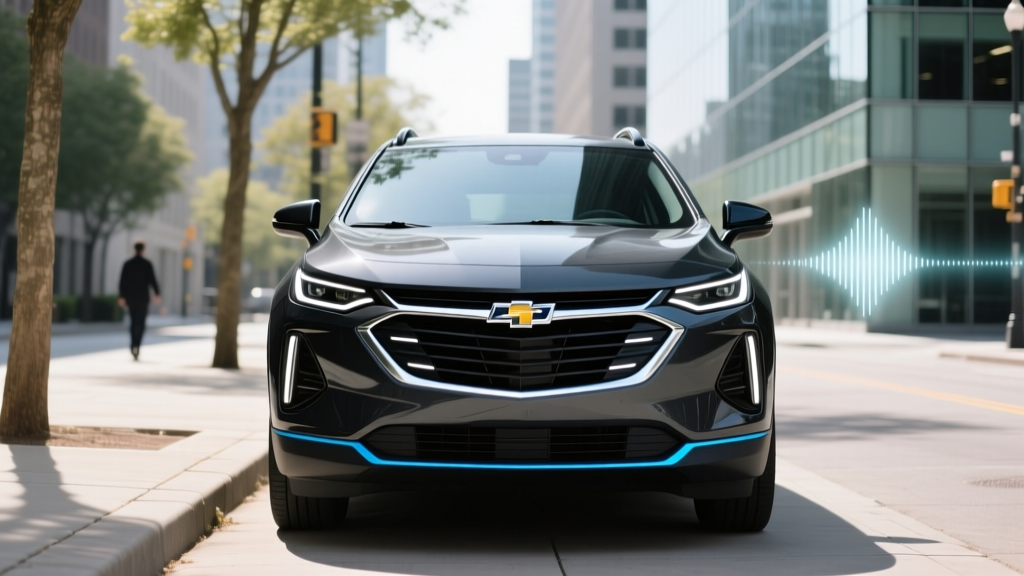
General Motors recalled Equinox EVs for quiet pedestrian alerts because a software defect in the Acoustic Vehicle Alerting System (AVAS) could prevent the vehicle from emitting the federally mandated warning sound at low speeds. The fix is a free over-the-air (OTA) software update — no dealer visit required for most owners. If you own an affected 2024 or 2025 Chevrolet Equinox EV, check your NHTSA VIN lookup immediately. If you're shopping for a 2026 Equinox EV, models produced after the recall remedy are not affected.
What the Equinox EV Pedestrian Alert Recall Actually Covers
The National Highway Traffic Safety Administration (NHTSA) opened this recall after GM identified that certain 2024–2025 Chevrolet Equinox EV units could fail to produce the required external warning sound under specific conditions. Federal Motor Vehicle Safety Standard (FMVSS) 141 mandates that all electric and hybrid vehicles emit an audible alert when traveling below 18.6 mph (30 km/h) to warn pedestrians, cyclists, and visually impaired individuals of an approaching vehicle that has no engine noise.
The issue was traced to a Body Control Module (BCM) software calibration error. In rare scenarios — typically after a specific power-cycle sequence — the AVAS speaker could remain silent even though the vehicle was in motion at low speed. GM reported zero known accidents or injuries tied to this defect, but the compliance failure triggered a mandatory recall.
Owners can verify whether their vehicle is affected by entering their 17-digit VIN on the NHTSA recall lookup page. GM began mailing owner notification letters within 60 days of filing, and the OTA remedy was pushed to most affected vehicles within weeks.
2026 Chevrolet Equinox EV: Current Specs at a Glance
If you're evaluating the Equinox EV as a purchase, here are the numbers that matter for the current model year:
| Spec | 2026 Equinox EV 2LT (FWD) | 2026 Equinox EV RS (AWD) |
|---|---|---|
| EPA Range | 319 miles | 285 miles |
| Battery (usable) | 85 kWh, NMC | 85 kWh, NMC |
| Motor Output | 213 hp / 236 lb-ft | 288 hp / 355 lb-ft |
| 0–60 mph | ~7.8 sec | ~5.9 sec |
| Peak DC Fast Charge | 150 kW | 150 kW |
| 10–80% DC Charge | ~32 min | ~32 min |
| Level 2 (240V) Rate | 11.5 kW | 11.5 kW |
| MPGe (combined) | 96 MPGe | 89 MPGe |
| Base MSRP | $34,900 | $44,900 |
| Battery Warranty | 8 yr / 100,000 mi | 8 yr / 100,000 mi |
Real-World Range Note: The EPA 319-mile figure for the FWD 2LT assumes mixed driving at moderate temperatures. In sustained 75 mph highway driving, expect roughly 255–275 miles. In sub-freezing winter conditions (below 32°F), range can drop 20–30%, yielding approximately 220–255 miles on a full charge. The Equinox EV lacks a heat pump on lower trims, which exacerbates cold-weather consumption.
Equinox EV vs. Gas Compact SUV: Real Cost Comparison
The Equinox EV competes against the Toyota RAV4, Honda CR-V, and its own ICE sibling, the gas Chevrolet Equinox. Here's how a 5-year ownership cycle stacks up against the gas Equinox AWD (EPA 26 mpg combined):
| Cost Category (5 Years / 75,000 Miles) | 2026 Equinox EV 2LT (FWD) | 2026 Equinox Gas AWD |
|---|---|---|
| Purchase Price (MSRP) | $34,900 | $30,200 |
| Federal Tax Credit (§30D) | Up to $7,500* | $0 |
| Effective Purchase Price | ~$27,400 | $30,200 |
| Fuel / Electricity Cost | ~$3,750 (home charging, $0.15/kWh avg) | ~$9,375 (gas at $3.25/gal, 26 mpg) |
| Maintenance | ~$1,200 | ~$3,800 |
| Insurance (avg) | ~$9,500 | ~$7,800 |
| Estimated Depreciation | ~$14,000 | ~$12,500 |
| 5-Year Total Cost of Ownership | ~$55,850 | ~$63,675 |
*The §30D federal tax credit has income caps ($150K single / $300K joint), MSRP caps ($55K for SUVs), and battery critical-mineral sourcing requirements that change annually. Verify eligibility via the IRS clean vehicle credits page and confirm with a tax professional. The credit can now be transferred at point of sale as an immediate discount.
Real-World Ownership: What First-Time EV Buyers Must Know
The pedestrian alert recall aside, owning an Equinox EV involves practical considerations that separate satisfied buyers from regretful ones.
Home Charging Access Is Non-Negotiable
The Equinox EV's 11.5 kW onboard charger means a full Level 2 home session (from 10% to 100%) takes roughly 8 hours. This is ideal for overnight replenishment — but only if you have a 240V circuit available. A Level 2 home charger installation typically runs $800–$2,200 (equipment + electrician + permit), and may require a panel upgrade ($1,500–$3,000) if your home still has a 100-amp service. Relying solely on a standard 120V outlet (Level 1) yields only about 3–4 miles of range per hour of charging — roughly 36 miles overnight — which won't cover most daily driving.
DC Fast Charging Reality
The Equinox EV peaks at 150 kW on DC fast chargers, but like all EVs, it doesn't sustain that rate. The charge curve tapers significantly above 80% State of Charge (SoC). A 10–80% session takes approximately 32 minutes at a properly rated 150+ kW station. However, if you arrive at a 50 kW charger, expect that same session to take over an hour. Always precondition the battery (the Equinox EV does this automatically when you navigate to a charger via the infotainment system) for optimal charge speeds.
Cold-Weather Range Loss
The NMC battery in the Equinox EV is liquid-cooled and heated, but it lacks the efficiency of a heat pump system on base trims. Owners in northern climates (Minnesota, Michigan, New England) should budget 20–30% range reduction in sustained sub-freezing temperatures. That 319-mile EPA sticker becomes roughly 220–255 real-world miles in January.
Common Misconceptions About EV Recalls and Safety
| Myth | Fact |
|---|---|
| "A recall means the car is unsafe to drive." | Most recalls, including this AVAS issue, are software-based compliance fixes. The Equinox EV remained mechanically safe; the fix deployed OTA within weeks. |
| "EVs are completely silent and dangerous to pedestrians." | FMVSS 141 has required AVAS on all EVs since 2020. The Equinox EV's alert system works correctly in the vast majority of operating conditions; this recall addressed an edge-case software bug. |
| "EV batteries need replacement every few years." | GM's battery warranty covers 8 years / 100,000 miles with a capacity retention threshold of 70%. Real-world degradation data from similar Ultium-platform vehicles shows roughly 5–8% capacity loss over 100,000 miles. |
| "The Equinox EV qualifies for the full $7,500 tax credit for everyone." | Eligibility depends on your adjusted gross income, the vehicle's MSRP, and battery mineral sourcing. Some trims and model years have qualified for the full amount; others have qualified for $3,750 or $0 depending on sourcing rule updates. Always check current IRS guidance. |
| "Public charging is unreliable everywhere." | Reliability varies by network. Tesla Superchargers (now accessible to Equinox EV via NACS adapter or built-in NACS port on 2025+ models) average 97%+ uptime. Electrify America and EVgo are improving but still report occasional connector failures in rural areas. |
Decision Framework: Is the Equinox EV Right for You?
Choose the Equinox EV if:
- You have reliable Level 2 home charging access (garage or driveway with 240V).
- Your daily commute is under 80 miles round-trip, and you take road trips fewer than 6 times per year.
- You qualify for the §30D federal tax credit (check income caps and sourcing rules on irs.gov).
- You want a mainstream compact SUV with competitive range (319 mi EPA) at a sub-$35K starting price.
- You prioritize low running costs: home charging at $0.15/kWh costs roughly $0.05/mile vs. $0.12–0.15/mile for a gas compact SUV.
Consider a hybrid (like the Toyota RAV4 Hybrid, 39 mpg combined) instead if:
- You live in an apartment or lack home charging access entirely.
- You frequently drive 300+ miles in a single day through areas with sparse DC fast charging infrastructure.
- You live in an extreme cold climate and cannot tolerate 20–30% winter range loss.
- Your budget is strictly under $28,000 and you don't qualify for the federal credit.
Consider a gas Equinox instead if:
- You tow regularly (the Equinox EV is not rated for towing; the gas model handles up to 1,500 lbs).
- You drive fewer than 8,000 miles per year — the fuel savings won't offset the higher upfront cost within a reasonable timeframe.
What to Do Right Now If You Own an Affected Equinox EV
- Check your VIN at nhtsa.gov/recalls. Enter your 17-digit VIN to confirm whether your specific vehicle is included.
- Check for OTA updates. On your Equinox EV's infotainment screen, go to Settings → Software Update. If the AVAS remedy is available, it will download and install automatically, usually overnight while plugged in.
- Verify the fix. After updating, with the vehicle in Drive at low speed (under 18 mph) and windows down, you should hear the external pedestrian alert sound. If you don't, schedule a dealer service appointment — in rare cases, the AVAS speaker hardware may need inspection.
- Don't delay. While GM reported no injuries tied to this issue, the AVAS is a critical safety system for pedestrians who rely on auditory cues. The fix is free and takes minutes via OTA.
Frequently Asked Questions
Does the 2026 Equinox EV have the same pedestrian alert issue?
No. The recall applies to specific 2024 and 2025 model-year Equinox EVs built before the remedy date. 2026 models rolling off the assembly line ship with the corrected BCM software calibration.
Will this recall affect the Equinox EV's resale value?
Historically, software-based recalls that are quickly remedied via OTA have minimal impact on resale value. Buyers can verify on the VIN lookup that the recall was completed. Unrepaired recalls may cause minor negotiation friction, but the free OTA fix largely eliminates this concern.
How much does it cost to charge an Equinox EV at home vs. public DC fast chargers?
At a national average residential rate of $0.15/kWh, fully recharging the 85 kWh battery costs roughly $12.75, yielding about $0.04–0.05 per mile. Public DC fast charging averages $0.35–0.50/kWh depending on the network and location, pushing the cost to $0.10–0.14 per mile — still cheaper than gas at $3.25/gallon and 26 mpg ($0.125/mile), but the gap narrows significantly.
Is the Equinox EV's battery LFP or NMC chemistry?
The Equinox EV uses GM's Ultium platform with NMC (nickel manganese cobalt) chemistry. NMC offers higher energy density than LFP, which contributes to the 319-mile EPA range in a relatively compact battery pack. However, NMC batteries benefit from staying between 20–80% SoC for daily use to minimize long-term degradation, whereas LFP batteries tolerate regular 100% charges.
What other GM EVs have had AVAS-related recalls?
This specific AVAS calibration issue was limited to the Equinox EV. However, the broader industry has seen AVAS-related recalls across multiple manufacturers as automakers refine software integration. You can search all open recalls by VIN at nhtsa.gov/recalls.