Quick Answer: Is a GM EV Right for You in 2025?
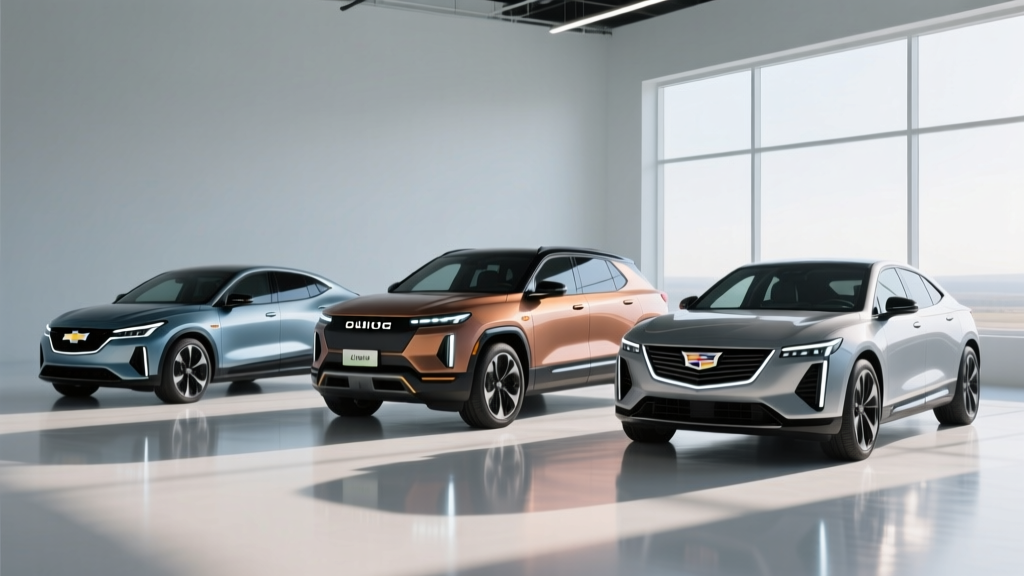
GM's 2025 electric lineup spans four core models built on the Ultium platform: the Chevrolet Equinox EV (315 miles EPA, from ~$33,600), Chevrolet Blazer EV (up to 324 miles, from ~$44,600), Cadillac Lyriq (314 miles, from ~$58,590), and Chevrolet Silverado EV (up to 440 miles, from ~$57,900). All use NACS connectors for native Tesla Supercharger access. The Equinox EV is the volume play for commuters; the Silverado EV targets truck buyers who tow and haul; the Lyriq serves luxury seekers who want premium materials without paying BMW iX money. If you have Level 2 home charging and drive under 250 miles daily, any of these work without compromise. If you rely solely on public charging or live in extreme cold (below 10°F regularly), factor in 20–30% range loss and plan accordingly.
The 2025 GM EV Lineup at a Glance
GM bet heavily on its Ultium battery architecture, a modular platform using NMC (nickel manganese cobalt) pouch cells that scale from compact crossovers to heavy-duty trucks. Unlike some competitors using LFP chemistry for cost savings, GM standardized on NMC across the lineup for higher energy density — the trade-off is slightly faster degradation over 10+ years and a recommendation to avoid routinely charging to 100% for daily use.
| Model | EPA Range | Battery (kWh usable) | Peak DC Charge | 10–80% Time | 0–60 mph | Base MSRP |
|---|---|---|---|---|---|---|
| Equinox EV 3LT | 315 mi | 85 kWh | 150 kW | ~30 min | 7.8 sec | $33,600 |
| Blazer EV RS AWD | 279 mi | 102 kWh | 190 kW | ~26 min | 4.9 sec | $48,600 |
| Cadillac Lyriq Tech | 314 mi | 102 kWh | 190 kW | ~26 min | 5.8 sec | $58,590 |
| Silverado EV WT | 380 mi | 118 kWh | 200 kW | ~28 min | 5.5 sec | $57,900 |
| Silverado EV RST | 440 mi | 200 kWh (est.) | 350 kW | ~20 min | 4.5 sec | $87,300 |
Sources: fueleconomy.gov, GM manufacturer specifications. Real-world highway range at 70 mph typically runs 10–15% below EPA; cold weather (below 32°F) can reduce range an additional 15–30% depending on cabin heating demand.
Charging Reality: NACS, Supercharger Access, and Home Setup
The biggest practical advantage of 2025 GM EVs is native NACS (North American Charging Standard) compatibility. GM transitioned away from CCS1 starting with the 2025 model year, meaning you can plug directly into Tesla Supercharger V3 and V4 stalls without an adapter — a network with over 20,000 stalls in North America and significantly better uptime than Electrify America or EVgo.
| Level | Power (kW) | Miles Added/Hour | Typical Use Case | Cost Estimate |
|---|---|---|---|---|
| Level 1 (120V) | 1.2–1.4 kW | 3–5 mi/hr | Overnight top-up, low daily miles | $0 (included cord) |
| Level 2 (240V, 48A) | 11.5 kW | 30–38 mi/hr | Daily home charging, full overnight | $500–$2,000 install |
| DC Fast (Supercharger V3) | 150–190 kW | ~500–700 mi/hr | Road trips, 10–80% in 20–30 min | $0.28–$0.35/kWh |
| DC Fast (350 kW capable) | Up to 350 kW | ~1,000+ mi/hr | Silverado RST, future V4 stalls | $0.35–$0.48/kWh |
Home charging installation reality check: A Level 2 home charger (like the ChargePoint Home Flex or Emporia V2) requires a 240V circuit — typically a NEMA 14-50 outlet or hardwired connection on a 60A breaker. If your electrical panel has capacity, expect $500–$1,200 for a licensed electrician to run the circuit and install. If your panel is maxed out (common in older homes with 100A service), a panel upgrade to 200A adds $1,500–$3,500. Always get a quote from a licensed electrician before committing to a vehicle purchase.
Preconditioning matters. When navigating to a DC fast charger, GM's battery thermal management system preheats or cools the pack to optimal temperature. Without preconditioning (e.g., pulling into a charger with a cold-soaked battery), your peak charge rate may be cut in half for the first 10–15 minutes. Always use the vehicle's built-in navigation to route to a charger — this triggers preconditioning automatically.
Cost Breakdown: EV vs. Gas Over 5 Years
The purchase price of an EV is only half the equation. Here's how a 2025 Equinox EV 3LT compares to a comparably equipped 2025 Chevrolet Equinox gas AWD over 5 years and 75,000 miles:
| Cost Category | Equinox EV 3LT | Equinox Gas AWD | Notes |
|---|---|---|---|
| Base MSRP | $33,600 | $30,600 | EV eligible for federal/state credits |
| Federal Tax Credit (§30D) | Up to $7,500 | $0 | Subject to income/MSRP/sourcing rules |
| Effective Purchase Price | ~$26,100 | $30,600 | EV wins if credit qualifies |
| Fuel/Energy (5 yr) | $3,200 | $8,400 | EV: $0.13/kWh home avg; Gas: $3.40/gal at 28 MPG |
| Maintenance (5 yr) | $1,200 | $3,800 | No oil changes, fewer brake replacements (regen) |
| Insurance (5 yr avg) | $7,500 | $6,200 | EV premiums ~15–20% higher on average |
| 5-Year Total | $38,000 | $49,000 | EV saves ~$11,000 if credit applies |
Assumptions: 15,000 miles/year, home charging at national average $0.13/kWh, gas at $3.40/gallon, Equinox gas rated 28 MPG combined per fueleconomy.gov. Insurance estimates vary significantly by state, age, and driving record. Tax credit eligibility requires meeting IRS §30D income caps ($150K single / $300K joint), MSRP caps ($55K cars / $80K SUVs/trucks), and battery sourcing requirements — consult irs.gov or a tax professional.
Federal Tax Credit Eligibility for 2025 GM EVs
Not every GM EV qualifies for the full $7,500 federal tax credit under current IRS §30D rules, and not every buyer qualifies even if the vehicle does. Here's what determines eligibility:
- MSRP Caps: Vans, SUVs, and trucks must have an MSRP at or below $80,000; sedans and other cars at or below $55,000. The Equinox EV, Blazer EV, and Silverado EV all fall under their respective caps. The Lyriq qualifies under the $80K SUV cap.
- Buyer Income Limits: Modified AGI must not exceed $300,000 (joint filers), $225,000 (head of household), or $150,000 (single). This applies to the year of delivery or the prior year — whichever is lower.
- Battery Component Sourcing: A percentage of battery components must be manufactured or assembled in North America (phasing up yearly). A separate percentage of critical minerals must be sourced from the US or FTA partners. GM has worked to localize Ultium cell production at plants in Ohio and Tennessee, improving eligibility.
- Point-of-Sale Transfer: As of 2024, you can transfer the credit to the dealer at purchase, reducing your out-of-pocket cost immediately rather than waiting for a tax refund. The dealer must be IRS-registered.
- One Vehicle Per VIN: The credit applies once per vehicle, and the vehicle must be new (not previously titled).
Critical caveat: Battery sourcing requirements tighten annually. A trim that qualifies in January may face supply-chain shifts that affect eligibility later in the year. Always verify current eligibility on fueleconomy.gov before signing a purchase agreement.
Real-World Ownership: What First-Time Buyers Must Know
Spec sheets tell one story; daily ownership tells another. Here are the practical realities that affect every 2025 GM EV owner:
Range Is a Spectrum, Not a Number
The Equinox EV's 315-mile EPA rating assumes moderate temperatures, mixed driving, and conservative speeds. In practice:
- Highway at 75 mph, 70°F: Expect ~265–280 miles
- Highway at 75 mph, 20°F: Expect ~210–240 miles (cabin heat is the main drain)
- City/suburban with regen, 70°F: You may exceed the EPA estimate, hitting 320+ miles
- Mountain driving with elevation gain: Varies wildly; uphill consumes heavily, downhill recovers via regen
The Charge Curve Taper Is Real
GM's published "10–80% in 30 minutes" figure is accurate, but charging from 80–100% can take nearly as long as the 10–80% session. The battery management system throttles charge rate above 80% to protect cell longevity. On road trips, plan stops around the 80% mark — don't wait for 100% unless you're at your overnight destination.
Home Charging Access Is the Deciding Factor
If you can install a Level 2 charger at home, an EV is transformative: you start every morning with a "full tank" and rarely visit a public charger. If you live in an apartment without charging access or rely exclusively on public infrastructure, the experience is significantly less convenient. Public DC fast charging costs 2–3x more than home charging per mile, and you'll spend 25–40 minutes per session waiting. Assess your housing situation honestly before purchasing.
Common GM EV Misconceptions, Corrected
| Myth | Fact |
|---|---|
| "GM EVs will need a $20,000 battery replacement in 5 years" | GM warranties the Ultium battery for 8 years/100,000 miles with a minimum 70% capacity retention threshold. Industry data shows NMC packs typically retain 85–90% capacity at 100K miles under normal use. |
| "Supercharger access means any Tesla stall works" | Only V3 (250 kW) and V4 stalls with NACS connectors are compatible. Older V2 stalls use Tesla's proprietary connector. GM's in-app navigation shows compatible stalls. |
| "Electric cars are worse in snow" | EVs are typically heavier (better traction) and offer precise torque control. Range drops 15–30% in cold, but AWD versions of the Blazer and Equinox EV perform well in winter. Preconditioning while plugged in preserves range. |
| "I'll save money no matter what" | Savings depend on electricity rates, gas prices, tax credit eligibility, insurance costs, and driving patterns. In states with high electricity rates ($0.25+/kWh) and low gas prices, savings shrink. Run your own numbers. |
| "Super Cruise is self-driving" | GM's Super Cruise is an SAE Level 2 driver-assistance system. It handles steering, acceleration, and braking on mapped divided highways, but requires the driver to remain attentive. A camera monitors your eyes. It does not handle construction zones, unmapped roads, or complex urban driving. |
Decision Framework: Which 2025 GM EV Fits Your Life?
Choose the Equinox EV if:
- Your budget is under $40,000 (after potential tax credit, effectively under $33K)
- Your daily commute is under 80 miles round-trip
- You want a practical, no-drama commuter that charges overnight at home
- You don't need AWD for heavy snow (FWD is standard; AWD available on 2LT/3LT)
Choose the Blazer EV if:
- You want a sportier driving experience (RS AWD does 0–60 in 4.9 seconds)
- You need more cargo space than the Equinox (up to 59.2 cu ft with seats folded)
- You want Super Cruise availability for highway commuting
- Your budget is $45,000–$55,000
Choose the Cadillac Lyriq if:
- You want luxury materials, a 33-inch LED dashboard display, and premium audio
- You're cross-shopping the BMW iX, Audi Q8 e-tron, or Genesis Electrified GV70 but want to spend $15K–$25K less
- You value the NACS Supercharger network access in a luxury package
- Your budget is $55,000–$70,000
Choose the Silverado EV if:
- You need a truck bed (5'11" on WT, with available Multi-Flex tailgate and midgate)
- You tow (up to 10,000 lbs on WT, 12,500 lbs with max trailering package)
- You want the 440-mile range of the RST for long hauls without charging stops
- You can absorb the $58K–$87K price tag and understand that the 200 kWh RST battery adds significant weight
Choose a PHEV or gas vehicle instead if:
- You cannot install home charging and your area has sparse DC fast-charging infrastructure
- You regularly drive 400+ miles in a single day in rural areas (charging gaps remain real)
- You live in extreme cold (regularly below 0°F) and cannot garage the vehicle
- Your annual mileage is under 8,000 miles — the fuel savings won't offset the purchase premium within a reasonable timeframe
Battery Longevity and Warranty
GM covers all 2025 Ultium-based EVs with an 8-year/100,000-mile battery warranty that guarantees a minimum of 70% state of health (SoH). If the battery degrades below that threshold within the warranty period, GM will repair or replace it at no cost. For context, independent fleet data from Recurrent Auto shows that liquid-cooled NMC packs (like Ultium) typically retain 88–92% capacity at 100,000 miles under mixed use patterns.
To maximize longevity:
- Set your daily charge limit to 80% for routine use; charge to 100% only before long trips
- Avoid leaving the vehicle at 100% SoC for extended periods (days) in hot weather
- Use DC fast charging sparingly — it's fine for road trips, but daily Level 2 home charging is gentler on the cells
- Keep the vehicle plugged in during extreme cold so the thermal management system can maintain pack temperature without draining the battery
Frequently Asked Questions
Are 2025 GM EVs reliable?
GM's early Ultium vehicles (2023–2024 Blazer EV, early Lyriq) experienced software bugs — infotainment freezes, charging handshake failures, and phantom warning lights. For 2025, GM issued multiple over-the-air updates and revised software architecture. J.D. Power and Consumer Reports data for the 2024–2025 model years show improvement, though GM EVs still trail Hyundai/Kia and Tesla in initial quality surveys. The powertrain and battery hardware have been solid; the issues were primarily software.
Can I use a Tesla Supercharger with a 2025 GM EV?
Yes — 2025 GM EVs have native NACS charge ports, so you plug directly into Tesla Supercharger V3 and V4 stalls without any adapter. Access is managed through the myChevrolet or myCadillac app, which shows available stalls and initiates billing. You do not need a Tesla account.
How long does it take to charge a GM EV at home?
On a Level 2 home charger delivering 11.5 kW (48 amps, 240V), the Equinox EV's 85 kWh battery charges from 0–100% in approximately 8 hours. The larger Silverado EV RST with its ~200 kWh pack requires roughly 17 hours on Level 2 — but in practice, you rarely arrive home at 0%, so a typical overnight session (topping up from 30–80%) takes 4–5 hours.
Do GM EVs qualify for the $7,500 federal tax credit?
Eligibility varies by model, trim, buyer income, and current battery sourcing compliance. The Equinox EV, Blazer EV, and Silverado EV have qualified for the full or partial credit at various points, but critical-mineral sourcing rules tighten yearly. Verify the specific VIN's eligibility on fueleconomy.gov and confirm with your dealer before finalizing a purchase. The credit can be transferred to the dealer at point of sale to reduce your out-of-pocket cost.
Is Super Cruise available on all 2025 GM EVs?
No. Super Cruise — GM's hands-free highway driving system — is available on select trims of the Blazer EV, Lyriq, and Silverado EV. It is not offered on the Equinox EV. Super Cruise works on over 750,000 miles of mapped divided highways in North America and requires an active OnStar subscription after the initial trial period. Remember: this is SAE Level 2 assistance, not autonomous driving. You must remain attentive and ready to take over.
What happens if the Ultium battery fails out of warranty?
Out-of-warranty battery replacement costs for Ultium packs are not yet widely documented, as the platform is still relatively new. Industry estimates for comparable NMC packs of this size range from $12,000–$22,000 depending on capacity. However, given that Ultium packs use modular pouch cells, partial repairs (replacing individual modules rather than the full pack) may be possible and significantly cheaper. Third-party EV repair shops are increasingly capable of module-level service.