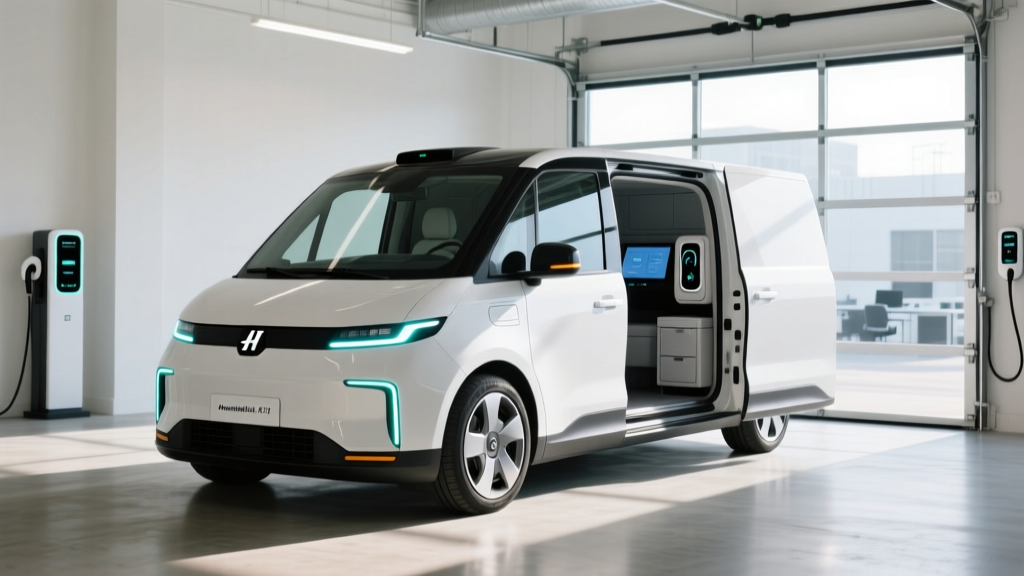
If you're researching a GM electric van for commercial delivery or fleet use, the answer centers on one vehicle line: the BrightDrop Zevo (formerly the Zevo 400 and Zevo 600). These are purpose-built, last-mile electric delivery vans produced by GM's BrightDrop division, offering 150–250 miles of EPA-estimated range, up to 2,200 lbs of payload, and DC fast charging from 10–80% in roughly 45 minutes. They are sold primarily to fleet operators, not individual retail buyers, and pricing typically starts around $70,000–$100,000 depending on configuration before incentives.
Quick Answer: GM Electric Van Availability (2026)
GM's electric van offering is the BrightDrop Zevo lineup — available as the compact Zevo 400 (~270 cu ft cargo) and the full-size Zevo 600 (~410 cu ft cargo). Both are fleet-only sales channels. FedEx, Walmart, and Verizon are among early adopters. Retail small-business buyers can access them through fleet leasing partners. GM does not sell a consumer electric minivan as of the 2026 model year.
BrightDrop Zevo Lineup: Specs That Matter
BrightDrop launched as a GM subsidiary focused on commercial electric logistics. The Zevo vans ride on GM's Ultium battery platform and are assembled at the CAMI plant in Ingersoll, Ontario. Here are the numbers fleet managers actually use to make purchase decisions:
| Spec | Zevo 400 | Zevo 600 |
|---|---|---|
| Cargo Volume | ~270 cu ft | ~410 cu ft |
| EPA-Est. Range | ~250 mi | ~150–200 mi (load-dependent) |
| Battery (usable, est.) | ~120 kWh (NMC, Ultium) | ~165 kWh (NMC, Ultium) |
| Max Payload | ~2,200 lbs | ~2,200 lbs |
| Peak DC Fast Charge | ~120 kW | ~150 kW |
| 10–80% DC Charge Time | ~45 min | ~45 min |
| Level 2 Charge Rate | ~11.5 kW | ~11.5 kW |
| Drive | RWD, single motor | RWD, single motor |
| Horsepower / Torque | ~200 hp / 325 lb-ft | ~200 hp / 325 lb-ft |
| Base MSRP (est.) | ~$70,000 | ~$90,000–$100,000 |
| Warranty (battery) | 8 yr / 100,000 mi | 8 yr / 100,000 mi |
Real-world range caveat: The Zevo 600's range is highly load- and route-sensitive. A fully loaded Zevo 600 running a stop-heavy urban delivery route with frequent door openings and HVAC use will see range closer to 130–160 miles in practice. Cold-weather testing in northern climates shows a 20–30% range reduction, consistent with most large EVs lacking aggressive battery preconditioning. Fleet managers should plan routes around 70% of EPA range to maintain operational buffer.
Total Cost of Ownership: Electric Van vs. Gas Van
The purchase price of a BrightDrop Zevo is substantially higher than a comparable Ford Transit or Ram ProMaster cargo van. But fleet TCO tells a different story over a 5-year, 100,000-mile horizon — especially when the IRS §30D commercial clean vehicle credit (or the §45W commercial credit for fleet entities) applies.
| Cost Factor (5 yr / 100k mi) | BrightDrop Zevo 600 (EV) | Ford Transit 350 (Gas) |
|---|---|---|
| Purchase Price (base) | ~$95,000 | ~$52,000 |
| Federal Tax Credit (§45W commercial) | Up to –$7,500 | $0 |
| Fuel / Energy Cost | ~$6,500 (electric @ $0.14/kWh avg) | ~$18,000 (gas @ $3.60/gal, 14 MPG) |
| Maintenance (est.) | ~$2,500 | ~$7,000 |
| Insurance (est.) | ~$12,000 | ~$9,500 |
| Estimated Resale (5 yr) | ~$30,000 | ~$18,000 |
| Net 5-Year Cost (est.) | ~$78,500 | ~$68,500 |
Key takeaway: The EV van still carries a cost premium over five years in most scenarios, but the gap narrows significantly — and flips in the EV's favor — when you factor in state/local utility rebates for depot charging infrastructure, higher annual mileage (the fuel savings scale linearly), and the EPA efficiency data showing commercial EVs at 2.0–2.5 kWh/mile vs. gas vans at 14–16 MPG.
At 25,000 miles/year and commercial electricity rates of $0.10/kWh (depot charging), the Zevo 600 costs roughly $0.10/mile to "fuel" vs. $0.26/mile for a gas Transit. That's $4,000/year in fuel savings alone — $20,000 over five years.
Charging Infrastructure: What Fleet Buyers Actually Need
This is where most GM electric van adoption stalls — not the vehicle itself, but the depot charging setup. Here's what a realistic BrightDrop deployment requires:
Depot Level 2 Charging (Primary)
Most fleet Zevo vans charge overnight at the depot on Level 2 (240V) equipment. At 11.5 kW, a full charge of the Zevo 600's ~165 kWh battery takes roughly 14–16 hours from empty. Since most fleet vans return with 30–50% remaining SoC, a typical overnight session of 8–10 hours easily replenishes daily use.
- Equipment cost: $1,500–$3,000 per dual-port Level 2 station (commercial-grade, e.g., ChargePoint CT4000 or Blink HQ 200)
- Electrical work: $3,000–$15,000+ per site depending on panel capacity, trenching, and whether a service upgrade to 400A+ is needed
- Utility demand charges: Can add $0.05–$0.15/kWh equivalent in some commercial rate structures — smart charging software (off-peak scheduling) is essential
DC Fast Charging (Supplemental)
For mid-day top-ups or high-utilization routes, the Zevo's CCS1 port accepts up to 150 kW DC. A 10–80% session takes ~45 minutes, adding roughly 100–130 miles of range. However, fleet operators rarely rely on public DC fast charging due to cost ($0.35–$0.50/kWh at commercial networks like Electrify America) and the physical size of the van limiting station access.
Common Misconceptions About GM Electric Vans
| Myth | Fact |
|---|---|
| "The Zevo can do 250 miles fully loaded in winter." | Expect 130–170 miles fully loaded in sub-40°F weather. Route planning must account for this. |
| "You can buy one at any Chevy dealer." | BrightDrop sells through fleet-direct and leasing channels. Some BrightDrop-authorized Chevy commercial dealers can facilitate orders. |
| "Electric vans can't handle real payloads." | The Zevo 600 matches or exceeds the Ford Transit 250's payload (~2,200 lbs) while delivering more low-end torque for stop-and-go routes. |
| "Charging takes too long for commercial use." | Overnight depot charging at 11.5 kW covers 95%+ of daily route needs. DC fast charging exists for edge cases. |
| "The $7,500 credit applies automatically." | The §45W commercial credit has battery sourcing and MSRP requirements. Consult a tax professional — eligibility varies by entity type and vehicle VIN sourcing. |
Who Should Buy (or Lease) a GM Electric Van?
The BrightDrop Zevo isn't for everyone. It solves specific operational problems and creates others. Here's a practical decision framework:
Decision Framework: Is the Zevo Right for Your Fleet?
- Choose the BrightDrop Zevo if:
- Your routes are under 150 miles/day with predictable return-to-depot patterns
- You have (or can install) depot Level 2 charging
- You operate in a metro area with utility EV rate programs or state fleet-electrification grants
- Stop-heavy urban delivery is your use case (regenerative braking maximizes efficiency and reduces brake wear)
- Your company has sustainability reporting or ESG mandates
- Stick with a gas/diesel Transit, ProMaster, or Sprinter if:
- Your daily routes exceed 200 miles or are highly variable
- You lack depot charging access and cannot install it (rented yard, shared facility)
- You operate in extreme cold climates (–20°F regular) where range loss compounds operational risk
- Your fleet is fewer than 3 vans and the infrastructure investment doesn't amortize
- You need AWD for rural or mountain routes (Zevo is RWD only)
Real-World Ownership: What First-Time Fleet EV Buyers Miss
Transitioning a van fleet from gas to electric involves operational changes that go beyond the vehicle. Based on early fleet deployments with FedEx, Walmart, and municipal operators, here are the non-obvious realities:
Driver Training Matters More Than You Think
The Zevo's regenerative braking is strong enough to enable near-one-pedal driving in urban settings. Drivers accustomed to gas vans need 1–2 weeks to adapt. Fleets that skip training report higher energy consumption (drivers riding the friction brake instead of using regen) and more reported "range anxiety" complaints.
Maintenance Savings Are Real — But Different
There are no oil changes, no transmission fluid, no spark plugs, and significantly reduced brake pad wear (regen handles most deceleration). BrightDrop's telematics platform enables predictive maintenance alerts. However, tire wear can be 15–20% higher due to the vehicle's weight (~7,500 lbs curb weight for the Zevo 600) and instant torque delivery. Budget for tire rotation every 5,000–7,000 miles.
Insurance Premiums Run Higher
Commercial EV insurance typically runs 15–25% higher than equivalent gas vans, driven by higher repair costs for battery-adjacent damage and limited collision-repair network familiarity with Ultium platform vehicles. Get quotes from your commercial carrier before committing.
Software and Telematics Are the Real Product
BrightDrop's connected fleet platform provides real-time SoC monitoring, route optimization based on remaining range, and remote preconditioning (warming the battery and cabin while plugged in to preserve range). This software layer is where long-term operational efficiency is won or lost — and it requires fleet manager buy-in and training.
BrightDrop vs. the Competition: Rivian EDV and Ford E-Transit
The GM electric van doesn't exist in a vacuum. Two other players compete in this space:
| Spec | BrightDrop Zevo 600 | Ford E-Transit (2026) | Rivian EDV-700 |
|---|---|---|---|
| Cargo Volume | ~410 cu ft | ~487 cu ft (high-roof) | ~653 cu ft |
| EPA Range | ~150–200 mi | ~126 mi | ~161 mi |
| Battery | ~165 kWh NMC | ~68 kWh NMC | ~110 kWh NMC |
| Peak DC Charge | ~150 kW | ~115 kW | ~200 kW |
| Payload | ~2,200 lbs | ~3,880 lbs | ~2,535 lbs |
| Base Price (est.) | ~$95,000 | ~$58,000 | Fleet-only (Amazon-priority) |
| Availability | Fleet-direct order | Dealer network | Amazon-exclusive (limited external) |
The E-Transit wins on price and dealer accessibility but loses badly on range. The Rivian EDV is purpose-built for Amazon and remains largely unavailable to other fleets. The BrightDrop Zevo occupies the middle ground: strong range, Ultium platform credibility, but higher cost and a more complex purchasing path.
Frequently Asked Questions
Can a small business buy a GM electric van?
Yes, but not the way you'd buy a Chevy Equinox. BrightDrop sells primarily through fleet-direct channels and commercial leasing partners. Some Chevrolet Commercial dealerships can facilitate BrightDrop orders. Expect lead times of 3–6 months depending on production allocation.
Does the BrightDrop Zevo qualify for the $7,500 federal tax credit?
The Zevo may qualify under IRS §45W (the commercial clean vehicle credit), which provides up to $7,500 for vehicles under 14,000 lbs GVWR. However, eligibility depends on battery component sourcing, critical mineral requirements, and your entity's tax situation. The point-of-sale transfer option available to retail buyers under §30D works differently for commercial entities. Consult a tax professional before assuming credit eligibility.
What happens if the battery degrades?
BrightDrop covers the Ultium battery with an 8-year/100,000-mile warranty against defects and excessive capacity loss (typically defined as dropping below 60–70% State of Health). NMC chemistry in commercial use with proper thermal management and charge-limiting (fleet software rarely charges above 90% SoC) should retain 80%+ capacity at 150,000 miles based on GM's published degradation curves. A full battery replacement, if needed out of warranty, is estimated at $18,000–$25,000 — a significant cost, but one that rarely materializes in the vehicle's first decade.
How does cold weather affect the Zevo's range?
In sustained sub-40°F operation, expect 20–30% range loss. A Zevo 600 rated at ~180 miles may deliver 125–145 miles in January in Chicago or Minneapolis. Preconditioning the battery while still plugged in at the depot recovers some of this loss. Fleet route software should automatically adjust range estimates based on ambient temperature.
Is there a consumer version of the GM electric van?
Not as of 2026. GM has not announced a consumer-oriented electric minivan or passenger van. If you need a personal electric vehicle with van-like cargo space, the closest alternatives are the Tesla Model X (behind the third row), the Rivian R1S, or the upcoming electric platforms from Hyundai (Ioniq 9) and Kia — none of which match a commercial van's cargo volume.