Quick Answer: Which GM Electric SUV Fits You?
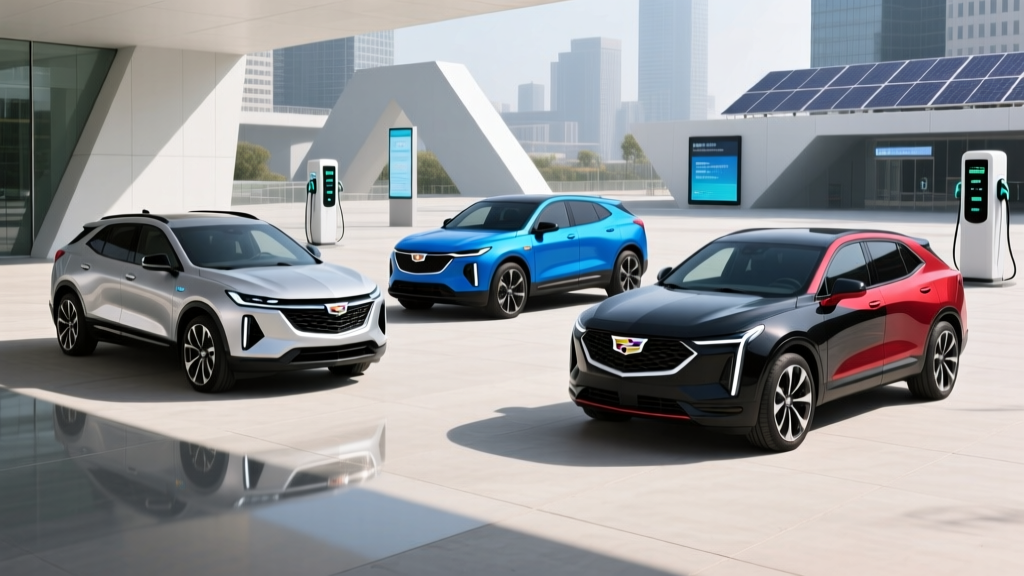
General Motors offers three core electric SUVs for 2026 across two brands: the Chevrolet Equinox EV (affordable compact, up to 319 miles EPA range, starting ~$33,600), the Chevrolet Blazer EV (midsize performance option, up to 324 miles, starting ~$44,600), and the Cadillac Lyriq (luxury midsize, 314 miles, starting ~$58,590). The Equinox EV is the value pick for daily commuters; the Blazer EV suits families wanting more space and power; the Lyriq targets luxury buyers. All three ride on GM's Ultium platform with NMC battery chemistry and support DC fast charging up to 190 kW (Equinox/Blazer) or 190 kW (Lyriq). Federal tax credit eligibility under IRS §30D varies by trim, battery sourcing, and buyer income—verify current-year rules before purchasing.
The 2026 GM Electric SUV Lineup at a Glance
GM's Ultium-platform strategy has matured past early production stumbles. For 2026, the three-SUV lineup covers a wide price spectrum, from sub-$35K to nearly $60K. Here's how they stack up on the numbers that matter.
| Spec | Equinox EV (2LT AWD) | Blazer EV (2LT AWD) | Cadillac Lyriq (Luxury AWD) |
|---|---|---|---|
| EPA Range | ~285 mi (AWD) / 319 mi (FWD) | ~279 mi (AWD) / 324 mi (RWD) | 314 mi |
| Battery (usable) | ~85 kWh, NMC | ~102 kWh, NMC | ~102 kWh, NMC |
| Peak DC Fast Charge | 150 kW | 190 kW | 190 kW |
| 10–80% DC Charge | ~32 min | ~24 min | ~25 min |
| Level 2 Rate | 11.5 kW | 11.5 kW | 19.2 kW (optional) |
| Horsepower | 288 hp (AWD) | 288 hp (AWD) | 500 hp (AWD) |
| 0–60 mph | ~7.2 sec | ~7.0 sec | ~4.6 sec |
| Base MSRP | ~$33,600 (FWD) | ~$44,600 | ~$58,590 |
| Battery Warranty | 8 yr / 100,000 mi | 8 yr / 100,000 mi | 8 yr / 100,000 mi |
Sources: EPA fueleconomy.gov, Chevrolet Equinox EV specs, Cadillac Lyriq.
Real-World Range Reality Check
EPA estimates are a starting point, not a guarantee. Expect roughly 10–15% range loss at sustained highway speeds (75+ mph) and 20–30% loss in freezing temperatures due to cabin heating and battery chemistry limitations. A Blazer EV AWD rated at 279 miles EPA may deliver 220–240 miles on a cold winter highway trip. Preconditioning the battery while plugged in mitigates some cold-weather loss and also improves DC fast-charge speeds.
EV vs. Gas: What the Cost Comparison Actually Looks Like
The sticker price tells only part of the story. Let's compare the Equinox EV 2LT AWD against its gas counterpart, the 2026 Equinox AWD (1.5L turbo, ~28 MPG combined), over five years and 75,000 miles.
| Cost Factor | Equinox EV 2LT AWD | Equinox Gas AWD (28 MPG) |
|---|---|---|
| Base MSRP | $38,400 | $30,200 |
| Est. Federal Tax Credit (§30D) | Up to $7,500* | $0 |
| Effective Purchase Price | ~$30,900 | $30,200 |
| Fuel / Energy (75K mi) | ~$2,800 (home L2 @ $0.14/kWh) | ~$9,375 ($3.50/gal, 28 MPG) |
| Maintenance (5 yr) | ~$1,200 | ~$3,500 |
| Est. Insurance (5 yr) | ~$9,500 | ~$7,800 |
| 5-Year Total Cost | ~$44,400 | ~$50,875 |
*§30D credit caveats: Eligibility depends on MSRP caps ($80,000 for SUVs), buyer income limits ($150K single / $300K joint), battery critical-mineral and component sourcing requirements, and point-of-sale transfer rules. Check IRS §30D guidance for current-year specifics. The credit can be applied at the dealership to reduce your out-of-pocket cost.
Charging at Home and on the Road
GM has adopted the NACS (Tesla-style) connector across its 2026 EV lineup, giving owners access to Tesla Supercharger stations via native plug—no adapter needed for DC fast charging. This was a major shift from CCS and significantly expands the public charging network available to GM EV drivers.
| Level | Power (kW) | Miles Added per Hour | Use Case |
|---|---|---|---|
| Level 1 (120V) | 1.4 kW | ~4 mi/hr | Overnight top-up, emergencies |
| Level 2 (240V, 48A) | 11.5 kW | ~34 mi/hr | Daily home charging |
| Level 2 (240V, 80A, Lyriq opt.) | 19.2 kW | ~52 mi/hr | Faster home/depot charging |
| DC Fast (150–190 kW) | 150–190 kW | ~600+ mi/hr (peak) | Road trips, 10–80% in 24–32 min |
Home Level 2 Charger Installation: What to Budget
| Item | Cost Range |
|---|---|
| Level 2 EVSE (48A hardwired) | $400–$700 |
| Electrician labor (standard install) | $600–$1,500 |
| Permit & inspection | $100–$300 |
| Panel upgrade (if needed, 200A service) | $1,500–$3,500 |
| Total (no panel upgrade) | $1,100–$2,500 |
| Total (with panel upgrade) | $2,600–$6,000 |
A licensed electrician should evaluate your panel capacity before purchase. A 48A charger requires a 60A circuit. Many older homes with 100A service will need a panel upgrade to support simultaneous EV charging and household loads.
Battery Longevity, Degradation, and Warranty
All three GM electric SUVs use NMC (nickel manganese cobalt) lithium-ion cells manufactured at the Ultium Cells joint-venture plants. NMC chemistry delivers high energy density (more range per kilogram) but is more sensitive to sustained high SoC and extreme temperatures than LFP chemistry.
| Factor | NMC (GM Ultium) | LFP (e.g., Tesla Model 3 RWD) |
|---|---|---|
| Energy Density | Higher — more range per kWh | Lower — heavier pack for same range |
| Cycle Life | ~1,000–1,500 full cycles to 80% SoH | ~2,500–3,500 full cycles to 80% SoH |
| Cold Performance | Better in freezing temps | Reduced range & charge speed in cold |
| Daily Charging Recommendation | 80% SoC daily, 100% for trips | 100% SoC fine for daily use |
| Cost | Higher (cobalt content) | Lower (no cobalt/nickel) |
GM's battery warranty guarantees at least 70% capacity retention over 8 years or 100,000 miles, whichever comes first. Real-world data from early Ultium owners suggests typical degradation of 5–8% over the first two years, with the curve flattening afterward. At 150,000 miles, most NMC packs retain 82–88% of original capacity when owners follow the 80% daily charge guideline.
If a pack does need replacement out of warranty, expect $12,000–$18,000 for parts and labor depending on the model—a significant sum, though pack failures are statistically rare in modern liquid-cooled systems.
Common Misconceptions About GM Electric SUVs
| Myth | Fact |
|---|---|
| "GM EVs can't use Tesla Superchargers." | 2026 GM EVs have native NACS ports and access Supercharger V3/V4 stalls directly—no adapter required for DC fast charging. |
| "The battery will need replacing in 5 years." | Liquid-cooled Ultium packs are designed for 200,000+ miles. The 8-year/100K-mile warranty covers defects and capacity below 70%. |
| "EVs cost more to insure." | Partially true: EV premiums average 15–25% higher than gas equivalents due to repair costs, but the gap is narrowing. Shop multiple carriers. |
| "I'll save $7,500 on every GM EV." | The §30D credit has income caps, MSRP caps, and battery-sourcing requirements. Not all trims or buyers qualify. Verify on IRS.gov. |
| "Cold weather kills EV range completely." | Expect 20–30% reduction in sub-freezing temps, not total loss. Preconditioning and seat/steering-wheel heaters reduce the hit significantly. |
Decision Framework: Which GM Electric SUV Should You Buy?
Choose the Equinox EV if:
- Your budget is under $40K and you want the best value per mile of range.
- Your daily commute is under 80 miles round-trip and you charge at home.
- You don't need 500 hp or a luxury badge—you need practical, affordable daily transport.
- FWD is acceptable for your climate (FWD gets the 319-mile max range).
Choose the Blazer EV if:
- You need more interior space for a family but want to stay under $55K.
- You value faster DC charging (190 kW peak vs. 150 kW on the Equinox).
- You take road trips of 250+ miles and want the larger 102 kWh battery buffer.
- You want a sportier look without stepping into luxury pricing.
Choose the Cadillac Lyriq if:
- Luxury, quietness, and premium materials are priorities.
- You want 500 hp and sub-5-second 0–60 performance.
- You value the optional 19.2 kW Level 2 charging (fastest home charge in the lineup).
- Your budget accommodates $58K+ and you're comfortable with higher insurance costs.
Skip a GM EV entirely if:
- You lack reliable access to home or workplace Level 2 charging AND your area has sparse public DC fast-charging infrastructure.
- You regularly tow heavy loads (these SUVs are not rated for heavy towing; consider an ICE or hybrid truck).
- You live in an extreme-cold climate and need 300+ miles of real-world winter range—no current GM electric SUV delivers that reliably at -10°F.
Frequently Asked Questions
Do all GM electric SUVs qualify for the $7,500 federal tax credit?
No. Eligibility under IRS §30D depends on battery critical-mineral sourcing, component manufacturing origin, buyer adjusted gross income (≤$150K single, ≤$300K joint), and vehicle MSRP (≤$80K for SUVs). The credit can be transferred to the dealer at point of sale as a purchase-price reduction. Always confirm current eligibility on IRS.gov and with your tax professional before relying on it.
Can I charge a GM electric SUV at Tesla Superchargers?
Yes. Starting with the 2025 model year, GM equipped its EVs with native NACS charge ports. You can plug directly into Tesla Supercharger V3 (250 kW) and V4 stalls without an adapter. The vehicle's navigation system routes you through Supercharger locations when planning road trips.
How long does it take to charge at home overnight?
On a standard 48A Level 2 home charger (11.5 kW), the Equinox EV gains roughly 34 miles of range per hour. A full charge from 10% to 100% takes about 8 hours for the Equinox and roughly 10 hours for the Blazer EV or Lyriq (with their larger 102 kWh batteries). The Lyriq with the optional 19.2 kW onboard charger can complete the same charge in about 6 hours. Most owners charge from 20–80% overnight, which takes 5–6 hours—well within a typical overnight window.
Is the Ultium battery reliable long-term?
Early data from 2024–2025 Ultium owners shows 5–8% degradation over the first 24 months, consistent with NMC chemistry norms. GM's liquid-cooling thermal management helps mitigate heat-related wear. The 8-year/100,000-mile warranty covering 70% capacity retention provides a safety net. For maximum longevity, set your daily charge limit to 80% and use 100% only for road trips.
What's the difference between kW and kWh?
kW (kilowatts) measures power—how fast energy flows, like water pressure in a hose. A 190 kW DC fast charger delivers energy rapidly. kWh (kilowatt-hours) measures energy capacity—how much the battery stores, like the size of a fuel tank. A 102 kWh battery holds more energy (and therefore provides more range) than an 85 kWh battery. Never confuse the two: kW is the rate; kWh is the total.
Should I buy an EV or a plug-in hybrid instead?
If you have home charging and drive under 250 miles daily, a BEV like the Equinox EV offers lower operating costs (~$0.04/mi vs. ~$0.13/mi for gas) and simpler maintenance. If you lack reliable charging access or frequently drive 400+ mile trips in areas with sparse chargers, a PHEV (like the upcoming GM PHEV models) offers a gas-engine fallback with 30–40 miles of electric-only commuting range.
Always verify specifications, pricing, and incentive eligibility with the manufacturer and IRS.gov before purchasing. Figures in this guide reflect 2026 model-year data available at time of publication.