The quick answer: GM's electric crate motor system — officially branded the GM eCrate — is a turnkey EV drivetrain package designed for classic car conversions and custom builds. As of 2026, the complete eCrate system (motor, inverter, battery pack, and controller) starts around $30,000–$40,000 depending on configuration, delivering approximately 200–400 HP and an estimated 150–250 miles of range depending on the donor vehicle weight and battery size selected. Installation by a qualified conversion shop typically adds $15,000–$30,000 in labor, bringing total EV-swap project costs to $45,000–$70,000+. The eCrate is sold through Chevrolet Performance and is intended for off-road/show use in most configurations, though street-legal registration pathways exist state by state.
What Is the GM Electric Crate Motor (eCrate)?
The GM electric crate motor is General Motors' answer to the growing EV conversion market. Rather than salvaging drivetrains from wrecked Teslas or Nissan Leafs, builders can now source a purpose-built, warranty-supported electric powertrain directly from an OEM. The eCrate lineup borrows heavily from GM's Ultium platform architecture — the same modular battery and motor technology underpinning the Chevrolet Silverado EV, Blazer EV, and Cadillac Lyriq.
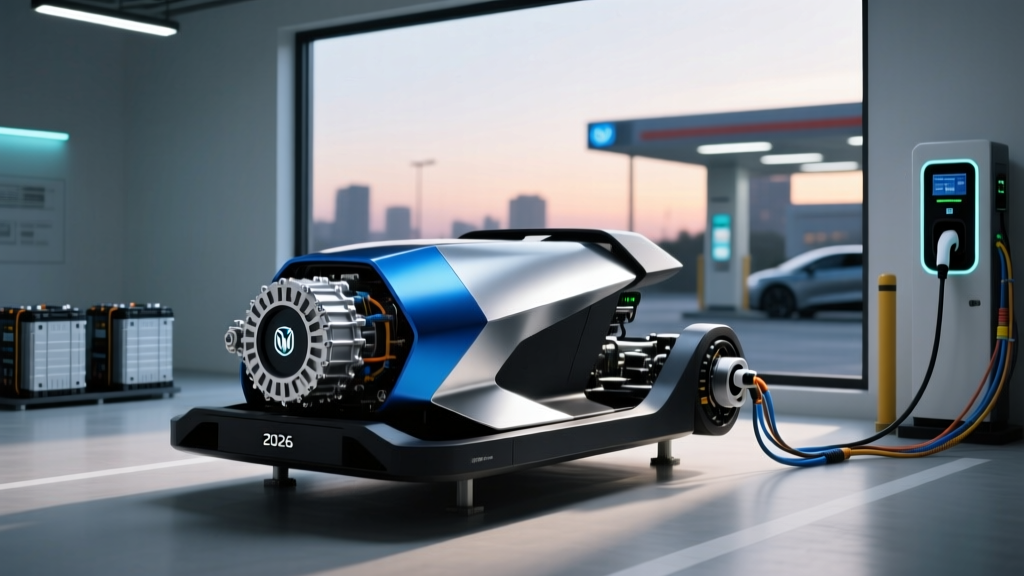
At its core, the system includes:
- Electric motor(s): Permanent-magnet or induction units derived from Ultium production, available in single or dual-motor configurations
- Inverter/controller: Manages power delivery between battery and motor, with programmable torque curves
- Battery pack: Ultium-based modules using NMC (nickel manganese cobalt) chemistry, configurable from approximately 60 kWh to 100+ kWh usable capacity
- Charging hardware: Onboard AC charger (typically 7.7–11.5 kW Level 2) and DC fast-charge capability (up to 150–190 kW peak depending on pack size)
- Software and displays: Controller interface, throttle mapping, and optional gauge-cluster integration
GM first signaled its eCrate ambitions with the Chevrolet Performance eCrate concept and the SEMA-showcased E-10 and El Camino EV conversions. By 2026, the production-oriented kits have matured, though availability remains limited and is primarily routed through authorized performance dealers and conversion partners.
GM eCrate Specs: Motor Output, Battery, and Charging
| Specification | Single Motor Kit | Dual Motor Kit |
|---|---|---|
| Motor Type | Permanent Magnet (rear) | Permanent Magnet (front + rear) |
| Peak Horsepower | ~200 HP | ~400 HP |
| Peak Torque | ~280 lb-ft | ~560 lb-ft |
| Battery Chemistry | NMC (Ultium modules) | NMC (Ultium modules) |
| Usable Battery Capacity | ~60 kWh | ~85–100 kWh |
| Estimated Range (light donor) | ~200–220 mi | ~230–260 mi |
| Level 2 AC Charging | 7.7 kW / ~25 mi/hr | 11.5 kW / ~37 mi/hr |
| DC Fast Charge Peak | ~150 kW | ~190 kW |
| 10–80% DCFC Time (est.) | ~28–32 min | ~25–30 min |
| Estimated System Weight | ~650–750 lbs | ~900–1,050 lbs |
| Estimated Kit Price (2026) | $30,000–$35,000 | $38,000–$45,000 |
Real-world range caveat: These range figures assume a lightweight donor vehicle (e.g., a 1960s–70s coupe or truck at 3,000–3,500 lbs curb weight) driven in mixed city/highway conditions. A heavier donor — say a full-size C10 pickup at 4,500+ lbs — will reduce range by 20–35%. Cold-weather driving (below 32°F) can further reduce range by 15–30% due to battery chemistry limitations and cabin heating loads, since most conversions lack the sophisticated heat-pump thermal management found in production EVs like the Blazer EV.
EPA vs. Reality: Crate motor conversions are not EPA-certified, so there is no official EPA range sticker. The estimates above are derived from kWh capacity divided by typical efficiency (250–350 Wh/mile for a classic car conversion). Expect real-world highway range at 70 mph to drop 15–25% versus city driving due to aerodynamic drag on non-optimized classic body shapes.
Total EV Swap Cost Breakdown: What You'll Actually Spend
The crate motor itself is only the starting point. Here's a realistic cost breakdown for a complete GM eCrate conversion in 2026:
| Cost Category | Low End | High End | Notes |
|---|---|---|---|
| GM eCrate Kit (motor + battery + controller) | $30,000 | $45,000 | Varies by single/dual motor and kWh |
| Conversion Labor | $15,000 | $30,000 | Fabrication, wiring, cooling, integration |
| Donor Vehicle | $5,000 | $25,000 | Depends on model, condition, rarity |
| Charging Hardware (home Level 2) | $500 | $2,500 | EVSE unit + electrician install |
| Brake/Suspension Upgrades | $2,000 | $6,000 | Added weight demands better stopping power |
| Registration & Inspection | $200 | $1,500 | State-dependent; some states require special EV registration |
| Total Project Cost | $52,700 | $110,000 | Most builds land in $55K–$75K range |
For context, a comparable-quality classic car with a professionally rebuilt LS V8 swap typically costs $35,000–$60,000 total (donor + engine + labor). The EV premium is real — roughly $15,000–$25,000 more than a gas restomod — but operating costs shift dramatically in the EV's favor once the car is on the road.
EV Conversion vs. Gas Engine Swap: Operating Cost Comparison
Where the GM electric crate motor makes its strongest financial case is in daily operating costs. Assuming you drive the converted vehicle 5,000 miles per year (typical for a classic/weekend car):
| Metric | GM eCrate EV Conversion | LS V8 Gas Swap |
|---|---|---|
| Fuel/Energy Cost per Mile | $0.04–$0.06 (home charging at $0.13/kWh) | $0.20–$0.25 (premium gas at $4.00/gal, 16–20 MPG) |
| Annual Fuel/Energy Cost (5,000 mi) | $200–$300 | $1,000–$1,250 |
| Annual Maintenance | $100–$300 (no oil, plugs, belts) | $500–$1,000 (oil changes, tune-ups, cooling system) |
| 5-Year Fuel + Maintenance | $1,500–$3,000 | $7,500–$11,250 |
| Drivetrain Complexity | Motor + single-speed reduction gear | Engine + transmission + exhaust + fuel system |
| Cold Start Reliability | Instant torque, no choke/warm-up | Carbureted: finicky; EFI: reliable |
| Emissions Testing | Exempt in most states | Required in many jurisdictions |
Over five years, the EV conversion saves approximately $5,000–$8,000 in fuel and maintenance versus a gas V8. That recoups roughly a third of the EV swap premium. The remaining gap is harder to justify purely on economics — this is where the intangible benefits (silent operation, instant torque, no exhaust fumes in the garage, novelty factor) enter the equation.
Real-World Ownership Considerations Before You Swap
Converting a classic car to electric is not the same as buying a production EV. Several ownership factors demand honest assessment:
Home Charging Access
You will need a Level 2 home charger (240V, 32–48 amps) to make daily use practical. A Level 2 station at 7.7 kW adds roughly 25 miles of range per hour of charging — adequate for overnight replenishment of a 60 kWh pack. Installation costs range from $800 to $2,500 depending on whether your electrical panel needs an upgrade to 200 amps. If you live in an apartment or lack dedicated parking, a crate motor conversion becomes far less practical. Public DC fast charging is available but relies on CCS or NACS connector compatibility — confirm your conversion shop installs the correct inlet.
Climate and Range Reality
NMC battery chemistry — the type used in Ultium-based eCrate modules — performs well in moderate temperatures but suffers in extremes. If you live in Minnesota or Montana, expect winter range to drop to 60–75% of the sticker estimate. Battery preconditioning (warming the pack before fast charging) is standard in production EVs but may or may not be implemented in a crate motor conversion depending on the installer's sophistication. Ask your builder explicitly about thermal management.
Insurance and Registration
Insuring an EV-converted classic is a developing area. Specialty insurers like Hagerty and American Modern will cover modified vehicles, but you'll need an agreed-value policy based on the total build cost. Expect annual premiums of $800–$2,000 depending on your driving record, stated value, and mileage limits. Registration as a converted EV varies by state — some require a special inspection, others simply reclassify the vehicle upon presentation of the electric motor documentation. Check with your state DMV before beginning the build.
Federal Tax Credit Eligibility
Here's a common misconception: the GM eCrate kit does NOT qualify for the §30D federal clean vehicle tax credit. That credit applies only to new, EPA-certified production vehicles purchased from an authorized dealer with specific MSRP caps ($55,000 for cars, $80,000 for trucks/SUVs), buyer income limits, and battery sourcing requirements. A crate motor installed in a classic car is an aftermarket conversion and falls outside these rules entirely. Some states offer separate incentives for EV conversions — California's Clean Transportation Program has occasionally included conversion rebates — but check your local jurisdiction for current availability.
Common Misconceptions About GM Electric Crate Motors
| Myth | Fact |
|---|---|
| "It's plug-and-play — just bolt it in." | EV conversions require custom motor mounts, battery enclosure fabrication, high-voltage wiring, cooling loops, and software integration. Professional installation is strongly recommended for safety. |
| "I'll get 300+ miles of range." | Even with a 100 kWh pack, a heavy classic car with poor aerodynamics will likely achieve 200–250 miles. Classic trucks may see 150–180 miles. Aerodynamic drag is the primary range killer at highway speed. |
| "The battery will need replacement in 5 years." | NMC Ultium modules are designed for 1,000+ charge cycles with ~80% capacity retention. At 5,000 miles/year, that's 20+ years of use before meaningful degradation. GM's production vehicles carry an 8-year/100,000-mile battery warranty, though crate kit warranty terms differ. |
| "I can fast-charge at any Tesla Supercharger." | Only if your conversion includes a NACS (North American Charging Standard) inlet. Most conversion shops default to CCS1. Adapters exist but add cost and complexity. |
| "It's cheaper than buying a new EV." | A complete eCrate conversion ($55K–$75K) costs more than a new Chevrolet Equinox EV ($33,000 MSRP) or a Hyundai Ioniq 5 ($42,000 MSRP). The swap makes sense for sentimental or collector vehicles, not as a budget EV pathway. |
Decision Framework: Is the GM eCrate Right for Your Build?
Choose the GM electric crate motor if:
- You have a sentimental classic car or truck you want to drive more often without gas-station dependency
- You have reliable home Level 2 charging and drive mostly within a 100-mile radius
- You value instant torque, silent operation, and zero tailpipe emissions in your garage
- Your project budget comfortably exceeds $55,000 and you view this as a passion project, not a cost-saving measure
- You want OEM-grade components with better long-term parts support than salvage-yard Tesla drivetrains
Stick with a gas or LS swap if:
- You regularly drive 300+ miles between stops or tow heavy loads with the vehicle
- You lack home charging access and live in an area with sparse DC fast-charging infrastructure
- Your total project budget is under $40,000
- The vehicle's collector value depends on matching-numbers originality or a period-correct drivetrain
- You want the sound, smell, and mechanical engagement of a V8 — these are valid preferences that an EV swap eliminates entirely
Consider a hybrid approach if:
- You want electric daily driving but gas-powered range for road trips — some builders are experimenting with range-extender setups using small generators, though these add complexity and are not yet mainstream in the crate motor market
Where to Source and Who Can Install
The GM eCrate system is distributed through Chevrolet Performance authorized dealers. Not all Chevy dealers stock or support eCrate components — you'll need to locate a dealer with an active EV performance parts desk or work through a conversion specialist.
Notable conversion shops with experience integrating OEM electric crate systems include EV West, Zero EV, and Moment Motor Co. Labor rates typically run $125–$200/hour, and a full conversion requires 120–250 shop hours depending on the donor vehicle's complexity. Ask any prospective installer for:
- A detailed written scope of work including battery enclosure crash safety
- High-voltage system documentation and emergency disconnect locations
- Warranty terms on both parts and labor (aim for at minimum 1 year/12,000 miles on workmanship)
- Proof of proper insurance for high-voltage work
Frequently Asked Questions
Can I install a GM electric crate motor myself?
Technically yes, if you have advanced fabrication skills, high-voltage electrical training, and access to a well-equipped shop. However, working with 400V battery systems carries lethal risk if mishandled. Most builders strongly recommend professional installation or, at minimum, professional consultation for the high-voltage portions of the build.
How long does a GM eCrate battery last?
Ultium-based NMC modules are engineered for approximately 1,000–1,500 full charge cycles while retaining 70–80% of original capacity. For a weekend-driven classic covering 5,000 miles annually, that translates to 20–30+ years before a noticeable range reduction. Replacement module costs are estimated at $150–$200 per kWh if individual modules need service, though full pack replacement would run $10,000–$20,000+ at current pricing.
Does the eCrate support regenerative braking?
Yes. The controller supports programmable regenerative braking, allowing you to tune the deceleration feel from mild (coasting like a gas car) to aggressive (one-pedal driving). Regenerative braking also reduces wear on the friction brakes, a meaningful benefit given the added weight of the battery pack.
What connector does the GM eCrate use — CCS or NACS?
GM has been transitioning its production lineup to NACS (the Tesla-originated standard now adopted industry-wide). The eCrate system is expected to ship with NACS compatibility on newer kits, though early production units may use CCS1. Confirm with your dealer or conversion shop which inlet is included, as this determines your public charging network access.
Is an EV-converted classic car street legal?
In most U.S. states, yes — but the process varies. Some states require a special inspection or reclassification from "gasoline" to "electric" on the title. A few states impose additional weight or safety requirements on modified vehicles. Consult your state DMV and your conversion shop for the specific pathway in your jurisdiction. The NHTSA does not regulate aftermarket conversions at the federal level; this is a state-level process.