The Short Answer on GM Affordable 400 Mile Electric Trucks
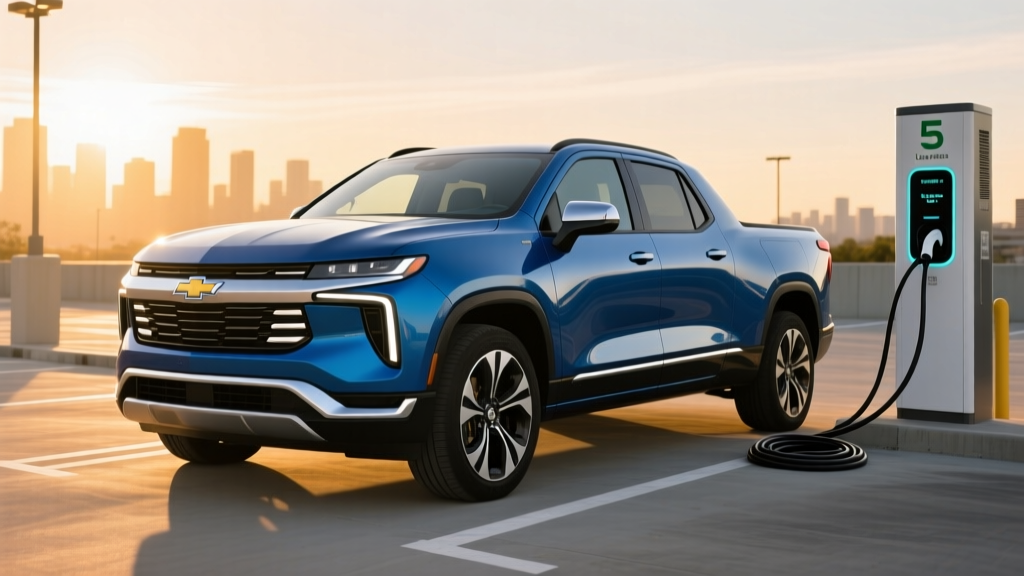
As of the 2026 model year, GM's closest offering to an affordable 400-mile electric truck is the Chevrolet Silverado EV 4WT (Work Truck) with the larger Ultium battery pack, carrying an EPA-estimated range of up to 400 miles and a starting MSRP around $59,900 before incentives. For buyers seeking a sub-$50,000 entry point, the Silverado EV fleet-oriented trims and upcoming consumer LT trims target the mid-$50,000s, though achieving 400 miles at that price point requires stepping up to the extended-range battery. The RST First Edition (MSRP ~$105,000) also hits 400+ miles but is far from "affordable." Below, we break down exactly what GM offers, what the real-world range looks like, and whether the numbers pencil out versus a gas Silverado.
Silverado EV Range, Battery, and Efficiency: The Numbers
The Chevrolet Silverado EV rides on GM's Ultium platform with a dual-motor AWD layout across most trims. The extended-range battery pack delivers a usable capacity of approximately 200 kWh (GM's largest Ultium pack), while the standard-range pack offers roughly 115 kWh usable.
| Spec | Silverado EV 4WT (Std Range) | Silverado EV 4WT (Max Range) | Silverado EV RST |
|---|---|---|---|
| EPA Range | ~240 mi | ~400 mi | ~400 mi |
| Battery (Usable) | ~115 kWh (NMC) | ~200 kWh (NMC) | ~200 kWh (NMC) |
| Horsepower | 510 hp | 645 hp | 664 hp |
| 0–60 mph | ~5.4 sec | ~4.5 sec | ~4.5 sec |
| Max DC Fast Charge | ~200 kW | ~350 kW | ~350 kW |
| 10–80% DC Charge | ~35 min | ~30 min (peak curve) | ~30 min |
| Level 2 (240V) Rate | 11.5 kW (~27 mi/hr) | 19.2 kW (~45 mi/hr) | 19.2 kW (~45 mi/hr) |
| Towing Capacity | 8,000 lb | 10,000 lb | 10,000 lb |
| Base MSRP (2026) | ~$39,900 (fleet) | ~$59,900 | ~$105,000 |
Real-World Range Reality Check
The EPA 400-mile figure applies to mixed city/highway driving in moderate temperatures. Expect ~310–340 miles on a flat highway at 70 mph, and ~250–280 miles in cold weather (below 32°F) due to cabin heating demands and reduced battery efficiency. If you're towing near max capacity, range can drop to 150–200 miles depending on trailer weight and aerodynamics. These are physics — heavy vehicles moving at speed consume energy at a steep rate regardless of powertrain.
Charging the Silverado EV: Home and Public Networks
Charging a 200 kWh battery is where ownership logistics matter most. At a Level 2 home charger rated at 19.2 kW, a full charge from 10% to 100% takes roughly 10 hours — feasible overnight. On a standard 120V Level 1 outlet (~1.4 kW), that same charge would take over 5 days, making Level 1 impractical as a primary strategy for this truck.
| Charging Level | Power (kW) | Miles Added per Hour | Full Charge Time (10–100%) |
|---|---|---|---|
| Level 1 (120V) | 1.4 kW | ~3 mi/hr | ~135 hours |
| Level 2 (240V, 48A) | 11.5 kW | ~27 mi/hr | ~17 hours |
| Level 2 (240V, 80A) | 19.2 kW | ~45 mi/hr | ~10 hours |
| DC Fast (350 kW peak) | Up to 350 kW | ~800+ mi/hr (peak) | 10–80% in ~30 min |
On the road, the Silverado EV's 800V architecture enables DC fast charging at up to 350 kW on capable Electrify America or EVgo stations. However, charging curves taper significantly above 80% State of Charge (SoC). Expect to spend ~30 minutes getting from 10% to 80%, but an additional 25–35 minutes for the final 20% if you need a full pack. For road trips, plan stops around the 10–80% window to minimize downtime.
Home charging installation for an 80A Level 2 circuit typically requires a 100A breaker and potentially a panel upgrade if your home has a 100A or 150A service panel. Budget $1,500–$3,500 for the full installation (charger + electrician + permit), or $5,000–$8,000+ if a panel upgrade to 200A is needed. Always get a quote from a licensed electrician before committing.
Silverado EV vs. Gas Silverado: Cost of Ownership Breakdown
The purchase price of a Silverado EV Max Range (~$59,900) is significantly higher than a base gas Silverado 1500 WT (MSRP ~$38,700). But total cost of ownership (TCO) narrows the gap over time, especially with federal incentives and lower fueling costs.
| Cost Factor (5-Year / 75,000 mi) | Silverado EV 4WT Max Range | Silverado 1500 Gas (V8 4WD) |
|---|---|---|
| Purchase Price (MSRP) | $59,900 | $38,700 |
| Est. Federal Tax Credit (§30D) | Up to $7,500* | $0 |
| Effective Purchase Price | ~$52,400 | $38,700 |
| Fuel / Electricity (75k mi) | ~$4,500 (home charging @ $0.15/kWh) | ~$11,250 (19 MPG avg @ $3.80/gal) |
| Maintenance (5 yr) | ~$1,800 | ~$4,500 |
| Insurance (est. avg/yr) | ~$2,400/yr ($12,000 total) | ~$1,900/yr ($9,500 total) |
| Total 5-Year Cost | ~$70,700 | ~$63,950 |
*Federal §30D tax credit eligibility depends on MSRP caps ($80,000 for trucks/vans/SUVs), buyer income limits ($150k single / $300k joint), and battery component/critical mineral sourcing requirements. Check current rules at IRS.gov. The credit can be transferred at point of sale as a discount.
The EV saves roughly $6,750 in fueling and maintenance over five years, but the higher purchase price and insurance premiums keep the TCO about $6,750 higher than the gas truck. The gap closes further if you factor in state incentives, time-of-use electricity rates (charging overnight at $0.08–$0.10/kWh), or higher annual mileage. At 15,000 miles/year or more, the EV's fueling advantage compounds significantly.
Tax Credits and Incentives: What Actually Applies in 2026
For the Silverado EV, the §30D federal tax credit offers up to $7,500, split between two components:
- $3,750 if battery components meet North American manufacturing thresholds
- $3,750 if critical minerals are sourced from the U.S. or free-trade-agreement partners
GM's Ultium batteries are assembled in the U.S. (Lansing, MI and Spring Hill, TN plants), and GM has been actively reshoring critical mineral supply chains. However, the exact credit amount varies by model year and production batch. Always verify eligibility at the point of sale — dealers must provide the IRS-required seller report confirming the vehicle qualifies.
§30D Credit Checklist for Silverado EV Buyers
- Vehicle MSRP must be ≤ $80,000 (trucks, vans, SUVs)
- Buyer modified AGI ≤ $150,000 (single) / $225,000 (head of household) / $300,000 (joint)
- Vehicle must be assembled in North America (Silverado EV: yes — Factory ZERO, Detroit)
- Battery components and critical minerals must meet 2026 sourcing thresholds
- Credit can be applied as a point-of-sale rebate or claimed on your tax return
- Confirm via the IRS VIN-lookup tool and your tax professional
Some states offer additional rebates (e.g., California's CVRP, Colorado's innovative motor vehicle credits), but these vary by jurisdiction and funding availability. Check your state's energy office or fueleconomy.gov for current incentive data.
Common Misconceptions About Electric Trucks
| Myth | Fact |
|---|---|
| "Electric trucks can't tow." | The Silverado EV tows up to 10,000 lb — comparable to many gas half-tons. But towing near max capacity cuts range by 50–60%, requiring more frequent charging stops on long hauls. |
| "400 miles means 400 miles no matter what." | EPA estimates assume mixed driving at moderate temps. Highway driving at 75+ mph, cold weather, and elevation changes all reduce range. Real-world highway: ~310–340 mi. Cold weather: ~250–280 mi. |
| "Charging takes too long for road trips." | A 10–80% DC fast charge takes ~30 minutes at a 350 kW station. Combined with a meal or restroom break, it adds ~15–20 min of net downtime per stop on a long trip vs. a gas fill-up. |
| "The battery will need expensive replacement soon." | GM warranties the Ultium battery for 8 years/100,000 miles with a capacity retention threshold of ≥70%. Industry data shows NMC packs typically retain 85–90% capacity at 100k miles under normal use. |
| "I can't charge at home." | Most single-family homeowners can install Level 2 charging. Renters and condo dwellers face more hurdles — check with your property manager or explore workplace and public charging options. |
Battery Longevity and Warranty: What 200 kWh Means Over Time
The Silverado EV uses NMC (nickel manganese cobalt) chemistry in its Ultium packs, chosen for high energy density to achieve 400 miles in a truck-sized vehicle. NMC packs historically show moderate degradation — expect roughly 8–12% capacity loss over the first 100,000 miles based on industry data from similar large-format packs.
GM's battery warranty guarantees at least 70% capacity retention over 8 years / 100,000 miles (whichever comes first). The powertrain (motors, power electronics) is also covered for the same period. Out of warranty, a full battery pack replacement for a 200 kWh system would be extremely expensive — estimated at $25,000–$40,000+ based on current Ultium cell costs — but full replacements are rare. Module-level repairs are more common and more affordable.
To maximize battery life: avoid routinely charging to 100% (set daily limit to 80–90%), use preconditioning before DC fast charging (the truck does this automatically when you navigate to a charger), and minimize prolonged exposure to extreme heat with a full pack.
Decision Framework: Should You Buy the Silverado EV?
Choose the Silverado EV If:
- You have access to Level 2 home charging (garage or driveway with 240V circuit)
- You drive 200+ miles/day and want to eliminate gas costs on a high-mileage commute
- You value instant torque (510–664 hp) and a low center of gravity for on-road manners
- You qualify for the full $7,500 federal credit and possibly state incentives
- You tow occasionally but not daily long-distance (under 200 mi round trips)
- You want the latest tech: 17.7-inch infotainment screen, Super Cruise (Level 2 hands-free on mapped highways), and V2L capability
Stick With a Gas or Hybrid Silverado If:
- You lack reliable home or workplace charging access
- You regularly tow heavy loads over 200+ miles (charging stops every 2 hours gets old fast)
- Your budget tops out below $45,000 and you need a new truck now
- You live in a region with extreme cold (-20°F or below) and high daily mileage needs
- You prefer the simplicity and established dealer service network for conventional powertrains
Frequently Asked Questions
Does the Silverado EV qualify for the full $7,500 federal tax credit?
It depends on the specific model year, trim, and your income. The Silverado EV is assembled at GM's Factory ZERO in Detroit (meeting North American assembly rules), and GM has been working to meet critical-mineral sourcing thresholds. However, the exact credit amount can vary. Verify with the dealer's point-of-sale credit tool and cross-reference at IRS.gov. Income caps apply: $150k single / $300k joint filers.
How does the Silverado EV compare to the Ford F-150 Lightning and Rivian R1T?
The F-150 Lightning (extended range) offers ~320 miles EPA at ~$59,995 MSRP, making it slightly less range but similarly priced. The Rivian R1T Dual-Motor Max starts around $89,000 with ~352 miles EPA. The Silverado EV Max Range offers the longest EPA range of the three at a competitive price point, but availability has been more limited to fleet buyers initially. Consumer trims are expanding for 2026.
Can I use the Silverado EV to power my home or tools?
Yes. The Silverado EV supports V2L (Vehicle-to-Load) via outlets in the bed and cabin, providing up to 9.6 kW of exportable power — enough to run power tools, appliances, or even a home during an outage when paired with a compatible bidirectional charger (V2H). GM has partnered with energy companies to enable V2H capability, though the home integration equipment adds cost ($3,000–$6,000 installed).
What's the real charging cost per mile?
At a national average residential electricity rate of ~$0.16/kWh and the Silverado EV's efficiency of roughly 48 kWh/100 mi (mixed driving), you're paying about $0.077 per mile on home charging. Compare that to a gas Silverado 1500 V8 at 19 MPG combined and $3.80/gallon: $0.20 per mile. Public DC fast charging at $0.35–$0.50/kWh raises EV costs to $0.17–$0.24/mi, narrowing the advantage on road trips.
Is the 200 kWh battery safe?
The Ultium platform uses a cell-to-pack architecture with individual cell isolation and advanced thermal management. GM has conducted extensive crash and thermal runaway testing. The Silverado EV has not yet been rated by NHTSA or IIHS as of early 2026, but the platform's design prioritizes post-crash electrical safety. Check NHTSA.gov for updated crash test results as they become available.
Will GM release a more affordable Silverado EV trim?
GM has announced plans for a broader consumer lineup including LT trims targeting the mid-$50,000 range, but these will likely come with the standard-range (~240 mi) battery. Achieving both 400 miles and a sub-$50,000 price point in a full-size truck remains a battery-cost challenge industry-wide. As Ultium cell costs decline and LFP chemistry potentially enters the truck segment, more affordable long-range options may emerge in the 2027–2028 timeframe.