Quick Answer: Is the 2026 Mercedes-Benz GLC Electric Worth It?
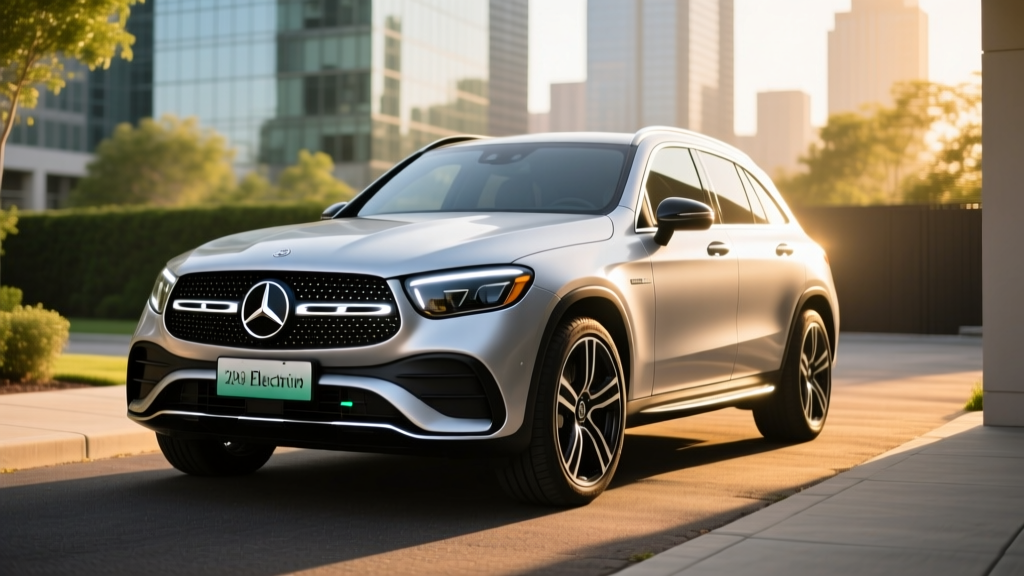
The 2026 Mercedes-Benz GLC EV (officially the GLC with EQ Technology) is Mercedes' all-electric successor to the popular GLC SUV, built on the new MB.EA platform with 800-volt architecture, an estimated 85–95 kWh usable NMC battery, and a targeted EPA range of approximately 295–320 miles. Starting MSRP is expected near $62,000–$65,000 for the GLC 350 4MATIC trim, rising to roughly $72,000+ for the AMG-lite GLC 43 variant. DC fast charging peaks around 220–250 kW, enabling a 10–80% charge in approximately 20–22 minutes under ideal conditions. Federal §30D tax credit eligibility remains uncertain at launch due to battery-sourcing requirements — expect to verify eligibility at point of sale.
What Exactly Is the 2026 GLC Electric?
Mercedes-Benz has been consolidating its EV naming strategy, and the 2026 GLC EV sits in the most important luxury compact SUV segment. Unlike the older EQC (which was discontinued in the U.S. after limited availability), this model rides on the dedicated MB.EA (Mercedes-Benz Electric Architecture) platform — not a modified ICE chassis. That distinction matters: dedicated EV platforms yield better interior packaging, lower centers of gravity, and more efficient thermal management.
The 2026 GLC EV slots between the smaller GLA/EQA equivalents and the larger GLE/EQE SUV lineup. It competes directly with the BMW iX3 (next-gen), Audi Q6 e-tron, Tesla Model Y, Genesis GV70 Electrified, and the Porsche Macan Electric.
| Spec | GLC 350 4MATIC (Est.) | GLC 43 4MATIC (Est.) |
|---|---|---|
| Battery (usable) | ~89 kWh NMC | ~89 kWh NMC |
| EPA Range | ~310 mi | ~285 mi |
| Horsepower | ~335 hp | ~450 hp |
| 0–60 mph | ~5.8 sec | ~4.5 sec |
| Peak DC Charge Rate | ~220 kW | ~250 kW |
| 10–80% DC Time | ~22 min | ~20 min |
| Level 2 (AC) Rate | 11 kW | 11 kW |
| Drivetrain | Dual-motor AWD | Dual-motor AWD |
| Starting MSRP | ~$63,000 | ~$72,000 |
| Battery Warranty | 8 yr / 100,000 mi | 8 yr / 100,000 mi |
Note: Specifications are preliminary estimates based on Mercedes-Benz announcements and MB.EA platform data. Final EPA certifications may differ. Source: Mercedes-Benz.
Real-World Range vs. EPA Sticker: What to Actually Expect
The EPA range figure is a laboratory-derived estimate. In practice, your mileage will vary based on speed, temperature, terrain, and climate control usage. Here's a realistic reconciliation for the GLC 350 4MATIC with an estimated 310-mile EPA rating:
Range Reality Check
- EPA Sticker: ~310 miles
- Mixed real-world driving (55–70 mph, moderate climate): ~270–290 miles
- Sustained highway (75+ mph): ~240–265 miles
- Cold weather (below 32°F, cabin heat on): ~210–245 miles (30–35% loss is typical for NMC packs without aggressive preconditioning)
- Optimal conditions (city/regen-heavy, 50–65 mph, mild temps): ~300–320 miles
Mercedes equips the MB.EA platform with a heat pump as standard equipment, which mitigates cold-weather losses compared to resistive heating. However, NMC chemistry inherently loses more range in freezing temperatures than LFP alternatives. If you live in a region with harsh winters, budget for a 25–35% range reduction from December through February.
The 800V architecture also enables more efficient power delivery and reduced heat generation during sustained high-speed driving — an advantage over 400V competitors like the current Genesis GV70 Electrified.
Charging Speed & Infrastructure: The 800V Advantage
Charging speed is where the 2026 GLC EV's 800-volt architecture pays tangible dividends. Here's what to expect across charging levels:
| Level | Power | Miles Added/Hour | Typical Use Case |
|---|---|---|---|
| Level 1 (120V) | ~1.4 kW | ~4–5 mi/hr | Emergency / overnight trickle |
| Level 2 (240V, 48A) | 11 kW | ~35–40 mi/hr | Home daily charging (full charge in ~9 hrs) |
| DC Fast (150 kW station) | ~150 kW | ~400+ mi/hr | Public road-trip charging |
| DC Fast (350 kW station) | ~220–250 kW peak | ~550+ mi/hr | 10–80% in ~20–22 min |
Understanding kW vs. kWh: kW (kilowatts) measures power — how fast energy flows into the battery. kWh (kilowatt-hours) measures energy capacity — the total "fuel tank" size. A 220 kW charge rate filling an 89 kWh battery is analogous to a high-flow pump filling a 20-gallon tank quickly.
Charge curve reality: The GLC EV will not sustain 220–250 kW for the entire session. Like all EVs, charge speed peaks between roughly 10–40% State of Charge (SoC), then progressively tapers. Expect the 40–80% portion to average closer to 120–160 kW. Above 80%, charging slows dramatically to protect battery longevity — a 80–100% top-off can add 15–25 additional minutes. For road trips, plan stops at 10–80% for optimal time efficiency.
The GLC EV will use the NACS (North American Charging Standard) connector, giving it native access to Tesla's Supercharger network — currently the most reliable DC fast-charging network in the U.S. with over 25,000 stalls. This is a significant practical advantage over CCS-only vehicles that must rely on Electrify America, EVgo, or other networks with more variable uptime.
Cost Breakdown: Purchase, Charging, and 5-Year Ownership
Luxury EVs carry premium sticker prices, but the total cost of ownership (TCO) story is more nuanced. Here's a 5-year comparison between the 2026 GLC EV and its gas counterpart, the GLC 300 4MATIC:
| Cost Category | 2026 GLC EV (350 4MATIC) | 2026 GLC 300 4MATIC (Gas) |
|---|---|---|
| Base MSRP | ~$63,000 | ~$49,500 |
| Federal Tax Credit (§30D) | $0–$7,500* | $0 |
| Effective Purchase Price | ~$55,500–$63,000 | ~$49,500 |
| 5-Year Fuel/Energy (60,000 mi) | ~$3,800–$5,200** | ~$8,400–$9,800 |
| 5-Year Maintenance | ~$1,200–$1,800 | ~$3,000–$4,200 |
| 5-Year Insurance (avg.) | ~$11,000–$13,500 | ~$8,500–$10,500 |
| Estimated Depreciation (5yr) | ~$28,000–$33,000 | ~$22,000–$26,000 |
| 5-Year Total Cost | ~$99,500–$116,500 | ~$91,400–$100,500 |
*§30D credit eligibility depends on battery sourcing, MSRP caps ($80,000 for SUVs), and buyer income limits ($300K MFJ / $150K single). Verify at IRS.gov.
**Electricity cost assumes $0.14–$0.18/kWh home charging mix; public DC fast charging at $0.35–$0.50/kWh increases costs significantly. Gas assumes $3.50–$4.10/gal at 25 MPG combined. Source: fueleconomy.gov.
Key takeaways from the numbers:
- Energy savings are real but not transformative at luxury price points. You'll save roughly $3,500–$5,000 on fuel over 5 years with home charging.
- Maintenance savings are meaningful: No oil changes, fewer brake replacements (regenerative braking extends pad life 2–3x), no transmission fluid, no spark plugs.
- Insurance costs more: EVs typically carry 15–25% higher premiums due to repair complexity and battery replacement costs. Get quotes before purchasing.
- Depreciation is the wildcard: Luxury EVs have depreciated faster than gas equivalents in 2023–2025. The MB.EA platform and NACS adoption may help, but plan conservatively.
EV vs. Gas vs. Hybrid: Where Does the GLC EV Fit?
| Factor | GLC EV | GLC 300 (Gas) | GLC 350e (PHEV) |
|---|---|---|---|
| EPA Range / Total | ~310 mi | ~380 mi (15.4 gal tank) | ~48 mi electric + ~340 mi gas |
| Efficiency | ~95 MPGe / 3.1 kWh/mi | ~26 MPG combined | ~58 MPGe (elec) / 25 MPG (gas) |
| Refuel/Recharge Time | 10–80% in ~22 min (DC) | ~5 min at pump | ~4 hrs (Level 2) / 5 min (gas) |
| Home Fueling | Yes — wake up "full" daily | No | Yes (electric portion) |
| Road Trip Ease | Good (NACS/Supercharger) | Excellent | Excellent (gas backup) |
| Cold-Weather Impact | 25–35% range loss | Minimal | Moderate (electric portion) |
| Tax Credit Eligibility | $0–$7,500 | $0 | $0–$3,750 |
| Best For | Home chargers, daily commutes, tech-forward buyers | High-mileage road trippers, no home charging | Short commutes + occasional long trips |
The GLC 350e plug-in hybrid deserves serious consideration if you lack reliable home charging or frequently drive in extreme cold. Its ~48-mile electric range covers most daily commutes, and the gas engine eliminates range anxiety entirely. The trade-off: you maintain two powertrains (oil changes, transmission service, plus battery care), and the PHEV is heavier, reducing overall efficiency once the battery depletes.
First-Time EV Buyer: What You Must Know Before Signing
Common Misconceptions vs. Reality
| Myth | Fact |
|---|---|
| "The battery will need replacing in 5 years" | NMC batteries on the MB.EA platform are warranted for 8 years/100,000 miles at ≥70% capacity retention. Real-world data from similar platforms shows ~8–12% degradation at 100K miles. |
| "I can charge anywhere in 15 minutes" | 10–80% takes ~20–22 min at a 350 kW-capable station. Many public chargers deliver 50–150 kW, extending charge times to 30–50+ min. |
| "EVs are always cheaper to own" | At luxury price points, higher insurance, potential faster depreciation, and upfront cost can negate fuel savings over 5 years. TCO parity is more realistic at 7+ years. |
| "The $7,500 tax credit applies to everyone" | §30D has income caps ($150K single / $300K MFJ), MSRP caps ($80K SUVs), and battery-sourcing requirements that eliminate some models. Always verify on fueleconomy.gov. |
| "Autonomous driving is standard" | The GLC EV's driver-assistance suite is SAE Level 2 — you must remain attentive with hands on or near the wheel at all times. It is not self-driving. |
SAE Automation Level: What the GLC EV Actually Offers
Mercedes' latest Drive Pilot system on the MB.EA platform operates as SAE Level 2 in the U.S. (combined steering + acceleration/braking assistance with driver supervision required). While Mercedes has received Level 3 certification in limited jurisdictions (Nevada, California) for low-speed highway traffic jam assist (up to 40 mph, specific conditions), the vast majority of driving scenarios require full driver engagement. This is fundamentally different from Level 4 robotaxi services like Waymo, which operate without any human driver in defined zones.
Home Charging: The Non-Negotiable Setup
If you cannot install a Level 2 home charger, reconsider EV ownership — or look at the PHEV instead. Here's what a home installation involves:
| Component | Cost Range | Notes |
|---|---|---|
| Level 2 EVSE (hardwired, 48A) | $500–$900 | Mercedes Wallbox or third-party (ChargePoint, Emporia, Wallbox Pulsar) |
| Electrician labor (240V/60A circuit) | $800–$2,500 | Depends on panel proximity, conduit run, local rates |
| Electrical panel upgrade (if needed) | $1,500–$3,500 | Required if your panel is 100A or fully loaded |
| Permit & inspection | $100–$400 | Varies by municipality |
| Total (no panel upgrade) | $1,400–$3,800 | Most homes with 200A service |
| Total (with panel upgrade) | $2,900–$7,300 | Older homes or high-load panels |
Always get a quote from a licensed electrician. Some utilities offer rebates of $250–$1,000 for EVSE installation. The federal §30C credit covers up to $1,000 of home charging equipment installation through 2032.
Decision Framework: Should You Buy the 2026 GLC Electric?
Choose the GLC EV If:
- ✅ You have (or can install) Level 2 home charging on a 200A panel
- ✅ Your daily commute is under 80 miles round-trip
- ✅ You take road trips 3–6 times per year and can plan 20-minute DC fast-charging stops
- ✅ You value the NACS connector and Tesla Supercharger access
- ✅ You live in a moderate climate, or accept cold-weather range reduction
- ✅ Your household income is under §30D caps and you want to pursue the tax credit
Choose the GLC 350e PHEV Instead If:
- ❌ You live in an apartment or lack home charging access
- ❌ You regularly drive 300+ miles in a single day without time for charging stops
- ❌ You live in a region with extreme winters (below 0°F regularly) and need maximum range predictability
- ❌ Your area has limited DC fast-charging infrastructure
Choose the Gas GLC 300 If:
- ❌ You want the lowest upfront cost and simplest ownership
- ❌ You drive 20,000+ miles/year mostly on highways where EV efficiency drops
- ❌ You plan to keep the vehicle under 4 years (depreciation risk is lower on proven ICE models)
Tax Credit Eligibility Checklist (§30D — 2026 Rules)
- Vehicle MSRP cap: SUVs must be ≤$80,000. The GLC 350 4MATIC (~$63K) qualifies on price; a fully loaded GLC 43 may approach the cap with options.
- Buyer income cap: Modified AGI ≤$300,000 (married filing jointly), ≤$225,000 (head of household), ≤$150,000 (single).
- Battery sourcing: A percentage of critical minerals and battery components must be sourced from the U.S. or free-trade-agreement countries. These thresholds increase annually. Mercedes has not confirmed full compliance for 2026 — check the official list at fueleconomy.gov before purchasing.
- Point-of-sale transfer: You can transfer the credit to the dealer at purchase, reducing your out-of-pocket cost immediately rather than waiting for tax filing.
- VIN verification: The dealer must report the VIN to the IRS at time of sale. Confirm eligibility before signing.
Frequently Asked Questions
What is the real-world range of the 2026 Mercedes-Benz GLC EV?
The estimated EPA range is approximately 310 miles for the GLC 350 4MATIC. In real-world mixed driving, expect 270–290 miles. Sustained highway driving at 75+ mph drops this to 240–265 miles, and cold weather (below 32°F) can reduce range to 210–245 miles. The onboard heat pump helps mitigate winter losses compared to older EVs with resistive heating.
How long does it take to charge the GLC EV at home?
On a Level 2 home charger (11 kW / 48A), a full 0–100% charge takes approximately 9 hours. Most owners plug in overnight and wake up to a full battery every morning. Daily driving of 40–60 miles requires only 2–3 hours of Level 2 charging to replenish.
Does the GLC EV qualify for the $7,500 federal tax credit?
Eligibility under §30D depends on three factors: the buyer's income (must be under caps), the vehicle MSRP (must be ≤$80,000 for SUVs), and battery-component/critical-mineral sourcing (which changes annually). As of early 2026, Mercedes has not publicly confirmed full sourcing compliance. Verify the specific VIN's eligibility on fueleconomy.gov and with your dealer before purchase.
Is the GLC EV self-driving?
No. The GLC EV's driver-assistance systems are SAE Level 2, meaning they provide combined steering and speed assistance but require continuous driver supervision. Mercedes' Drive Pilot Level 3 system (conditional hands-off in specific low-speed traffic scenarios) is available only in limited U.S. jurisdictions under strict conditions. You are always responsible for the vehicle.
What happens if the battery degrades?
Mercedes warranties the high-voltage battery for 8 years or 100,000 miles against capacity loss below 70%. Based on data from similar NMC packs in the EQE and EQS, expect approximately 8–12% degradation at 100,000 miles under normal use. A full battery replacement outside warranty, if ever needed, would likely cost $12,000–$18,000 based on current luxury EV battery pricing — though individual module replacement may be possible at lower cost.
How does the GLC EV compare to the Tesla Model Y?
The Model Y Long Range (~$48,000, ~320 miles EPA) offers similar range at roughly $15,000 less, with access to the same Supercharger network. However, the GLC EV delivers a markedly more luxurious interior, superior ride quality, quieter cabin, and Mercedes' dealer/service network. The Model Y is the value and efficiency leader; the GLC EV is the luxury refinement choice. They serve different buyer priorities in the same segment.