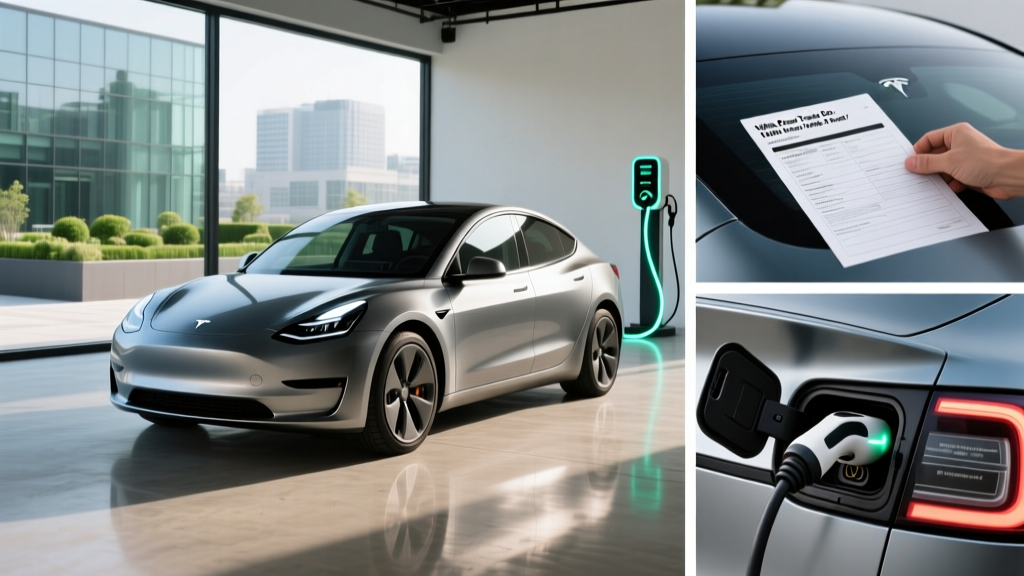
The Georgia EV Tax Credit Reality for 2026
If you're shopping for an electric vehicle in Georgia and searching for a "GA EV tax credit," here's the honest answer up front: Georgia does not currently offer a state-level tax credit or rebate for purchasing a new or used electric vehicle. The state's previous $2,500 EV tax credit was eliminated years ago, and as of 2026, no replacement legislation has passed.
That doesn't mean Georgia EV buyers are out of luck on incentives. The federal IRS §30D Clean Vehicle Credit remains available for qualifying vehicles and buyers, and several Georgia utilities offer meaningful rebates for home charger installation and EV adoption. The key is knowing exactly what you qualify for — and understanding the true 5-year cost of EV ownership beyond the sticker price.
This guide breaks down every incentive available to Georgia EV buyers in 2026, then runs the real numbers on charging, maintenance, insurance, and depreciation so you can decide whether going electric in the Peach State makes financial sense.
Federal §30D Tax Credit: What Georgia Buyers Can Actually Claim
The federal Clean Vehicle Credit under IRS §30D offers up to $7,500 for new EVs and up to $4,000 for used EVs. But eligibility depends on a stack of requirements that eliminate many vehicles and buyers. Here's the full checklist as of the 2026 tax year:
New EV Credit (§30D) — Up to $7,500
- Buyer income caps: Modified AGI ≤ $150,000 (single), ≤ $225,000 (head of household), ≤ $300,000 (joint)
- MSRP caps: Vans/pickups/SUVs ≤ $80,000; sedans/other ≤ $55,000
- Battery sourcing: Credit splits into two halves — $3,750 for critical-minerals sourcing + $3,750 for battery-component manufacturing. Both requirements tighten annually.
- Final assembly: Vehicle must undergo final assembly in North America
- Point-of-sale transfer: As of 2024, you can transfer the credit to the dealer at purchase, reducing your out-of-pocket cost immediately rather than waiting for tax filing
- Vehicle weight: Gross vehicle weight rating (GVWR) under 14,000 lbs
Used EV Credit (§25E) — Up to $4,000
- Buyer income caps: Modified AGI ≤ $75,000 (single), ≤ $112,500 (head of household), ≤ $150,000 (joint)
- Vehicle price cap: Sale price ≤ $25,000
- Vehicle age: Model year at least 2 years older than calendar year (for 2026 purchase: 2024 or older)
- Credit amount: 30% of sale price, capped at $4,000
- Dealer requirement: Must purchase from a licensed dealer, not private party
Critical caveat: Battery-sourcing and critical-mineral requirements have tightened significantly since the credit was restructured. Many popular EVs from manufacturers relying on non-qualifying supply chains now only qualify for $3,750 (half credit) or nothing at all. Always verify a specific VIN's eligibility on fueleconomy.gov before committing to a purchase.
Georgia Utility Rebates & Local Incentives
While the state of Georgia doesn't offer a direct EV tax credit, several investor-owned utilities and electric membership corporations (EMCs) in Georgia provide rebates that meaningfully offset ownership costs:
Georgia Utility EV Rebates (2026)
Note: Utility incentive programs change frequently. Confirm current availability and amounts directly with your provider before relying on these figures.
- Georgia Power: Has historically offered rebates for Level 2 home charger installation and time-of-use (TOU) charging rates that reduce electricity costs for overnight charging. Check current program availability at georgiapower.com.
- Electric Membership Corporations (EMCs): Several Georgia EMCs (e.g., Cobb EMC, Jackson EMC, Walton EMC) have periodically offered $250–$500 rebates for EV purchase or Level 2 charger installation. Programs vary by cooperative.
- HOV lane access: Georgia previously offered free HOV lane access for EVs via special license plates, but this program has been modified. Check current Georgia DOT rules for alternative-fuel vehicle lane access.
- No state EV registration surcharge: Unlike some states that impose $200+ annual fees on EVs to offset lost gas tax revenue, Georgia's EV registration fee structure is relatively moderate — but confirm current annual fees with the Georgia Department of Revenue.
5-Year Total Cost of Ownership: EV vs. Gas in Georgia
Incentives matter, but the real financial story is what you'll spend over five years of driving. Let's compare a representative 2026 EV against a comparable gas vehicle, using Georgia-specific electricity and fuel prices.
Comparison vehicles:
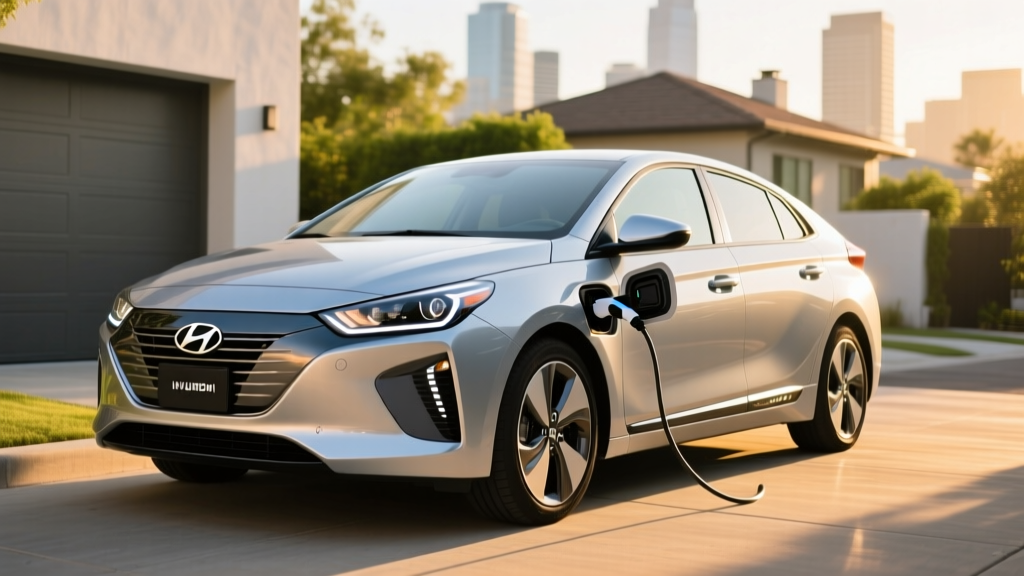
- EV: 2026 Hyundai Ioniq 6 SEL — 342 mi EPA range, 77.4 kWh battery (NMC), 161 kW peak DC charging, 225 hp, ~$42,500 MSRP
- Gas baseline: 2026 Honda Accord Sport — 2.0T, 252 hp, 30 MPG combined EPA, ~$33,000 MSRP
5-Year Total Cost of Ownership (15,000 miles/year, 75,000 total miles)
| Cost Category | 2026 Hyundai Ioniq 6 SEL (EV) | 2026 Honda Accord Sport (Gas) |
|---|---|---|
| Purchase Price (MSRP) | $42,500 | $33,000 |
| Federal Tax Credit (§30D) | −$7,500 (if eligible) | $0 |
| Effective Purchase Price | $35,000 | $33,000 |
| Georgia Sales Tax (~4% state + local avg ~7% total) | $2,975 | $2,310 |
| Fuel/Energy (75,000 mi) | $4,688 (see math below) | $8,125 (see math below) |
| Maintenance (5 years) | $1,800 | $4,200 |
| Insurance (5 years) | $10,500 | $7,800 |
| Depreciation (5-year loss) | $18,200 | $13,500 |
| Total 5-Year Cost | $73,163 | $68,935 |
| Cost Per Mile | $0.975/mi | $0.919/mi |
Key takeaway: Even with the full $7,500 federal credit, the EV costs roughly $4,200 more over 5 years in this comparison — driven primarily by higher insurance premiums and steeper depreciation. However, this gap narrows significantly if you qualify for additional utility rebates, drive more miles annually (amplifying fuel savings), or keep the vehicle beyond 5 years (where maintenance savings compound).
Charging vs. Gas: The Per-Mile Math for Georgia Drivers
Georgia's electricity rates are among the more affordable in the U.S., which helps EV operating costs. Here's the precise breakdown:
EV Charging Cost Per Mile (Georgia)
| Charging Scenario | Rate | Cost Per Mile |
|---|---|---|
| Home Level 2 (Georgia Power residential avg) | $0.13/kWh | $0.042/mi (at 3.1 mi/kWh) |
| Home with TOU off-peak rate | $0.08/kWh | $0.026/mi |
| Public DC fast charging (avg) | $0.38/kWh | $0.123/mi |
| Blended (80% home / 20% public) | $0.18/kWh avg | $0.058/mi |
Gas Vehicle Cost Per Mile (Georgia)
| Scenario | Rate | Cost Per Mile |
|---|---|---|
| 30 MPG combined at $3.25/gal (GA avg 2026) | $3.25/gal | $0.108/mi |
| 25 MPG (city-heavy driving) | $3.25/gal | $0.130/mi |
| 35 MPG (highway-heavy driving) | $3.25/gal | $0.093/mi |
The savings are real but depend on how you charge. A Georgia EV owner charging primarily at home on off-peak rates saves roughly $0.082/mi versus a 30 MPG gas car — that's $6,150 over 75,000 miles. If you rely heavily on public DC fast charging, the savings shrink to about $2,250 over the same distance. Home charging access is the single biggest factor in EV operating-cost advantage.
Maintenance Savings: Where EVs Genuinely Shine
EVs have far fewer moving parts than internal-combustion vehicles. No oil changes, no spark plugs, no timing belts, no transmission fluid, no exhaust system. The two biggest maintenance advantages:
Maintenance Cost Comparison Over 5 Years / 75,000 Miles
| Maintenance Item | EV Cost | Gas Vehicle Cost |
|---|---|---|
| Oil changes (every 5,000–7,500 mi) | $0 | $750–$1,125 |
| Brake pads (regen braking extends life 2–3×) | $300 (1 replacement) | $900–$1,200 (2–3 replacements) |
| Coolant/fluid service | $200 | $500 |
| Transmission service | $0 (single-speed) | $300–$600 |
| Tire rotation & replacement | $1,100 (EV tires wear faster due to weight/torque) | $800 |
| Cabin air filter, wipers, misc. | $200 | $200 |
| Total 5-Year Maintenance | ~$1,800 | ~$4,200 |
The net maintenance savings of roughly $2,400 over 5 years is genuine and well-documented. Regenerative braking is the biggest contributor — by using the electric motor to decelerate, EVs dramatically reduce friction-brake wear. Many EV owners report original brake pads lasting 100,000+ miles.
One honest caveat: EV tires tend to wear faster due to the vehicle's heavier curb weight (battery mass) and instant torque delivery. Budget for tire replacement every 30,000–40,000 miles rather than the 50,000+ miles typical for lighter gas sedans. EV-specific tire compounds (like Michelin e·Primacy or Hankook iON) help but cost more per tire.
Insurance: The Cost Most EV Buyers Overlook
EV insurance premiums in Georgia typically run 20–35% higher than equivalent gas vehicles. For our Ioniq 6 vs. Accord comparison, that translates to roughly $2,700 more over five years. Several factors drive this:
- Higher repair costs: EV battery packs and power electronics are expensive to replace after collision damage. Even minor structural damage near the battery enclosure can trigger a total-loss declaration.
- Specialized labor: High-voltage system repairs require certified technicians, and fewer shops have this capability, driving up labor rates.
- Higher vehicle MSRP: Insurers base premiums partly on replacement value. A $42,500 EV costs more to insure than a $33,000 gas sedan, all else equal.
- Parts availability: EV-specific components (battery modules, inverters, charge ports) can have longer lead times, extending rental-car claims.
What to do: Get insurance quotes before purchasing. In Georgia, carriers like State Farm, GEICO, and USAA offer EV-specific policies, and some provide discounts for completing EV safety courses or installing telematics devices. The spread between insurers is wider for EVs than for gas cars — shopping around can save $500–$1,000/year.
Depreciation: EVs and Resale Value in 2026
EV depreciation has been volatile. Early EVs suffered steep resale losses due to rapid battery degradation, but modern liquid-cooled battery packs with NMC or LFP chemistry hold up far better. Still, EVs on average depreciate faster than top-selling gas vehicles for several reasons:
- Pace of technology: Newer EVs offer more range, faster charging, and better features at similar prices, making 3–4-year-old models feel dated faster than gas cars.
- Battery health uncertainty: Used-EV buyers are cautious about remaining battery capacity. A vehicle with a verified State of Health (SoH) above 90% commands a premium; one below 80% takes a significant value hit.
- Tax credit effect: When new EVs qualify for $7,500 point-of-sale credits, the effective new price drops, which compresses used-EV values accordingly.
- Price wars: Manufacturer price cuts on new EVs (as seen in 2023–2025) immediately reduced resale values for existing owners across the segment.
For our comparison, the Ioniq 6 loses an estimated $18,200 in value over 5 years (~43% of MSRP), while the Accord loses roughly $13,500 (~41% of MSRP). Brands like Tesla and Porsche have historically held value better than average among EVs, while luxury EVs from newer brands have depreciated more steeply.
Long-term play: If you plan to keep an EV for 8–10 years, depreciation matters less — you're driving it until it's nearly worthless regardless. And the maintenance savings compound significantly in years 6–10 as gas vehicles require major services (timing chain, transmission rebuild, exhaust replacement) that EVs simply don't need.
Georgia EV Ownership Verdict: Who Saves and Who Doesn't
Buy an EV in Georgia if:
- You can install a Level 2 charger at home (garage or driveway) and access off-peak TOU electricity rates
- You qualify for the full $7,500 federal §30D credit (income under caps, vehicle meets sourcing rules)
- You drive 15,000+ miles/year, amplifying per-mile fuel savings
- You plan to keep the vehicle 7+ years, where maintenance savings compound and depreciation becomes less relevant
- You value the driving experience: instant torque, quiet cabin, one-pedal driving, no gas station visits
Stick with gas or hybrid if:
- You live in an apartment or condo without reliable charging access and depend on public infrastructure
- Your income exceeds §30D caps and the target EV doesn't qualify for the credit anyway
- You drive fewer than 8,000 miles/year — the fuel savings won't offset higher insurance and depreciation
- You plan to trade in within 3 years — current EV depreciation will likely erase your operating-cost savings
- You frequently tow heavy loads or drive long rural routes in extreme cold, where EV range drops 30–40%
Frequently Asked Questions
Does Georgia offer a state EV tax credit in 2026?
No. Georgia does not currently offer a state-level tax credit, rebate, or incentive for EV purchases. The state's previous $2,500 credit was repealed. Georgia EV buyers can claim the federal §30D Clean Vehicle Credit (up to $7,500) if they meet income, vehicle MSRP, and battery-sourcing requirements. Some Georgia utilities offer separate rebates for charger installation.
How much does it really cost to own an EV over 5 years in Georgia?
For a mid-range EV like the 2026 Hyundai Ioniq 6 SEL with the full federal tax credit, expect a 5-year total cost of roughly $73,000 including purchase, energy, maintenance, insurance, and depreciation over 75,000 miles. That's about $4,000–$5,000 more than a comparable gas sedan, though the gap narrows with higher annual mileage, off-peak home charging, and longer ownership horizons.
Do I qualify for the $7,500 federal EV tax credit?
Eligibility requires: modified AGI under $150,000 (single) or $300,000 (joint); vehicle MSRP under $55,000 (sedans) or $80,000 (SUVs/trucks); final assembly in North America; and battery components and critical minerals meeting escalating domestic-sourcing thresholds. Many popular EVs qualify for only $3,750 (half credit) due to sourcing rules. Check the specific VIN on fueleconomy.gov and consult a tax professional.
How much do I save on fuel charging an EV in Georgia?
Georgia's average residential electricity rate of ~$0.13/kWh translates to roughly $0.042/mile in an efficient EV (3.1 mi/kWh). Compared to a 30 MPG gas car at $3.25/gallon ($0.108/mi), that's a savings of ~$0.066/mile — or about $4,950 over 75,000 miles. With off-peak TOU rates ($0.08/kWh), savings increase to ~$6,150. If you rely primarily on public DC fast charging at $0.38/kWh, savings drop to roughly $2,250.
Are EVs more expensive to insure in Georgia?
Yes, typically 20–35% more than comparable gas vehicles. Higher repair costs (battery replacement after collision), specialized labor requirements, and higher MSRP all contribute. For a $42,000 EV versus a $33,000 gas sedan, expect to pay roughly $500–$700 more per year in insurance. Always get quotes from multiple carriers before purchasing — the spread between insurers is wider for EVs.
How well do EVs hold their value?
EV depreciation has improved but still averages slightly higher than mainstream gas vehicles. Expect a mid-range EV to lose 40–50% of its MSRP over 5 years, versus 35–45% for popular gas sedans and SUVs. Factors accelerating EV depreciation include rapid technology advancement, new-vehicle price cuts, and buyer concern over battery health. Brands like Tesla and Porsche have historically retained value better than average within the EV segment.
Can I transfer the federal EV tax credit to the dealer at point of sale?
Yes. Since 2024, the §30D credit can be transferred to the dealer at purchase, reducing your out-of-pocket cost immediately. The dealer then claims the credit from the IRS. This is available regardless of whether you have sufficient tax liability to use the credit — effectively making it a point-of-sale rebate. You still must meet all income and vehicle eligibility requirements, and you'll reconcile the transfer on your tax return.
Sources: IRS §30D Clean Vehicle Credit, fueleconomy.gov (EPA range and efficiency data), manufacturer specifications. Tax credit rules are subject to change — consult a qualified tax professional for your specific situation.