Georgia's EV Incentive Landscape in 2026: What Buyers Need to Know
Georgia was once one of the most EV-friendly states in the country — until the legislature repealed its $5,000 state tax credit back in 2015 and replaced it with a $200 annual registration fee for EVs. As of 2026, there is no Georgia electric vehicle tax credit at the state level. That doesn't mean Georgia buyers are out of luck: the federal §30D credit, utility rebates, and lower operating costs can still make electrifying your driveway financially compelling — but only if you run the real numbers.
This guide breaks down the total cost of owning an EV in Georgia over five years, maps out which federal and utility incentives still apply, and compares per-mile fueling costs against a gasoline baseline using Peach State electricity rates. If you're shopping for an EV in Atlanta, Savannah, or anywhere between, this is the math you need before signing a purchase agreement.
Federal EV Tax Credit: IRS §30D Rules for 2026
With no Georgia electric vehicle tax credit available, the federal §30D Clean Vehicle Credit is the primary incentive for Peach State buyers. The credit offers up to $7,500 for qualifying new EVs and up to $4,000 for qualifying used EVs — but eligibility is anything but automatic. Congress significantly tightened the rules starting in 2023, and they continue to evolve.
§30D New EV Credit Eligibility Checklist (2026)
- Credit amount: Up to $7,500 ($3,750 for meeting critical-minerals requirements + $3,750 for battery-component sourcing)
- Buyer income caps: Modified AGI ≤ $150,000 (single), ≤ $225,000 (head of household), ≤ $300,000 (married filing jointly)
- MSRP caps: Vans, SUVs, and pickups ≤ $80,000; sedans and other vehicles ≤ $55,000
- Battery sourcing: Critical minerals and battery components must meet escalating domestic/free-trade sourcing thresholds — many vehicles with Chinese-sourced battery materials no longer qualify for the full amount
- Final assembly: Vehicle must undergo final assembly in North America
- Point-of-sale transfer: Buyers can transfer the credit to the dealer at purchase, reducing the sale price upfront rather than waiting to claim it on their tax return
- Manufacturer cap removed: The old 200,000-unit-per-manufacturer cap (which once excluded Tesla and GM) is gone
Source: IRS Clean Vehicle Tax Credits. Rules are subject to change — verify eligibility before purchase.
The critical-minerals and battery-component sourcing rules have disqualified several popular models in recent years. Vehicles like certain trims of the Hyundai Ioniq 5 (built in Georgia at the Hyundai Metaplant) have seen their credit eligibility shift as sourcing requirements tightened. Always check the latest DOE/FuelEconomy.gov qualifying vehicle list before committing.
Used EV Credit (§25E)
For used EVs, the credit equals 30% of the sale price, capped at $4,000. The vehicle must be at least two model years old, priced at $25,000 or less, and purchased from a licensed dealer. Buyer income caps are lower: $75,000 (single) / $112,500 (head of household) / $150,000 (joint).
Georgia Utility Rebates & Local Incentives
Important: State and local incentives vary by jurisdiction and change frequently. Always verify current programs with your utility and the Alternative Fuels Data Center (Georgia) before relying on them in your budget.
While Georgia doesn't offer a state tax credit, several utilities and local programs provide meaningful rebates:
- Georgia Power: Has historically offered rebates for residential Level 2 charger installations and off-peak charging rate plans (such as the Plug-in Electric Vehicle rate). Current program availability and amounts vary — contact Georgia Power directly for the latest offers.
- Electric membership corporations (EMCs): Several Georgia co-ops (Jackson EMC, Cobb EMC, etc.) have periodically offered charger rebates or discounted EV rate plans. These programs are hyperlocal and rotate frequently.
- HOV lane access: Georgia's Clean Air Force program once granted single-occupant HOV lane access to qualifying EVs, but this program has been modified over the years. Check current Georgia DOT rules for the latest.
- Registration fee: Georgia charges a $200+ annual EV registration fee (higher than most gas-vehicle registrations), which partially offsets the fuel-tax revenue EVs don't pay. Factor this into your annual cost.
5-Year Total Cost of Ownership: EV vs. Gas in Georgia
To ground this in real numbers, let's compare a 2026 Hyundai Ioniq 5 SEL (a popular mid-size EV built right in Savannah, GA) against a comparably equipped 2026 Toyota RAV4 LE AWD — a common gas crossover shoppers cross-shop. Both are practical five-seat crossovers, and this pairing illustrates the EV-vs-gas math Georgia buyers actually face.
| Cost Category | Hyundai Ioniq 5 SEL (EV) | Toyota RAV4 LE AWD (Gas) |
|---|---|---|
| Base MSRP | $46,650 | $33,425 |
| Federal tax credit (§30D) | −$3,750 to −$7,500* | $0 |
| Effective purchase price | ~$39,150 – $42,900 | $33,425 |
| Georgia EV registration fee (5 yrs) | ~$1,000 – $1,100 | $0 (standard reg.) |
| Fueling (5 yrs, 75,000 mi) | ~$3,940 (home L2) | ~$10,350 (gasoline) |
| Maintenance (5 yrs) | ~$1,800 | ~$4,200 |
| Insurance (5 yrs) | ~$12,500 | ~$9,500 |
| Depreciation (est. 5-yr) | ~$20,000 | ~$14,500 |
| Estimated 5-Year TCO | ~$58,390 – $61,540 | ~$61,975 |
*Credit amount depends on battery-sourcing compliance at time of purchase. Insurance estimates are averages — your rate depends on age, driving record, ZIP code, and carrier. Depreciation is estimated based on current resale trends. Sources: EPA fueleconomy.gov, manufacturer MSRPs, industry depreciation data.
The takeaway: the Ioniq 5 can break even or beat the RAV4 on five-year cost — but only if you qualify for a meaningful portion of the federal credit and charge primarily at home. Public DC fast charging exclusively would push EV fueling costs significantly higher.
Charging vs. Gas: Per-Mile Cost Math for Georgia
Georgia's average residential electricity rate hovers around $0.13–$0.14 per kWh as of early 2026 (per EIA data), slightly below the national average. Here's how that translates to cost per mile:
| Scenario | Rate / Price | Vehicle Efficiency | Cost Per Mile |
|---|---|---|---|
| Home Level 2 (Georgia Power residential) | $0.135/kWh | 3.5 mi/kWh (Ioniq 5, EPA combined ~114 MPGe) | $0.039 |
| Georgia Power EV off-peak rate | ~$0.08/kWh | 3.5 mi/kWh | $0.023 |
| Public DC fast charging (avg.) | $0.40/kWh | 3.5 mi/kWh | $0.114 |
| Gasoline (RAV4 AWD, Georgia avg.) | $3.10/gallon | 30 MPG combined | $0.103 |
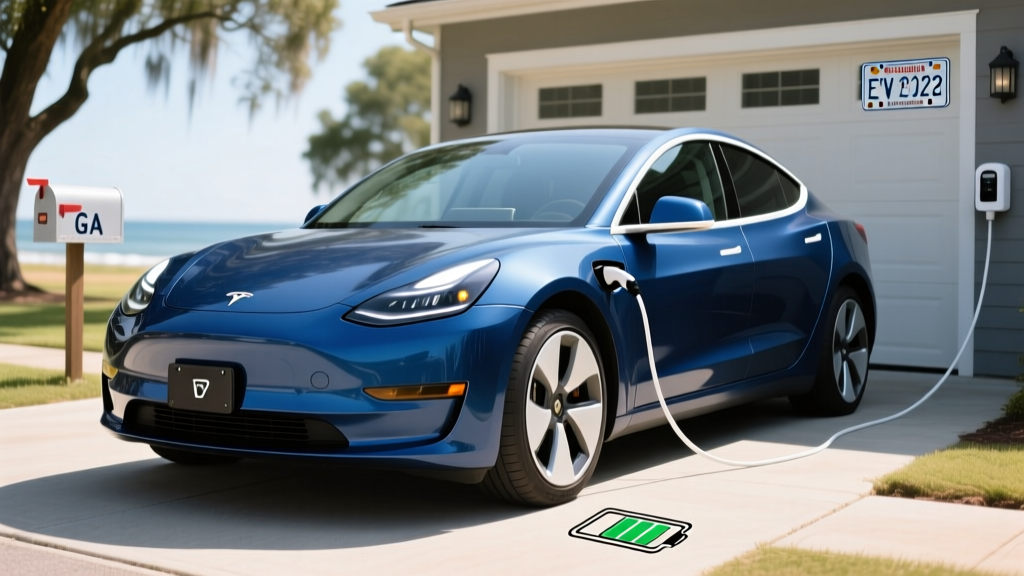
At home on a standard residential rate, the Ioniq 5 costs roughly $0.04 per mile — less than half the RAV4's $0.10/mile on gasoline. If you're on Georgia Power's off-peak EV rate and charge overnight, that drops to around $0.023/mile. Over 15,000 annual miles, home charging saves roughly $960–$1,200 per year compared to gasoline.
However, if you rely exclusively on public DC fast chargers (at $0.35–$0.48/kWh common on networks like Electrify America or EVgo), your per-mile cost can actually exceed gasoline. This is why home charging access is the single biggest financial variable in EV ownership.
Maintenance Savings: Where EVs Quietly Win
EVs eliminate many of the recurring service items that gasoline vehicles require. Here's a direct comparison of what you'll pay over five years / 75,000 miles:
| Service Item | EV (Ioniq 5) | Gas (RAV4) |
|---|---|---|
| Oil changes | $0 (none required) | ~$750 (10–15 changes) |
| Brake pads | ~$200 (regen extends life 2–3×) | ~$600 (2+ replacements) |
| Transmission fluid | $0 (single-speed reduction gear) | ~$200 (ATF service) |
| Coolant | ~$150 (battery thermal mgmt service) | ~$200 |
| Cabin air filter | ~$200 | ~$200 |
| Tire rotation/replacement | ~$1,200 (EVs wear tires ~20% faster due to weight/torque) | ~$1,000 |
| Misc. (wipers, 12V battery, etc.) | ~$400 | ~$500 |
| 5-Year Total | ~$2,150 | ~$3,450 |
The net maintenance saving is roughly $1,300 over five years, or about $260/year. The biggest EV maintenance surprise is tire wear — the Ioniq 5's 4,400+ lb curb weight and instant torque wear through tires faster than a gas crossover. Budget for it.
One more note: EV battery degradation is a common concern, but modern thermal management systems have made it a non-issue for most owners. Hyundai covers the Ioniq 5's 84.0 kWh (usable, NMC chemistry) battery pack for 10 years / 100,000 miles against capacity loss below 70%. In real-world data from sources like Recurrent, most modern EV packs lose only 5–8% capacity over the first five years.
Insurance Costs: The EV Premium Is Real
Here's the cost category where EVs consistently lose ground. EV insurance premiums run 15–30% higher than comparable gasoline vehicles, for several reasons:
- Higher repair costs: EV battery packs, power electronics, and specialized structural components are expensive to replace after a collision. Even minor rear-end damage can total a vehicle if the high-voltage system is compromised.
- Higher vehicle values: The Ioniq 5 SEL's ~$46,650 MSRP vs. the RAV4 LE's ~$33,425 means a larger insured value, even after tax credits reduce your effective purchase price. Insurers base premiums on MSRP, not your net cost.
- Specialized repair networks: Fewer body shops are certified for high-voltage system repairs, which drives up labor rates and claim cycle times.
- Tesla effect: Teslas in particular have skewed EV insurance data upward; non-Tesla EVs like the Ioniq 5 tend to be cheaper to insure than Autopilot-equipped models, but still carry a premium over gas equivalents.
For the Ioniq 5 vs. RAV4 comparison, expect to pay roughly $2,500/year for the EV vs. $1,900/year for the gas car — a $600/year or $3,000/5-year gap. Always get quotes from at least three carriers before purchasing, and ask specifically about EV discounts (some insurers like Progressive and State Farm have started offering them).
Depreciation and Resale Value: The Wildcard
EV depreciation has been volatile. In 2023–2024, a wave of Tesla price cuts, aggressive new-model launches, and shifting tax credit rules sent used EV values tumbling. By 2025–2026, the market has stabilized somewhat, but EVs still depreciate faster on average than top-selling gas vehicles like the RAV4 or CR-V.
Key factors affecting EV resale value:
- Battery health perception: Buyers of used EVs scrutinize State of Health (SoH) reports. A well-maintained pack with 92%+ SoH commands a premium.
- Charging standard risk: With the industry's shift to NACS (Tesla's connector), CCS-equipped vehicles may face a resale headwind as adapters become necessary for Supercharger access. The 2026 Ioniq 5 now ships with NACS natively, eliminating this concern for new buyers.
- Tax credit resets: When federal credit rules change, they can instantly alter the effective price of competing new vehicles, which cascades into used values.
- Brand strength: Hyundai/Kia, Tesla, and Ford EVs have held value better than some discontinued models (RIP Chevrolet Bolt, though its successor is expected).
For our comparison, we estimate the Ioniq 5 will lose roughly 43–48% of its MSRP over five years, while the RAV4 loses about 38–43%. That's a ~$3,000–$5,500 gap in depreciation cost — a meaningful number that partially offsets the EV's fuel and maintenance savings.
Georgia EV Ownership: Frequently Asked Questions
Does Georgia offer a state electric vehicle tax credit in 2026?
No. Georgia repealed its $5,000 state EV tax credit (the ZERO Emission Vehicle credit) in 2015. Currently, Georgia charges an annual EV registration fee of $200+ instead. The primary incentive for Georgia EV buyers is the federal §30D Clean Vehicle Credit (up to $7,500 for qualifying new EVs, subject to income, MSRP, and battery-sourcing rules).
How much does it really cost to own an EV over 5 years in Georgia?
Based on our Ioniq 5 vs. RAV4 comparison, a 5-year TCO for a mid-size EV in Georgia ranges from roughly $58,000 to $62,000, depending on federal tax credit eligibility and charging habits. A comparable gas crossover costs approximately $62,000. The EV wins on fuel and maintenance but loses on insurance, depreciation, and Georgia's annual EV registration fee. Home charging is essential to the EV's cost advantage.
Do I qualify for the federal §30D EV tax credit?
Eligibility depends on four factors: (1) your modified adjusted gross income must fall below $150K (single) / $300K (joint); (2) the vehicle MSRP must be ≤$80K for SUVs/trucks or ≤$55K for sedans; (3) the vehicle must meet critical-mineral and battery-component sourcing thresholds; and (4) final assembly must occur in North America. Use the IRS's dealer portal and the DOE's qualifying vehicle list at fueleconomy.gov to verify before purchasing. You can transfer the credit to the dealer at point of sale for an upfront price reduction.
How much do I save on fuel and maintenance with an EV in Georgia?
At Georgia's average residential electricity rate (~$0.135/kWh), an efficient EV like the Ioniq 5 costs about $0.04/mile to fuel at home — saving roughly $960–$1,200 per year versus a 30 MPG gas crossover at $3.10/gallon. Maintenance savings add another ~$260/year (no oil changes, reduced brake wear from regenerative braking). Combined, expect roughly $1,200–$1,500/year in operating-cost savings. Over five years, that's $6,000–$7,500.
Are EVs more expensive to insure?
Yes — typically 15–30% more expensive than comparable gasoline vehicles. Higher repair costs for battery and powertrain components, higher MSRP values, and a smaller network of certified EV body shops all contribute. For a mid-size EV crossover in Georgia, expect premiums around $2,400–$2,600/year vs. $1,800–$2,000/year for a gas equivalent. Shop multiple carriers and ask about EV-specific discounts.
How well do EVs hold their value?
EV depreciation has been steeper than gasoline vehicles in recent years, with typical 5-year retention rates of 52–57% for mainstream EVs vs. 57–62% for top-selling gas crossovers. Factors like battery health, charging-standard compatibility (NACS vs. CCS), and shifting tax credit rules create volatility. Buying an EV with NACS native support, a strong battery warranty, and a reputable brand helps protect resale value.
Is the Georgia EV registration fee higher than a gas car?
Yes. Georgia charges EVs an annual registration fee of approximately $200 (compared to roughly $20–$40 for standard gasoline vehicle registration). This fee was designed to compensate for lost gas-tax revenue. Over five years, it adds ~$1,000 to your ownership cost — a meaningful offset to fuel savings that out-of-state EV guides often overlook.
The Bottom Line for Georgia EV Buyers
Georgia's lack of a state electric vehicle tax credit means buyers need to lean harder on the federal §30D credit and utility-level programs to close the cost gap. The math works — barely — for buyers who can charge at home, qualify for the full or partial federal credit, and drive enough miles annually (15,000+) to recoup the higher purchase price through fuel and maintenance savings.
If you're considering an EV in Georgia, start with these three steps:
- Verify §30D eligibility for your target model on fueleconomy.gov and confirm your income qualifies.
- Get three insurance quotes before committing — the premium gap varies wildly by carrier.
- Contact Georgia Power or your EMC about EV rate plans and charger rebates before installing a Level 2 home charger.
The Georgia electric vehicle tax credit may not exist at the state level, but with the right homework, the total ownership math can still pencil out in your favor.