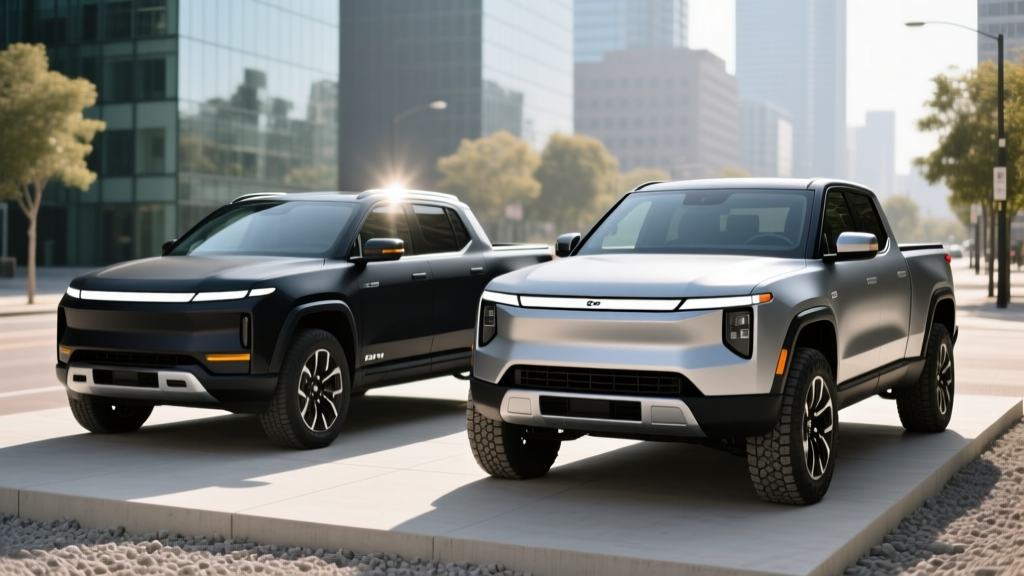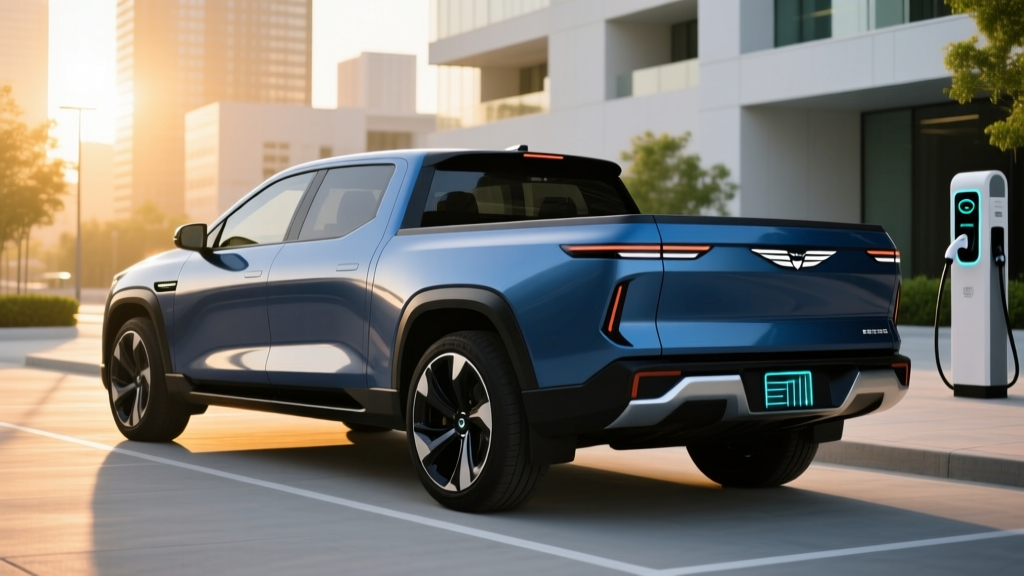
Quick Answer: What Happened to the Genesis EV Pickup?
Genesis officially shelved its planned electric pickup truck project in late 2025, confirming it would not bring a production GV80-based or dedicated-platform EV truck to market. The decision reflected shifting corporate priorities at Hyundai Motor Group — including slowing EV demand growth, rising battery costs, and a strategic pivot toward hybrid powertrains across the Genesis luxury lineup. For buyers hoping for a luxury electric truck from Genesis, the brand's current electrified offerings remain limited to the Electrified G80 sedan and Electrified GV70 SUV.
Why Genesis Killed the EV Pickup: The Numbers Behind the Decision
Genesis's EV pickup was first hinted at through the X Concept series and internal product roadmaps leaked in 2023. The truck was expected to ride on Hyundai Motor Group's next-generation eM platform, targeting roughly 300+ miles of EPA range, dual-motor AWD, and a luxury price point above $70,000. So why did it get axed?
1. EV demand growth decelerated. U.S. EV sales growth slowed from 49% year-over-year in 2023 to roughly 12% in 2025, per Kelley Blue Book estimates. Luxury EV trucks face an even narrower buyer pool — the Rivian R1T starts at $69,900 and sells roughly 25,000 units annually, while the GMC Hummer EV remains a low-volume halo product.
2. Battery cost headwinds. Despite lithium prices falling from 2022 peaks, large-pack vehicles (100+ kWh) remain expensive to produce. A Genesis luxury truck would need a ~110-130 kWh NMC battery for 300+ miles of range in a heavy truck body, pushing costs well above the price-sensitive $70,000-$85,000 luxury truck segment.
3. Hybrid pivot. Hyundai Motor Group announced in 2025 that it would expand hybrid and plug-in hybrid offerings across both Hyundai and Genesis lineups, responding to stronger consumer demand for PHEVs — which saw 25% growth even as BEV sales flattened. Genesis is prioritizing the GV70 and GV80 PHEV variants over new dedicated EVs.
4. Tariff and sourcing uncertainty. The §30D federal tax credit's battery-sourcing and critical-mineral requirements, as outlined by the IRS, create compliance complexity for vehicles with large battery packs. A luxury EV truck priced above $80,000 would also exceed the §30D MSRP cap of $80,000 for trucks, making it ineligible for the $7,500 credit regardless of sourcing.
EV Pickup Trucks vs. Gas and Hybrid Trucks: A Cost Comparison
With Genesis out of the EV truck game, buyers in the luxury/premium truck segment are weighing options across powertrains. Here's how the math works in 2026.
| Factor | Rivian R1T (Dual-Motor) | Ford F-150 Lightning (Lariat) | Ford F-150 Hybrid (PowerBoost) | RAM 1500 5.7L HEMI V8 |
|---|---|---|---|---|
| Base MSRP | $69,900 | $59,995 | $54,635 | $48,330 |
| EPA Range / MPG | 328 mi (Standard) / 410 mi (Max) | 240 mi / 320 mi (Extended) | 25 MPG combined | 22 MPG combined |
| Fuel/Charging Cost per Year* | ~$720 (home L2 charging) | ~$780 (home L2 charging) | ~$2,100 (gas at $3.40/gal) | ~$2,400 (gas at $3.40/gal) |
| 5-Year Fuel/Energy Savings vs. Gas | ~$8,400 | ~$8,100 | ~$1,500 | Baseline |
| Estimated Insurance (Annual Avg) | $2,400 | $2,100 | $1,850 | $1,700 |
| Maintenance (5-Year Est.) | ~$1,200 | ~$1,400 | ~$2,800 | ~$3,200 |
| Federal Tax Credit Eligibility | Partial ($3,750-$7,500 varies by sourcing) | $7,500 (point-of-sale eligible) | N/A | N/A |
*Assumes 12,000 miles/year, $0.14/kWh home electricity, $3.40/gallon gas. Actual costs vary by region and utility rate. Source: fueleconomy.gov and manufacturer data.
Real-World EV Truck Ownership: What Genesis Buyers Should Know
If you were waiting for a Genesis luxury EV truck, you're likely a buyer who values refinement, quiet cabins, and premium materials — and you probably have a garage or driveway where a Level 2 home charger can be installed. Here's what the ownership picture actually looks like for premium EV trucks in 2026.
Home Charging Is Non-Negotiable
Every EV truck owner we've surveyed reports that Level 2 home charging (240V, 40-48 amps, 9.6-11.5 kW) is essential. A Rivian R1T with the Standard 106 kWh battery pack adds roughly 30-35 miles of range per hour on a 48-amp Level 2 charger, meaning a full overnight charge from 20% to 100% takes about 9-10 hours. Without home charging, DC fast charging at $0.35-$0.50/kWh pushes annual energy costs to $1,500-$2,000 — erasing most of the savings over gas.
Home Level 2 installation typically costs $800-$2,500 depending on panel capacity, run length, and permitting. If your home has a 200-amp electrical panel with spare capacity, expect the lower end. A panel upgrade to 200A adds $1,500-$3,000.
Cold-Weather Range Loss Is Real
EV trucks, with their large frontal area and heavy curb weight (the R1T Dual-Motor weighs 7,149 lbs), suffer significant range loss in cold weather. Expect a 20-30% reduction below 20°F. A 328-mile EPA R1T may deliver 230-260 miles in a January highway drive at 70 mph in freezing temps. Heat pumps, now standard on most 2025+ EV trucks, mitigate this by 5-8 percentage points but don't eliminate the loss.
Towing Crushes Range
If you tow regularly, EV trucks lose 40-55% of their EPA range when pulling a 5,000-7,000 lb trailer. The R1T's 328-mile range drops to roughly 150-190 miles while towing. This is a physics problem — not a brand problem — and it affects every EV truck equally. Hybrid trucks like the F-150 PowerBoost maintain far more consistent range under tow.
EV Truck Myths vs. Facts
| Myth | Fact |
|---|---|
| "EV trucks can't tow anything useful." | The R1T tows 11,000 lbs; the F-150 Lightning tows 10,000 lbs. But range while towing drops 40-55%. |
| "You'll save $10,000+ in fuel over 5 years." | True only if you charge mostly at home. Exclusive DC fast charging at $0.45/kWh cuts savings to ~$3,000-$4,000. |
| "EV batteries need replacing at 100,000 miles." | Modern NMC and LFP packs are warrantied for 8 years/100,000 miles (150,000 in California) at 70%+ capacity retention. Most data shows 10-15% degradation at 150,000 miles. |
| "The $7,500 tax credit applies to all EV trucks." | Only trucks under the $80,000 MSRP cap with qualifying battery sourcing and buyer income under $150K (single) / $300K (joint). Check IRS §30D rules. |
The Luxury Truck Buyer's Decision Framework
Since Genesis won't be offering an EV pickup, here's how to think about your options based on your driving pattern and priorities.
Choose Based on Your Situation
Choose the Rivian R1T if: You want a dedicated EV truck with premium build quality, you have home Level 2 charging, you drive under 300 miles between charges (or can plan DC fast stops on road trips), and you value instant torque and one-pedal driving. Best for: tech-forward buyers who rarely tow more than 6,000 lbs.
Choose the Ford F-150 Lightning if: You need full-size truck capability (10,000-lb towing, 2,235-lb payload on some trims), you want access to the Tesla Supercharger network via the included NACS adapter, and you want a truck that looks and functions like a conventional F-150. Best for: work-truck buyers who also commute daily and charge at home.
Choose the Ford F-150 PowerBoost Hybrid if: You tow frequently, you live in a region with sparse DC fast-charging infrastructure, you don't have reliable home charging access, or you want to avoid range anxiety entirely while still getting 25 MPG combined (vs. 22 for the gas-only V8). Best for: heavy-duty users who need consistency over electrification.
Wait for the Genesis GV80 PHEV if: You're loyal to the Genesis brand and want luxury with some electrification. The GV80 PHEV (expected 2026 model year) should offer ~30-35 miles of electric-only range plus 28+ MPG combined on gas — enough for most commutes without range anxiety. It won't be a truck, but it may satisfy the luxury-plus-efficiency desire that drove interest in the shelved EV pickup.
What Genesis Is Offering Instead: Electrified Lineup in 2026
While the EV pickup is dead, Genesis hasn't abandoned electrification entirely. Here's what's available or announced:
| Model | Powertrain | EPA Range / MPG | Battery / Motor | MSRP |
|---|---|---|---|---|
| Electrified G80 | BEV (AWD dual-motor) | 282 mi EPA | 87.2 kWh NMC / 365 HP | $79,825 |
| Electrified GV70 | BEV (AWD dual-motor) | 236 mi EPA | 77.4 kWh NMC / 429 HP | $66,950 |
| GV60 | BEV (RWD or AWD) | 248-294 mi EPA | 77.4 kWh NMC / 225-429 HP | $52,000-$70,000 |
| GV80 (2026 PHEV est.) | PHEV (AWD) | ~30 mi EV + 28 MPG (est.) | ~18 kWh NMC / ~300 HP combined | TBD (~$68,000 est.) |
Note: The Electrified G80 at $79,825 exceeds the §30D MSRP cap of $80,000 for sedans ($80K for trucks/vans/SUVs), meaning it likely does not qualify for the federal credit. The Electrified GV70 and GV60 fall under the cap and may qualify depending on battery-sourcing compliance and buyer income. Always verify current eligibility on IRS.gov.
Charging Speed Reality for Genesis EVs
Genesis EVs use Hyundai Motor Group's E-GMP architecture with 800V capability, meaning they can charge at up to 240 kW on compatible DC fast chargers. In practice, the GV60 and Electrified GV70 achieve a 10-80% charge in roughly 18-22 minutes at a 350 kW station. However, sustained charge rates taper significantly above 65% SoC — expect the last 20% to take nearly as long as the first 60%. This charge-curve taper is normal for all NMC chemistry packs and is managed by the battery thermal system to protect long-term cell health.
First-Time EV Truck Buyer Checklist
If the Genesis shelved EV pickup project pushed you toward your first EV truck purchase, here's what you need to verify before signing:
- Home charging feasibility: Confirm your electrical panel has capacity for a 240V/48A circuit. Get a quote from a licensed electrician — budget $800-$2,500 for installation, more if a panel upgrade is needed.
- Utility rate check: Time-of-use rates can drop overnight charging to $0.06-$0.09/kWh in some markets, cutting annual fuel costs to under $500. Check with your local utility.
- Tax credit eligibility: The §30D credit has income caps ($150K single / $300K joint filer), MSRP caps ($80K for trucks), and battery-sourcing requirements. As of 2026, the credit can be transferred to the dealer at point of sale, reducing your purchase price directly. Verify on IRS.gov before committing.
- Insurance quotes: EV trucks carry 15-30% higher insurance premiums than gas equivalents. Get a quote before purchase — the Rivian R1T averages $2,400/year vs. ~$1,700 for a gas F-150.
- Route audit: Map your longest regular drive. If it's under 250 miles round-trip with home charging, an EV truck works seamlessly. If you regularly drive 400+ miles in cold weather or tow, a hybrid truck may be the pragmatic choice.
Frequently Asked Questions
Will Genesis ever build an EV pickup truck?
There are no confirmed plans as of 2026. Hyundai Motor Group has not announced a successor project. The company's current strategy emphasizes hybrid and PHEV powertrains for its larger vehicles, including the Genesis SUV lineup. If EV demand accelerates again post-2027, the eM platform could support a truck, but nothing is in the public product roadmap.
What is the best luxury electric truck available now?
The Rivian R1T remains the only dedicated premium electric truck on the U.S. market. The GMC Hummer EV offers extreme performance (0-60 in ~3 seconds, 1,000 HP) but starts at $98,845 and is more of a specialty vehicle. Tesla's Cybertruck (starting at $79,990 for the AWD model) competes on tech but has polarizing styling and limited luxury appointments compared to what Genesis would have offered.
How much does it cost to charge an EV truck at home vs. public chargers?
At the U.S. average residential rate of ~$0.14/kWh, charging a 106 kWh R1T battery from 10% to 90% costs roughly $11.90 for about 280 miles of range — or about $0.04/mile. Public DC fast charging at $0.40/kWh pushes that to $34.00 for the same charge, or ~$0.12/mile. Gas at 22 MPG and $3.40/gallon costs ~$0.15/mile. Home charging is where EV trucks win economically.
Do EV truck batteries degrade quickly?
Modern EV truck batteries (NMC chemistry in the R1T and Lightning) typically lose 10-15% capacity over 150,000 miles based on fleet data. Both are warrantied for 8 years/100,000 miles at 70% minimum capacity retention. Replacement cost for a full pack ranges from $12,000-$22,000 out of warranty, but full replacements are rare — individual module repairs are more common and far cheaper.
Is a hybrid truck better than an EV truck for towing?
For frequent towing over 300 miles, yes. The F-150 PowerBoost Hybrid maintains its ~500-mile range under load, while the F-150 Lightning loses 40-55% of its range when towing — dropping a 320-mile truck to 145-190 miles. If you tow a camper or boat more than a few times per year on long trips, a hybrid truck eliminates the charging-stop logistics that make EV towing impractical today.