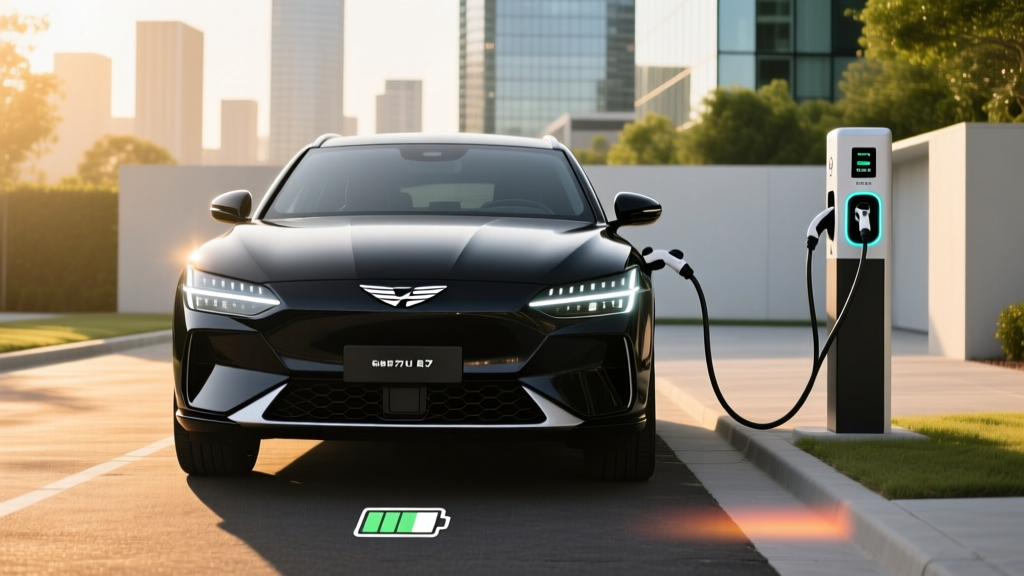
The Genesis GV70 Electrified slots into a narrow but lucrative band of the EV market: the luxury compact electric SUV that doesn't look or feel like an appliance. Built on the same platform as the gas GV70, it trades a transmission tunnel for a 77.4 kWh battery pack and dual motors, delivering 429 horsepower and a cabin that punches well above its weight in material quality. But its EPA-estimated 236 miles of range and premium pricing demand a hard look at whether luxury alone justifies the cost — especially as competitors like the BMW iX, Audi Q8 e-tron, and Tesla Model Y push further on a charge.
Below is a data-driven breakdown of what the 2026 GV70 Electrified actually delivers in range, charging speed, real-world ownership costs, and federal tax credit eligibility under current IRS §30D rules.
Range and Efficiency: EPA vs. Real-World Reality
Real-World Expectation: 200–220 miles highway at 70 mph; 180–200 miles in freezing temps with cabin heat; up to 240+ miles in mild city/regen-heavy driving.
The GV70 Electrified carries a 77.4 kWh (total) / 74.0 kWh (usable) nickel-manganese-cobalt (NMC) lithium-ion battery pack. The EPA rates it at 95 MPGe combined (98 city / 91 highway), which translates to roughly 35 kWh per 100 miles. That efficiency figure is middling for the class — the BMW iX xDrive50 achieves 86 MPGe but carries a far larger 111.5 kWh pack for 324 miles of range.
In real-world highway testing at sustained 70–75 mph speeds, expect range to drop to approximately 200–220 miles. Cold weather (below 32°F) with resistive cabin heating can push that down to 180–200 miles. The GV70 Electrified does include a standard heat pump on all trims, which mitigates cold-weather range loss compared to EVs without one, but NMC chemistry inherently loses more capacity in freezing temperatures than LFP packs.
For daily commuting under 60 miles round-trip with home charging, 236 miles is more than adequate. For road trips exceeding 200 miles between charging stops, you'll be planning more frequent stops than you would in an iX or Model Y Long Range.
| Spec | Value |
|---|---|
| EPA Range | 236 miles |
| Battery (Total / Usable) | 77.4 kWh / 74.0 kWh |
| Battery Chemistry | NMC (Nickel-Manganese-Cobalt) |
| Drivetrain | Dual-motor AWD |
| Horsepower / Torque | 429 hp / 446 lb-ft (Boost mode) |
| 0–60 mph | 4.2 seconds |
| Max DC Fast Charge | 235 kW (peak) |
| 10–80% DC Charge Time | ~18 minutes (ideal conditions) |
| Level 2 Charge Rate | 10.9 kW (AC onboard charger) |
| EPA Efficiency | 95 MPGe combined (35 kWh/100 mi) |
| Towing Capacity | Not rated (no factory tow package) |
| Cargo Volume (rear seats up / folded) | 28.7 / 56.9 cu ft |
| Front / Rear Legroom | 41.3 / 37.2 inches |
| Base MSRP (Advanced) | $68,450 (incl. destination) |
| Battery Warranty | 10 years / 100,000 miles |
Charging Speed: DC Fast, Level 2, and the Charge Curve
The GV70 Electrified supports up to 235 kW peak DC fast charging on 800-volt architecture — a genuine advantage over competitors still limited to 400V systems. Genesis claims a 10–80% charge in approximately 18 minutes under ideal conditions (battery preconditioned, charger capable of 350 kW output).
| Charge Level | Power | Speed / Time |
|---|---|---|
| Level 1 (120V standard outlet) | ~1.4 kW | ~4 mi/hr added |
| Level 2 (240V home, 48A circuit) | 10.9 kW max | ~31 mi/hr added; full charge in ~7.5 hrs |
| DC Fast (350 kW station) | 235 kW peak | 10–80% in ~18 min; 187 miles added |
| DC Fast (150 kW station) | ~130–150 kW sustained | 10–80% in ~30 min |
The charge-curve caveat: The 235 kW figure is a peak, not a sustained rate. Like all EVs, the GV70 Electrified's charge rate tapers significantly above 60–70% state of charge. You'll see 200+ kW only between roughly 10–50% SoC; from 50–80%, expect the rate to drop to 100–130 kW. If you're charging past 80% on a road trip (not recommended for battery longevity), speeds drop further to under 50 kW. This taper is normal physics, not a defect, but it means a 10–90% charge takes closer to 30 minutes, not 22.
The 800V architecture also enables vehicle-to-load (V2L) capability via an adapter, allowing you to power devices or a limited home circuit from the battery — useful for camping or emergency backup, though not a full vehicle-to-home (V2H) system.
At home on a Level 2 charger, the 10.9 kW onboard charger refills the 74 kWh usable battery in approximately 7.5 hours from empty. Most owners charging overnight from 20–80% will need only 4–5 hours. A 48-amp Level 2 home charger (requiring a 60-amp dedicated circuit) is the practical standard; installation typically costs $800–$2,000 depending on panel proximity and local permitting.
Performance and Driving Dynamics
The dual-motor AWD powertrain produces 429 hp and 446 lb-ft of torque in Boost mode (activated via a steering-wheel button, available for 30-second bursts). Standard output is 365 hp. The 0–60 mph sprint takes 4.2 seconds with Boost engaged — quick enough to merge aggressively and pass with confidence, though a step behind the BMW iX M60's 3.6-second run.
Ride quality is where the GV70 Electrified distinguishes itself. The extra weight of the battery pack (approximately 5,100 lbs curb weight) gives it a planted, substantial feel, and Genesis's adaptive suspension on the Prestige trim absorbs road imperfections with the composure of a vehicle costing $20,000 more. Steering is light but precise, and the regenerative braking system offers adjustable levels via paddle shifters, including an i-Pedal one-pedal driving mode that brings the car to a full stop without touching the brake pedal.
Notable omission: the GV70 Electrified is not rated for towing. If you need to pull a trailer, the BMW iX (3,500 lbs) or Rivian R1S are better choices.
Interior, Tech, and Driver Assistance
The cabin is the GV70 Electrified's strongest argument. Quilted leather seats, real aluminum trim, and a 14.5-inch widescreen infotainment display set it apart from the more austere Tesla Model Y and the tech-forward but less luxurious Hyundai Ioniq 5. The center console features a rotary shift dial with an integrated fingerprint reader for driver profile authentication.
Infotainment: Genesis's 14.5-inch split-screen display supports wireless Apple CarPlay and Android Auto, built-in navigation with EV-specific route planning (incorporating charging stops), and over-the-air updates. A 12.3-inch digital instrument cluster and available head-up display round out the driver-facing tech. The touch-sensitive climate controls below the main screen are attractive but draw criticism for lack of tactile feedback — a common complaint across Hyundai Motor Group vehicles.
Driver Assistance: Highway Driving Assist II (HDA II) provides adaptive cruise control with stop-and-go, lane-centering, and lane-change assist. It's a competent SAE Level 2 system — meaning you must keep hands on the wheel and eyes on the road at all times. It does not offer hands-free driving like GM's Super Cruise or Ford's BlueCruise. Blind-spot monitoring, rear cross-traffic avoidance, and a 360-degree camera are standard across all trims.
Pricing, Trims, and Federal Tax Credit Eligibility
The 2026 GV70 Electrified is offered in three trims, all with dual-motor AWD:
| Trim | MSRP (incl. destination) | §30D Credit Eligibility | Est. Price After Credit |
|---|---|---|---|
| Advanced | $68,450 | Subject to sourcing/income rules | As low as ~$60,950* |
| Prestige | $73,450 | Subject to sourcing/income rules | As low as ~$65,950* |
| Sport Prestige | $75,450 | Subject to sourcing/income rules | As low as ~$67,950* |
*Estimated prices assume full $7,500 §30D credit eligibility. Actual eligibility depends on battery component and critical mineral sourcing, buyer income limits, and MSRP caps. Verify with a tax professional and the IRS clean vehicle credit page.
Federal tax credit reality check: Under current IRS §30D rules, the GV70 Electrified faces several eligibility hurdles:
- MSRP cap: SUVs must have an MSRP at or below $80,000. All GV70 Electrified trims clear this threshold.
- Buyer income cap: Modified adjusted gross income (MAGI) must not exceed $150,000 (single), $225,000 (head of household), or $300,000 (married filing jointly).
- Battery sourcing requirements: A percentage of battery components must be manufactured or assembled in North America, and critical minerals must be sourced from the U.S. or FTA partners. These percentages increase annually. The GV70 Electrified is assembled in South Korea, and its battery cell sourcing (SK On, with cells from South Korea and potentially the U.S. via the SK/BlueOval SK joint venture) may or may not meet the escalating thresholds for a given model year.
- Point-of-sale transfer: Eligible buyers can transfer the credit to the dealer at purchase, reducing the upfront price rather than waiting for a tax refund.
Check fueleconomy.gov for the most current list of qualifying vehicles before relying on the credit in your purchase decision. Eligibility can change mid-year as sourcing rules tighten.
Ownership Costs, Warranty, and Long-Term Value
Genesis provides one of the strongest warranty packages in the luxury segment:
- Battery: 10 years / 100,000 miles (capacity retention threshold not publicly specified; industry standard is 70% of original capacity)
- Powertrain: 10 years / 100,000 miles
- Bumper-to-bumper: 5 years / 60,000 miles
- Complimentary maintenance: 3 years / 36,000 miles
- Valet service: 3 years (Genesis picks up and returns the vehicle for service)
Electricity cost for the GV70 Electrified depends heavily on your local rates. At the U.S. average of ~$0.17/kWh, charging the 74 kWh usable battery from empty costs approximately $12.58 — or about $0.059/mile. Compare that to a gas GV70 AWD (22 MPG combined) at $3.50/gallon: $0.159/mile. Over 15,000 miles annually, the EV saves roughly $1,500/year in fuel. Over five years, that's approximately $7,500 in fuel savings, partially offsetting the higher purchase price.
Insurance premiums for the GV70 Electrified tend to run 15–25% higher than the gas GV70, driven by higher repair costs and battery replacement considerations. Shop quotes before purchase — actual premiums vary significantly by insurer, driving record, and state.
Pros, Cons, and Who Should Buy
Pros
- Exceptional interior quality — best-in-class materials for the segment
- 800V architecture enables 235 kW peak DC charging
- Strong 10-year/100,000-mile battery and powertrain warranty
- Standard heat pump reduces cold-weather range loss
- Complimentary maintenance and valet service for 3 years
- Quiet, composed ride with adaptive suspension (Prestige/Sport)
Cons
- 236-mile EPA range trails key competitors (iX: 324 mi, Model Y LR: 330 mi)
- High starting price; Prestige trim pushes past $73K before options
- No towing capacity
- Touch-sensitive climate controls lack tactile feedback
- South Korea assembly may complicate §30D tax credit eligibility
- Hands-free driving not available (Level 2 only)
Who this EV suits best: The GV70 Electrified is ideal for luxury-oriented commuters and couples who prioritize cabin quality, quiet ride refinement, and fast DC charging over maximum range. If your daily drive is under 80 miles round-trip and you have reliable home Level 2 charging, the 236-mile range is a non-issue. It's a poor fit for frequent long-distance road trippers (the range requires more stops than an iX or Model Y), anyone who needs towing capability, or buyers whose income or battery-sourcing circumstances disqualify them from the §30D credit — at full MSRP, the value proposition tightens considerably.
How It Compares to Key Competitors
The GV70 Electrified competes in a segment with several strong alternatives:
- BMW iX xDrive50 — 324 mi range, $87,250 MSRP, significantly more cargo space, but ~$19K more expensive.
- Audi Q8 e-tron — 285 mi range, $74,400 MSRP, comparable luxury, slightly more range but slower 150 kW charging.
- Tesla Model Y Long Range — 330 mi range, $48,990 MSRP, vastly more efficient and cheaper, but interior quality and ride refinement don't match Genesis.
- Cadillac Lyriq — 314 mi range, $58,590 MSRP, competitive luxury and better range, but single-motor RWD base and less powerful.
The GV70 Electrified wins on interior craftsmanship and charging speed per dollar. It loses on range, cargo space, and price efficiency. Your priority list determines the winner.
Frequently Asked Questions
What is the real-world range of the Genesis GV70 Electrified?
The EPA rates it at 236 miles. In real-world highway driving at 70 mph, expect 200–220 miles. In freezing weather with cabin heat, that drops to 180–200 miles. City driving with regenerative braking can push it to 240+ miles in mild conditions.
How fast does the GV70 Electrified charge?
On a 350 kW DC fast charger, it peaks at 235 kW and charges from 10–80% in approximately 18 minutes (with a preconditioned battery). On a 150 kW charger, expect 10–80% in about 30 minutes. At home on a Level 2 (10.9 kW) charger, a full charge takes roughly 7.5 hours.
Does the Genesis GV70 Electrified qualify for the $7,500 federal tax credit?
It may, but eligibility depends on current IRS §30D rules for battery component sourcing, critical mineral origin, buyer income (MAGI caps), and the $80,000 SUV MSRP limit. The GV70 is assembled in South Korea with SK On battery cells; whether it meets the escalating sourcing thresholds varies by model year. Always verify on fueleconomy.gov and consult a tax professional before counting on the credit.
Is the GV70 Electrified worth buying over the BMW iX or Tesla Model Y?
If interior luxury, ride quality, and fast 800V charging are your top priorities, yes — it delivers a more premium experience than the Model Y at a lower price than the iX. If maximum range, cargo space, or lowest total cost of ownership matters more, the iX or Model Y are stronger choices.
What are the biggest drawbacks of the GV70 Electrified?
The 236-mile EPA range is the weakest in its luxury compact SUV class. It has no towing capacity, touch-sensitive controls frustrate some drivers, and South Korea assembly creates uncertainty around federal tax credit eligibility. Insurance costs also run higher than the gas equivalent.
Does the GV70 Electrified have a frunk (front trunk)?
Yes, but it's small — approximately 0.7 cu ft, enough for a charging cable bag or small emergency kit. It's not a practical cargo space like the Model Y's 4.1 cu ft frunk.