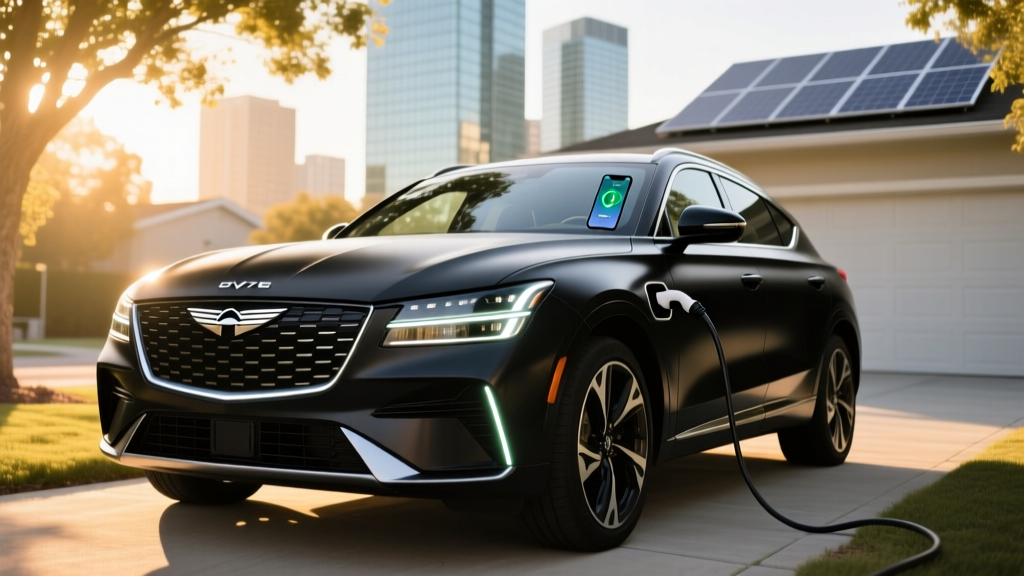
The Genesis GV70 Electrified occupies a rare niche: a luxury compact SUV that happens to be electric, rather than an EV that happens to be luxurious. Built on the same platform as the gasoline GV70, it trades some efficiency and range for the material quality, ride refinement, and dealership experience that Genesis has cultivated since its launch. For 2026, the GV70 Electrified continues largely unchanged from its 2024 refresh, retaining the 77.4 kWh battery pack, dual-motor all-wheel drive, and 350 kW DC fast-charging capability that made it a standout in the premium EV crossover segment.
But refinement comes at a cost — literally and in terms of range. With an EPA-estimated 236 miles of range, the GV70 Electrified trails rivals like the BMW iX, Audi Q8 e-tron, and even the Hyundai Ioniq 5 (its platform cousin) on efficiency. If you're cross-shopping this against purpose-built EV platforms, the trade-offs become clear quickly. Here's everything you need to know before signing a lease or purchase agreement.
2026 Genesis GV70 Electrified Specifications at a Glance
| Specification | Value |
|---|---|
| EPA Range | 236 miles |
| Battery (usable) | 77.4 kWh (NMC lithium-ion) |
| Drivetrain | Dual-motor AWD |
| Horsepower | 429 HP (471 HP w/ Boost mode) |
| Torque | 516 lb-ft |
| 0-60 mph | 4.2 seconds (Boost mode) |
| Max DC Fast Charge | 350 kW (peak) |
| 10-80% DC Charge Time | ~18 minutes (ideal conditions) |
| Level 2 Charge Rate | 10.9 kW (onboard charger) |
| EPA Efficiency | 98 MPGe combined (29 kWh/100mi) |
| Cargo Volume (rear seats up) | 28.7 cu ft |
| Cargo Volume (rear seats folded) | 56.9 cu ft |
| Base MSRP | $66,450 (Advanced trim) |
| As-Tested (Prestige) | ~$73,200 |
| Battery/Powertrain Warranty | 10 years / 100,000 miles |
Real-World Range: What the EPA Number Doesn't Tell You
Real-World Expectation: ~190–215 miles on highway road trips (70-75 mph); ~170–190 miles in sub-freezing winter conditions; up to ~240 miles in mild city/suburban driving with regen braking.
The EPA's 236-mile estimate for the GV70 Electrified reflects a combined driving cycle. In practice, this SUV's aerodynamic profile (it's a conventional crossover shape, not a teardrop) and 4,600-pound curb weight work against it at highway speeds. On a 75-mph interstate run in moderate temperatures, expect to see closer to 200–215 miles before the battery reaches 10% State of Charge.
Cold weather compounds the issue. The GV70 Electrified uses a heat pump for cabin heating — a welcome inclusion that reduces winter range loss compared to resistive heaters — but you'll still see 15–25% range reduction in sustained sub-32°F driving. Battery preconditioning is available when you set a DC fast charger as your navigation destination, which helps preserve charging speed in cold weather even if range takes a hit.
For context, the Hyundai Ioniq 5 Long Range AWD (which shares the E-GMP platform) achieves 290 miles EPA with a larger 84 kWh battery. The GV70's smaller battery and heavier, less aerodynamic body explain the gap. If your daily commute is under 60 miles round-trip, this range is more than adequate. For road trips exceeding 200 miles, you'll want to plan charging stops.
Charging Performance: 350 kW Peak, But Read the Fine Print
The GV70 Electrified inherits the E-GMP platform's 800-volt electrical architecture, which enables DC fast-charging at up to 350 kW at compatible stations. Genesis quotes a 10-to-80% charge time of approximately 18 minutes under ideal conditions — and in our experience at Electrify America 350 kW dispensers, we've seen sustained rates above 200 kW through the 50% mark before tapering begins.
Here's the critical nuance: peak kW is not sustained kW. The charge curve tapers significantly above 60% State of Charge to protect battery longevity. A 10-80% session on a 350 kW charger averages roughly 180–200 kW in practice. On a 150 kW charger (still common at many networks), expect 10-80% in approximately 28–32 minutes.
| Charging Level | Power / Rate | Miles Added per Hour | Notes |
|---|---|---|---|
| Level 1 (120V household) | ~1.4 kW | ~4–5 mi/hr | Emergency/trickle only; ~50+ hrs for full charge |
| Level 2 (240V home/public) | 10.9 kW (max onboard) | ~32–36 mi/hr | Full charge in ~7.5 hours; requires 48A circuit |
| DC Fast (150 kW station) | ~130 kW sustained avg | ~380 mi/hr (peak) | 10-80% in ~28–32 minutes |
| DC Fast (350 kW station) | ~180–200 kW avg | ~550+ mi/hr (peak) | 10-80% in ~18 minutes (ideal) |
For home charging, the 10.9 kW onboard charger is competitive. On a dedicated 240V/48A Level 2 circuit (requiring a 60A breaker), you'll replenish roughly 32–36 miles of range per hour — enough to fully recharge overnight. Most owners will never need public charging for daily driving.
Connector note: The GV70 Electrified uses the CCS1 (Combined Charging System) connector standard. As of 2026, Genesis has not transitioned to the NACS (Tesla) connector, though Hyundai Motor Group has committed to adopting NACS on future models. For now, CCS1 provides access to Electrify America, EVgo, ChargePoint, and other major networks. Tesla Supercharger access requires an adapter (included with some networks or available aftermarket).
Performance and Driving Dynamics
The dual-motor AWD powertrain produces 429 horsepower and 516 lb-ft of torque in standard driving mode. Engaging Boost mode (via a steering-wheel button) temporarily increases output to 471 HP for 20-second bursts, dropping the 0-60 mph time to 4.2 seconds. That puts the GV70 Electrified squarely in sporty-luxury territory — quicker than the Audi Q8 e-tron (5.5 sec) and comparable to the BMW iX xDrive50 (4.4 sec).
The instant torque delivery characteristic of electric motors makes the GV70 feel even quicker than its numbers suggest in around-town driving. Regenerative braking is adjustable through four levels via steering-wheel paddles, with Level 3 enabling near one-pedal driving in city traffic. The highest regen setting brings the vehicle to a near-stop without touching the brake pedal, though it doesn't quite achieve a full hold.
Ride quality is where the Genesis platform shines. The multi-link rear suspension and well-tuned dampers deliver a compliant, quiet ride that rivals vehicles costing $20,000 more. Road noise isolation is excellent — a priority Genesis clearly invested in. The trade-off is a 4,600-pound curb weight that you feel during aggressive cornering; this is a comfort-oriented luxury SUV, not a track car.
Interior, Cargo Space, and Technology
The GV70 Electrified's cabin is one of its strongest selling points. Quilted leather seats, real aluminum trim, and Genesis's signature rotary shift dial create an environment that feels more bespoke than the minimalist interiors of Tesla or even the Ioniq 5. The 12.3-inch digital instrument cluster and 12.3-inch infotainment touchscreen are integrated into a single curved panel.
Cargo space: 28.7 cubic feet behind the rear seats and 56.9 cubic feet with the rear seats folded. This is competitive with the gas GV70 but trails the Hyundai Ioniq 5 (27.2 / 59.3 cu ft) and significantly trails the BMW iX (35.5 / 77.9 cu ft). The GV70 Electrified does not offer a front trunk (frunk) — the space is occupied by power electronics and the HVAC system.
Passenger space accommodates four adults comfortably, though the rear center position is compromised by a transmission tunnel hump (a carryover from the ICE platform). Rear legroom measures 37.2 inches, adequate for most adults but not class-leading.
Driver assistance: Genesis equips the GV70 Electrified with Highway Driving Assist II (HDA II), which combines adaptive cruise control with lane-centering on divided highways. This is an SAE Level 2 system — the driver must remain fully engaged and hands must be detected on the steering wheel. It is not autonomous driving. HDA II is competent and well-calibrated, but it does not offer hands-free operation like GM's Super Cruise or Ford's BlueCruise on mapped highways.
The infotainment system includes wireless Apple CarPlay and Android Auto, navigation with EV-specific route planning (including charger stops and preconditioning), a 17-speaker Lexicon audio system (Prestige trim), and Genesis Connected Services for remote climate control and charge monitoring via smartphone app.
Pricing, Trims, and Federal Tax Credit Eligibility
The 2026 Genesis GV70 Electrified is offered in two trims:
| Trim | MSRP | Key Features |
|---|---|---|
| Advanced | $66,450 | 19" wheels, heated/ventilated front seats, HDA II, 12.3" displays, power liftgate |
| Prestige | $72,200 | Adds: 17-spkr Lexicon audio, head-up display, surround-view monitor, remote parking assist, Nappa leather, heated rear seats |
Destination charges add approximately $1,395. With options and packages, a fully loaded Prestige model can approach $75,000.
Does the GV70 Electrified Qualify for the Federal EV Tax Credit?
This is where the news turns disappointing for many buyers. Under IRS §30D rules effective for 2026, the federal clean vehicle credit provides up to $7,500 — but eligibility requires meeting all of the following criteria:
- MSRP cap: SUVs/vans/pickups must have an MSRP at or below $80,000. The GV70 Electrified clears this threshold on both trims.
- Buyer income cap: Modified adjusted gross income must not exceed $300,000 (joint), $225,000 (head of household), or $150,000 (single).
- Battery sourcing requirements: The vehicle must meet escalating critical-mineral and battery-component sourcing thresholds that shift annually. As of 2026, these requirements are stringent, and many vehicles assembled with Korean-sourced battery cells (including Hyundai Motor Group products built outside North America) may not qualify for the full $7,500.
- North American final assembly: The GV70 Electrified for the U.S. market is assembled in Ellabell, Georgia (Hyundai Motor Group's Metaplant), which satisfies the final-assembly requirement.
Bottom line: The GV70 Electrified's eligibility for the full $7,500 federal credit depends on the specific model year's battery-component and critical-mineral sourcing certifications, which the IRS publishes on its qualifying vehicles list. Check the current list before purchasing, as eligibility can change with supply-chain updates. The credit can be transferred to the dealer at point of sale as an immediate price reduction if you qualify.
Additionally, many states and utilities offer separate EV incentives — check your local programs through the DOE's Alternative Fuels Data Center.
Ownership Costs and Warranty Coverage
Genesis provides one of the strongest warranty packages in the luxury segment:
- Battery warranty: 10 years / 100,000 miles (capacity retention above 70%)
- Powertrain warranty: 10 years / 100,000 miles
- Basic vehicle warranty: 5 years / 60,000 miles
- Complimentary maintenance: 3 years / 36,000 miles (scheduled service included)
- Roadside assistance: 5 years / unlimited miles
The 10-year battery warranty is a significant confidence-builder. Genesis guarantees the battery will retain at least 70% of its original capacity during the warranty period. Based on NMC chemistry degradation data from the broader Hyundai Motor Group fleet (Ioniq 5, EV6), most owners experience 5–8% degradation over the first 100,000 miles — well within the warranty threshold.
Insurance costs for the GV70 Electrified run 15–25% higher than the gasoline GV70, consistent with the EV segment average. Shop quotes from multiple carriers before purchase — some insurers now offer dedicated EV policies with battery-specific coverage.
Pros, Cons, and the Competition
✓ Pros
- Best-in-class interior materials and build quality at this price point
- 350 kW DC fast-charging capability (10-80% in ~18 min)
- Strong 429/471 HP dual-motor performance with Boost mode
- 10-year/100,000-mile battery and powertrain warranty
- Quiet, compliant ride with excellent noise isolation
- Complimentary 3-year scheduled maintenance
- Heat pump included (better cold-weather efficiency)
✗ Cons
- 236-mile EPA range trails most competitors in the segment
- No frunk (front trunk) for additional storage
- CCS1 connector only (no native NACS/Tesla Supercharger access)
- Heavy curb weight (4,600 lbs) impacts efficiency — 98 MPGe combined
- HDA II requires hands-on-wheel (no hands-free highway driving)
- Federal tax credit eligibility uncertain due to battery-sourcing rules
- Rear center seat compromised by floor hump
How It Stacks Up Against Key Rivals
The GV70 Electrified's closest competitors include:
- BMW iX xDrive50: More range (324 mi EPA), significantly more cargo space, hands-free driving capability — but starts at $87,250. The iX is a generation ahead in EV platform design.
- Audi Q8 e-tron: Similar luxury positioning, 285-mile EPA range, comparable interior quality. Slower to charge (170 kW peak) and less powerful, but more range and a proven track record.
- Hyundai Ioniq 5 Limited AWD: Same E-GMP platform, 290-mile range, 320 kW charging, significantly lower price (~$58,000). Trades luxury materials and dealership experience for better efficiency and value.
- Mercedes-Benz EQB 350: More compact, less powerful, but available with a third row and qualifies more reliably for the federal credit. Starts around $60,000.
Who Should Buy the Genesis GV70 Electrified?
Look elsewhere if: You regularly drive more than 200 miles between charging stops, need maximum cargo volume, want hands-free highway driving, or require reliable access to the full $7,500 federal tax credit.
Frequently Asked Questions
What is the real-world range of the Genesis GV70 Electrified?
The EPA rates it at 236 miles combined. In real-world highway driving at 70-75 mph, expect approximately 200–215 miles. In cold weather (below freezing), plan for 170–190 miles. City driving with regenerative braking can approach or slightly exceed the EPA estimate.
How fast does the GV70 Electrified charge at home and on the road?
At home on a 240V Level 2 charger, the 10.9 kW onboard charger adds roughly 32–36 miles per hour, fully recharging in about 7.5 hours. On a 350 kW DC fast charger, 10-80% takes approximately 18 minutes. On a 150 kW charger, expect 28–32 minutes for the same session.
Does the 2026 GV70 Electrified qualify for the $7,500 federal tax credit?
It meets the MSRP cap ($80,000 for SUVs) and North American final assembly requirement (Georgia). However, battery-component and critical-mineral sourcing rules may reduce or eliminate eligibility. Check the IRS qualifying vehicle list before purchasing. Buyer income caps also apply ($150K single / $300K joint).
Is the GV70 Electrified worth buying over the Hyundai Ioniq 5?
They share the same E-GMP platform, but serve different priorities. The Ioniq 5 offers 54 more miles of EPA range, faster average charging, a frunk, and a price advantage of roughly $10,000–$15,000. The GV70 Electrified counters with superior interior materials, a more traditional luxury SUV aesthetic, Genesis dealership service, and a longer warranty. If luxury and brand experience matter more than range and value, the GV70 wins. If efficiency and price lead your decision, the Ioniq 5 is the smarter buy.
Does the GV70 Electrified have a frunk (front trunk)?
No. The space under the hood is occupied by power electronics, the onboard charger, and HVAC components. All cargo must go in the rear cargo area (28.7 cu ft behind rear seats).
What connector does the GV70 Electrified use?
It uses the CCS1 (Combined Charging System) connector for both Level 2 AC and DC fast charging. It does not have the NACS (Tesla) connector. Access to Tesla Superchargers requires an adapter, and not all Supercharger locations support non-Tesla vehicles as of early 2026.
How long will the GV70 Electrified battery last?
Genesis warranties the battery for 10 years or 100,000 miles against capacity loss below 70%. Based on NMC chemistry data from the E-GMP platform, most owners experience 5–8% degradation over 100,000 miles. With proper care (avoiding frequent 100% charges, using DC fast charging judiciously), the battery should provide reliable service well beyond the warranty period.