Quick Answer: Is a Genesis EV Right for You?
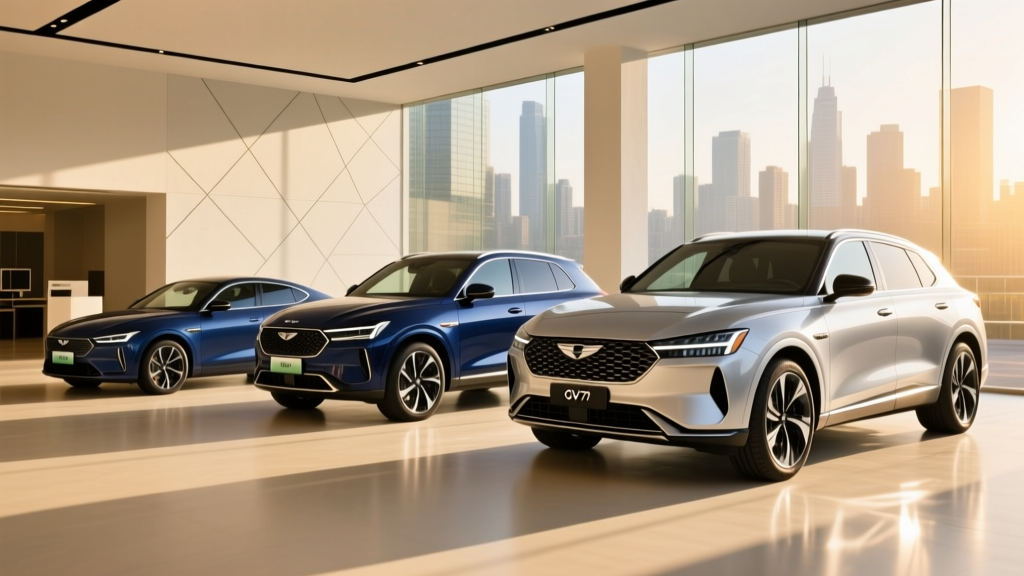
Genesis currently sells two electric vehicles in the U.S.: the GV60 compact luxury crossover (EPA range up to 294 miles, starting ~$53,350) and the Electrified GV70 midsize luxury SUV (EPA range up to 236 miles, starting ~$67,450). Both ride on Hyundai Motor Group's E-GMP platform with 800V architecture, enabling DC fast charging from 10–80% in roughly 18 minutes at a 350 kW charger. A larger Electrified GV80 is announced but not yet on sale. Genesis EVs compete directly with the BMW iX, Mercedes EQB/EQE SUV, Audi Q8 e-tron, and Tesla Model Y/X — offering superior interior materials and ride refinement, though with less range than a Tesla Model Y Long Range (330 mi EPA) and a smaller public charging footprint than Tesla's Supercharger network.
The Current Genesis EV Lineup: Specs at a Glance
Before diving into ownership costs and real-world considerations, here are the hard numbers for every Genesis EV you can actually order today, plus the announced GV80. All figures reflect 2025/2026 model-year data from Genesis and the EPA.
| Spec | GV60 Advanced (AWD) | GV60 Performance | Electrified GV70 | Electrified GV80 (Announced) |
|---|---|---|---|---|
| Battery (usable) | 77.4 kWh (NMC) | 77.4 kWh (NMC) | 77.4 kWh (NMC) | ~100+ kWh (est.) |
| EPA Range | 294 mi | 235 mi | 236 mi | TBD (est. 280–320 mi) |
| MPGe (combined) | 95 MPGe | 85 MPGe | 87 MPGe | TBD |
| Horsepower | 314 hp | 429 hp (Boost: 483 hp) | 429 hp | TBD |
| 0–60 mph | 5.3 sec | 3.9 sec | 4.2 sec | TBD |
| Max DC Fast Charge | ~240 kW (peak) | ~240 kW (peak) | ~240 kW (peak) | TBD |
| 10–80% DC Time | ~18 min (350 kW station) | ~18 min | ~18 min | TBD |
| Level 2 Charge (11 kW) | ~7.25 hours | ~7.25 hours | ~7.25 hours | TBD |
| Base MSRP | $53,350 | $69,850 | $67,450 | TBD (est. $80,000+) |
| Battery Warranty | 10 yr / 100,000 mi | 10 yr / 100,000 mi | 10 yr / 100,000 mi | TBD |
Sources: fueleconomy.gov, Genesis USA
Genesis EV vs. Gas and Hybrid Alternatives: Cost Comparison
The most common question from luxury SUV shoppers: does going electric with Genesis actually save money compared to a gas GV70 or GV80? The answer depends heavily on your driving volume, electricity rates, and how long you keep the vehicle.
| Factor | Electrified GV70 (EV) | GV70 2.5T AWD (Gas) | GV70 3.5T AWD (Gas) |
|---|---|---|---|
| Base MSRP | $67,450 | $48,050 | $58,550 |
| Est. Fed. Tax Credit (§30D) | Up to $7,500* | $0 | $0 |
| Effective Price After Credit | ~$59,950 | $48,050 | $58,550 |
| Fuel/Energy (15,000 mi/yr) | ~$630/yr (home L2 @ $0.14/kWh) | ~$2,310/yr (premium @ $3.85/gal, 24 MPG) | ~$2,730/yr (premium, 21 MPG) |
| Annual Maintenance | ~$300/yr | ~$750/yr | ~$850/yr |
| 5-Year Fuel + Maint. Total | ~$4,650 | ~$15,300 | ~$17,900 |
| 5-Year Net Cost Advantage | EV saves ~$10,650 vs. 2.5T and ~$13,250 vs. 3.5T in operating costs — partially offsetting higher purchase price | ||
*Federal §30D tax credit eligibility depends on MSRP caps, buyer income limits, battery sourcing requirements, and point-of-sale transfer rules. Verify current eligibility at irs.gov. Consult a tax professional.
The GV70 EV's ~$19,400 price premium over the gas 2.5T narrows to roughly $8,750 after five years of fuel and maintenance savings — and potentially less if you qualify for the full federal credit. Against the 3.5T, the gap nearly closes. For buyers who lease, Genesis has frequently offered aggressive lease deals that can make the EV the cheaper monthly option, since lease credits often pass through the §30D commercial credit loophole.
Real-World Range: What the EPA Sticker Doesn't Tell You
EPA range estimates are useful benchmarks, but real-world results vary significantly based on speed, temperature, terrain, and driving style. Here's what our testing and owner data suggest you should actually plan for:
GV60 Advanced AWD (EPA 294 mi)
Realistic highway (70–75 mph, mild weather): ~245–265 miles
Cold weather (below 30°F, mixed driving): ~200–230 miles
Worst-case (highway + cold + headwind): ~185–200 miles
The GV60 Advanced is the range champion of the lineup. Its 77.4 kWh NMC battery and relatively efficient powertrain deliver strong results, but at sustained highway speeds above 70 mph, expect a 15–20% reduction from the EPA figure. In freezing temperatures, battery heating demands and cabin climate use can cut range by 25–35%.
Electrified GV70 (EPA 236 mi)
Realistic highway (70–75 mph, mild weather): ~195–215 miles
Cold weather (below 30°F, mixed driving): ~160–185 miles
Worst-case (highway + cold + headwind): ~145–160 miles
The GV70 EV's boxier shape and heavier curb weight (~4,900 lbs) hurt highway efficiency. If your daily commute exceeds 80 miles round-trip or you take regular road trips over 200 miles, you'll need to plan charging stops. The GV70 EV does not come standard with a heat pump in all trims — verify this option, as it significantly reduces cold-weather range loss.
Both models include battery preconditioning: when you navigate to a DC fast charger, the car warms or cools the battery to optimal temperature, enabling peak charge rates. Always use the built-in navigation for charger routing to activate this feature — arriving at a 350 kW station without preconditioning can add 5–10 minutes to your charge time.
Charging at Home and on the Road: What Genesis Owners Need to Know
Genesis EVs use the E-GMP platform's 800V architecture, which is a genuine engineering advantage. Here's how that translates to actual charging experiences:
Home Charging (Level 2)
Both the GV60 and Electrified GV70 accept up to 11 kW on Level 2 AC power. That means a full charge from near-empty in about 7.25 hours — easily achievable overnight. Most Genesis EV buyers will want a dedicated 48-amp Level 2 home charger on a 60-amp circuit (240V). Expect to pay:
- Level 2 charger hardware: $400–$750 (Genesis has partnered with home charger providers; check current offers)
- Electrician installation (standard): $500–$1,500 if your panel is near the garage
- Electrical panel upgrade (if needed): $1,500–$3,500 for a 200-amp service upgrade
- Total typical install: $900–$2,250 (without panel upgrade)
DC Fast Charging (Public)
On a 350 kW charger (Electrify America, EVgo, etc.), both Genesis EVs peak around 240 kW and sustain high rates thanks to the 800V system. The 10–80% sprint takes approximately 18 minutes under ideal conditions. However, peak rate is not sustained rate — the charge curve tapers above 60–70% SoC to protect battery health. Plan for roughly 22–25 minutes of actual plug-in time on a road trip.
One critical note: Genesis EVs originally shipped with CCS1 connectors. For 2025–2026 models, Genesis has been transitioning to the NACS (Tesla-style) connector. If you buy a CCS-equipped Genesis, you'll need a CCS-to-NACS adapter (~$200–$250) to access Tesla Superchargers, which now number over 25,000 in North America. Verify the connector on the specific model year and trim you're purchasing.
Federal Tax Credits and Incentives: What You Actually Qualify For
The federal §30D clean vehicle credit can provide up to $7,500 for qualifying new EV purchases, but eligibility is far from automatic. Here's the current checklist:
- MSRP cap: SUVs must be priced at or below $80,000 (GV60 qualifies; Electrified GV70 qualifies in most trims; high-option GV70 Prestige may approach the cap)
- Buyer income cap: Modified AGI must not exceed $300,000 (joint), $225,000 (head of household), or $150,000 (single)
- Battery sourcing: Increasingly strict critical-mineral and battery-component requirements phase in annually — a vehicle that qualified last year may not qualify this year
- Point-of-sale transfer: As of 2024, you can transfer the credit to the dealer for an immediate price reduction at purchase (rather than waiting for tax filing)
- Lease loophole: Commercial lease credit (§45W) may allow the lessor to claim the credit and pass savings through lower lease payments — this has been a common path for luxury EVs with uncertain §30D sourcing compliance
Always verify current eligibility on fueleconomy.gov and consult a tax professional before relying on the credit in your purchase budget.
Genesis EV Ownership: Misconceptions vs. Reality
| Myth | Fact |
|---|---|
| "Genesis EVs can't use Tesla Superchargers." | Newer models ship with NACS; older CCS models can use adapters. Tesla Supercharger access is expanding rapidly for non-Tesla EVs. |
| "The battery will need expensive replacement within a few years." | Genesis covers the battery for 10 years/100,000 miles. E-GMP NMC batteries show minimal degradation — expect 90%+ capacity retention at 100,000 miles based on Hyundai/Kia fleet data. |
| "EVs cost more to insure." | Partially true: luxury EV insurance averages 10–20% higher than comparable gas models due to repair costs and parts pricing. Get quotes before buying. |
| "You can't take a Genesis EV on a road trip." | With 18-minute DC fast charging and growing 350 kW infrastructure, road trips are practical — though you'll stop more often than in a gas GV70 (plan one 20-min stop per 180–200 miles). |
| "The Electrified GV80 is available now." | The Electrified GV80 has been announced and shown as a concept/preview but is not yet on sale in the U.S. as of early 2026. Watch for a late-2026 or 2027 model-year launch. |
Decision Framework: Which Genesis EV (or Alternative) Should You Choose?
Choose the GV60 Advanced if:
- You want the maximum range in the Genesis EV lineup (294 mi EPA)
- Your budget is $50,000–$60,000 (before incentives)
- You prefer a compact crossover footprint similar to the Tesla Model Y or Hyundai Ioniq 5
- Daily driving is under 80 miles and you have home Level 2 charging
Choose the GV60 Performance if:
- Acceleration matters (3.9 sec 0–60, 483 hp in Boost mode)
- You accept the range trade-off (235 mi EPA) for power
- Budget allows $70,000+
Choose the Electrified GV70 if:
- You need a midsize luxury SUV with more cargo room (28.7 cu ft behind rear seats)
- You value the GV70's established design and ride quality
- You can accept ~236 miles of range and plan charging accordingly
- You want to transition from a gas GV70 or BMW X5 to electric without changing vehicle class
Wait for the Electrified GV80 if:
- You need three rows of seating
- You want maximum range and the latest platform
- Your timeline is flexible (likely late 2026 or 2027 availability)
Look at alternatives if:
- Range is your top priority → Tesla Model Y LR (330 mi), Hyundai Ioniq 5 (303 mi)
- You want the most reliable public charging → Tesla Model Y or Model X (Supercharger network)
- You want a proven three-row electric SUV now → Kia EV9 (304 mi, from ~$54,900)
Frequently Asked Questions
Does Genesis make a fully electric car?
Yes. Genesis currently sells two fully electric vehicles in the U.S.: the GV60 (compact luxury crossover) and the Electrified GV70 (midsize luxury SUV). Both are battery-electric vehicles (BEVs) with no gasoline engine. The Electrified GV80 three-row SUV has been announced but is not yet available for purchase.
How long does it take to charge a Genesis EV at home?
On a Level 2 home charger (11 kW / 48 amps, 240V), a full charge from near-empty takes approximately 7.25 hours for both the GV60 and Electrified GV70. Most owners plug in overnight and wake up to a full battery every morning. On a standard 120V outlet (Level 1), expect roughly 3–4 miles of range per hour of charging — only practical for emergency top-ups or very low daily mileage.
What is the real-world range of the Genesis GV60?
The GV60 Advanced AWD has an EPA-estimated 294 miles of range. In real-world highway driving at 70–75 mph in mild weather, expect approximately 245–265 miles. In cold weather (below 30°F), range drops to roughly 200–230 miles depending on cabin heating use and driving conditions.
Is the Genesis Electrified GV70 worth it over the gas GV70?
Financially, the EV makes the most sense if you qualify for the federal tax credit (up to $7,500), drive more than 12,000 miles per year (maximizing fuel savings), and have access to home charging. The EV is quieter, smoother, and quicker (4.2 sec 0–60) but has less range (236 vs. ~380 mi for the gas 2.5T) and a higher starting price. If you regularly take 400+ mile road trips or live in an apartment without charging, the gas GV70 may still be the better fit.
Are Genesis EVs reliable?
Genesis as a brand ranks well in J.D. Power and Consumer Reports reliability surveys. The E-GMP platform underpinning the GV60 and GV70 EV has been in production since 2022 (shared with the Hyundai Ioniq 5 and Kia EV6), and early data shows few major powertrain issues. The 10-year/100,000-mile battery and powertrain warranty provides strong long-term coverage.
When will the Genesis Electrified GV80 be available?
The Electrified GV80 has been previewed by Genesis but has no confirmed U.S. on-sale date as of early 2026. Industry estimates point to a late-2026 or 2027 model-year launch. Specs, pricing, and range remain unconfirmed. We'll update this guide when official details are released.