Quick Verdict: Genesis's Electric Luxury Sedan Arrives
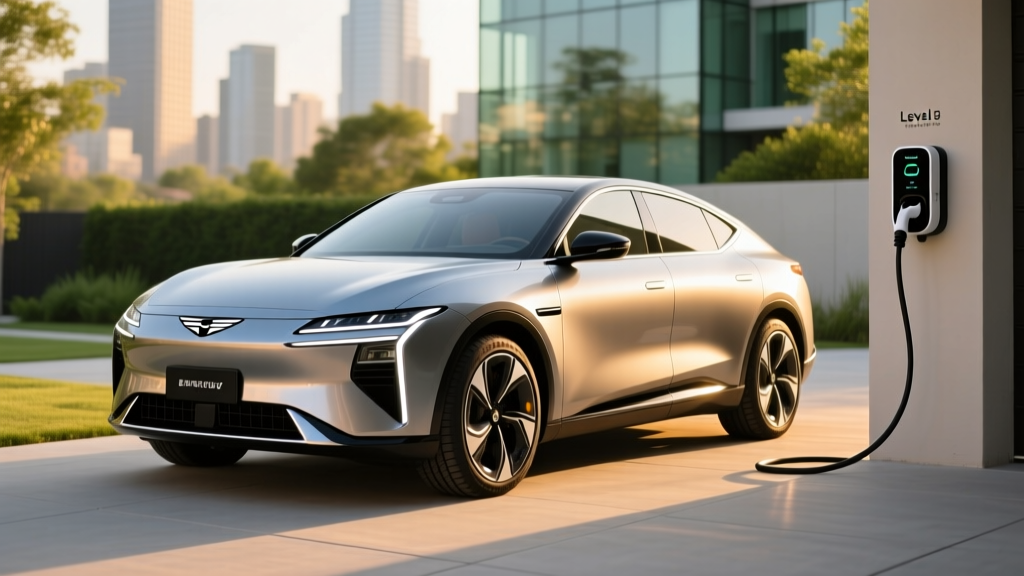
The 2026 Genesis Electrified G80 — frequently searched as the Genesis EREV — is the Korean luxury brand's flagship electric sedan, wrapping a proven 77.4 kWh battery platform in a handcrafted, whisper-quiet executive car. With up to 282 miles of EPA-estimated range, 350 kW peak DC fast charging, and a starting price near $66,200 before incentives, it undercuts European rivals like the BMW i5 and Mercedes EQE on price while matching or beating them on cabin materials and ride refinement.
But this is not a track weapon or a range king. The Electrified G80 prioritizes comfort over cornering, and its 282-mile ceiling (on the single-motor RWD variant) means road trippers will plan stops more carefully than in a Tesla Model S or Lucid Air. If your priority is serene daily commuting with luxury-badge presence, the EREV earns a serious look.
Genesis EREV Specs at a Glance
| Specification | RWD (Base/Advanced) | AWD (Prestige) |
|---|---|---|
| EPA Range | 282 miles | 264 miles |
| Battery (usable) | 77.4 kWh, NMC lithium-ion | |
| Horsepower | 365 hp | 365 hp (dual motor) |
| Torque | 258 lb-ft | 516 lb-ft |
| 0–60 mph | 5.1 sec (est.) | 4.1 sec (mfr.) |
| Drivetrain | Rear-Wheel Drive | Dual-Motor AWD |
| Max DC Fast Charge | 350 kW (peak) | |
| 10–80% DC Time | ~22 minutes (ideal conditions) | |
| Level 2 (AC) Rate | 10.9 kW (~36 mi/hr) | |
| MPGe (combined) | 97 MPGe | 91 MPGe |
| Cargo Volume | 12.5 cu ft (trunk, no frunk) | |
| Base MSRP (2026) | $66,200 | $73,900 |
| Battery Warranty | 10 years / 100,000 miles | |
Range & Efficiency: Real-World vs. EPA Sticker
Genesis rates the RWD Electrified G80 at 282 miles EPA, while the dual-motor AWD drops to 264 miles. Efficiency lands at 97 MPGe combined for RWD and 91 MPGe for AWD, translating to roughly 34–36 kWh per 100 miles — competitive with the BMW i5 eDrive40 but trailing the lighter Tesla Model S Long Range.
EPA 282 miles (RWD) / 264 miles (AWD). In mixed highway driving at 70–75 mph, expect 240–260 miles from the RWD and 225–245 miles from AWD. In freezing temperatures (below 32°F), range can drop 20–30% without preconditioning, yielding as low as 185–210 miles on the AWD. The Electrified G80's heat pump (standard on 2026 models) helps mitigate cold-weather losses compared to resistive heating, but physics still applies.
The 77.4 kWh NMC (nickel-manganese-cobalt) battery pack sits beneath the floor. NMC chemistry favors energy density over cycle life compared to LFP, meaning you get more range per kilogram but should avoid routinely charging to 100% or draining below 10% for long-term health. Genesis's battery management system includes a buffer that protects the pack, and the 10-year/100,000-mile warranty covers capacity dropping below 70% of original.
For context, a 250-mile real-world range comfortably covers a week of 30-mile round-trip commutes with home charging, but cross-country road trips in the AWD variant will require a charge stop roughly every 3 hours at highway speeds.
Charging Speed: DC Fast, Level 2, and Home Setup
The Electrified G80 uses the CCS1 connector (Genesis has not yet adopted NACS for the 2026 model year, though adapter compatibility with Tesla Superchargers is expanding). On a 350 kW DC fast charger, the pack can accept peak rates near 230–250 kW before tapering — the "350 kW" label reflects the vehicle's maximum acceptance architecture, not sustained throughput.
| Charging Level | Power / Rate | Speed | Typical Use |
|---|---|---|---|
| Level 1 (120V) | 1.4 kW | ~4–5 mi/hr | Emergency / overnight trickle |
| Level 2 (240V home) | 10.9 kW | ~36 mi/hr | Daily home charging, 0–100% in ~7.5 hrs |
| DC Fast (150 kW station) | ~130 kW sustained | ~430 mi/hr | 10–80% in ~28 min |
| DC Fast (350 kW station) | ~230 kW peak | ~760 mi/hr | 10–80% in ~22 min (preconditioned) |
Charging-curve reality: Like most NMC packs, the Electrified G80 charges fastest between 10–50% SoC, then progressively tapers. The 10–80% time of ~22 minutes assumes a preconditioned battery (use the navigation-based preconditioning feature to warm the pack before arrival) and a station delivering its rated output. Above 80%, the rate drops sharply — expect 80–100% to take an additional 25–30 minutes. For road trips, plan 10–80% stops and skip topping off unless necessary.
At home on a 48-amp Level 2 circuit (hardwired, 60-amp breaker), the 10.9 kW onboard charger refills the pack in about 7.5 hours — enough for a full overnight charge. Home installation typically costs $500–$2,000 depending on panel capacity and run length. A licensed electrician should verify your panel has headroom; older 100-amp panels may require a $1,500–$3,000 upgrade.
Performance and Driving Dynamics
The AWD dual-motor variant produces 365 horsepower and a stout 516 lb-ft of torque, delivering a 4.1-second 0–60 mph time. That's quick by luxury-sedan standards — the BMW i5 M60 hits 3.7 seconds, but costs $20,000 more. The RWD model uses a single rear motor with 365 hp and 258 lb-ft, reaching 60 mph in roughly 5.1 seconds.
Where the Electrified G80 excels is not in launch control but in isolation. The cabin is among the quietest in the segment, with active noise cancellation, laminated glass, and a multi-link rear suspension that absorbs highway imperfections with composure. The steering is light and numb by sporty-sedan standards — this is a grand tourer, not a canyon carver.
Regenerative braking offers multiple levels adjustable via steering-wheel paddles, including a near one-pedal-driving mode at the highest setting. The transition between regen and friction braking is well-blended, avoiding the grabby feel that plagues some competitors.
Interior, Tech, and Cargo
Genesis interiors have been quietly outpacing German rivals in perceived quality, and the Electrified G80 continues that trend. Standard features include a 12.3-inch digital cluster, a 14.5-inch widescreen infotainment display, a 12.3-inch passenger screen (Prestige trim), Nappa leather with quilted stitching, and a 21-speaker Lexicon audio system.
The infotainment runs Genesis's latest software with wireless Apple CarPlay and Android Auto, over-the-air updates, and a fingerprint-authentication system for driver profiles. The available Digital Key lets you use a smartphone as the key fob.
Driver assistance includes Highway Driving Assist II (HDA II), which provides adaptive cruise control with lane-centering on divided highways — a SAE Level 2 system requiring full driver attention. It is not self-driving. HDA II performs well in highway traffic but requires hands on the wheel and does not handle construction zones or sudden lane merges without intervention.
Cargo space is the Electrified G80's weakest practical metric: just 12.5 cubic feet of trunk volume with no front trunk (frunk), as the battery and power electronics occupy the space under the hood. That trails the BMW i5 (17.4 cu ft) and is tight for airport runs with four passengers' luggage. Rear legroom is generous at 37.4 inches, and the cabin seats four adults comfortably (the rear middle seat is best for short trips due to a drivetrain hump).
Pricing, Trims, and Federal Tax Credit Eligibility
| Trim | MSRP (2026) | Est. After §30D Credit* |
|---|---|---|
| RWD Standard | $66,200 | $58,700 |
| RWD Advanced | $69,800 | $62,300 |
| AWD Prestige | $73,900 | $66,400 |
*Tax-credit estimates assume full eligibility. Actual credit varies.
The 2026 Electrified G80 may qualify for up to $7,500 under IRS §30D, but eligibility depends on three moving targets that buyers must verify at purchase:
- MSRP cap: Sedans must be priced at or below $55,000 to qualify. The Electrified G80 starts at $66,200, which exceeds the sedan cap. However, if Genesis reclassifies the vehicle or if the buyer selects a configuration that qualifies under a different body-style classification, partial or full credit may apply. Verify with your dealer and IRS guidelines before assuming eligibility.
- Income limits: Modified AGI must not exceed $150,000 (single), $225,000 (head of household), or $300,000 (joint filers).
- Battery sourcing: Critical-mineral and battery-component requirements phase in annually. Confirm the specific VIN's compliance on fueleconomy.gov.
- Point-of-sale transfer: As of 2024, eligible buyers can transfer the credit to the dealer for an immediate price reduction at purchase rather than waiting to claim it on their tax return.
Bottom line on pricing: Do not count on the full $7,500 credit for the Electrified G80. The MSRP cap for sedans is the primary obstacle. Consult a tax professional and check the IRS's VIN-lookup tool before signing a purchase agreement.
Genesis EREV Pros and Cons
- Class-leading cabin quietness and material quality
- Competitive 350 kW DC fast-charge architecture
- 10-year/100,000-mile battery warranty (best in luxury segment)
- Generous standard features — few add-on packages needed
- Smooth, composed ride quality for daily commuting
- 282-mile max range trails Tesla Model S and Lucid Air significantly
- Only 12.5 cu ft trunk, no frunk — poor cargo utility
- Likely ineligible for §30D credit due to sedan MSRP cap
- CCS1 connector (no native NACS; Supercharger access via adapter)
- Numb steering and soft dynamics — not a sporty sedan
Who the Genesis EREV Suits Best
Choose the Genesis Electrified G80 if: You prioritize interior luxury and ride comfort over outright range or sportiness, you charge primarily at home, your daily commute is under 60 miles round-trip, and you want a luxury sedan that doesn't default to a German badge.
Look elsewhere if: You regularly drive 300+ miles between charges (consider the Lucid Air Pure or Tesla Model S), you need cargo versatility (an SUV like the Electrified GV70 or BMW iX is better), or you depend on the full $7,500 federal credit to make the math work.
Frequently Asked Questions
What is the real-world range of the Genesis EREV?
In mixed highway driving at 70 mph, expect 240–260 miles from the RWD and 225–245 miles from the AWD. In cold weather below freezing, plan for 185–210 miles on the AWD variant. The EPA sticker of 282 miles (RWD) is achievable only in moderate temperatures with city-heavy driving.
How fast does the Genesis EREV charge?
On a 350 kW DC fast charger with a preconditioned battery, 10–80% takes approximately 22 minutes. On a home Level 2 charger (10.9 kW), a full charge takes about 7.5 hours. Peak charge rate tapers significantly above 80%, so avoid topping off on road trips unless needed.
Does the Genesis Electrified G80 qualify for the federal EV tax credit?
Likely not the full $7,500. The §30D sedan MSRP cap is $55,000, and the Electrified G80 starts at $66,200. Some configurations or reclassifications may allow partial eligibility, but buyers should verify with the IRS and a tax professional before purchase.
Is the Genesis EREV worth buying vs. the BMW i5 or Mercedes EQE?
For cabin luxury and value, yes — the Genesis undercuts both on price while matching material quality. For range and driving engagement, the BMW i5 eDrive40 (up to 295 miles EPA) and the Tesla Model S (402 miles) are stronger. The Electrified G80 wins on comfort; it loses on practicality and sporty dynamics.
What battery chemistry does the Genesis EREV use?
The Electrified G80 uses an NMC (nickel-manganese-cobalt) lithium-ion pack with 77.4 kWh of usable capacity. NMC offers higher energy density than LFP but benefits from staying between 20–80% state of charge for daily use to maximize long-term health.
Does the Electrified G80 have a frunk?
No. The front compartment houses power electronics and the HVAC system, leaving no front trunk. Total cargo is limited to the 12.5 cu ft rear trunk.
Sources: fueleconomy.gov, IRS §30D Clean Vehicle Credit, Genesis USA press specifications. Verify trim pricing and credit eligibility at time of purchase.