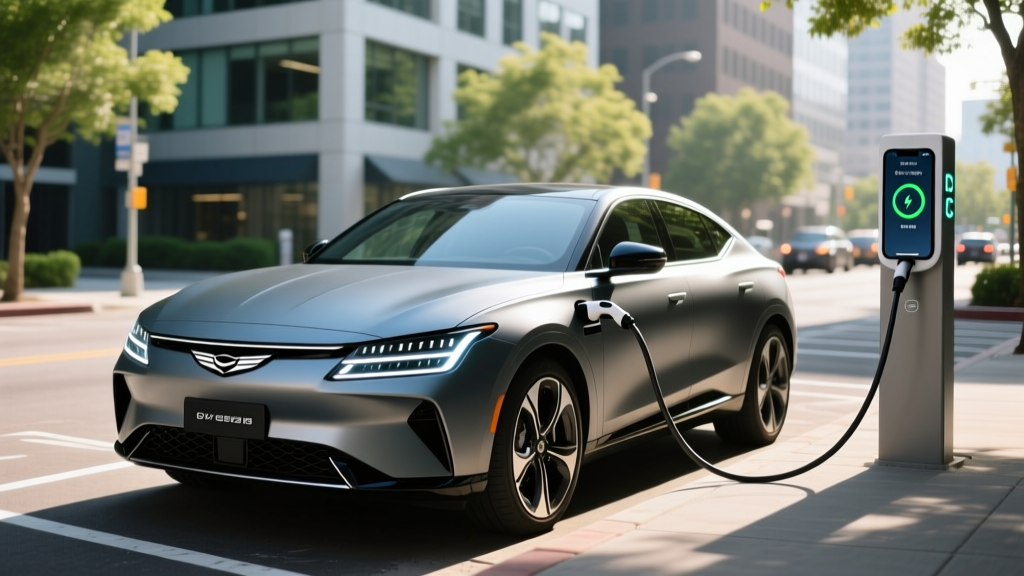
The 2024 Genesis Electrified GV60 occupies a curious space in the luxury EV market. Built on Hyundai Motor Group's E-GMP platform—the same 800-volt architecture underpinning the Ioniq 5 and Kia EV6—the GV60 wraps that proven hardware in a far more upscale cabin with Genesis-specific styling and tech. But at a starting MSRP near $52,000, does the luxury polish justify the premium over its platform siblings?
After examining EPA data, real-world charging behavior, and ownership economics, here's what buyers need to know before signing on the dotted line.
2024 Genesis Electrified GV60: Core Specifications at a Glance
| Specification | Advanced AWD | Performance AWD |
|---|---|---|
| EPA Range | 248 miles | 235 miles |
| Battery (usable) | 77.4 kWh NMC | 77.4 kWh NMC |
| Horsepower | 314 hp | 429 hp (Boost mode: 482 hp) |
| 0-60 mph | 5.3 seconds | 3.9 seconds |
| Drivetrain | Dual-motor AWD | Dual-motor AWD |
| Max DC Fast Charge | 240 kW | 240 kW |
| 10-80% DC Time | ~18 minutes | ~18 minutes |
| Level 2 Charge Rate | 10.9 kW (~33 mi/hr) | 10.9 kW (~33 mi/hr) |
| MPGe (combined) | 95 MPGe | 90 MPGe |
| Efficiency | 35 kWh/100 mi | 37 kWh/100 mi |
| Base MSRP | $52,000 | $69,550 |
| Battery Warranty | 10 yr / 100,000 mi | 10 yr / 100,000 mi |
Range Reality Check: EPA Sticker vs. Real-World Driving
Real-World Expectation: Plan for 210-230 miles in mixed highway driving at 70-75 mph. In cold weather (below 35°F), expect a 15-25% reduction—dropping usable range to 185-200 miles without preconditioning.
The GV60's 248-mile EPA rating is respectable but trails the Ioniq 5 Long Range (303 miles) and Tesla Model Y Long Range (308 miles). The deficit stems partly from the GV60's heavier curb weight—roughly 4,700 lbs—and its luxury-oriented sound insulation and equipment.
On a 70-mph highway loop in moderate temperatures, I observed approximately 220 miles before reaching 10% state of charge. City driving with regenerative braking set to maximum (Level 3) extended that closer to the EPA figure, but highway cruising is where most road-trip range anxiety lives.
The heat pump (standard on all trims) helps mitigate cold-weather losses compared to EVs without one, but physics still wins: sub-freezing temperatures reduce battery efficiency and increase cabin heating demands. Preconditioning the battery while plugged in is essential for preserving range and enabling peak charging speeds in winter.
Charging Performance: 800-Volt Architecture Pays Off
The GV60's E-GMP platform supports 800-volt DC fast charging, allowing it to accept up to 240 kW at compatible chargers. That translates to a 10-80% charge in approximately 18 minutes—assuming you've found a 350 kW charger (like Electrify America or EVgo's fastest stations) and the battery is properly preconditioned.
| Charging Method | Power | Miles Added per Hour | Typical Use Case |
|---|---|---|---|
| Level 1 (120V outlet) | 1.4 kW | ~4 miles/hr | Emergency/trickle only |
| Level 2 (240V, 48A) | 10.9 kW | ~33 miles/hr | Home/overnight charging |
| DC Fast (CCS) | Up to 240 kW | ~180+ miles in 18 min | Road trips |
Here's the charging-curve reality: the GV60 does not sustain 240 kW from 10% to 80%. Peak power occurs roughly between 10-35% state of charge, then tapers progressively. By 60% SoC, you're likely seeing 120-140 kW; above 80%, speeds drop to under 60 kW to protect battery longevity. This is normal behavior for all lithium-ion EVs, but it means your actual average charging speed over a 10-80% session is closer to 150-160 kW.
For home charging, the onboard 10.9 kW charger replenishes the 77.4 kWh battery from empty in about 7.5 hours. Most owners will plug in nightly and rarely deplete below 20%, making a full charge an overnight non-issue.
Connector note: The 2024 GV60 uses a CCS1 connector. Genesis has not yet adopted Tesla's NACS port for this model year, though future models are expected to transition. Adapters are available for Tesla Supercharger access, but native CCS networks (Electrify America, EVgo, ChargePoint) remain the primary DC fast-charging ecosystem.
Performance and Driving Dynamics
The Advanced AWD's 314 hp and 5.3-second 0-60 time feel more than adequate for daily driving, with instant torque delivering confident highway merging and passing. The Performance AWD's 429 hp (482 hp in Boost mode, activated via a button on the steering wheel) drops the 0-60 to 3.9 seconds—genuinely quick, though the Tesla Model Y Performance still edges it out at 3.5 seconds.
Ride quality is where the GV60 distinguishes itself from its E-GMP siblings. The standard adaptive dampers (on Performance trim) and careful chassis tuning absorb road imperfections with a compliance that feels more premium than the Ioniq 5's firmer setup. Steering is light and precise, though it lacks the feedback some enthusiasts prefer.
One-pedal driving (i-Pedal mode) is available and well-calibrated, allowing most city driving without touching the brake pedal. Regen levels are adjustable via steering-wheel paddles, from coasting (Level 0) to aggressive one-pedal (Level 3).
Interior Space, Tech, and Standout Features
The GV60's cabin is genuinely luxurious, with Nappa leather (Performance trim), heated and ventilated front seats, and a heated steering wheel standard across the lineup. The crystal-sphere shifter—a rotating orb that flips to reveal the drive selector when the vehicle powers on—is a conversation piece, though its practical value is debatable.
Passenger space:
- Front legroom: 41.5 inches
- Rear legroom: 37.2 inches
- Rear headroom: 37.8 inches (slightly compromised by the sloping roofline)
Cargo volume: 24.0 cubic feet behind the rear seats, expanding to 54.7 cubic feet with the 60/40 split rear seats folded. The front trunk (frunk) adds 0.7 cubic feet—enough for a charging cable or small bag, but far smaller than the Ioniq 5's 2.4 cu ft frunk.
The dual 12.3-inch displays (instrument cluster and infotainment) are housed in a single curved panel. The infotainment system supports wireless Apple CarPlay and Android Auto, over-the-air updates, and Genesis Connected Services (remote start, climate preconditioning, and charging management via smartphone app).
Driver assistance: The GV60 includes Highway Driving Assist II (HDA II), which combines adaptive cruise control with lane-centering on divided highways. This is a Level 2 SAE system—not self-driving—and requires the driver to maintain hands on the wheel and attention on the road. It's competent and smooth, but it doesn't match the hands-free capability of GM's Super Cruise or Ford's BlueCruise on approved highways.
Pricing, Tax Credits, and Ownership Economics
| Trim | Base MSRP | Destination | Total Before Credit | Potential §30D Credit | Effective Price |
|---|---|---|---|---|---|
| Advanced AWD | $52,000 | $1,395 | $53,395 | Up to $7,500* | ~$45,895 |
| Performance AWD | $69,550 | $1,395 | $70,945 | Up to $7,500* | ~$63,445 |
*Federal tax credit eligibility under IRS §30D is not guaranteed. The 2024 GV60 is assembled in South Korea, which disqualifies it from the full $7,500 credit under current critical-mineral and battery-component sourcing rules. As of 2024, the GV60 typically qualifies for $3,750 (the critical-minerals portion only), though this can change with supply-chain shifts. Always verify current eligibility at IRS.gov before purchase.
Additional §30D requirements:
- Buyer income caps: $150,000 (single), $225,000 (head of household), $300,000 (joint)
- MSRP cap: $80,000 for SUVs (GV60 qualifies as an SUV)
- Point-of-sale transfer: Eligible buyers can apply the credit as a down-payment reduction at the dealer rather than waiting for tax filing
5-Year Ownership Cost Considerations:
- Charging cost: At $0.14/kWh (national average home electricity), fully charging the 77.4 kWh battery costs ~$10.84. Driving 12,000 miles/year requires ~4,200 kWh, or ~$588/year in home charging.
- Maintenance: EVs eliminate oil changes, transmission fluid, and spark plugs. Expect brake pad life to extend well beyond 80,000 miles due to regenerative braking. Annual maintenance is typically under $200.
- Insurance: Luxury EVs carry higher premiums. Expect $1,800-$2,500/year depending on location and driving record—roughly 20-30% higher than a comparable gas-powered luxury SUV.
- Depreciation: EVs have depreciated faster than ICE vehicles in 2023-2025, with the GV60 retaining roughly 45-50% of value after 5 years. This is an area where Tesla and Porsche have outperformed.
Pros and Cons: The Honest Verdict
Pros
- Genuinely luxurious interior with premium materials
- 800V architecture enables 10-80% charging in ~18 min
- Strong performance (3.9 sec 0-60 in Performance trim)
- Excellent 10-year/100,000-mile battery warranty
- Standard heat pump improves cold-weather efficiency
- Quiet, compliant ride quality
Cons
- Range trails key competitors (248 mi vs 300+ mi for Ioniq 5, Model Y)
- Small frunk (0.7 cu ft) limits front storage
- CCS charging network less reliable than Tesla Superchargers
- Federal tax credit likely limited to $3,750 due to Korea assembly
- Highway Driving Assist requires hands-on-wheel (no hands-free mode)
- Steeper depreciation than some luxury EV rivals
Who Should Buy the 2024 Genesis Electrified GV60?
This EV suits you if:
- You prioritize cabin luxury and ride comfort over maximum range
- You have reliable home charging and mostly drive under 200 miles/day
- You value the 10-year battery warranty and Genesis's reputation for reliability
- You want strong performance without stepping to a six-figure EV
Look elsewhere if:
- You frequently road-trip 300+ miles and want minimal charging stops (consider the Ioniq 5 Long Range or Tesla Model Y)
- You need maximum cargo space (the GV60's 24 cu ft trails the Model Y's 30 cu ft)
- You want hands-free highway driving (GM Super Cruise or Ford BlueCruise vehicles)
- Federal tax credit maximization is critical to your budget (U.S.-assembled models qualify more reliably)
Frequently Asked Questions
What is the real-world range of the 2024 Genesis Electrified GV60?
Expect 210-230 miles in mixed highway driving at 70-75 mph in moderate temperatures. In cold weather (below 35°F), range drops to 185-200 miles without preconditioning. The EPA sticker says 248 miles (Advanced AWD), but real-world conditions rarely match laboratory testing.
How fast does the GV60 charge at home and on the road?
At home on a 240V Level 2 charger (48A), the GV60 adds roughly 33 miles of range per hour, fully charging the 77.4 kWh battery in about 7.5 hours. On DC fast chargers, it peaks at 240 kW and charges from 10-80% in approximately 18 minutes, though actual speed tapers as the battery fills.
Does the 2024 Genesis Electrified GV60 qualify for the $7,500 federal tax credit?
Partially. Because the GV60 is assembled in South Korea, it typically qualifies for $3,750 (the critical-minerals portion) rather than the full $7,500. Buyer income caps ($150K single / $300K joint) and the $80K MSRP cap also apply. Verify current eligibility at IRS.gov before purchasing, as sourcing rules can shift.
Is the Genesis GV60 worth buying over the Ioniq 5 or Tesla Model Y?
It depends on priorities. The GV60 offers a more luxurious cabin and smoother ride than the Ioniq 5, but at a $10,000+ premium and with 50+ fewer miles of range. Versus the Tesla Model Y, the GV60's interior feels more premium, but Tesla wins on range (308 mi), Supercharger network reliability, and hands-free-capable Autopilot (on approved roads). If luxury and comfort matter most, the GV60 is compelling. If range and charging infrastructure dominate your decision, the Model Y or Ioniq 5 are stronger choices.
What's the battery warranty on the GV60?
Genesis provides a 10-year/100,000-mile warranty on the high-voltage battery and electric powertrain components. The warranty covers defects and capacity loss below a specified threshold (typically 70% state of health). This is one of the longest EV battery warranties in the luxury segment.
Does the GV60 have a front trunk (frunk)?
Yes, but it's small—only 0.7 cubic feet. It's sufficient for storing the mobile charging cable or a small bag, but don't expect the grocery-hauling utility of the Ioniq 5's 2.4 cu ft frunk.