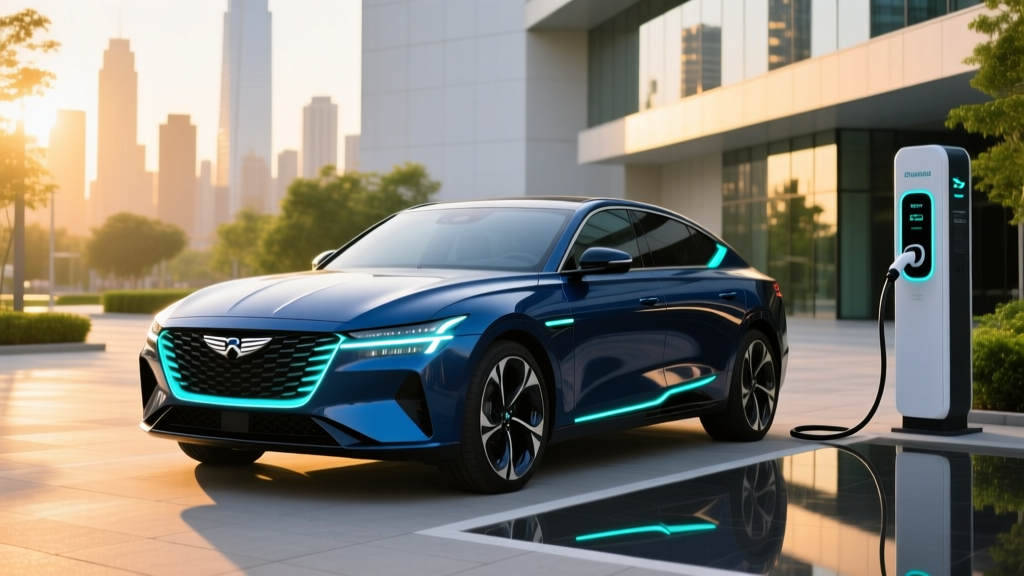
Quick Verdict: Should You Buy the Genesis Electrified GV60?
The Genesis Electrified GV60 is a premium compact electric crossover built on the Hyundai Motor Group's E-GMP 800V architecture. For the 2026 model year, the base Advanced trim starts at $53,400 MSRP (including destination) and delivers an EPA-estimated 264 miles of range from a 77.4 kWh (usable) lithium-ion battery. The performance-oriented Sport Prestige trim drops to 248 miles EPA but adds dual motors producing 429 hp (483 hp in Boost mode) with a 0-60 mph time of 3.8 seconds.
Bottom line: If you have access to Level 2 home charging and want a luxury EV crossover that undercuts German rivals on price while offering ultra-fast DC charging (10-80% in ~18 minutes at a 350 kW station), the GV60 is a strong candidate. If you lack home charging or frequently drive in sub-20°F climates, the ownership experience requires more planning — factor in real-world range loss and public charging logistics before committing.
Genesis Electrified GV60: Core Specs at a Glance
| Specification | Advanced (Single Motor) | Sport (Dual Motor) | Sport Prestige (Dual Motor) |
|---|---|---|---|
| Base MSRP (2026) | $53,400 | $60,400 | $66,400 |
| EPA Range | 264 mi | 248 mi | 248 mi |
| Battery (Usable) | 77.4 kWh, NMC | 77.4 kWh, NMC | 77.4 kWh, NMC |
| Horsepower | 225 hp | 314 hp | 429 hp (483 Boost) |
| 0-60 mph | 7.3 sec | 5.3 sec | 3.8 sec (Boost) |
| Max DC Charge Rate | 240 kW (peak) | 240 kW (peak) | 240 kW (peak) |
| 10-80% DC Fast Charge | ~18 min (350 kW station) | ~18 min | ~18 min |
| Level 2 (240V) Rate | 10.9 kW | 10.9 kW | 10.9 kW |
| MPGe (Combined) | 95 MPGe | 90 MPGe | 88 MPGe |
| Battery/Powertrain Warranty | 10 yr / 100,000 mi | 10 yr / 100,000 mi | 10 yr / 100,000 mi |
| Vehicle Warranty | 5 yr / 60,000 mi | 5 yr / 60,000 mi | 5 yr / 60,000 mi |
Sources: EPA fueleconomy.gov, Genesis USA specifications.
Real-World Range: What the EPA Sticker Doesn't Tell You
EPA Sticker: 264 miles (Advanced) / 248 miles (Sport Prestige)
Real-World Expectations:
- Mixed driving (city/suburban, 65-70°F): 240-260 miles — close to EPA
- Highway sustained (75+ mph): 210-230 miles — EVs consume more energy at high speeds due to aerodynamic drag
- Cold weather (20°F or below, cabin heat): 170-200 miles — expect 25-35% range reduction. The GV60 uses a heat pump on higher trims, which mitigates some loss, but NMC chemistry still suffers in deep cold
- Towing (max 2,000 lb rated): 140-170 miles — towing crushes EV range; not a strong suit for this platform
The GV60's 77.4 kWh NMC (nickel-manganese-cobalt) battery prioritizes energy density over the cycle-life advantage of LFP (lithium iron phosphate) chemistry. In practice, this means you get strong range in a compact package, but you should follow the 20-80% daily charging guideline to minimize long-term degradation. Genesis backs the pack with a 10-year/100,000-mile warranty guaranteeing at least 70% capacity retention — competitive with Hyundai/Kia's coverage and better than most European luxury brands.
Charging the GV60: Home, Public, and the 800V Advantage
The GV60's standout technical feature is its 800V electrical architecture, shared with the Hyundai Ioniq 5 and Kia EV6. This enables DC fast charging at up to 240 kW when paired with a 350 kW charger — far faster than 400V competitors like the BMW iX or Mercedes EQB.
| Charging Level | Power | Miles Added Per Hour | Typical Use Case |
|---|---|---|---|
| Level 1 (120V household) | ~1.4 kW | ~4-5 mi/hr | Emergency/overnight trickle only |
| Level 2 (240V, 48A home charger) | 10.9 kW | ~32-36 mi/hr | Daily home charging — full charge in ~7.5 hours |
| DC Fast (350 kW station) | Peak 240 kW | ~15 mi/min at peak | Road trips — 10-80% in ~18 min |
| DC Fast (150 kW station) | ~130-145 kW sustained | ~9-11 mi/min | Common public chargers — 10-80% in ~28 min |
| DC Fast (50 kW station) | 50 kW | ~3-4 mi/min | Older chargers — 10-80% in ~65 min |
Understanding the Charge Curve
The advertised "240 kW peak" is not sustained across the entire session. Like all lithium-ion packs, the GV60's charge rate tapers as State of Charge (SoC) rises. Expect the following curve at a 350 kW station with battery preconditioning active:
- 10-40% SoC: 200-240 kW (peak zone)
- 40-60% SoC: 150-180 kW
- 60-80% SoC: 100-130 kW (tapering)
- 80-100% SoC: 50 kW or less — this is why 10-80% is the practical fast-charging window
Critical tip: Enable battery preconditioning via the navigation system before arriving at a DC fast charger. Without it, a cold battery in winter may cap your charge rate at 50-80 kW, turning an 18-minute stop into a 50-minute stop.
Home Charging Setup Costs
| Item | Estimated Cost Range |
|---|---|
| Level 2 EVSE (ChargePoint Home Flex, Emporia, etc.) | $400-$700 |
| Electrician labor (240V/48A circuit run) | $600-$2,000 |
| Permit (varies by municipality) | $50-$250 |
| Electrical panel upgrade (if 100A panel is full) | $1,500-$3,500 |
| Typical total (no panel upgrade) | $1,050-$2,950 |
| Typical total (with panel upgrade) | $2,550-$6,450 |
Genesis includes a complimentary home charger (the Genesis Home Charging Unit) for qualifying 2026 GV60 buyers — check with your dealer for current program terms. Installation still requires a licensed electrician.
GV60 Ownership Costs vs. a Gas Luxury Crossover
The most common comparison shoppers make is against a gas-powered luxury compact SUV like the Genesis GV70 2.5T (the GV60's ICE sibling) or the BMW X3. Here's how the numbers stack up over five years and 75,000 miles of driving.
| Cost Category | Electrified GV60 Advanced | Genesis GV70 2.5T (Gas) |
|---|---|---|
| Base MSRP | $53,400 | $46,900 |
| Estimated Federal Tax Credit (§30D) | $0-$7,500* | $0 |
| Fuel/Energy (75,000 mi) | $2,600-$4,500** | $8,200-$9,800*** |
| Maintenance (5 yr) | $800-$1,200 | $3,500-$5,000 |
| Insurance (5 yr avg) | $9,500-$12,000 | $7,500-$9,500 |
| Estimated 5-Year Depreciation | $22,000-$28,000 | $18,000-$22,000 |
| Approx. 5-Year Total Cost | $42,000-$53,000 | $44,000-$55,000 |
* §30D credit eligibility depends on battery sourcing, MSRP caps ($80,000 for SUVs), and buyer income limits ($150K single / $300K joint). Check current rules at IRS.gov. As of 2026, many Hyundai Motor Group vehicles face sourcing restrictions that may reduce or eliminate the credit — verify with your dealer before purchase.
** Assumes $0.12-$0.18/kWh home charging and occasional DC fast charging at $0.35-$0.48/kWh. Efficiency: ~32 kWh/100mi.
*** Assumes $3.50-$4.20/gallon premium, 24 MPG combined (EPA for GV70 2.5T AWD).
Key takeaway: The GV60's higher purchase price is substantially offset by fuel and maintenance savings. EVs eliminate oil changes, transmission fluid, spark plugs, and most brake wear (regenerative braking extends pad life to 80,000+ miles). However, EV insurance premiums run 15-25% higher on average due to repair-cost patterns for battery-adjacent collision damage.
Federal Tax Credit & Incentive Reality Check
§30D Clean Vehicle Credit — 2026 Rules:
- Maximum credit: $7,500 ($3,750 for critical minerals + $3,750 for battery components)
- MSRP cap: $80,000 for SUVs/trucks/vans (GV60 qualifies on all trims)
- Buyer income cap: $150,000 single / $225,000 head of household / $300,000 joint (modified AGI)
- Battery sourcing: Increasing percentages of critical minerals and battery components must be sourced from the US or FTA partners — this threshold tightens annually and may exclude some Hyundai Motor Group models in 2026
- Point-of-sale transfer: Eligible buyers can transfer the credit to the dealer at purchase, reducing the out-of-pocket price immediately rather than waiting for tax filing
- FEOC restriction: Vehicles with battery components from a "foreign entity of concern" (primarily Chinese suppliers) are disqualified
Always verify current eligibility at fueleconomy.gov and consult a tax professional before relying on the credit.
Common Misconceptions About the GV60 — Fact-Checked
| Myth | Fact |
|---|---|
| "The GV60 has 264 miles of range, so I'll always get 264 miles." | EPA range assumes mixed driving at moderate temperatures. Sustained highway driving at 75+ mph yields ~210-230 miles; winter driving below 20°F yields ~170-200 miles. Plan trips around the lower number. |
| "I need to charge to 100% every time for maximum range." | Charging NMC batteries to 100% regularly accelerates degradation. Set your daily limit to 80% and reserve 100% for road trips. The GV60's infotainment lets you set a custom charge limit. |
| "DC fast charging will destroy the battery." | Modern thermal management systems (like the GV60's liquid-cooled pack) handle frequent DC charging well. Data from E-GMP platform vehicles shows <5% degradation at 100,000 miles even with regular DC use. Still, home Level 2 is gentler long-term. |
| "EVs cost more to insure, so the savings disappear." | Insurance is 15-25% higher on average, but fuel and maintenance savings of $4,000-$6,000 over five years typically exceed the insurance premium increase of $1,500-$2,500 for most drivers. |
| "The GV60 uses Tesla's NACS plug." | For the 2026 model year, the GV60 ships with a CCS1 connector in the US market. Genesis has announced a transition to NACS for future models, but current GV60 owners will need a CCS-to-NACS adapter to access Tesla Superchargers — verify adapter availability and compatibility with your dealer. |
| "I can't charge at home if I live in an apartment." | Many apartment complexes and condos now install shared Level 2 chargers. Check PlugShare or ChargePoint for workplace charging. If neither is available, the GV60's fast-charging capability makes public-only charging viable — but it costs 2-3x more than home charging. |
Decision Framework: Is the GV60 the Right EV for You?
Choose the Genesis Electrified GV60 if:
- You have access to Level 2 home or workplace charging — this is where 80%+ of EV charging happens and where the economics work best
- Your typical daily driving is under 80 miles round-trip, leaving plenty of range buffer
- You value the 800V fast-charging architecture for road trips (10-80% in 18 minutes at a 350 kW charger)
- You want a luxury interior with genuine premium materials, a 12.3" dual-screen cockpit, and Genesis's strong dealer/service network
- You prefer the 10-year/100,000-mile battery warranty over the 8-year standard from most European competitors
- You don't need more than 24 cubic feet of cargo space (the GV60 is a compact crossover with a sloping roofline)
Look Elsewhere if:
- You have no access to home or workplace charging and live in an area with sparse public DC infrastructure — public-only charging erodes cost savings and adds time
- You regularly drive in temperatures below 10°F and need consistent 250+ mile range — consider a larger-battery EV like the Rivian R1S or BMW iX
- You need three rows of seating or significant towing capacity — the GV60 is a 5-passenger, 2,000-lb-tow vehicle
- You want maximum federal tax credit certainty — as of 2026, battery-sourcing rules under §30D are tightening, and some Hyundai Motor Group models may qualify for partial or no credit. Verify before purchase
- You prioritize one-pedal driving — the GV60's regen braking is adjustable but doesn't offer the aggressive single-pedal mode found in Teslas or the Nissan Ariya
What First-Time EV Buyers Should Know Before Signing
Transitioning from a gas car to the GV60 involves a few practical shifts that aren't always obvious at the dealership:
- Install your Level 2 charger BEFORE delivery day. Schedule your electrician 2-4 weeks before the car arrives. A 240V/48A circuit (requiring a 60A breaker) delivers the full 10.9 kW. Don't rely on the included 120V Level 1 cord for daily use — at ~4 miles of range per hour, it's inadequate for anything beyond emergency trickle charging.
- Download the Genesis Connected Services app and set your charge limit to 80%. Daily charging to 80% preserves your NMC battery's long-term health. Set a scheduled charge window to take advantage of off-peak electricity rates (typically 10 PM - 6 AM) if your utility offers time-of-use pricing.
- Plan your first road trip around charger availability, not range. Use PlugShare, A Better Routeplanner, or the Genesis navigation system to identify 350 kW Electrify America or EVgo stations along your route. The E-GMP platform charges fastest at the highest-power stations.
- Understand preconditioning. When you set a DC fast charger as your navigation destination, the GV60 will warm the battery to optimal temperature before arrival. This can shave 10-15 minutes off your charging stop in cold weather. Always navigate to the charger — don't just drive there.
- Budget for tires. The GV60 Sport Prestige wears 255/40R21 performance tires that cost $280-$400 per corner and may need replacement at 20,000-30,000 miles due to the vehicle's weight (~4,700 lbs) and instant torque. The Advanced trim's 19-inch tires are more affordable and longer-lasting.
Frequently Asked Questions
How long does the Genesis GV60 battery last before it needs replacement?
Based on data from E-GMP platform vehicles (Ioniq 5, EV6) now accumulating 100,000+ miles, NMC packs with active liquid cooling show 5-8% capacity loss at 100,000 miles under normal use. Battery replacement is rarely needed — the 10-year/100,000-mile warranty covers packs that drop below 70% capacity. If out-of-warranty replacement is ever needed, expect $12,000-$18,000 for the pack plus labor, though prices continue to decline as battery manufacturing scales.
Can the GV60 use Tesla Superchargers?
The 2026 GV60 uses a CCS1 connector. Tesla has opened portions of its Supercharger network to non-Tesla EVs via the Tesla app and built-in NACS adapters, but compatibility depends on having the correct CCS-to-NACS adapter. Check with your Genesis dealer for approved adapter options. Tesla's NACS connector is becoming the North American standard, and future Genesis models are expected to adopt it natively.
What's the real cost to charge the GV60 at home?
At the US average residential electricity rate of ~$0.16/kWh, fully charging the 77.4 kWh battery from 10% to 80% costs approximately $8.70 and adds ~200 miles of range — roughly $0.044 per mile. Compare that to premium gasoline at $4.00/gallon in a 24 MPG vehicle: $0.167 per mile. Over 15,000 annual miles, home charging saves approximately $1,800-$2,000 per year on energy alone.
Is the GV60 eligible for the $7,500 federal tax credit in 2026?
Eligibility is model-year and sourcing-dependent. Under §30D rules, the GV60 must meet critical-mineral and battery-component sourcing thresholds, the buyer must fall under income caps ($150K single / $300K joint), and the vehicle MSRP must be under $80,000 (all GV60 trims qualify on MSRP). Because sourcing rules tighten annually, some Hyundai Motor Group vehicles have seen credit eligibility fluctuate. Verify the current status at fueleconomy.gov and confirm with your dealer's finance department before finalizing the purchase.
How does the GV60 compare to the Hyundai Ioniq 5 or Kia EV6 mechanically?
All three share the E-GMP platform, 77.4 kWh battery, and 800V architecture. The GV60 differentiates with a more premium interior, standard luxury features (like the crystal sphere shifter and Bang & Olufsen audio on upper trims), Genesis's concierge-level service experience, and the 10-year warranty. The Ioniq 5 and EV6 offer slightly more cargo space and lower starting prices. Driving dynamics are similar, though the GV60 Sport Prestige's 483 hp Boost mode gives it a performance edge over most Ioniq 5 and EV6 trims.
Does the GV60 have a front trunk (frunk)?
Yes, but it's small — approximately 0.7 cubic feet, enough for a charging cable bag or small items. The main cargo area provides 24.0 cubic feet behind the rear seats and approximately 54.7 cubic feet with the rear seats folded. This is competitive with the BMW iX3 but smaller than the Hyundai Ioniq 5's 27.2 cu ft.