Quick Answer: Are General Motors EVs Worth Buying in 2026?
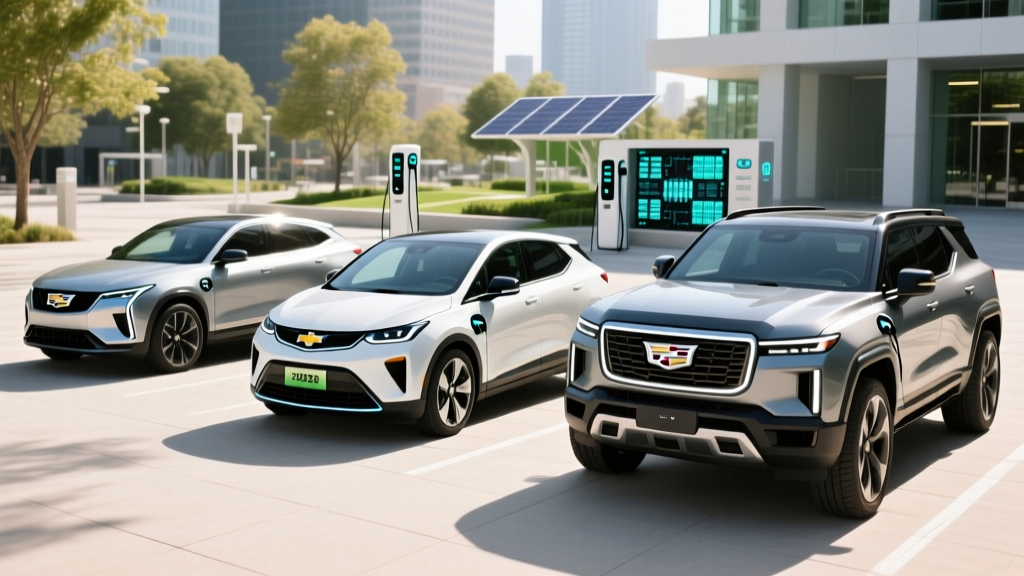
General Motors currently sells five mainstream EVs across Chevrolet, Cadillac, and GMC brands, ranging from the $33,600 Equinox EV (319 miles EPA) to the $96,800 GMC Sierra EV Denali. Most qualify for the full $7,500 federal tax credit under IRS §30D when purchased new, thanks to GM's North American battery sourcing. The Equinox EV offers the best value proposition at roughly $26,100 after incentives, while the Cadillac Lyriq and Optiq target luxury buyers. If you have Level 2 home charging access and drive under 300 miles daily, GM's Ultium-based EVs deliver competitive range, reasonable charging speeds (150-190 kW peak DC), and strong warranty coverage (8 years/100,000 miles on battery).
The Complete 2026 GM Electric Vehicle Lineup
GM's Ultium platform underpins every current electric vehicle in the portfolio. Unlike the older Bolt EV/EUV (discontinued in 2023, returning with Ultium in 2027), these models use the standardized battery architecture with pouch-style NMC (nickel manganese cobalt) cells in various pack sizes. Here's what's available now:
| Model | EPA Range | Battery (kWh usable) | Peak DC Charge | 10-80% Time | 0-60 mph | Base MSRP |
|---|---|---|---|---|---|---|
| Chevy Equinox EV (2LT FWD) | 319 mi | 85 kWh | 150 kW | ~32 min | 7.8 sec | $33,600 |
| Chevy Blazer EV (2LT AWD) | 279 mi | 102 kWh | 190 kW | ~28 min | 5.9 sec | $44,600 |
| Chevy Silverado EV (4WT) | 392 mi | 200 kWh | 350 kW* | ~20 min | 4.5 sec (RST) | $57,900 |
| Cadillac Lyriq (Tech RWD) | 314 mi | 102 kWh | 190 kW | ~28 min | 6.0 sec | $58,590 |
| Cadillac Optiq (Luxury AWD) | 300 mi | 102 kWh | 150 kW | ~32 min | 5.2 sec | $53,900 |
| GMC Sierra EV (Denali Edition 1) | 390 mi | 200 kWh | 350 kW* | ~20 min | 4.3 sec | $96,800 |
*350 kW peak requires a compatible 400+ kW DC fast charger — rare in public networks as of 2026. Expect sustained rates closer to 200-250 kW at typical 350 kW stations.
Real-World Range Reality Check
EPA estimates assume mixed city/highway driving at moderate temperatures. In real-world testing, expect:
- Highway-only at 75 mph: 15-20% reduction from EPA (Equinox EV ~255-270 mi)
- Cold weather (below 32°F): 20-30% reduction due to cabin heating and battery chemistry limitations
- Towing (Silverado/Sierra EV): 40-50% range loss when towing near max capacity (10,000 lb)
GM includes a heat pump standard on all Ultium EVs, which reduces cold-weather HVAC energy consumption by roughly 30% compared to resistive heating — a meaningful advantage in northern climates.
Federal Tax Credit Eligibility: The §30D Advantage
GM has a distinct advantage over many competitors: most of its EVs qualify for the full $7,500 federal tax credit under IRS §30D rules. Here's why and what the requirements are:
- MSRP caps: Vans/SUVs/pickups ≤$80,000; sedans ≤$55,000 (Equinox, Blazer, Silverado WT, Lyriq, Optiq qualify; Sierra Denali does not)
- Buyer income limits: AGI ≤$150K single / $225K head of household / $300K joint
- Battery sourcing: GM's Ultium cells are manufactured in Ohio and Tennessee with North American critical mineral supply chains — meeting the 2026 thresholds
- Final assembly: All current GM EVs are assembled in US plants (Orion, MI; Spring Hill, TN; Factory Zero, Detroit)
- Point-of-sale transfer: Eligible buyers can apply the $7,500 as a down payment reduction at the dealer rather than waiting for tax filing
Critical caveat: The Sierra EV Denali Edition 1 at $96,800 exceeds the $80,000 truck MSRP cap, so it does not qualify for the federal credit. The Silverado EV 4WT at $57,900 does qualify. Always verify current eligibility at fueleconomy.gov before purchasing, as battery sourcing rules can shift.
Charging Infrastructure: What GM Owners Need to Know
All 2026 GM EVs use the NACS (North American Charging Standard) connector — the Tesla-designed plug now adopted industry-wide. This is a major practical advantage:
| Network | Connector | GM Compatibility |
|---|---|---|
| Tesla Supercharger (V3/V4) | NACS | Native — no adapter required |
| Electrify America | NACS + CCS | Native NACS at new stations; CCS adapter for legacy |
| EVgo | NACS + CCS | Native NACS at new stations |
| ChargePoint | CCS (legacy) | Adapter required (included with vehicle) |
Home charging setup: Every GM EV includes a dual-level mobile cord (120V Level 1 at 1.4 kW / 240V Level 2 at up to 7.7 kW via NEMA 14-50 outlet). For faster Level 2 charging, GM sells the Ultium PowerShift wall connector at 11.5 kW ($595), which adds roughly 37 miles of range per hour on the Equinox EV.
| Item | Cost Range |
|---|---|
| NEMA 14-50 outlet install (50A circuit) | $500–$1,500 |
| Hardwired Level 2 station (11.5 kW) | $800–$2,200 |
| Electrical panel upgrade (if needed, 200A service) | $1,500–$4,000 |
| Permit fees | $50–$300 |
| Total typical install | $1,350–$3,000 |
Cost of Ownership: GM EVs vs Gas Equivalents
Let's compare the Equinox EV 2LT ($33,600) against the gas Equinox LT ($28,600) over 5 years and 75,000 miles. This is where the math gets interesting:
| Category | Equinox EV 2LT | Gas Equinox LT |
|---|---|---|
| Purchase price | $33,600 | $28,600 |
| Federal tax credit | -$7,500 | $0 |
| Net purchase | $26,100 | $28,600 |
| Fuel/energy (75K mi) | $3,900 (home charging @ $0.14/kWh) | $8,100 (gas @ $3.40/gal, 28 MPG) |
| Maintenance (5 yr) | $1,200 | $3,800 |
| Insurance (5 yr avg) | $9,500 | $7,800 |
| 5-year total cost | $40,700 | $48,300 |
The EV saves roughly $7,600 over five years, primarily from fuel and maintenance reductions. The break-even point against the gas Equinox occurs around year 2-3, depending on local electricity rates and driving patterns. However, insurance premiums run 15-25% higher on EVs due to repair costs and battery replacement risk — a real cost often overlooked.
Maintenance reality: No oil changes, no transmission fluid, no spark plugs, no emissions testing. Brake pads last 100,000+ miles thanks to regenerative braking. The primary service items are cabin air filters ($40-60), tire rotations, and windshield washer fluid.
Decision Framework: Which GM EV Fits Your Situation?
Choose the Equinox EV if:
- Budget is under $35K (under $27K after tax credit)
- You commute under 60 miles daily
- You need a practical compact SUV with 26.4 cu ft cargo space
- You want maximum range per dollar (319 mi EPA)
Choose the Blazer EV if:
- You need AWD for snow/rain climates
- You want a midsize SUV with more rear legroom
- You prefer sportier styling over maximum efficiency
- You're cross-shopping the Tesla Model Y or Ford Mustang Mach-E
Choose the Silverado EV if:
- You need truck capability (10,000 lb towing, 5'11" bed)
- You want the longest range in the lineup (392 mi)
- You can charge at home and don't tow frequently
- MSRP stays under $80K for tax credit eligibility (4WT/Trail Boss trims)
Choose the Lyriq if:
- You want a luxury midsize SUV with premium interior materials
- You're upgrading from a Cadillac XT5 or XT6
- Super Cruise hands-free driving is a priority ($2,500 option)
- Brand prestige matters more than maximum range
Skip GM EVs and consider alternatives if:
- You lack home charging access (public-only charging is expensive and inconvenient)
- You regularly drive 400+ miles in single days (road-trip charging adds 45-60 min)
- You live in extreme cold climates and need guaranteed 300+ mile winter range
- You need a sub-$30K EV (wait for the 2027 Bolt or consider used market)
Common Misconceptions About GM EVs
| Myth | Fact |
|---|---|
| "GM EVs can't use Tesla Superchargers" | All 2025+ GM EVs have native NACS ports and work at 15,000+ Tesla Superchargers with no adapter |
| "The battery will need expensive replacement" | GM warrants 70% capacity retention for 8 years/100,000 miles. Real-world data shows ~10-12% degradation at 100K miles — most owners never need replacement |
| "Charging takes hours" | Level 2 home charging adds 37 mi/hr; DC fast charging goes 10-80% in 20-32 minutes depending on model. Overnight home charging is the norm |
| "GM EVs are unreliable" | Early 2024 Blazer EV software issues were resolved via OTA updates. The Ultium platform has matured significantly by 2026 |
| "The tax credit is gone" | As of 2026, GM EVs still qualify for the full $7,500 credit (subject to income/MSRP limits). Check IRS.gov for current rules |
Super Cruise: GM's Level 2 Hands-Free System
SAE Automation Level: 2 — The driver must remain attentive and ready to take over immediately. This is not autonomous driving. Super Cruise uses driver monitoring (eye-tracking camera) and will disengage if you look away for more than a few seconds.
Available on Lyriq, Cadillac Optiq, and as an option on Blazer EV and Silverado EV, Super Cruise enables hands-free driving on 750,000+ miles of pre-mapped divided highways in the US and Canada. It's genuinely useful for reducing fatigue on long trips, but it does not handle city streets, construction zones, or unmapped roads. Competing systems like Ford BlueCruise and Tesla Autopilot offer similar Level 2 capabilities with different coverage areas and interface philosophies.
What Super Cruise Does NOT Do
- Navigate to arbitrary destinations autonomously
- Handle stoplights, stop signs, or roundabouts
- Change lanes without driver confirmation (on most trims)
- Operate in heavy rain, snow, or poor lane-marking conditions
- Replace an attentive driver — you remain legally responsible
Frequently Asked Questions
Are GM EV batteries made in the USA?
Yes. GM's Ultium Cells LLC joint venture with LG Energy Solution manufactures battery cells in Lordstown, Ohio; Spring Hill, Tennessee; and Lansing, Michigan. This domestic production is why most GM EVs qualify for the federal tax credit's battery sourcing requirements.
What happens if I can't charge at home?
Public-only EV ownership is significantly more expensive ($0.35-$0.50/kWh at DC fast chargers vs $0.12-$0.16 at home) and less convenient. If you lack home charging access, consider a PHEV like the upcoming Chevy Equinox PHEV or a conventional hybrid until you can install Level 2 charging.
How long does a GM EV battery last?
GM warranties the battery for 8 years/100,000 miles with a 70% capacity retention threshold. Based on current NMC chemistry data and thermal management performance, expect 85-90% capacity at 100,000 miles and 75-80% at 150,000 miles. Many EVs reach 200,000+ miles before needing battery replacement.
Can I tow with the Silverado EV or Sierra EV?
Yes, but with major range implications. The Silverado EV is rated for 10,000 lb towing, but expect 40-50% range reduction when towing near capacity. A 392-mile EPA range becomes roughly 200-235 miles while towing a 7,000 lb trailer. Plan charging stops accordingly.
Is the Chevy Bolt coming back?
GM has announced the Bolt will return for the 2027 model year on the Ultium platform with faster charging and NACS connector. It's expected to start under $30,000 and become the most affordable GM EV. As of 2026, it is not yet available for purchase.
Do GM EVs qualify for state incentives too?
Many states offer additional rebates (California: up to $7,000 for income-qualified buyers; Colorado: $5,000; New York: $2,000). These stack with the federal credit but vary by jurisdiction and often have their own income/price caps. Check your state's energy office or AFDC state incentive database.