The Short Answer: You Probably Can't Buy a GM EV1
If you're searching for a General Motors EV1 for sale, here's the reality: GM recalled and crushed nearly all 1,117 EV1s produced between 1996 and 1999. A handful survive in museums (like the Smithsonian and the Petersen Automotive Museum) or in private collections, but virtually none are street-legal or available for public purchase. The few that escaped destruction were donated to universities and research institutions with disabled powertrains. If you do find one listed—typically at specialty auctions like Barrett-Jackson or Mecum—expect prices between $250,000 and $500,000+ for a non-drivable collector piece. For anyone actually looking to drive an electric vehicle daily, the EV1 is a historical artifact, not a practical option. Below, we break down the EV1's legacy, what modern GM EVs actually offer, and how to make a smart EV purchase in 2026.
Why the GM EV1 Is Essentially Unobtainable
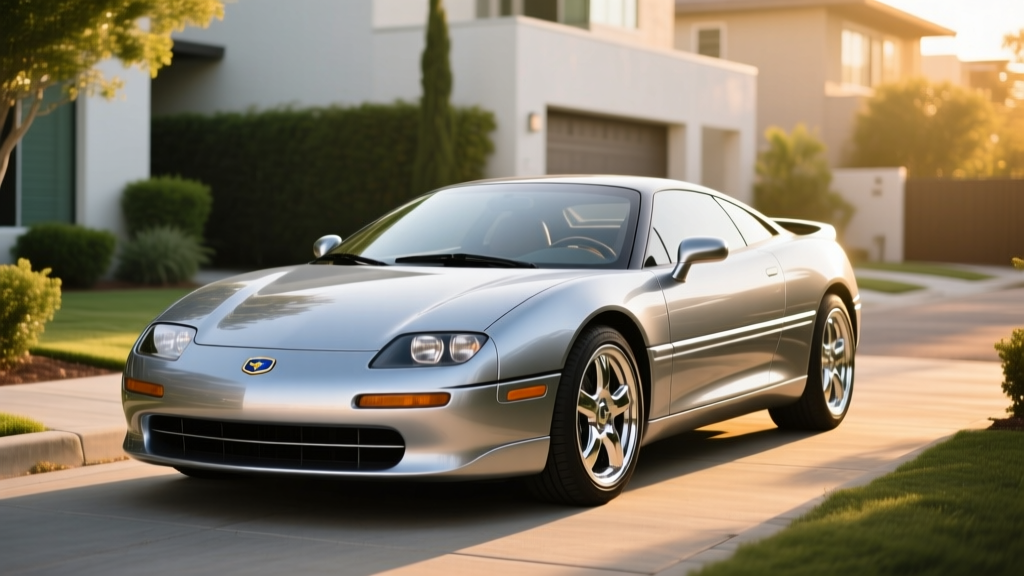
The General Motors EV1 was a pioneering two-seat electric coupe leased (never sold) to consumers in California and Arizona from 1996 to 1999. GM produced approximately 1,117 units across two generations:
- Gen 1 (1996–1997): Lead-acid battery pack, ~70 miles of range
- Gen 2 (1998–1999): Nickel-metal hydride (NiMH) pack, up to ~142 miles of range
In 2003, GM terminated all leases, recalled every EV1, and crushed the vast majority. The official reasons cited included insufficient parts supply to support the fleet, low consumer demand at the time, and liability concerns. This decision became the subject of the 2006 documentary Who Killed the Electric Car?
The surviving units were deactivated—powertrains disabled, battery packs removed—and donated to museums or engineering programs. Even if you located a surviving chassis, you'd face:
- No replacement battery availability — the original NiMH packs are long out of production
- No dealer support or diagnostic tools — GM's EV1-specific service infrastructure was dismantled decades ago
- Title and registration challenges — many surviving units carry salvage or non-roadworthy titles
- Insurance impossibility — no mainstream insurer will write a policy on a crushed-recall vehicle
What a GM EV1 Cost Then vs. What Modern GM EVs Cost Now
The EV1 was never sold outright—lessees paid roughly $399–$549/month with a $2,500 down payment (equivalent to about $800–$1,100/month in 2026 dollars). Let's compare that historical context to what GM's current EV lineup actually delivers for real buyers:
| Specification | GM EV1 Gen 2 (1999) | 2026 Chevrolet Equinox EV LT | 2026 Cadillac Lyriq Luxury | 2026 Chevrolet Silverado EV 4WT |
|---|---|---|---|---|
| EPA Range | ~142 mi (NiMH) | 319 mi | 314 mi | 380 mi (est.) |
| Battery Capacity | ~26.4 kWh (NiMH) | 85 kWh (NMC, Ultium) | 102 kWh (NMC, Ultium) | 200+ kWh (NMC, Ultium) |
| Peak DC Fast Charge | N/A (AC only, ~6.6 kW) | 150 kW | 190 kW | 350 kW |
| 10–80% Charge Time | ~5–8 hours (Level 2) | ~30 min (DC fast) | ~27 min (DC fast) | ~20 min (DC fast, 350 kW) |
| Horsepower | 137 hp | 213 hp (FWD) / 288 hp (AWD) | 340 hp (RWD) | 510 hp (AWD) |
| 0–60 mph | ~8.4 sec | ~7.8 sec (FWD) | ~6.0 sec (RWD) | ~4.5 sec (AWD) |
| Seating | 2 passengers | 5 passengers | 5 passengers | 5 passengers |
| Base MSRP | Not sold (lease ~$449/mo) | ~$33,600 | ~$58,590 | ~$55,000 (est.) |
| Federal Tax Credit (§30D) | N/A | Up to $7,500* | Up to $7,500* | Up to $7,500* |
| Battery Warranty | N/A (lease included service) | 8 yr / 100,000 mi | 8 yr / 100,000 mi | 8 yr / 100,000 mi |
*Federal §30D tax credit eligibility depends on buyer income (≤$150K single / ≤$300K joint), vehicle MSRP caps ($55K sedans / $80K SUVs/trucks), and battery critical-mineral sourcing requirements. Always verify current-year rules at IRS.gov and confirm point-of-sale transfer availability with your dealer.
The Real Cost of Owning a 2026 GM EV vs. a Gas Car
If you were drawn to the EV1's story and are now considering a modern electric vehicle, the economics have shifted dramatically. Here's a concrete 5-year ownership comparison between the 2026 Chevrolet Equinox EV (GM's most affordable current EV) and a comparable gas-powered crossover:
| Cost Category | 2026 Chevy Equinox EV LT (AWD) | 2026 Chevy Equinox Gas (AWD, 25 MPG combined) |
|---|---|---|
| Purchase Price (MSRP) | $36,400 | $30,200 |
| Federal Tax Credit (§30D) | −$7,500 (if eligible) | $0 |
| Effective Purchase Price | $28,900 | $30,200 |
| Energy Cost (75,000 mi) | $3,750 (home charging, $0.15/kWh avg) | $9,000 (gas at $3.00/gal, 25 MPG) |
| Maintenance (5 yr) | ~$1,200 (no oil changes, fewer brake replacements due to regen) | ~$3,500 (oil, filters, spark plugs, brake pads) |
| Insurance (5 yr avg) | ~$9,500 | ~$7,800 |
| Estimated Depreciation | ~$14,500 | ~$13,000 |
| Total 5-Year Cost | ~$57,850 | ~$63,500 |
Key takeaway: The EV breaks even or saves money over 5 years primarily through fuel and maintenance savings—roughly $5,250–$6,600 less depending on your electricity rate and driving habits. However, this assumes you qualify for the full §30D credit and charge primarily at home. Without home charging access, public DC fast charging costs ($0.35–$0.55/kWh at networks like Electrify America or EVgo) can cut energy savings by 40–60%.
Real-World Ownership: What First-Time EV Buyers Must Know
The EV1's owners in the late 1990s faced primitive charging infrastructure and constant range limitations. In 2026, the landscape is vastly improved but still requires planning. Here's what matters:
Home Charging Is the Make-or-Break Factor
Over 80% of EV charging happens at home. A Level 2 home charger (240V, 32–48 amps) adds roughly 25–37 miles of range per hour of charging and costs $800–$2,500 to install (charger unit: $400–$700; electrician labor and permitting: $400–$1,800, depending on whether your electrical panel needs an upgrade from 100A to 200A service). Without home charging, you'll rely on public Level 2 and DC fast chargers, which is feasible but adds time and cost.
Cold Weather Cuts Range — Plan for It
Lithium-ion batteries lose efficiency in freezing temperatures. Expect 20–35% range reduction at 20°F compared to the EPA sticker. A 319-mile Equinox EV might deliver ~210–255 real-world miles in a Midwest or Northeast winter. Using a heat pump (standard on many 2026 GM Ultium-platform vehicles) mitigates this somewhat by warming the cabin more efficiently than resistive heating.
DC Fast Charging Isn't Always "Fast"
When manufacturers advertise "150 kW peak charging," that's the maximum rate at a low state of charge (SoC). The charge curve tapers significantly above 80% to protect battery health. A 10–80% session at a compatible DC fast charger might take 30 minutes, but 80–100% could add another 25–40 minutes. For road trips, plan to charge to 80% and move on.
Common Misconceptions About EVs — Corrected with Facts
| Myth | Fact |
|---|---|
| "EV batteries need replacement every few years." | Modern NMC and LFP packs are warrantied for 8 years/100,000 miles at ≥70% capacity retention. Real-world data from fleets shows ~10–15% degradation after 150,000+ miles. Full replacement (if ever needed) runs $8,000–$18,000 depending on pack size, but most packs outlast the vehicle. |
| "There are no charging stations." | As of early 2026, the U.S. has over 70,000 public charging ports across networks like Tesla Supercharger (now open to non-Tesla EVs via NACS adapters), Electrify America, EVgo, and ChargePoint. Rural gaps remain real, but interstate corridors are well-covered. |
| "EVs are worse for the environment because of electricity generation." | Even on coal-heavy grids, an EV produces fewer lifecycle CO₂ emissions than a comparable gas car over 150,000 miles, per EPA and Union of Concerned Scientists data. On cleaner grids (hydro, wind, solar), the advantage widens dramatically. Source: fueleconomy.gov. |
| "You can't take an EV on a road trip." | A 2026 Equinox EV with 319 miles of range and 150 kW DC fast charging can cover 300+ miles between 20-minute charge stops. Apps like A Better Routeplanner and PlugShare make trip planning straightforward. |
| "The tax credit is $7,500 for everyone." | The §30D credit has income caps ($150K single / $300K joint AGI), MSRP caps ($55K cars / $80K SUVs, vans, trucks), and critical-mineral and battery-component sourcing requirements that change annually. Many EVs qualify for the full amount, but some qualify for $3,750 or nothing. Verify at IRS.gov. |
Decision Framework: Should You Buy a GM EV in 2026?
Use This If/Then Guide to Decide
- IF you have access to home or workplace Level 2 charging AND your daily commute is under 100 miles round-trip → THEN a GM EV like the Equinox EV or Blazer EV is an excellent fit. You'll charge overnight, rarely visit a public charger, and save $1,500–$2,500/year on fuel.
- IF you live in an apartment without charging access AND public chargers are more than 15 minutes away → THEN consider a plug-in hybrid (PHEV) like the Chevrolet Corvette E-Ray or wait for expanded charging infrastructure. A PHEV gives you 30–50 electric-only miles for daily driving with a gas engine for longer trips.
- IF you regularly tow heavy loads or drive 400+ miles in remote areas → THEN a diesel or gas truck may still be more practical. The Silverado EV's towing capacity is competitive, but charging infrastructure in rural areas remains inconsistent.
- IF you want a collectible piece of EV history AND have $300K+ to spend → THEN monitor specialty auctions (Barrett-Jackson, Bring a Trailer) for the extremely rare GM EV1 appearance—but understand it's a display piece, not a daily driver.
- IF you're budget-conscious and want the lowest total cost of ownership → THEN target the Equinox EV LT at ~$33,600 MSRP, apply the $7,500 point-of-sale credit (if eligible), and your effective price drops to ~$26,100—making it one of the most affordable new EVs in America.
The EV1's Legacy: What It Taught GM (and the Industry)
The EV1 proved that consumers would embrace electric driving if the product was compelling—but also that limited range, slow charging, and corporate commitment were existential barriers. The program's cancellation set back GM's EV development for over a decade. When the Chevrolet Bolt EV launched in 2017 with 238 miles of range for ~$37,000, it was the spiritual successor the EV1 never got to become.
Today, GM's Ultium platform underpins every new GM EV—from the Equinox to the GMC Hummer EV—and represents a fundamentally different corporate commitment. The Ultium battery architecture uses NMC (nickel manganese cobalt) chemistry with wireless battery management, supports up to 350 kW DC fast charging, and is designed for vehicle-to-home (V2H) bidirectional capability on select models.
The EV1 is a museum piece. But its lessons—about range, charging speed, infrastructure, and manufacturer commitment—directly shaped the EVs you can actually buy and drive today.
Frequently Asked Questions
Is there any General Motors EV1 for sale right now?
As of 2026, no GM EV1 is publicly listed for sale on any major automotive marketplace. The ~40 surviving units are held by museums (Smithsonian, Petersen, etc.) and university engineering departments. If one surfaces at auction, expect a price exceeding $250,000 and significant legal/title complications.
What was the GM EV1's range, and how does it compare to today's EVs?
The Gen 2 EV1 with its NiMH pack achieved approximately 142 miles of range—remarkable for 1999 but far below today's standards. The 2026 Chevrolet Equinox EV delivers 319 EPA miles, and the Silverado EV targets 380+ miles. Battery energy density has improved roughly 5–6x since the EV1 era.
Can I convert a surviving EV1 to modern batteries?
Theoretically, a custom lithium-ion retrofit is possible for anyone with advanced electrical engineering skills and $30,000–$60,000 to spend. However, no commercial conversion kit exists, the vehicle's proprietary electronics are undocumented, and the result would likely never be street-legal in most states. This is a museum-restoration project, not a practical EV conversion.
What's the cheapest GM EV I can buy new in 2026?
The 2026 Chevrolet Equinox EV LT starts at approximately $33,600 MSRP. With the full $7,500 federal §30D tax credit (applied at point of sale, if you meet income and sourcing requirements), the effective price drops to roughly $26,100—making it one of the most affordable new electric vehicles available.
Does GM still support the EV1 in any way?
No. GM dismantled all EV1-specific service infrastructure, parts inventories, and diagnostic systems after the 2003 recall. The company's current EV support is focused entirely on the Ultium-platform lineup through Chevrolet, Buick, GMC, and Cadillac dealerships.