The Short Answer on General Motors EV Sales
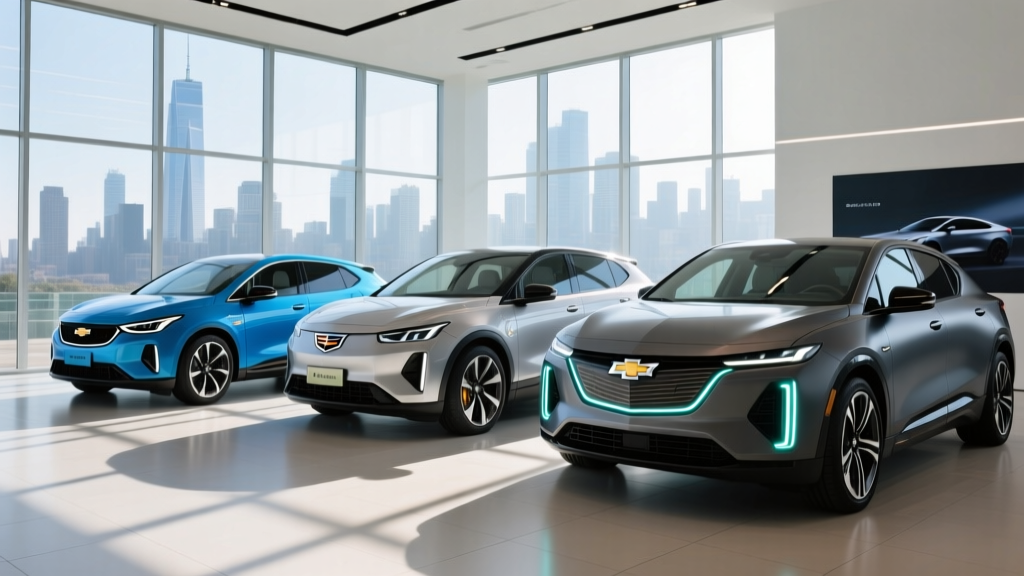
General Motors EV sales have become a major force in the US electric vehicle market by 2026. After a turbulent 2023-2024 launch period for its Ultium-based lineup, GM's electric portfolio — led by the Chevrolet Equinox EV (starting around $33,600), Chevrolet Blazer EV (from ~$44,600), Cadillac Lyriq (from ~$58,600), and the Chevrolet Silverado EV (from ~$57,900) — is now reaching mainstream buyers at scale. For shoppers, this means more affordable long-range options (250-320+ EPA miles), wider Super Cruise availability, and a growing dealer network trained on EVs. However, real-world range in cold weather, public charging reliability, and insurance premiums remain practical considerations that sales headlines don't capture.
Why General Motors EV Sales Matter for Shoppers in 2026
GM's transition to an all-electric future has been messy but consequential. The Ultium battery platform — GM's modular skateboard architecture supporting everything from the Equinox crossover to the GMC Hummer EV — now underpins a broader, more price-competitive lineup than legacy automakers like Ford or Hyundai/Kia offer in the US. By 2026, GM has also adopted the Tesla NACS connector across its EVs, granting access to the Supercharger network (with adapters for earlier CCS1-equipped models), which meaningfully expands road-trip practicality.
For buyers, the surge in GM EV volume translates into three tangible benefits: more inventory at dealerships (less waiting), competitive pricing pressure that keeps MSRPs in check, and a larger certified service network for battery and powertrain work. The tradeoff: GM's software-defined vehicle approach has produced inconsistent infotainment reliability in early model years, though 2025-2026 updates have largely stabilized the experience.
The Current GM EV Lineup: Range, Price, and Specs
Here's what GM is actually selling to retail buyers in 2026 — not concept cars, not fleet-only models:
| Model | Base MSRP | EPA Range | Battery (kWh) | Peak DC Charge | 10-80% Time | 0-60 mph |
|---|---|---|---|---|---|---|
| Chevy Equinox EV 2LT | $33,600 | 319 mi | 85 kWh (NMC) | 150 kW | ~30 min | 8.5 sec |
| Chevy Blazer EV RS AWD | $44,600 | 279 mi | 102 kWh (NMC) | 190 kW | ~24 min | 4.8 sec |
| Cadillac Lyriq Tech | $58,600 | 314 mi | 102 kWh (NMC) | 190 kW | ~24 min | 6.0 sec |
| Chevy Silverado EV WT | $57,900 | 360 mi | 200 kWh (NMC) | 350 kW | ~20 min | 5.4 sec |
| GMC Sierra EV Denali | $99,495 | 440 mi | 200+ kWh (NMC) | 350 kW | ~18 min | 4.3 sec |
Real-World Range Reality: EPA figures assume moderate temperatures and mixed driving. On a 70-mph highway loop in 35°F weather, expect the Equinox EV to deliver roughly 240-260 miles, the Blazer EV around 210-230 miles, and the Silverado EV closer to 270-290 miles before needing to charge. Cold weather, high speeds, and hilly terrain all compress usable range — plan road trips around 70-80% of the EPA sticker.
EV vs Gas: What GM Ownership Actually Costs
The headline advantage of a GM EV over its gas equivalent (say, an Equinox 1.5T turbo or a Silverado 1500 2.7T) shows up in fuel and maintenance costs. Here's a realistic five-year comparison for a driver covering 15,000 miles annually:
| Cost Category | Equinox EV 2LT | Equinox Gas (1.5T) | 5-Year Difference |
|---|---|---|---|
| Purchase Price (MSRP) | $33,600 | $28,600 | +$5,000 (EV) |
| Federal Tax Credit (§30D) | -$7,500* | $0 | -$7,500 (EV) |
| Net Purchase | $26,100 | $28,600 | -$2,500 (EV wins) |
| Fuel/Energy (5 yrs) | $3,750** | $9,375*** | -$5,625 (EV wins) |
| Maintenance (5 yrs) | $1,200 | $3,500 | -$2,300 (EV wins) |
| Insurance (5 yrs) | $10,500 | $7,500 | +$3,000 (EV costs more) |
| 5-Year Total Cost | $41,550 | $49,075 | -$7,525 (EV wins) |
* §30D credit eligibility depends on income caps ($150K single / $300K joint), MSRP limits ($55K for SUVs), and battery sourcing rules. Verify at IRS.gov. Point-of-sale transfer available at participating dealers.
** Based on $0.14/kWh national average home charging; public DC fast charging costs 2-3x more.
*** Based on 30 MPG combined at $3.75/gallon. Source: fueleconomy.gov
Real Ownership Considerations Sales Numbers Don't Show
GM can sell a record number of EVs, but individual ownership success depends on factors the sales figures obscure:
Home Charging Access Is the Make-or-Break
Level 2 home charging (240V, 48A circuit) adds roughly 25-30 miles of range per hour on GM's Ultium vehicles. If you can install a home charger — typically $500-$1,500 for the wallbox plus $800-$2,500 for electrical work (more if your panel needs a 200A upgrade) — daily EV ownership is effortless. Without home charging, you'll rely on public Level 2 (slow, 6-8 hours for a full charge) or DC fast charging (faster but more expensive and stressful to plan around).
Public Charging: NACS Access Changes the Game
GM's adoption of the NACS connector means 2025+ GM EVs plug directly into Tesla Superchargers. For 2024 and earlier CCS1-equipped models, GM provides an adapter. This significantly reduces range anxiety on road trips — Superchargers remain the most reliable public network in the US, with uptime exceeding 95% at most corridors. Electrify America and EVgo remain alternatives, but reliability varies by station.
Cold Climate Buyers: Expect Range Loss
Ultium batteries use active liquid thermal management, which helps, but physics is physics. In sustained sub-freezing temperatures (below 25°F), plan for 20-30% range reduction. Preconditioning the battery before charging (via the myChevrolet or myCadillac app) is essential for achieving advertised DC fast-charge speeds in cold weather — without it, a 150 kW peak may throttle to 50-70 kW until the pack warms up.
Common Misconceptions About GM's EV Push
| Myth | Fact |
|---|---|
| "GM EVs are all losing money for the company." | Early Ultium vehicles had thin margins, but the Equinox EV at $33,600 is positioned for volume profitability by 2026, especially with battery cost reductions. |
| "The battery will need replacing in 5 years." | GM warranties Ultium packs for 8 years/100,000 miles against defects and excessive degradation (below 60% capacity). Real-world data from Bolt EV owners shows 5-8% degradation over 5 years — not catastrophic. |
| "Super Cruise means the car drives itself." | Super Cruise is an SAE Level 2 hands-free system on mapped highways. You must remain attentive, and it does not handle construction zones, unmapped roads, or complex urban driving. |
| "You can't tow with an EV." | The Silverado EV rates up to 10,000 lbs towing. However, towing a 6,000-lb trailer at highway speeds can cut range by 40-50% — plan charging stops accordingly. |
| "GM's software is broken." | 2023-2024 launches had significant infotainment bugs. 2025-2026 OTA updates and revised hardware have substantially improved reliability, though some owners report occasional app connectivity delays. |
SAE Automation Level Reminder: GM's Super Cruise and Tesla's Autopilot/FSD Supervised are both SAE Level 2 — the driver must continuously supervise and be ready to take over instantly. Only fully driverless robotaxi services (Waymo, Zoox) operate at Level 4. Marketing language like "hands-free" does not mean "self-driving."
Decision Framework: Should You Buy a GM EV?
Choose a GM EV if:
- You have access to Level 2 home charging (garage or driveway with 240V circuit)
- Your daily commute is under 80 miles round-trip (covers 90%+ of US drivers)
- You want a mainstream-brand EV with a large dealer service network
- You value Super Cruise for frequent highway driving (especially the Lyriq and Blazer EV on 400,000+ mapped miles)
- You qualify for the §30D tax credit and can apply it at point-of-sale
- You need NACS/Supercharger access for road trips without adapter hassle (2025+ models)
Look elsewhere or wait if:
- You live in an apartment with no charging access and your area has sparse public infrastructure
- You regularly drive 300+ miles in sub-freezing weather without time to charge en route
- You need a compact EV under $30,000 — GM doesn't currently offer one (consider the Chevy Bolt EV/EUV if available on the used market, or look at Hyundai/Kia)
- You want an LFP battery option for maximum longevity — GM currently uses NMC chemistry across the Ultium lineup
- You need third-row seating — GM's current EVs are two-row; the gas Tahoe/Suburban or a PHEV like the Jeep Grand Cherokee 4xe may serve better
What First-Time GM EV Buyers Should Know Before Signing
If you're moving from a gas vehicle to your first GM EV, these practical details matter more than horsepower or 0-60 times:
- Get a home electrical assessment first. Before visiting a dealer, have a licensed electrician evaluate your panel. A 200A panel with spare capacity is ideal; a 100A panel may need upgrading ($1,500-$3,500) before installing a 48A Level 2 charger.
- Understand the charge curve. GM EVs don't charge at peak kW the entire session. A 150 kW peak on the Equinox EV applies roughly from 10-50% SoC; above 80%, speeds drop to 30-50 kW to protect the battery. Plan fast-charge stops for 10-80%, not 0-100%.
- Factor in insurance early. EV insurance premiums run 15-30% higher than equivalent gas models due to repair costs and battery replacement risk. Get quotes before committing.
- Verify tax credit eligibility yourself. Don't rely solely on the dealer. Check IRS §30D rules for income limits, MSRP caps, and battery component sourcing requirements. A tax professional can confirm your specific situation.
- Test the app and charging ecosystem. Download the myChevrolet or myCadillac app before purchase. Try a public charger near your home. Comfort with the digital experience is part of ownership.
Frequently Asked Questions
Are GM EVs reliable enough to buy in 2026?
GM's Ultium platform reliability has improved significantly since the rocky 2023-2024 launches. The battery and powertrain are well-proven, and OTA updates have resolved most software issues. J.D. Power and Consumer Reports data for 2025 model years show marked improvement. The main risk areas remain infotainment glitches and 12V battery management — not the high-voltage system.
Which GM EV has the best range?
The GMC Sierra EV Denali Edition 1 claims 440 EPA miles, but starts near $100,000. For mainstream buyers, the Chevrolet Silverado EV WT at 360 EPA miles (~$57,900) and the Equinox EV at 319 miles (~$33,600) offer the best range-per-dollar ratios. Remember that real-world highway and cold-weather driving will reduce these figures by 15-30%.
Can I use Tesla Superchargers with a GM EV?
Yes. 2025 and newer GM EVs come with the native NACS connector and plug directly into Tesla Superchargers. 2024 and earlier models use CCS1 and require GM's approved adapter (included or available through dealers). Always check station compatibility in the vehicle's navigation or the Tesla app before traveling.
How long will the Ultium battery last?
GM warranties the Ultium battery for 8 years or 100,000 miles (whichever comes first) against defects and capacity loss below 60%. Based on historical data from the Chevrolet Bolt (which uses earlier-generation cells), expect 5-10% degradation over 5 years and 75,000 miles with normal use. Avoid routinely charging to 100% or draining below 10% to maximize longevity.
Is the Equinox EV eligible for the $7,500 federal tax credit?
The Equinox EV has qualified for the full §30D credit in many configurations, but eligibility depends on battery component sourcing (which can change by production batch), your income, and the vehicle's MSRP. Always verify current eligibility on the fueleconomy.gov tax credit lookup and consult a tax professional before relying on the credit in your purchase decision.
General Motors EV sales growth reflects a lineup that's finally competitive on price, range, and charging access — but real ownership satisfaction depends on your charging setup, climate, and driving patterns more than any sales chart can show. Do the math on your specific situation before signing.