The Quick Answer: Are General Electric Mail & Fleet EVs Worth It in 2026?
Bottom line: If you manage a delivery or service fleet and are researching "General Electric mail" vehicles (fleet/mail-route EVs from major manufacturers, historically linked to GE's fleet-management heritage), battery-electric vans and compact cargo EVs like the Ford E-Transit, BrightDrop Zevo 400, and Mercedes-Benz eSprinter deliver real savings on fuel and maintenance — but only when daily routes stay under ~120 miles and depot Level 2 charging is available. Expect 3–5 year payback versus diesel, with $0.06–$0.12/mile "fuel" cost vs. $0.18–$0.28/mile for diesel equivalents.
What "General Electric Mail" Actually Means for EV Buyers
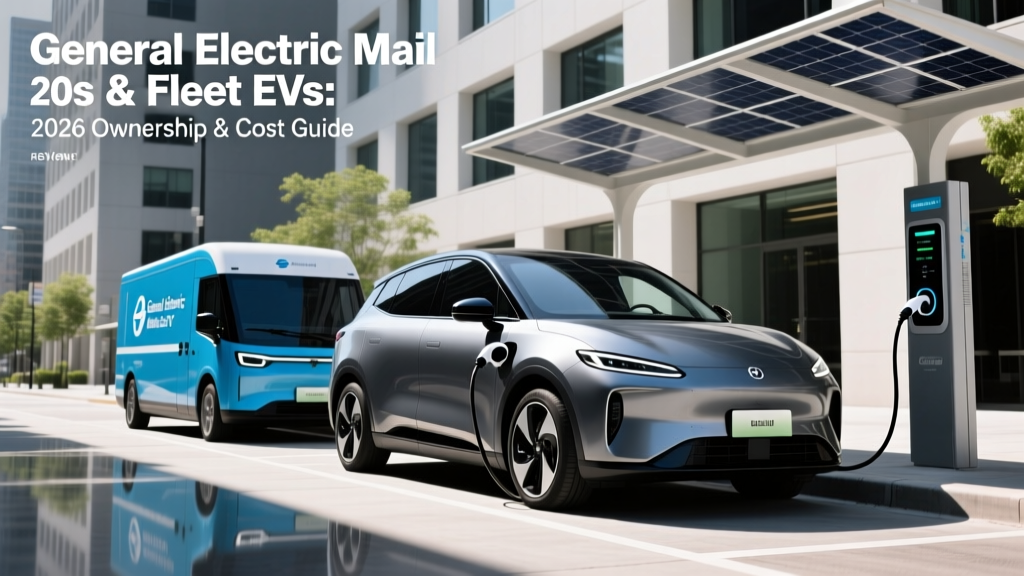
The phrase General Electric mail often surfaces when buyers research fleet and last-mile delivery vehicles — a nod to GE's long history in fleet leasing and electrification consulting (now largely transitioned to Element Fleet Management and other operators). In 2026, "mail and fleet EVs" refers to battery-electric commercial vans and step-vans used by USPS contractors, courier services, and municipal fleets. These are not consumer vehicles, but the purchase calculus overlaps heavily with consumer EV ownership: range, charging infrastructure, battery degradation, and total cost of ownership (TCO) all apply.
If you're evaluating one for a small business, nonprofit mail route, or personal commercial use, treat it like any EV purchase — with extra weight on depot charging logistics and duty-cycle range.
Spec Snapshot: Leading Fleet/Mail EVs in 2026
| Model | EPA Range | Battery (kWh) | Peak DC Charge | 10–80% Time | Base MSRP |
|---|---|---|---|---|---|
| Ford E-Transit (2026) | ~126 mi | 68 kWh (NMC) | 115 kW | ~45 min | ~$46,000 |
| BrightDrop Zevo 400 | ~160 mi | ~115 kWh (NMC) | 120 kW | ~55 min | ~$85,000 |
| Mercedes-Benz eSprinter (2500, High Roof) | ~200 mi | 113 kWh (NMC) | 115 kW | ~42 min | ~$78,000 |
| Rivian EDV 700 (Amazon fleet, limited resale) | ~161 mi | ~105 kWh | 150 kW | ~35 min | Fleet-only |
Real-world caveat: Cargo load, stop-start routes, and cold weather (below 32°F) can reduce range 20–35%. A 126-mile EPA E-Transit may deliver only ~85–95 miles on a winter urban route with HVAC running.
EV vs. Gas/Diesel Van: Real Cost Comparison
| Metric | Ford E-Transit (EV) | Ford Transit 3.5L V6 (Gas) |
|---|---|---|
| Base MSRP | ~$46,000 | ~$44,500 |
| Fuel/Energy Cost per Mile | $0.07–$0.10 (depot L2) | $0.22–$0.28 (gasoline) |
| Annual Fuel (15,000 mi) | $1,050–$1,500 | $3,300–$4,200 |
| Maintenance (annual) | ~$300–$500 | ~$900–$1,400 |
| Oil Changes / Year | 0 | 2–3 |
| Federal §30D Commercial Credit (IRC §45W) | Up to $7,500 (if eligible) | $0 |
| 5-Year TCO (est.) | ~$68,000 | ~$84,000 |
Sources: fueleconomy.gov, IRS §45W Commercial Clean Vehicle Credit.
For commercial fleets, the relevant federal incentive is the IRC §45W Commercial Clean Vehicle Credit — not the consumer §30D. It offers up to $7,500 for vehicles under 14,000 lbs GVWR, and up to $40,000 for heavier trucks. Eligibility depends on battery sourcing, MSRP caps, and business-tax liability — consult a tax professional.
Real-World Ownership: What Fleet Buyers Actually Face
Depot Charging Is Non-Negotiable
Unlike consumer EVs, fleet/mail vehicles rarely rely on public charging. You'll need Level 2 (7.7–19.2 kW) depot chargers — typically 1–2 per vehicle for overnight replenishment. Budget $2,500–$7,000 per stall installed (charger + electrical run + panel capacity). For a 5-van operation, expect $15,000–$35,000 in charging infrastructure before the first van arrives.
Cold-Weather Range Loss
In sub-30°F climates (Upper Midwest, Northeast), resistive cabin heating and battery thermal management draw significant energy. Plan routes at 65–75% of EPA range in winter. Heat pumps — standard on the eSprinter, optional on some E-Transit trims — recover ~10–15% of that loss.
Battery Degradation & Warranty
Most 2026 commercial EVs carry 8-year/100,000-mile battery warranties with a 70% capacity retention floor (per NHTSA guidance on commercial EV disclosures). Real-world fleet data from early E-Transit deployments shows ~6–9% degradation after 3 years / 60,000 miles of daily urban cycling.
Common Misconceptions — Myth vs. Fact
| Myth | Fact |
|---|---|
| "Fleet EVs can't handle real routes." | Urban mail/courier routes average 40–90 miles/day — well within EV range. |
| "Charging takes too long for business." | Overnight L2 charging (8–10 hrs) replenishes 100% — no mid-day stop needed for most routes. |
| "Battery replacement will bankrupt the fleet." | Out-of-warranty pack replacement runs $12,000–$22,000; most fleets retire vehicles before this is needed. |
| "All EVs qualify for the $7,500 credit." | Only vehicles meeting critical-mineral and battery-component sourcing rules qualify. Check IRS §45W guidance. |
| "EVs are zero-emission everywhere." | Grid mix matters — charging on coal-heavy grids reduces upstream benefit; on renewables-heavy grids, lifecycle emissions drop 60–80%. |
Decision Framework: Should Your Fleet Go Electric?
Choose a fleet/mail EV if:
- Daily routes are under 120 miles (or under 90 miles in cold climates)
- You have depot or garage parking where Level 2 chargers can be installed
- Your electrical panel has spare capacity (200A+ service for 2–3 chargers)
- Fuel cost per mile is a major line-item pain point
- Local air-quality or ESG mandates apply
Stick with gas/diesel or a PHEV if:
- Routes regularly exceed 150 miles with no mid-day charging
- You operate in a charging desert or rent depot space without electrical upgrades
- Towing or heavy payload (>3,000 lbs) is routine — range collapses under load
- Capital budget is tight and the 3–5 year payback horizon doesn't fit
FAQ: General Electric Mail & Fleet EV Questions
Is there a "General Electric" branded mail van in 2026?
No. GE does not manufacture vehicles. The term typically refers to fleet-management consulting historically tied to GE Capital, or to generic "mail/fleet EVs." Today's leading options are Ford E-Transit, BrightDrop, and Mercedes eSprinter.
Can I charge a fleet EV on a standard 120V outlet?
Technically yes (Level 1, ~1.4 kW), but it adds only ~3–5 miles of range per hour — far too slow for daily commercial use. Level 2 (240V, 7.7–19.2 kW) is the practical minimum.
How does insurance compare for commercial EVs?
Commercial EV insurance typically runs 15–25% higher than equivalent gas vans due to higher repair costs and battery replacement risk. Get quotes before purchasing — the premium gap can erase 30–40% of fuel savings.
What's the real-world range of the Ford E-Transit on a mail route?
EPA-rated ~126 miles. On a stop-start urban route at 45°F with moderate cargo, expect ~90–105 miles usable before needing a buffer. In summer with light loads, 115–120 miles is realistic.
Do fleet EVs qualify for the consumer §30D tax credit?
No. Business-owned commercial vehicles use the IRC §45W Commercial Clean Vehicle Credit, which has different sourcing, weight, and tax-liability rules. Consult IRS guidance or a tax professional before claiming.