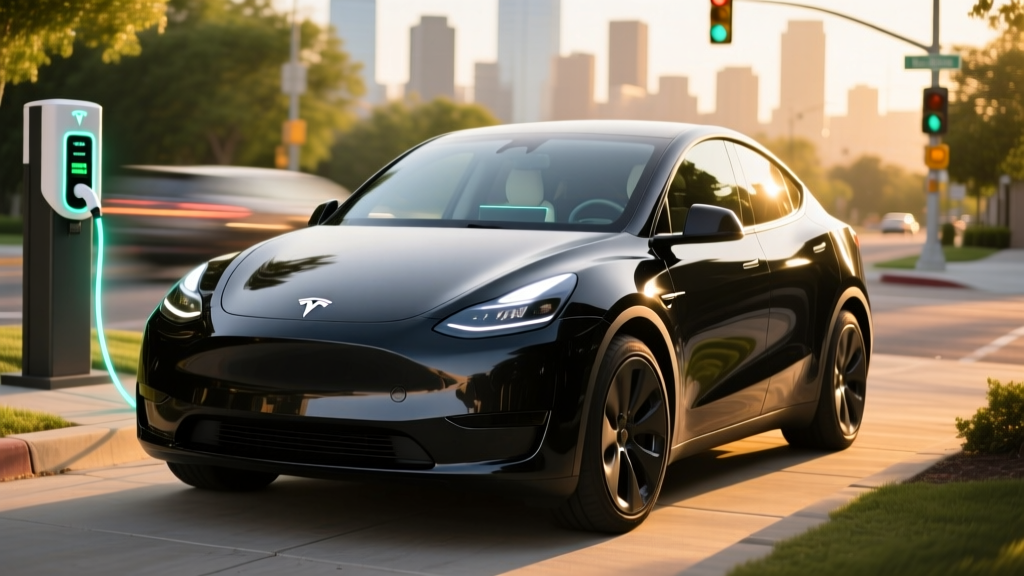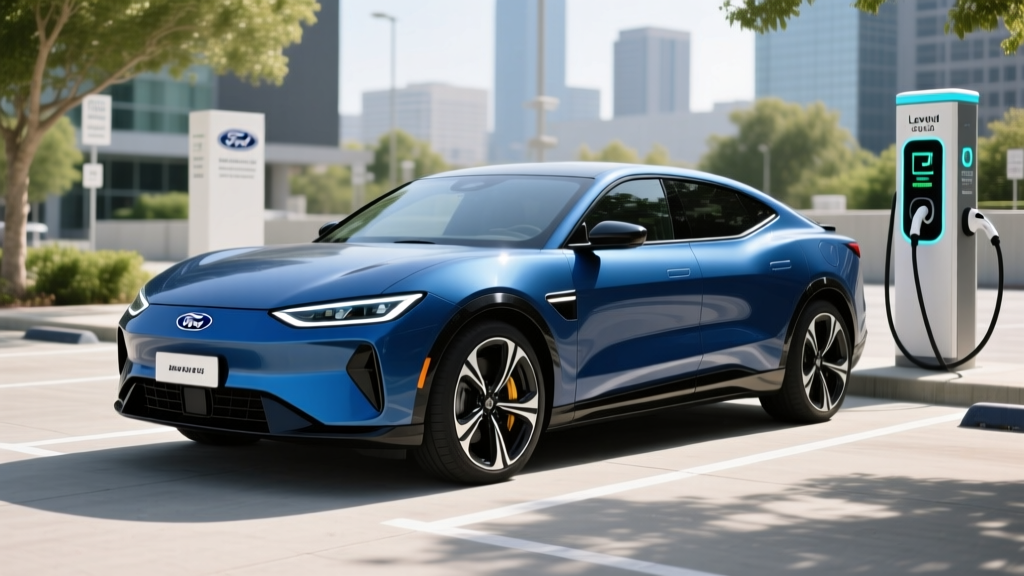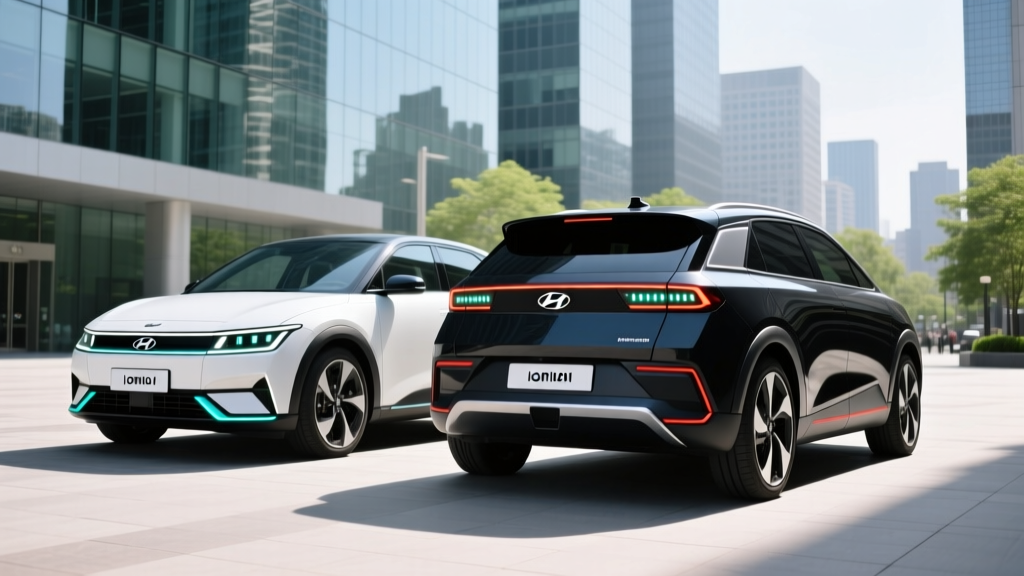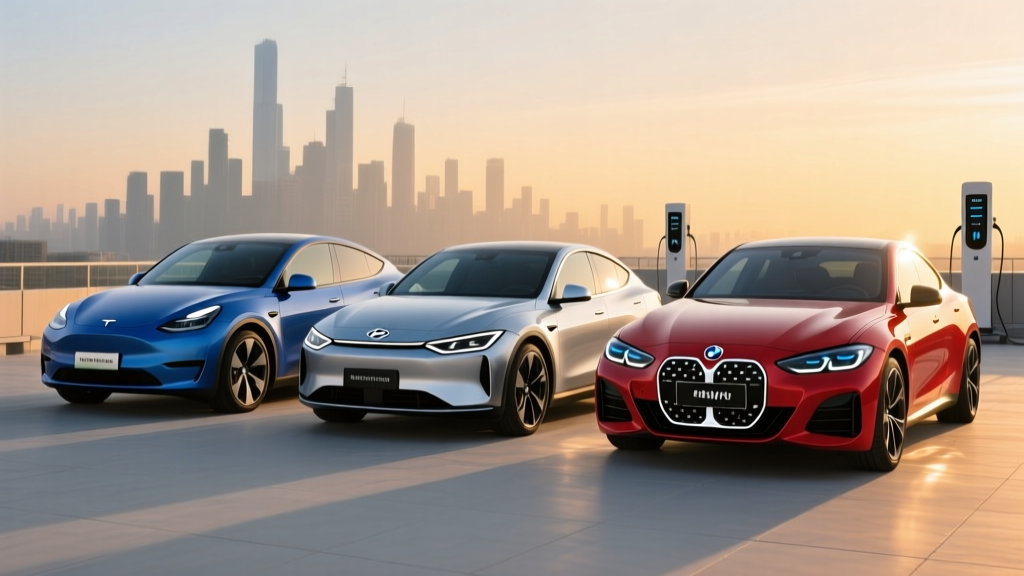
Quick Answer: General electric cars—mainstream EVs from brands like Chevrolet, Hyundai, Ford, and Tesla—cost more upfront but typically save owners $4,000–$9,000 over five years in fuel and maintenance compared to equivalent gas vehicles. The catch: savings depend heavily on home charging access, local electricity rates, and whether you qualify for the federal §30D tax credit (up to $7,500 with strict income, MSRP, and battery-sourcing rules). If you can charge at home and drive 10,000–15,000 miles annually, a mainstream EV is usually the cheaper long-term choice in 2026.
What "General Electric Cars" Actually Means for Buyers
When shoppers search for general electric cars, they're usually looking at mainstream, non-luxury battery-electric vehicles (BEVs) priced between $30,000 and $55,000. This segment includes models like the Chevrolet Equinox EV, Hyundai Ioniq 5, Ford Mustang Mach-E, Tesla Model 3, Volkswagen ID.4, and Nissan Ariya. These aren't boutique six-figure EVs or niche compliance cars—they're the volume sellers designed for everyday drivers.
As of early 2026, this segment has matured significantly. EPA ranges now commonly fall between 250 and 340 miles, DC fast-charging speeds reach 150–350 kW depending on the platform, and the North American Charging Standard (NACS) connector has largely replaced CCS1 across most new models. The question is no longer "Do mainstream EVs work?" but rather "Does a mainstream EV work for my specific situation?"
EV vs Gas vs Hybrid: The Numbers Side by Side
Let's compare a representative mainstream EV against a comparable gas compact SUV and a hybrid to ground the decision in real data. We'll use the 2026 Chevrolet Equinox EV (a popular general electric car), the Toyota RAV4 gas, and the Toyota RAV4 Hybrid as baselines.
| Metric | 2026 Chevy Equinox EV 3RS (AWD) | 2026 Toyota RAV4 LE (AWD Gas) | 2026 Toyota RAV4 Hybrid (AWD) |
|---|---|---|---|
| Base MSRP | $39,900 | $30,500 | $33,500 |
| Federal Tax Credit (est.) | Up to $7,500* | $0 | $0 |
| Effective Price After Credit | ~$32,400 | $30,500 | $33,500 |
| EPA Range / Tank Range | 319 mi (EPA) | 386 mi (14.5 gal × 27 mpg) | 580 mi (14.5 gal × 40 mpg) |
| Real-World Highway Range | ~255–280 mi | ~360 mi | ~530 mi |
| Energy/Fuel Cost per Mile | $0.04–$0.06 (home L2) | $0.13 ($3.50/gal) | $0.09 ($3.50/gal) |
| Annual Fuel/Energy (12k mi) | $480–$720 | $1,560 | $1,080 |
| Annual Maintenance (est.) | ~$300 | ~$650 | ~$550 |
| 0-60 mph | ~5.9 sec | ~8.1 sec | ~7.4 sec |
| Drivetrain Warranty | 8 yr / 100k mi (battery) | 5 yr / 60k mi | 10 yr / 150k mi (hybrid sys.) |
*Federal §30D credit eligibility depends on buyer income caps ($150k single / $300k joint AGI), vehicle MSRP caps ($55k for cars, $80k for SUVs/trucks), and battery critical-mineral and component sourcing requirements. Always verify current rules at IRS.gov. Credit can now be transferred to the dealer at point of sale as an immediate discount.
The Equinox EV's effective price after the tax credit lands very close to the gas RAV4, while delivering substantially lower per-mile energy costs. However, the hybrid RAV4 still wins on total range and refueling convenience for road-trip-heavy drivers.
Real Costs of Owning a Mainstream EV
Beyond sticker price, EV ownership costs break into five categories. Here's a realistic 5-year cost projection for a typical mainstream EV driven 12,000 miles per year, compared to an equivalent gas vehicle.
| Cost Category (5 Years / 60k Miles) | Mainstream EV | Gas Equivalent |
|---|---|---|
| Purchase Price (after credit) | $32,400 | $30,500 |
| Home Charger Install (Level 2) | $800–$2,000 | $0 |
| Energy/Fuel | $2,400–$3,600 | $7,800 |
| Maintenance | $1,500 | $3,250 |
| Insurance (avg. premium surcharge) | +$1,800 | $0 (baseline) |
| Estimated Depreciation | $14,000–$17,000 | $11,000–$13,000 |
| Total 5-Year Cost | $52,900–$58,800 | $52,550–$54,550 |
The totals are close—often within a few thousand dollars—but the EV owner benefits from lower ongoing costs and a smoother, quieter driving experience. The variables that swing the equation most:
- Electricity rates: At $0.12/kWh (national average), an EV with 3.5 mi/kWh efficiency costs roughly $0.034/mile. At $0.28/kWh (parts of California, Northeast), that jumps to ~$0.08/mile—still cheaper than gas but the gap narrows.
- Home charging access: Without Level 2 home charging, relying on public DC fast charging at $0.35–$0.50/kWh pushes fuel costs to $0.10–$0.15/mile, erasing most savings.
- Insurance: EV premiums run 10–25% higher on average due to repair costs and battery replacement exposure. Get quotes before buying.
- Depreciation: EV resale values have been volatile. Tesla price cuts in 2023–2024 hammered used values industry-wide. By 2026, depreciation is stabilizing but still slightly steeper than comparable gas vehicles for most brands.
Charging Reality: Home, Public, and Road Trips
The single biggest ownership variable for any general electric car is how you'll charge it. Here's what each level actually delivers:
| Charging Level | Power (kW) | Miles Added per Hour | Typical Use Case |
|---|---|---|---|
| Level 1 (120V household) | 1.2–1.9 kW | 3–5 mi/hr | Overnight top-up; viable only if daily driving <30 mi |
| Level 2 (240V home/public) | 7.2–11.5 kW | 25–44 mi/hr | Primary daily charging; full overnight replenishment |
| DC Fast Charging | 50–350 kW | 150–800+ mi/hr (peak) | Road trips; 10–80% in 18–40 min depending on vehicle |
kW vs kWh refresher: kW (kilowatts) measures power—the rate at which energy flows into the battery, like water pressure in a hose. kWh (kilowatt-hours) measures energy—the total capacity of the battery, like the size of a tank. A 75 kWh battery charged at 11 kW takes roughly 7 hours from empty; at 150 kW DC, it takes roughly 30 minutes to 80%.
Home Level 2 installation typically costs $800–$2,000 for a quality 40-amp or 48-amp wall connector if your electrical panel has capacity. If you need a panel upgrade (common in older homes with 100-amp service), add $1,500–$3,500. A licensed electrician should assess your panel before purchase.
Real-world road-trip charging: A mainstream EV like the Hyundai Ioniq 5 (84 kWh usable, NMC battery) peaks at roughly 240 kW on a compatible DC fast charger, reaching 10–80% in about 18 minutes. However, that peak rate only holds between roughly 10–55% state of charge. Above 80%, the charge curve tapers sharply to protect battery health—going from 80–100% can take an additional 25–35 minutes. Smart road-trippers charge to 80% and move on.
Cold-weather impact: In sustained temperatures below 30°F, expect 20–35% range reduction due to battery chemistry limitations and cabin heating demands. A 319-mile EPA-rated EV might deliver 210–250 real-world winter miles. Models with heat pumps (standard on most 2026 Hyundai, Kia, and Tesla models) mitigate this loss by 5–10 percentage points compared to resistive heaters.
Federal Tax Credits and Incentives: What Actually Applies
The §30D federal tax credit remains the most impactful purchase incentive for general electric cars in 2026, but eligibility is anything but universal. Here's the checklist:
- Buyer AGI caps: $150,000 single filer / $225,000 head of household / $300,000 joint filers
- Vehicle MSRP caps: $55,000 for sedans/cars; $80,000 for SUVs, vans, and pickup trucks
- Battery sourcing: Increasing percentages of critical minerals and battery components must be sourced from the U.S. or free-trade-agreement countries. These thresholds tighten annually, disqualifying some models that qualified in prior years.
- Assembly: Final assembly must occur in North America (verified via VIN at NHTSA.gov).
- Point-of-sale transfer: Eligible buyers can now transfer the credit to the dealer at purchase, receiving an immediate price reduction rather than waiting to claim it on their tax return.
Because battery-sourcing rules shift and manufacturers' eligibility status can change mid-year, always check the official fueleconomy.gov tax credit database before committing to a purchase. State and local incentives (utility rebates, HOV lane access, reduced registration fees) vary widely and stack on top—check your state energy office or utility provider.
Common EV Misconceptions: Myth vs. Fact
| Myth | Fact |
|---|---|
| "EV batteries need replacing every few years and cost $20,000." | Modern NMC and LFP batteries are warrantied for 8 years/100,000 miles at 70% capacity retention. Real-world data shows most packs lose 8–15% capacity over 150,000+ miles. Full replacements are rare and declining in cost. |
| "The electrical grid can't handle millions of EVs." | Most EV charging happens overnight during off-peak hours when grid capacity is underutilized. A 2025 DOE study found that 80% of light-duty electrification can be accommodated with existing grid infrastructure through managed charging. |
| "EVs are worse for the environment because of battery mining." | Lifecycle analyses from Argonne National Lab consistently show that even on coal-heavy grids, EVs produce fewer lifetime emissions than gas equivalents. On cleaner grids, the advantage widens dramatically. Battery recycling infrastructure is scaling rapidly. |
| "You can't take an EV on a road trip." | The U.S. now has over 70,000 public DC fast-charging ports. Tesla's Supercharger network—open to NACS-equipped vehicles from Ford, GM, Rivian, and others—provides reliable 150–350 kW coverage along every major interstate corridor. |
| "EVs cost more to insure and always will." | While current EV premiums run 10–25% higher, the gap is closing as collision data matures and repair networks expand. Some insurers now offer EV-specific policies with competitive rates. |
Decision Framework: Which Electrified Vehicle Fits You?
Choose a mainstream BEV (battery-electric vehicle) if:
- You can install a Level 2 charger at home (garage, driveway, or workplace)
- Your daily driving is under 80 miles round-trip (covers 95%+ of U.S. commuters)
- You take road trips fewer than 4–5 times per year and can plan charging stops
- You qualify for the federal tax credit, narrowing the price gap with gas vehicles
- You want minimal maintenance (no oil changes, fewer brake replacements due to regen)
Choose a plug-in hybrid (PHEV) if:
- You lack reliable home charging but want some electric-only driving (most PHEVs offer 25–45 miles of EV range)
- You frequently drive long distances in rural areas with sparse charging infrastructure
- You want to reduce fuel consumption without any range compromise
Choose a conventional hybrid (HEV) if:
- You have zero charging access (apartment, street parking, no workplace charging)
- You want maximum range simplicity and the lowest purchase price
- Your priority is fuel economy without plugging in ever
Wait or reconsider if:
- Your region has extreme cold (sustained sub-zero temps) and you lack a garage—range loss and charging slowdowns will be significant
- You regularly tow heavy loads (>3,000 lbs)—towing can halve an EV's range
- Your budget is strictly under $28,000—the new EV market has limited options below this threshold even after credits
Frequently Asked Questions
How long do EV batteries actually last?
Federally mandated battery warranties require 8 years/100,000 miles of coverage with at least 70% capacity retention. Real-world fleet data from sources like Recurrent Auto shows that most modern EV batteries retain 85–92% capacity at 100,000 miles. LFP (lithium iron phosphate) chemistry, used in base-model Teslas and some newer mainstream EVs, offers even longer cycle life—often exceeding 3,000 full charge cycles with minimal degradation—though at slightly lower energy density than NMC.
Do I need to upgrade my electrical panel for a home charger?
Possibly. A 48-amp Level 2 charger requires a 60-amp dedicated circuit. Homes with 200-amp panels usually have sufficient capacity. Homes with 100-amp service (common in older builds) often need a panel upgrade, adding $1,500–$3,500 to installation costs. Some newer smart chargers can dynamically adjust amperage to work within your panel's limits, avoiding an upgrade. Always have a licensed electrician evaluate your system before purchasing equipment.
Are general electric cars safe in crashes?
Mainstream EVs consistently earn top ratings from both the NHTSA (5-star overall) and IIHS (Top Safety Pick+). Their low center of gravity (battery pack under the floor) reduces rollover risk, and the absence of a front engine block allows larger crumple zones. The main safety consideration is ensuring first responders are trained on EV-specific high-voltage procedures, which is increasingly standard.
What happens if I run out of charge on the road?
Running an EV to 0% is rare with modern navigation systems that route through charging stations and warn of range shortfalls. If it happens, you'll need a flatbed tow to the nearest charger—conventional wheel-lift towing can damage EV motors. Most manufacturers include roadside assistance for the warranty period. AAA and other providers now offer mobile charging vans in major metro areas that can add 10–20 miles of range on the spot.
Should I buy or lease a mainstream EV?
Leasing makes sense if you're uncertain about long-term battery health, want to upgrade to newer tech every 3 years, or if the lease includes the $7,500 credit as a capital cost reduction (some automakers pass it through even when the buyer wouldn't qualify for purchase due to sourcing rules). Buying makes sense if you plan to keep the car 5+ years, drive under 15,000 miles annually, and qualify for the credit directly. Run both scenarios with your dealer and compare the total out-of-pocket over your intended ownership period.