Quick Answer: Why Are You Here?
If you landed on this page searching for general electric washer and dryer reviews, you may be surprised — this is an electric vehicle publication. But the overlap is real: EV owners who are also shopping for GE appliances often discover that their home's electrical panel, circuit capacity, and 240V wiring are shared concerns. Adding a Level 2 EV charger and a new electric dryer simultaneously can overload a standard 100-amp or even 150-amp panel. This guide addresses what EV owners need to know about home electrical capacity when balancing appliance purchases with EV charging infrastructure — and whether your home can handle both.
The Hidden Connection Between Your EV Charger and GE Appliances
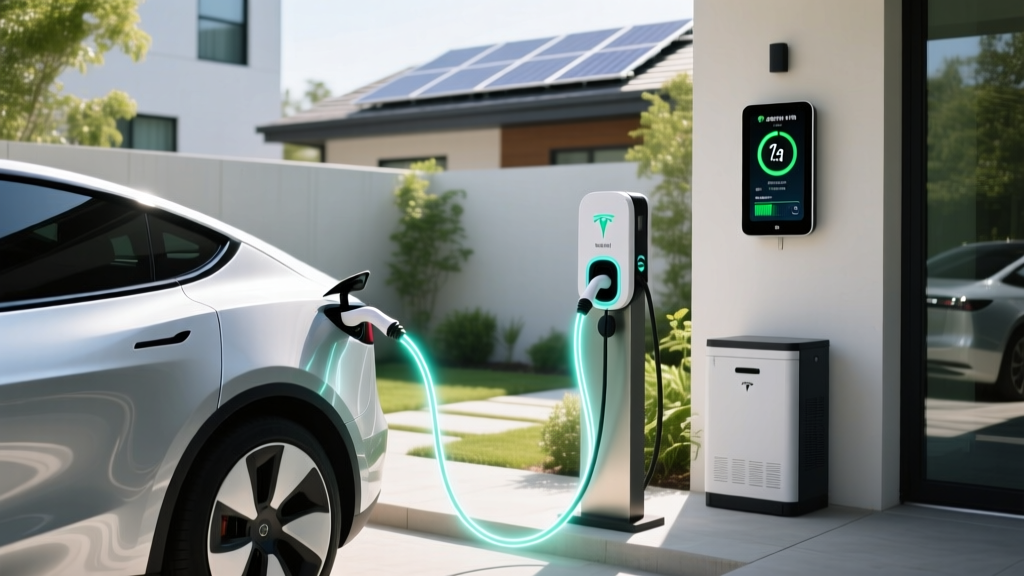
Most modern electric dryers — including popular GE models like the GUD27ESSMWW stacked unit or the GTD72EBSNWS front-load dryer — draw between 5,000 and 5,600 watts on a dedicated 30-amp, 240V circuit. A typical Level 2 home EV charger such as the ChargePoint Home Flex or Tesla Wall Connector operates on a similar 240V circuit, pulling anywhere from 7.2 kW (30 amps) to 11.5 kW (48 amps) depending on configuration.
When you're researching general electric washer and dryer reviews and planning an appliance upgrade, the electrical demand of your EV charger may not cross your mind. But if both appliances and your charger are running simultaneously — say, you plug in your EV at 6 PM while the dryer is running and the HVAC kicks on — you could trip your main breaker or, worse, create a fire hazard if your panel is undersized.
Here's the baseline math: a typical US home built before 2010 has a 100-amp or 150-amp main panel, providing 24,000 to 36,000 watts of total capacity. Newer construction often includes 200-amp panels (48,000 watts). Your home's actual continuous load budget must account for:
- EV Level 2 charger: 7,200W – 11,500W continuous
- Electric dryer: 5,000W – 5,600W peak
- HVAC system: 3,000W – 5,000W (varies by climate and tonnage)
- Electric range/oven: 6,000W – 12,000W peak
- Water heater (electric): 4,500W
- Lighting, electronics, refrigerator: 1,500W – 3,000W combined
Add those up on a 100-amp panel and you'll see the problem quickly. This is why a licensed electrician's load calculation is essential before installing both a new appliance circuit and an EV charger.
Cost Breakdown: Panel Upgrades, EV Charger Installation, and Appliance Wiring
If you're buying a GE electric dryer and also installing a Level 2 EV charger, budget for the full electrical scope. Here's a realistic 2026 cost breakdown based on national averages:
| Item | Typical Cost Range | Notes |
|---|---|---|
| Level 2 EV charger (hardware) | $350 – $700 | ChargePoint Home Flex, Tesla Wall Connector, Emporia Level 2 |
| EV charger electrical install (existing 200A panel) | $500 – $1,500 | New 50A or 60A 240V circuit, conduit run up to 50 ft |
| EV charger install (panel upgrade required) | $2,000 – $4,500 | Upgrade from 100A/150A to 200A panel plus new circuit |
| Electric dryer 240V circuit (new run) | $300 – $800 | Dedicated 30A circuit if not already present |
| Full panel upgrade (100A to 200A) | $1,800 – $3,500 | Includes permit, utility coordination, new breaker box |
| Permit and inspection | $100 – $400 | Varies by municipality; required for both EV and appliance circuits |
| Total (typical combined project) | $2,500 – $6,000 | Highly dependent on panel condition, conduit run length, local labor rates |
The key insight: if your home already has a 200-amp panel with available breaker slots and capacity headroom, adding a Level 2 charger alongside your GE dryer is straightforward and relatively affordable. If you're on a 100-amp panel — common in homes built before the 1990s — the panel upgrade becomes the dominant cost, but it's a one-time investment that also increases your home's resale value.
EV vs Gas Vehicle: The Total Ownership Cost Picture
While you're evaluating home electrical upgrades prompted by appliance shopping, it's worth contextualizing the broader EV ownership economics. Here's how a mainstream 2026 EV compares to a comparable gas vehicle over five years:
| Cost Category | 2026 EV (e.g., Hyundai Ioniq 5 SEL, $42,600 MSRP) | 2026 Gas Equivalent (e.g., Toyota RAV4 XLE, $32,350 MSRP) |
|---|---|---|
| Purchase price (after §30D credit) | $35,100 (if eligible for full $7,500 point-of-sale credit) | $32,350 |
| Fuel/energy (5 years, 60,000 miles) | $2,400 – $3,600 (home charging at $0.14/kWh avg) | $7,200 – $9,000 (gas at $3.40/gal, 28 MPG combined) |
| Maintenance (5 years) | $800 – $1,200 (no oil changes, fewer moving parts) | $2,500 – $3,500 (oil, filters, transmission fluid, belts) |
| Insurance (5 years) | $7,500 – $9,500 (EV premiums average 15-25% higher) | $6,000 – $7,800 |
| Home charger installation | $500 – $4,500 (one-time, depending on panel) | $0 |
| Depreciation (5 years) | $18,000 – $22,000 (EV depreciation has narrowed but remains higher) | $14,000 – $17,000 |
| Estimated 5-year total cost | $64,300 – $75,900 | $62,050 – $69,650 |
The takeaway: EVs save significantly on fuel and maintenance, but higher purchase prices, insurance premiums, and depreciation can narrow or erase the gap depending on your driving volume. The federal §30D clean vehicle credit (up to $7,500) helps at purchase, but eligibility depends on MSRP caps ($55,000 for sedans, $80,000 for SUVs/trucks), buyer income limits ($150K single / $300K joint), and battery critical-mineral sourcing requirements that vary by model year.
Smart Load Management: Running Your Dryer and EV Charger Together
You don't necessarily need a panel upgrade to run both a GE electric dryer and a Level 2 EV charger. Modern solutions include:
1. Smart EV chargers with load management. Devices like the Emporia Level 2 charger or the Wallbox Pulsar Plus can integrate with home energy monitors to automatically throttle charging speed when other high-draw appliances are active. If your dryer kicks on, the charger drops from 48 amps to 24 amps, then ramps back up when the dryer cycle ends.
2. Scheduled charging. Most EVs and chargers allow you to schedule charging for off-peak hours (typically 11 PM – 6 AM) when your dryer, HVAC, and cooking loads are minimal. This also takes advantage of time-of-use (TOU) electricity rates, which can be 40-60% cheaper overnight.
3. Circuit-sharing devices. Products like the NeoCharge Smart Splitter allow a single 240V outlet (such as your existing dryer outlet) to serve both the dryer and the EV charger — but never simultaneously. The device automatically switches power to whichever appliance is actively drawing current. This is a practical solution for homes where running a new dedicated circuit is cost-prohibitive, though it requires you to coordinate usage manually or via app scheduling.
Decision Framework: Do You Need a Panel Upgrade?
- If your home has a 200A panel AND available breaker slots: Install a dedicated 50A/60A circuit for your EV charger alongside your dryer circuit. No upgrade needed. Budget: $500 – $1,500.
- If your home has a 200A panel but NO available slots: Consider a subpanel or slim-line tandem breakers. Budget: $400 – $1,200. Consult a licensed electrician.
- If your home has a 100A or 150A panel: A panel upgrade to 200A is strongly recommended before adding an EV charger. Budget: $1,800 – $3,500. This also future-proofs for solar, heat pumps, or additional appliances.
- If you rent or can't modify electrical: Use a 120V Level 1 charger (adds ~3-5 miles of range per hour) or rely on public DC fast charging. Budget: $0 – $300 for a portable Level 1 unit.
Common Misconceptions EV Owners Have About Home Electrical Capacity
| Myth | Fact |
|---|---|
| "My dryer outlet can power my EV charger at full speed." | A standard NEMA 14-30 dryer outlet provides 30 amps (7.2 kW max, ~25 miles of range per hour). Most Level 2 chargers can be configured to this limit, but you cannot run the dryer and charger simultaneously on a shared circuit without a smart splitter. |
| "A panel upgrade is always required for EV charging." | False. Many 200A panels have sufficient headroom for a Level 2 charger. A licensed electrician's load calculation (per NEC Article 220) determines actual available capacity. If your calculated load is below 80% of panel rating, you likely have room. |
| "EV charging will dramatically increase my electricity bill." | Charging an EV with a 77 kWh battery (like the Ioniq 5 Long Range) from 10% to 80% at home costs approximately $7.40 at $0.14/kWh. For 12,000 miles of annual driving at 3.5 miles/kWh, that's roughly $480/year — compared to $1,450+ in gasoline. |
| "I need a 48-amp charger for practical daily use." | Most EV owners drive 30-40 miles per day. A 32-amp Level 2 charger (7.7 kW) adds approximately 25-30 miles of range per hour — more than sufficient for overnight replenishment. Higher amperage is only critical if you need rapid turnaround between long trips. |
| "GE appliances and EV chargers can't coexist on the same panel." | They absolutely can, provided the panel has adequate capacity. The National Electrical Code requires continuous loads (like EV chargers) to be calculated at 125% of rated draw. A 48A charger counts as 60A of panel capacity. Your electrician will factor this alongside all other circuits. |
What First-Time EV Buyers Should Know Before Upgrading Appliances
If you're simultaneously shopping for a GE washer and dryer set and your first EV, here's the optimal sequence:
- Get an electrical load calculation first. Before purchasing either the EV or the appliances, hire a licensed electrician to perform a NEC Article 220 load calculation on your home. Cost: typically $150 – $300 for the assessment. This tells you exactly what your panel can support.
- Prioritize the EV charger circuit. If capacity is limited, install the EV charger circuit first. You can delay a dryer upgrade (or opt for a gas dryer if a gas line is available), but EV charging infrastructure is harder to retrofit later.
- Consider energy-efficient appliances. GE's ENERGY STAR certified dryers use heat-pump technology in some models, cutting energy consumption by 20-40% compared to conventional resistance dryers. This frees up panel capacity for your EV charger.
- Check for utility rebates. Many utilities offer rebates of $250 – $1,000 for Level 2 charger installation and $100 – $500 for ENERGY STAR appliance upgrades. These can offset the combined project cost substantially.
- Verify §30D eligibility before buying. The federal EV tax credit has strict battery sourcing and MSRP requirements that change annually. Check current rules at irs.gov or consult a tax professional. The credit can now be transferred to the dealer at point of sale, reducing your purchase price directly.
Frequently Asked Questions
Can I plug my EV charger into my GE dryer outlet?
Technically yes, if your charger has a NEMA 14-30 plug adapter and is configured to draw no more than 24 amps continuous (80% of the 30A circuit rating). However, you cannot run the dryer and charger at the same time on a shared outlet. A smart splitter device like the NeoCharge automates the switching, or you can manually swap plugs. For daily convenience, a dedicated circuit is strongly preferred.
Will charging my EV trip my breaker if the dryer is running?
It depends on your panel's total load. On a 200-amp panel with moderate other loads, running both simultaneously is usually fine. On a 100-amp panel, the combined draw of an EV charger (48A), dryer (22-25A), HVAC (15-30A), and other circuits can approach or exceed the panel's safe continuous capacity. A load calculation by an electrician provides a definitive answer.
How much does it cost to charge an EV at home vs. fueling a gas car?
At the US average residential electricity rate of approximately $0.16/kWh (2026 EIA data), charging a 77 kWh battery from 10-80% costs about $8.50. For 12,000 annual miles at 3.5 mi/kWh efficiency, that's roughly $550/year in electricity. The same mileage in a 28 MPG gas vehicle at $3.40/gallon costs about $1,460/year — a savings of $900+ annually with home EV charging.
Do I need a permit to install a Level 2 EV charger?
Yes, in most US jurisdictions. Any new 240V circuit requires an electrical permit and inspection to ensure code compliance. Permit fees typically range from $50 to $400 depending on your municipality. Skipping the permit risks insurance claim denials and code violations that can complicate home sales. Your electrician should pull the permit as part of the installation.
Is a heat pump dryer worth it for an EV owner?
Heat pump dryers (available from GE and other brands) use 40-50% less electricity than conventional resistance dryers by recycling hot air rather than generating it fresh. For an EV owner on a limited-capacity panel, this reduced draw (approximately 1,000W vs 5,000W) can free up meaningful headroom for EV charging without a panel upgrade. The trade-off: heat pump dryers cost $200-$500 more upfront and have longer cycle times.