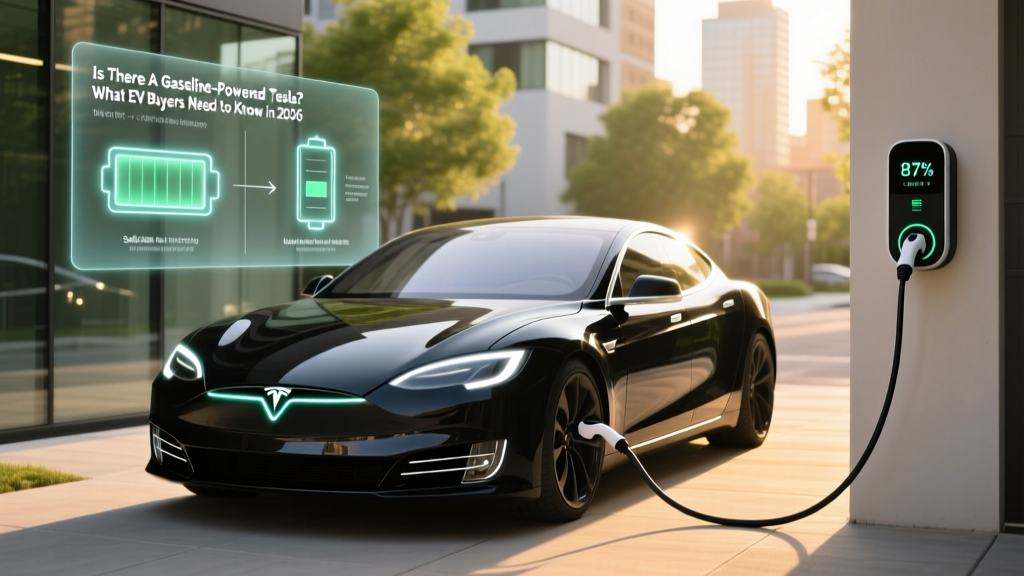
The Short Answer: No Gasoline Powered Tesla Exists
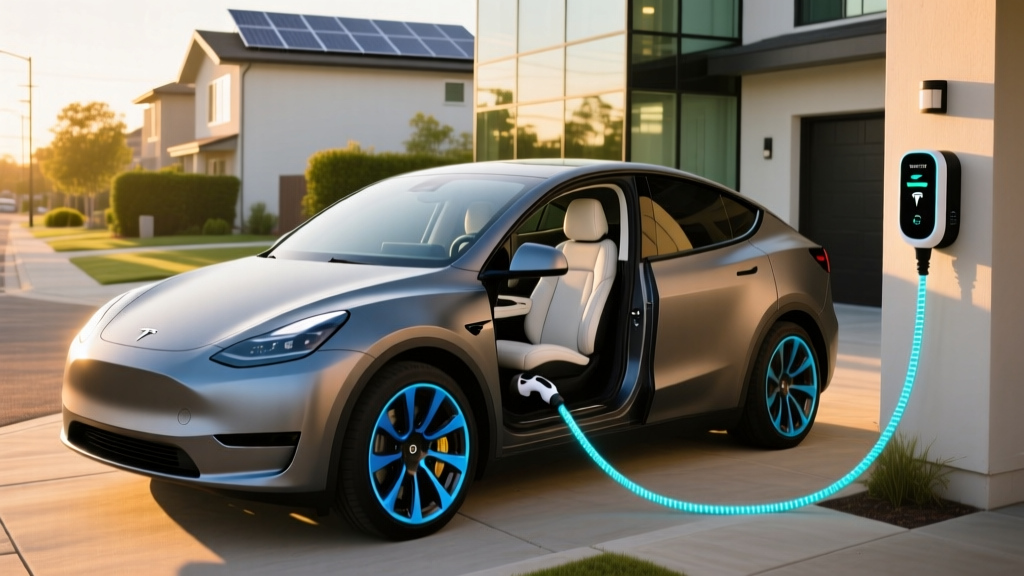
If you've been searching for a gasoline powered Tesla, you won't find one — not in 2026, not ever from Tesla directly. Every vehicle Tesla has ever produced is a battery-electric vehicle (BEV). There is no Tesla with an internal combustion engine, no Tesla hybrid, and no Tesla plug-in hybrid (PHEV). Tesla's entire business model, manufacturing infrastructure, and software ecosystem are built around pure electric propulsion.
That said, the search intent behind "gasoline powered Tesla" is real and worth addressing. Most people typing this are either:
- Curious skeptics wondering if Tesla has caved and added a gas engine to address range anxiety.
- Practical shoppers who love Tesla's tech, performance, and Supercharger network but need the flexibility of gasoline for long road trips, rural driving, or apartment living without home charging.
- Confused buyers who conflate Tesla with other brands that offer both EVs and gas vehicles.
This guide clears up the confusion, explains why Tesla remains 100% electric, and — most importantly — gives you concrete alternatives that deliver Tesla-rivaling tech with a gas engine or plug-in hybrid powertrain.
Why Tesla Will Never Build a Gasoline Car
Tesla's commitment to all-electric isn't a marketing stance — it's an engineering and economic one. Here's why a gasoline powered Tesla is functionally impossible:
Vertical Integration Around Electricity
Tesla's Gigafactories produce battery cells (4680 format, NMC chemistry), battery packs, drive units, and power electronics. The company also operates the Supercharger network — over 60,000 DC fast-charging stalls globally. Adding an internal combustion engine (ICE) would require an entirely separate supply chain: engine casting, fuel injection systems, exhaust aftertreatment, and transmission assembly. That's billions in retooling for a technology Tesla's CEO has called "obsolete."
Software and OTA Architecture
Tesla's software stack — from regenerative braking calibration to cabin preconditioning to FSD (Supervised) — is designed around a high-voltage battery and electric motors. An ICE powertrain would require fundamentally different control software, emissions monitoring, and OBD-II compliance that doesn't exist in Tesla's architecture.
Regulatory Credits
Tesla earns significant revenue selling zero-emission vehicle (ZEV) regulatory credits to legacy automakers. Building a gasoline car would undermine this revenue stream and Tesla's regulatory positioning.
Tesla's 2026 All-Electric Lineup: Quick Specs
For context, here's what Tesla actually sells in the US for 2026. All figures are from fueleconomy.gov and Tesla's official specifications.
| Model | EPA Range | Battery (kWh) | 0-60 mph | Starting MSRP | §30D Credit |
|---|---|---|---|---|---|
| Model 3 RWD | 363 mi | ~60 (LFP) | 5.8 sec | $38,990 | $7,500* |
| Model 3 Long Range AWD | 346 mi | ~75 (NMC) | 4.2 sec | $42,990 | $7,500* |
| Model Y Long Range AWD | 320 mi | ~75 (NMC) | 4.8 sec | $44,990 | $7,500* |
| Model S Dual Motor | 402 mi | ~100 (NMC) | 3.1 sec | $74,990 | No† |
| Model X Dual Motor | 335 mi | ~100 (NMC) | 3.8 sec | $79,990 | No† |
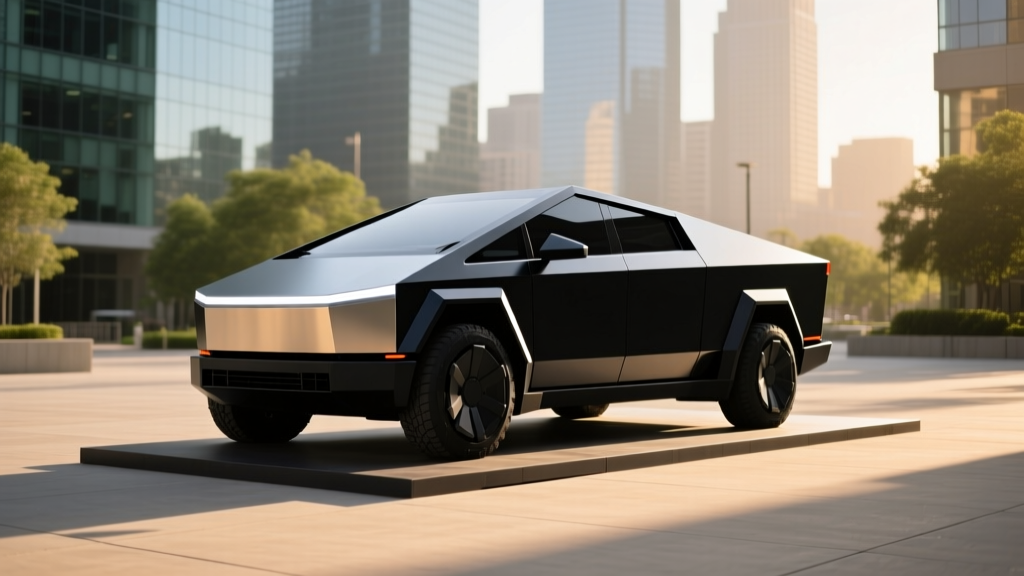
| Cybertruck AWD | 340 mi | ~123 (NMC) | 4.1 sec | $79,990 | No† |
*$7,500 federal tax credit eligibility requires meeting IRS §30D income caps ($150K single / $300K joint AGI), battery sourcing requirements, and point-of-sale transfer. Verify current eligibility at irs.gov. Rules are subject to change.
†Model S, Model X, and Cybertruck exceed the §30D MSRP cap ($55,000 for sedans, $80,000 for SUVs/trucks). Cybertruck AWD sits right at the truck cap but may not qualify depending on battery-sourcing compliance.
The Real Alternatives: PHEVs and EREVs That Give You Gas + Electric
If what you actually want is Tesla-level technology combined with the security of a gasoline engine, 2026 offers several compelling options. These vehicles let you drive on electricity for daily commuting while keeping a gas tank for road trips, towing, or rural routes where charging infrastructure is sparse.
Plug-In Hybrids (PHEVs): Best of Both Worlds
| Vehicle | EV Range | Gas Range | Combined MPGe | 0-60 mph | MSRP |
|---|---|---|---|---|---|
| Toyota RAV4 Prime | 42 mi | ~400 mi | 94 MPGe | 5.7 sec | $44,990 |
| Hyundai Tucson PHEV | 33 mi | ~380 mi | 80 MPGe | 6.3 sec | $39,490 |
| Jeep Wrangler 4xe | 22 mi | ~350 mi | 49 MPGe | 6.0 sec | $51,790 |
| BMW X5 xDrive50e | 38 mi | ~370 mi | 56 MPGe | 4.6 sec | $73,400 |
| Chrysler Pacifica PHEV | 32 mi | ~430 mi | 82 MPGe | 7.1 sec | $51,095 |
Extended-Range EVs (EREVs): Electric Drive with a Gas Generator
EREVs are the closest thing to a "gasoline powered Tesla" in concept. The wheels are always driven by electric motors — exactly like a Tesla — but a small gasoline engine acts as a generator to recharge the battery on the fly. You get EV driving dynamics with gas-powered range extension.
- Ram 1500 REV (with range extender): Up to 350 miles of combined range when equipped with the optional 69 kWh battery and onboard gas generator. Tows up to 10,000 lbs. Starting around $58,095.
- Mazda MX-30 R-EV (if available in US): Rotary engine generator extends range beyond the 85 kWh battery. Limited US availability as of 2026.
Charging and Fueling: How PHEVs Compare to Tesla
One reason people search for a gasoline powered Tesla is charging anxiety — the worry that a pure EV won't fit their lifestyle. Here's how the fueling experience actually breaks down:
| Metric | Tesla Model Y LR | Toyota RAV4 Prime (PHEV) | Gas-Only SUV (baseline) |
|---|---|---|---|
| Daily commute (30 mi round trip) | 100% electric, ~$1.20/day | 100% electric, ~$1.00/day | Gas, ~$3.80/day |
| Road trip (600 mi) | 2-3 Supercharger stops, ~45 min total | 2 gas stops, ~15 min total | 2 gas stops, ~15 min total |
| Home charging overnight | Level 2, ~44 mi/hr (11.5 kW) | Level 2, ~14 mi/hr (3.3 kW) | N/A |
| Cold weather range loss (20°F) | ~20-30% loss | EV range drops ~30%, gas unaffected | ~10-15% MPG loss |
Federal Tax Credits: Tesla vs. PHEV Alternatives
The IRS §30D Clean Vehicle Credit applies to both BEVs and PHEVs, but the rules are strict and evolving. Here's what matters for 2026:
- Maximum credit: $7,500 for new vehicles (up to $4,000 for used EVs under §25E).
- MSRP caps: $55,000 for sedans; $80,000 for SUVs, vans, and trucks.
- Income caps: $150,000 single filer / $225,000 head of household / $300,000 joint AGI.
- Battery sourcing: Increasingly strict critical-mineral and battery-component requirements must be met. These change annually — always verify on the IRS qualified vehicles list before purchasing.
- Point-of-sale transfer: You can now transfer the credit to the dealer at purchase, reducing your out-of-pocket cost immediately rather than waiting for a tax refund.
- PHEV eligibility: The vehicle must have a battery capacity of at least 7 kWh and meet the same sourcing and MSRP rules.
| Vehicle | MSRP | Under MSRP Cap? | Est. After $7,500 Credit |
|---|---|---|---|
| Tesla Model 3 RWD | $38,990 | Yes | ~$31,490* |
| Tesla Model Y LR AWD | $44,990 | Yes | ~$37,490* |
| Toyota RAV4 Prime | $44,990 | Yes | ~$37,490* |
| Hyundai Tucson PHEV | $39,490 | Yes | ~$31,990* |
| BMW X5 xDrive50e | $73,400 | Yes (SUV cap $80K) | ~$65,900* |
*Assumes buyer meets all §30D requirements including income caps, battery sourcing compliance, and point-of-sale transfer. Verify current eligibility at irs.gov before purchasing. State incentives may further reduce cost.
Who Should Buy a Tesla (BEV) vs. a PHEV?
✅ Choose a Tesla BEV If:
- You have reliable home Level 2 charging (garage or driveway with 240V outlet)
- Your daily commute is under 250 miles round trip
- You want access to the Supercharger network for road trips
- You prioritize over-the-air updates, minimalist tech, and Autopilot/FSD (Supervised)
- You want the lowest per-mile fuel cost (~$0.04/mi on home charging)
- You don't regularly tow heavy loads or drive in extreme cold without charging access
✅ Choose a PHEV If:
- You live in an apartment or lack home charging access
- You take frequent long road trips through rural areas with sparse charging
- You need to tow regularly (gas engine handles the heavy load)
- You experience harsh winters and don't want to manage cold-weather range loss
- You want electric commuting but zero range anxiety
- You prefer traditional dealership service and parts availability
Pros and Cons: Tesla BEV vs. Gas-Equipped Alternatives
Tesla BEV Pros
- Lowest operating cost per mile
- Supercharger network reliability
- OTA updates continuously add features
- Instant torque, smooth acceleration
- No oil changes, minimal maintenance
- Strong resale value (Model 3/Y)
Tesla BEV Cons
- No gas backup — range anxiety on rural routes
- Cold weather reduces range 20-30%
- Insurance premiums 20-40% higher than average
- Limited service center locations in rural areas
- Panel/body repair can be expensive and slow
- No CarPlay/Android Auto integration
PHEV Pros
- Electric commute + gas road trips
- No range anxiety, ever
- Works without home charging (gas-only mode)
- Dealership service network nationwide
- Better cold-weather flexibility
- May qualify for same $7,500 tax credit
PHEV Cons
- Higher maintenance (oil changes + EV systems)
- Smaller battery = shorter electric-only range (22-42 mi)
- Slower DC charging (most PHEVs max at 6.6-7.2 kW Level 2; few offer DC fast charge)
- Heavier vehicle = lower overall efficiency when gas-only
- Tech/infotainment often less advanced than Tesla
- Resale value less predictable
Frequently Asked Questions
Does Tesla make a hybrid or gasoline vehicle?
No. Tesla exclusively manufactures battery-electric vehicles (BEVs). The company has never produced a hybrid, plug-in hybrid, or gasoline-powered car, and has no announced plans to do so. Tesla's CEO Elon Musk has stated that hybrids are a "temporary bridge" technology that Tesla does not need.
Can I add a range-extending gas generator to a Tesla?
Not officially. Tesla does not offer or support any aftermarket gasoline range extender. Some third-party companies have explored trailer-mounted generators for the Cybertruck, but these are not Tesla-endorsed, may void your warranty, and introduce complexity that defeats the purpose of a pure EV. If you need gas range extension, a factory-built EREV or PHEV is a far better solution.
What is the cheapest Tesla available in 2026?
The Tesla Model 3 Rear-Wheel Drive starts at $38,990 MSRP. If you qualify for the full $7,500 federal tax credit via point-of-sale transfer, the effective price drops to approximately $31,490. This makes it one of the most affordable premium electric sedans on the market, undercutting many gas-powered luxury competitors.
Which PHEV has the longest electric-only range?
Among mainstream 2026 PHEVs, the Toyota RAV4 Prime leads with 42 miles of EPA-estimated electric-only range. The BMW X5 xDrive50e offers 38 miles. For context, 42 miles covers the average American's daily round-trip commute, meaning many PHEV owners can drive weeks without using gasoline.
Do PHEVs qualify for the same $7,500 tax credit as Teslas?
Yes — if they meet the same IRS §30D requirements: battery capacity of at least 7 kWh, MSRP under the cap ($55K sedans / $80K SUVs/trucks), buyer income within limits, and battery-sourcing compliance. Many popular PHEVs, including the RAV4 Prime and Tucson PHEV, have historically qualified. Always check the IRS qualified vehicles list for the most current eligibility, as sourcing requirements tighten annually.
Is a PHEV more expensive to maintain than a Tesla?
Generally, yes. A PHEV has both an internal combustion engine (requiring oil changes, air filters, spark plugs, and eventual transmission service) and an electric powertrain (battery, motor, power electronics). A Tesla BEV eliminates all ICE maintenance. However, Tesla's body repair costs and specialized service can be higher than a PHEV serviced at a conventional dealership.
What about aftermarket gasoline conversions for Teslas?
While technically possible for a custom shop to swap in a combustion engine, this would destroy the vehicle's warranty, void its software functionality (Tesla's systems are deeply integrated with the electric drivetrain), eliminate Supercharger access, and make the car uninsurable in most states. It's not a practical or rational approach. If you need gas capability, buy a vehicle designed for it.
The Bottom Line
A gasoline powered Tesla doesn't exist and almost certainly never will. Tesla's engineering, manufacturing, and business model are built entirely around battery-electric propulsion. But the desire behind that search — Tesla-caliber technology with the security net of gasoline — is completely valid, and 2026's PHEV and EREV market delivers exactly that.
If you can charge at home and your trips are mostly under 300 miles, a Tesla Model 3 or Model Y remains the most efficient, tech-forward EV choice. If you need gas flexibility for road trips, rural driving, towing, or apartment living, a plug-in hybrid like the RAV4 Prime or Tucson PHEV gives you electric daily driving with zero range anxiety — and may still qualify for the same $7,500 federal tax credit.
The right choice depends on your charging access, driving patterns, and tolerance for planning road trips around charging stops. Either way, you're reducing fuel costs and emissions compared to a gas-only vehicle. The "gasoline powered Tesla" may be a myth, but the practical need it represents has excellent real-world solutions.