Quick Answer: Do EV Owners Need Electric Garage Heaters?
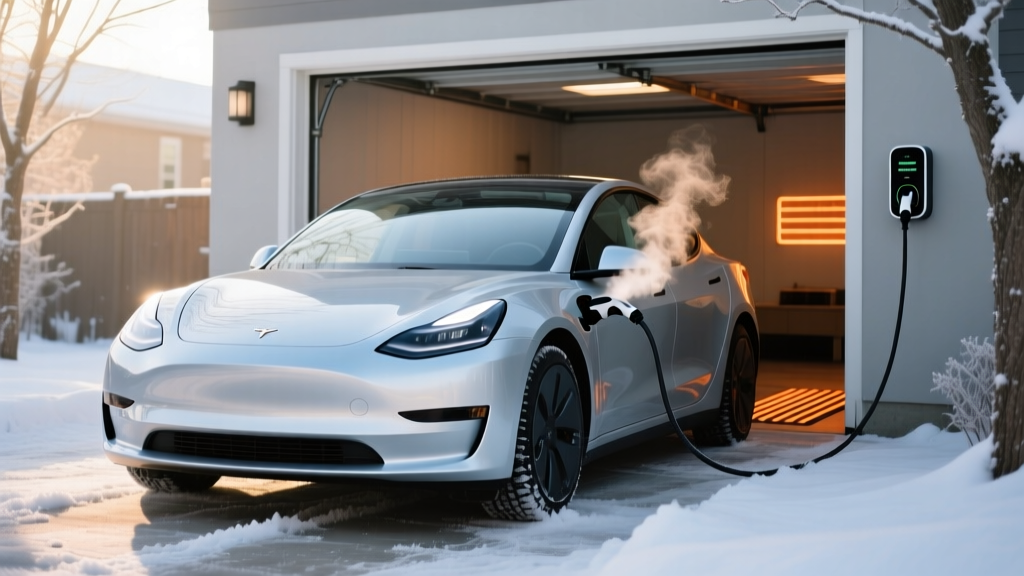
Most EV owners do not need a dedicated electric garage heater to protect their vehicle's battery or maintain range. Modern EVs use active thermal management systems that precondition the battery whether the garage is heated or not. However, keeping your garage above freezing (ideally 40–55°F) does reduce the energy your EV spends warming itself, which can preserve 5–10% of range on very cold mornings. The real range-saver is plugging in and preconditioning while connected to your Level 2 charger — not heating the entire garage space.
Winter range loss is one of the most common concerns for current and prospective EV owners. Search interest in garage heaters electric spikes every November through February as drivers look for ways to protect their investment and avoid range surprises. The instinct is understandable: if cold weather hurts EV range, wouldn't a warm garage fix it? The answer is more nuanced than a simple yes or no, and the economics rarely justify a dedicated garage heater purely for EV benefit.
How Cold Weather Actually Affects EV Range and Efficiency
Lithium-ion batteries operate best between 68–77°F (20–25°C). When ambient temperatures drop below freezing, two things happen simultaneously: the battery's internal resistance increases (reducing charge acceptance and discharge efficiency), and the cabin heating system draws significant energy from the traction battery.
According to testing data compiled by fueleconomy.gov, EVs can lose 20–40% of their EPA-rated range when driven in temperatures below 20°F with cabin heating active. The exact loss depends on several variables:
- Battery chemistry: LFP (lithium iron phosphate) batteries tend to experience slightly more cold-weather resistance than NMC (nickel manganese cobalt) cells, though the gap narrows with active thermal management.
- Heat pump availability: EVs equipped with a heat pump (standard on the Hyundai Ioniq 5, Tesla Model Y, and most 2025+ models) use roughly 30–50% less energy for cabin heating compared to resistive PTC heaters.
- Preconditioning behavior: An EV that starts a trip with a warm battery and cabin — preconditioned while plugged in — loses far less range than one that must heat everything from a cold start using battery energy alone.
- Trip length: Short trips (under 10 miles) in extreme cold are the worst-case scenario, as the battery and cabin never reach efficient operating temperature. Longer trips (40+ miles) allow thermal systems to stabilize.
| Metric | EV (with heat pump) | EV (resistive heater) | Gas Vehicle |
|---|---|---|---|
| EPA range / tank range | 300 mi | 300 mi | 400 mi |
| Cold-weather range loss | ~20–25% | ~30–40% | ~10–15% |
| Effective winter range | 225–240 mi | 180–210 mi | 340–360 mi |
| Energy cost per winter mile | ~$0.04–0.06 | ~$0.05–0.08 | ~$0.12–0.16 |
Gas vehicles also lose efficiency in cold weather — shorter trips, richer fuel mixtures during warmup, and increased drivetrain friction — but the effect is less visible because gas tanks are oversized relative to typical daily driving needs. An EV's range loss is more noticeable because the margin between "enough range" and "not enough" is tighter for some drivers.
What an Electric Garage Heater Actually Does for Your EV
A typical electric garage heater (1,500–5,000 watts) raises the ambient temperature of a two-car garage by 20–40°F above outside temperature, depending on insulation. Here's what that means in practice for your EV:
Battery temperature: If your garage stays at 45°F instead of 5°F overnight, your battery pack starts the morning closer to its efficient operating range. The vehicle's thermal management system won't need to draw as many kilowatt-hours from the pack to warm itself. In testing, this typically saves 2–5 kWh of energy on a cold morning — roughly 5–10% of a 60–80 kWh battery's usable capacity.
Cabin preconditioning load: A warmer garage means the cabin starts at a higher baseline temperature. Your EV's heat pump or resistive heater works less to reach 70°F, saving an additional 1–3 kWh depending on the temperature differential.
Charging speed: Cold batteries charge more slowly — this is a physical limitation of lithium-ion chemistry. If your battery is already at 45°F instead of 5°F when you begin a Level 2 charging session, the vehicle spends less time and energy on battery warming before accepting a full charge rate. This might shave 15–30 minutes off an overnight charge cycle on the coldest nights.
The Cost of Running an Electric Garage Heater
Here's where the math gets important. A 1,500-watt garage heater running 8 hours per night during a 120-day winter season consumes:
- 1.5 kW × 8 hours = 12 kWh per night
- 12 kWh × 120 nights = 1,440 kWh per winter
- At the U.S. average electricity rate of ~$0.16/kWh (per EIA data): $230 per winter
A larger 5,000-watt (240V) unit running on a thermostat might cycle 40% of the time, consuming roughly 48 kWh per night equivalent and costing $368 per winter at the same rate.
Compare that to the energy you're saving: if preconditioning from a warm garage saves you 5 kWh per morning over 120 days, that's 600 kWh saved, worth about $96 at the same rate. The heater costs more to run than the energy it saves your EV.
What Works Better Than a Garage Heater: Smart Preconditioning
The single most effective cold-weather strategy for EV owners is preconditioning while plugged in. Here's why this outperforms heating the entire garage:
When your EV is connected to a Level 2 charger (240V, typically 32–48 amps / 7.7–11.5 kW), preconditioning draws energy from the grid — not from your battery. The vehicle warms the battery pack to its optimal temperature range and heats the cabin before you ever get in. You start your trip with a warm battery, full cabin comfort, and 100% of your battery's usable capacity available for driving.
Most modern EVs allow you to schedule preconditioning via the manufacturer's app:
- Tesla: Scheduled Departure or "Defrost" via the Tesla app
- Hyundai/Kia: Scheduled climate and battery preconditioning via Bluelink/Kia Connect
- Ford: Scheduled departure times in FordPass
- Chevrolet: Delayed departure preconditioning via myChevrolet app
The energy cost of preconditioning from the grid is typically 3–8 kWh per session, depending on how cold it is and how long the warmup cycle runs. At $0.16/kWh, that's $0.48–$1.28 per morning — far cheaper than running a garage heater all night.
| Strategy | Equipment Cost | Operating Cost/Winter | Range Preserved | Convenience |
|---|---|---|---|---|
| Preconditioning while plugged in (Level 2) | $500–$1,200 (charger install) | $58–$154 | ~15–25% | High (scheduled via app) |
| Electric garage heater (1,500W, 8 hr/night) | $150–$400 | $230 | ~5–10% | Moderate (manual or timer) |
| Electric garage heater (5,000W, thermostat) | $400–$900 + 240V circuit | $368 | ~8–15% | High (thermostat-controlled) |
| Insulated garage (no active heat) | $800–$2,500 (insulation) | $0 | ~3–8% | Passive |
| No intervention (park outside, no preconditioning) | $0 | $0 | 0% baseline | N/A |
When a Garage Heater Might Actually Make Sense for EV Owners
While the pure economics don't favor a garage heater solely for EV range preservation, there are legitimate scenarios where one adds value:
You use your garage as a workspace. If you spend time in your garage during winter — working on projects, loading cargo, or doing maintenance — a heater improves your comfort regardless of the EV benefit. The range preservation becomes a secondary bonus.
You live in extreme cold (consistently below -10°F / -23°C). At these temperatures, battery chemistry becomes significantly less efficient, and some EVs may limit regenerative braking or charging speeds until the pack warms. A heated garage that maintains 35–45°F reduces the thermal delta your EV must overcome.
Your EV lacks a heat pump. Older or base-trim EVs with resistive PTC heaters (such as early Chevy Bolt EV models or base Nissan Leaf trims) suffer greater winter range loss. A warm garage partially offsets this disadvantage, though preconditioning while plugged in remains more cost-effective.
You cannot plug in at home. If you rely on public charging and cannot precondition from grid power, a heated garage provides the only available way to start with a warmer battery. This is a niche scenario — and the better solution is to prioritize finding home or workplace charging access.
Common Misconceptions About EVs and Cold Weather
| Myth | Fact |
|---|---|
| "Cold weather will destroy my EV battery." | Cold temporarily reduces range and charge speed but does not cause permanent damage. Modern thermal management systems protect the pack. Long-term degradation data from Recurrent shows minimal difference in battery health between cold-climate and warm-climate EVs after 100,000+ miles. |
| "I need to heat my garage or my EV won't charge." | EVs will charge in any temperature. Charging may be slower when the battery is very cold (the vehicle diverts some power to warming the pack), but charging still occurs. Preconditioning before or during charging resolves this. |
| "EVs are unusable in winter." | Norway — where EVs represent over 80% of new car sales — has harsh winters. Real-world ownership works with preconditioning, adequate range planning, and understanding that winter range is lower. Most daily commutes (under 40 miles round-trip) are well within any modern EV's winter range. |
| "A garage heater will fully restore my EV's winter range." | A heated garage reduces the thermal burden on your EV but does not eliminate cold-weather losses. Cabin heating during the drive, cold road surfaces, and winter driving conditions still reduce efficiency. Expect to recover 5–15% of lost range, not 100%. |
| "I should let my EV battery warm up before driving, like a gas car." | EVs don't idle to warm up. The correct approach is preconditioning while plugged in — this warms both battery and cabin using grid power. Idling an EV unplugged simply drains the battery. |
Decision Framework: Should You Install a Garage Heater for Your EV?
If-Then Guide for EV Owners Considering a Garage Heater
Choose preconditioning + Level 2 charger (skip the garage heater) if:
- You have access to a 240V circuit or can install one ($500–$1,500 typical cost with electrician)
- Your daily winter driving is under 80% of your EV's EPA range
- You use your garage only for parking and storage
- Your EV has a heat pump and scheduled preconditioning capability
- Your winter temperatures average above -10°F
Consider adding a garage heater alongside your Level 2 charger if:
- You regularly experience temperatures below -10°F for extended periods
- You use your garage as a workshop or living space in winter
- Your EV lacks a heat pump and you frequently drive near the limit of its winter range
- You already have a 240V circuit available in the garage (dryer outlet, welder plug)
- You value the comfort and convenience of a warm garage beyond the EV benefit
Prioritize garage insulation over active heating if:
- Your garage is uninsulated or poorly sealed — insulation (R-13 to R-19 in walls, R-30+ in ceiling) passively retains heat from your home, water heater, or dryer exhaust and costs nothing to operate
- Your budget allows one improvement — insulation provides year-round benefits (cooler in summer, warmer in winter) without ongoing electricity cost
The Bottom Line on Garage Heaters and EV Ownership
A dedicated electric garage heater is not a requirement for EV ownership, even in cold climates. The most impactful cold-weather investment is a Level 2 home charger with scheduled preconditioning — this addresses the majority of winter range loss at a lower operating cost than running a space heater all night.
If you're shopping for an EV and cold-weather range is a concern, prioritize models with a heat pump, a battery large enough that even 30% winter loss leaves comfortable margin for your daily driving, and available scheduled preconditioning features. Current strong cold-weather performers include the Tesla Model Y (heat pump standard, ~310 miles EPA), Hyundai Ioniq 5 (heat pump standard on most trims, ~303 miles EPA), and Ford Mustang Mach-E (heat pump available, ~320 miles EPA on Extended Range trims). For the latest federal tax credit eligibility on these models, always check the current rules at IRS.gov §30D, as MSRP caps, income limits, and battery sourcing requirements apply.
If you already own an EV and are experiencing winter range anxiety, start with preconditioning discipline before spending money on garage heating infrastructure. Most owners find that a consistent preconditioning routine — combined with realistic expectations about winter range — eliminates the problem without adding a single watt of garage heat.
Will my EV battery degrade faster if I park outside in winter?
No. Long-term battery degradation studies show no significant difference in State of Health (SoH) between cold-climate and warm-climate vehicles when thermal management systems are functioning properly. Extreme heat is actually more damaging to lithium-ion batteries than extreme cold. Your EV's battery management system (BMS) protects the pack in both conditions.
How much does a Level 2 home charger cost to install?
A typical Level 2 charger installation (240V, 40–60 amp circuit) costs $500–$1,500 total, including the charger unit ($200–$600) and electrician labor ($300–$900). Costs increase if your electrical panel needs an upgrade to support the additional load — a 200-amp panel upgrade can add $1,500–$3,000. Always have a licensed electrician assess your panel capacity before installation.
Can I use a standard 120V outlet to precondition my EV?
Yes, but slowly. A standard 120V outlet (Level 1) provides roughly 1.2–1.4 kW of power. Preconditioning typically draws 3–6 kW, so on Level 1, the vehicle will supplement with battery power during the warmup. You'll still benefit from a warmer cabin and battery at departure, but you won't fully preserve your battery's charge. Level 2 (240V) is strongly recommended for consistent preconditioning.
Do electric garage heaters require a special electrical circuit?
Small 120V garage heaters (1,500W or less) plug into a standard 15-amp or 20-amp outlet, but they draw 12.5 amps continuously — near the limit of a 15-amp circuit. Larger 240V units (3,000–5,000W) require a dedicated circuit installed by an electrician. If you're also installing a Level 2 EV charger, your electrician should evaluate total panel load to ensure both can operate simultaneously without tripping breakers.
What's the best EV for cold climates in 2026?
Look for three features: a heat pump (reduces cabin heating energy use by 30–50%), a battery with at least 75 kWh usable capacity (providing enough range margin after winter losses), and robust preconditioning scheduling via the manufacturer's app. The Tesla Model Y Long Range, Hyundai Ioniq 5 Long Range, and BMW iX all meet these criteria. Always check fueleconomy.gov for the latest EPA range and efficiency data by model year.