Why Tesla's In-Car Gaming Matters for EV Owners
If you have ever sat at a DC fast charger watching a progress bar inch toward 80%, you know the downtime problem. Tesla has leaned into this reality by building a surprisingly robust gaming platform directly into the vehicle's infotainment system. Whether you are waiting 18 minutes at a Supercharger or parked at a campsite for the evening, games on Tesla have evolved from novelty to a genuine ownership perk—especially as the hardware under the dashboard has gotten powerful enough to run AAA-class titles.
This guide breaks down what gaming on a Tesla actually looks like in 2026, which models support what, and how the experience ties into the real-world charging and ownership picture. We will also cover the vehicles themselves—range, charging speed, pricing, and tax credit eligibility—because the gaming platform is only as useful as the car it lives in.
What Games Can You Actually Play on a Tesla?
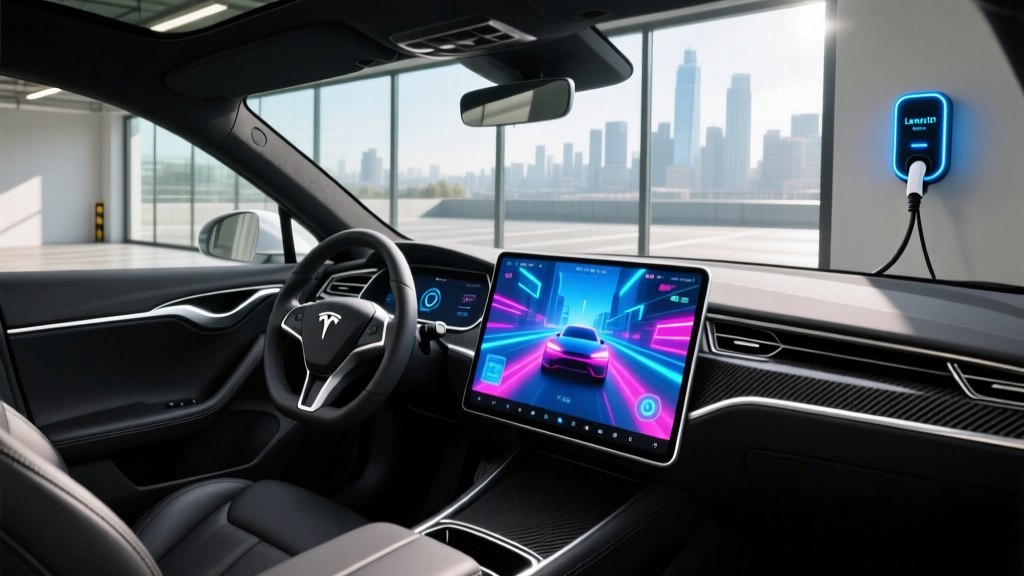
Tesla's infotainment system runs a custom Linux-based OS, and its gaming library spans casual arcade titles to full AAA ports. Here is how the catalog breaks down:
- Casual and arcade games: Titles like 2048, Solitaire, Backgammon, and Sudoku come preloaded. These are low-demand and work on any Tesla hardware generation.
- Mid-tier titles: Stardew Valley, Cuphead, Beach Buggy Racing, and Castlevania Anniversary Collection run well on Hardware 4 (AMD Ryzen-based) infotainment systems.
- AAA ports: Cyberpunk 2077, The Witcher 3, and Stardew Valley are headline titles that Tesla has showcased. These require the newer AMD Ryzen-based MCU (Media Control Unit) found in vehicles built from mid-2021 onward.
- Browser and streaming: Tesla's built-in browser supports web-based games, and the Theater app can stream services like Netflix and YouTube—though gaming and streaming are restricted to Parked mode.
Owners can connect USB or Bluetooth game controllers. Tesla officially supports Xbox and PlayStation controllers, and many third-party Bluetooth controllers work as well. The steering wheel and pedals can serve as controllers for certain racing games, which is a uniquely Tesla touch.
When and Where Can You Play Games on Tesla?
This is where safety rules and software logic intersect. Tesla enforces strict gating on when gaming is available:
The practical use cases are:
- DC fast charging stops: A 10-80% session takes roughly 15-25 minutes depending on the model and charger. That is enough time for a quick Cuphead run or a few hands of Solitaire.
- Camping or tailgating: With Camp Mode enabled, the climate system stays on and the screen remains active. This turns the Tesla into a climate-controlled gaming station.
- Waiting scenarios: School pickup lines, airport waits, or parked at home while the car charges on Level 2.
Tesla's SAE Level 2 driver-assist systems—Autopilot and FSD (Supervised)—do not change this restriction. Even with FSD engaged, the driver must remain attentive, and gaming is never available while the vehicle is in motion. Only Level 4 robotaxi services like Waymo operate without a driver-engagement requirement, and those are a fundamentally different category.
Hardware Matters: Which Tesla Models Run Which Games?
Not every Tesla delivers the same gaming experience. The infotainment hardware generation is the bottleneck:
| Hardware | Processor | Models (approx.) | Gaming Capability |
|---|---|---|---|
| MCU1 (pre-2018) | NVIDIA Tegra | Model S/X (2012-2018) | Basic casual games only; no AAA titles |
| MCU2 (2018-2021) | Intel Atom | Model 3/Y (early), Model S/X refresh | Mid-tier games; some AAA with reduced settings |
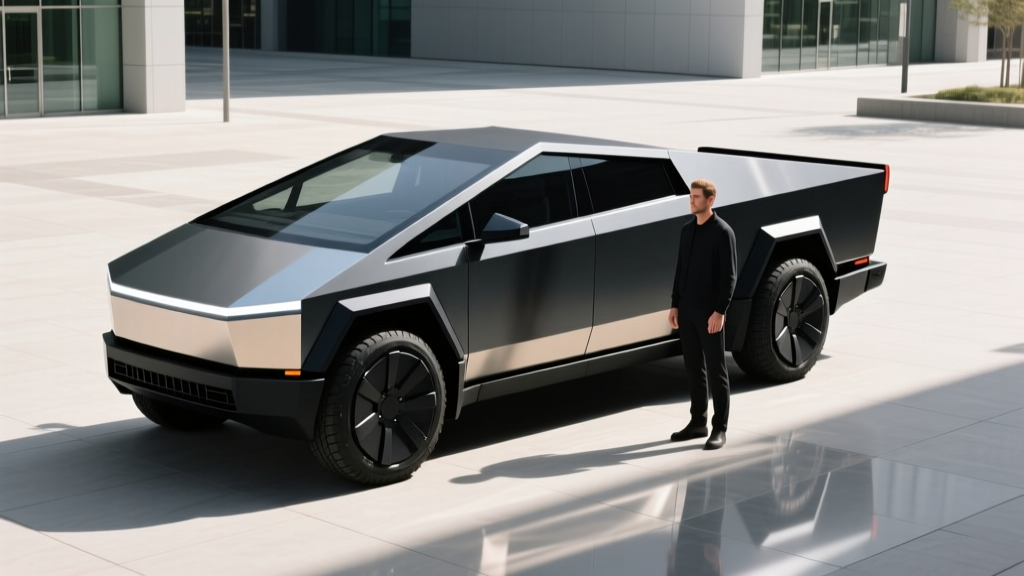
| MCU3 / HW4 (2021+) | AMD Ryzen | All current Model 3/Y/S/X, Cybertruck | Full AAA titles including Cyberpunk 2077 |
If gaming is a priority, ensure the vehicle you are buying has the AMD Ryzen-based MCU. You can verify this in the Software menu under "Additional Vehicle Information." A used Model 3 from 2020 with Intel Atom hardware will run Stardew Valley but will struggle or outright fail to launch Cyberpunk 2077.
Specs That Matter: Range, Charging, and Performance (2026 Lineup)
The gaming experience is only as good as the car around it. Here is what the current 2026 Tesla lineup delivers in the metrics that matter most to buyers. Figures below represent the highest-volume models:
| Spec | Model 3 Long Range AWD | Model Y Long Range AWD | Model S Dual Motor |
|---|---|---|---|
| EPA Range | 363 mi | 320 mi | 402 mi |
| Battery (usable) | ~79 kWh, NMC | ~78 kWh, NMC | ~95 kWh, NMC |
| Max DC Fast Charge | 250 kW | 250 kW | 250 kW |
| 10-80% DC Time | ~25 min | ~27 min | ~30 min |
| Level 2 Home Rate | 11.5 kW (~44 mi/hr) | 11.5 kW (~44 mi/hr) | 11.5 kW (~34 mi/hr) |
| 0-60 mph | 4.2 sec | 4.8 sec | 3.1 sec |
| Horsepower | 346 hp | 384 hp | 670 hp |
| Drivetrain | Dual-Motor AWD | Dual-Motor AWD | Dual-Motor AWD |
| MPGe (combined) | 132 MPGe | 122 MPGe | 124 MPGe |
| Efficiency | 26 kWh/100mi | 28 kWh/100mi | 28 kWh/100mi |
| Cargo Volume | 23 cu ft (trunk+frunk) | 76 cu ft (max, seats folded) | 28 cu ft (trunk+frunk) |
| Rear Legroom | 35.3 in | 39.0 in | 35.4 in |
| Battery Warranty | 8 yr / 120,000 mi | 8 yr / 120,000 mi | 8 yr / 150,000 mi |
| Base MSRP | $47,740 | $48,990 | $79,990 |
Sources: fueleconomy.gov, Tesla official specs. Pricing reflects 2026 MSRP before destination fees; specs subject to change by model year.
The EPA numbers above assume a mix of city and highway driving at moderate temperatures. In real-world highway use at 75 mph, expect to lose roughly 10-15% from the EPA sticker—so a Model 3 LR rated at 363 miles will deliver closer to 300-320 miles on a flat, temperate highway run. In cold weather (below 32°F), range can drop 20-30% due to battery resistance and cabin heating demands. Tesla's heat pump (standard on all current models) mitigates this compared to older resistive-heating EVs, but physics is physics. Plan charging stops around 250 miles of real-world range in winter to stay comfortable.
Charging Speed: How Long Will You Be Sitting There Gaming?
The charging experience directly determines how much gaming time you get on the road. Tesla's Supercharger network remains the most reliable DC fast-charging ecosystem in the U.S., and the charge curve tells the real story:
| Charging Level | Power (kW) | Miles Added per Hour | Typical Use Case |
|---|---|---|---|
| Level 1 (120V household) | ~1.4 kW | 3-5 mi/hr | Emergency / overnight trickle |
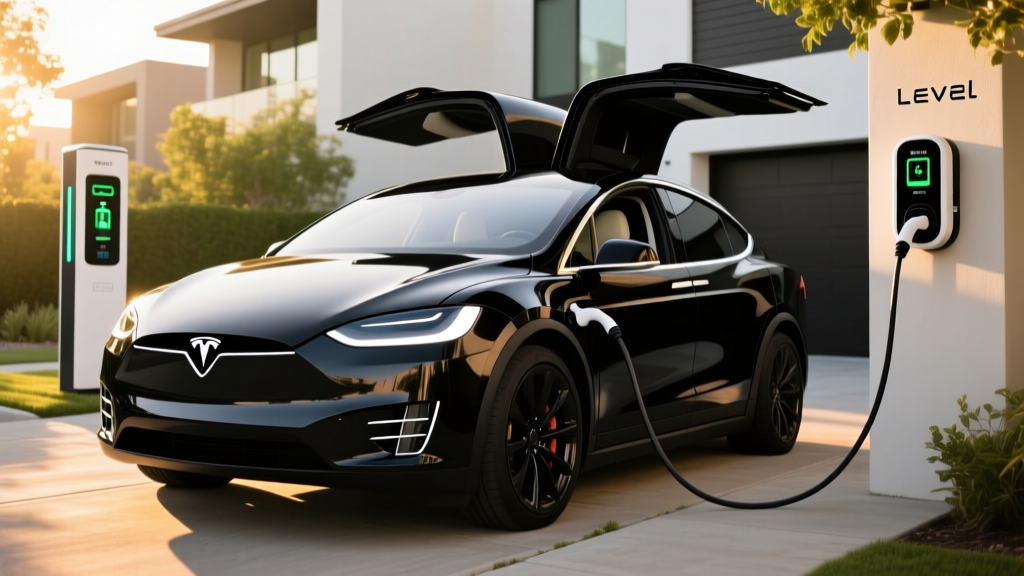
| Level 2 (240V home Wall Connector) | 11.5 kW | 34-44 mi/hr | Daily home charging |
| DC Fast (V3 Supercharger) | Peak 250 kW | ~1,000+ mi/hr (peak) | Road trips; 10-80% in ~25 min |
| DC Fast (V4 Supercharger) | Up to 350 kW (cab side) | Varies by vehicle acceptance | Newer stalls; Tesla vehicles currently cap at 250 kW |
A critical detail: the 250 kW peak only holds between roughly 10-30% state of charge. Above 50%, the charge rate tapers significantly—to around 100 kW by 60% and below 50 kW past 80%. This is why Tesla and experienced EV owners recommend charging to 80% on road trips and moving on rather than waiting for a full battery. That 10-80% window is where you get the most miles per minute—and about 25 minutes of gaming time.
With Tesla now opening Superchargers to NACS-equipped vehicles from Ford, GM, Rivian, and others, station congestion at popular corridors has increased. Using the Tesla app to check stall availability before arriving is more important than ever.
Pricing and Federal Tax Credit Eligibility (2026)
Tesla's pricing has shifted multiple times, but the current 2026 lineup positions the Model 3 and Model Y as the most accessible entries. Here is where the federal §30D tax credit fits in:
| Model / Trim | Base MSRP | §30D Credit Eligible? | Effective Price (if eligible) |
|---|---|---|---|
| Model 3 RWD | $39,740 | Up to $7,500 (sourcing-dependent) | ~$32,240 |
| Model 3 Long Range AWD | $47,740 | Up to $7,500 (sourcing-dependent) | ~$40,240 |
| Model Y Long Range AWD | $48,990 | Up to $7,500 (sourcing-dependent) | ~$41,490 |
| Model S Dual Motor | $79,990 | No (exceeds $55K sedan cap) | $79,990 |
| Cybertruck AWD | $79,990 | No (exceeds $80K truck/SUV cap) | $79,990 |
- MSRP cap: Sedans must be ≤$55,000; SUVs, trucks, and vans ≤$80,000. Model 3 and Model Y qualify; Model S, Model X, and Cybertruck do not.
- Buyer income cap: Modified AGI ≤$150,000 (single), ≤$225,000 (head of household), ≤$300,000 (joint). Exceed this and you are ineligible regardless of the vehicle.
- Battery sourcing: The credit splits into two halves ($3,750 each)—one for critical minerals sourcing and one for battery component manufacturing. Tesla's North American battery production (via Panasonic at Giga Nevada) generally qualifies, but specific eligibility can change as IRS sourcing rules are updated. Always verify on the IRS eligible vehicles list before purchasing.
- Point-of-sale transfer: You can transfer the credit to the dealer at purchase to reduce the sale price directly, rather than waiting to claim it on your tax return.
- VIN and seller report: The dealer must submit a seller report to the IRS confirming the sale and your eligibility.
Consult a tax professional for your specific situation. Rules are subject to change. Source: IRS.gov §30D.
Who Should Buy a Tesla (and Who Should Look Elsewhere)?
The gaming platform is a bonus feature, not a purchase reason on its own. The real question is whether the vehicle itself fits your life. Here is a decision framework:
- You want access to the Supercharger network—the most reliable and extensive DC fast-charging system in North America.
- Software-first features matter to you: over-the-air updates, Sentry Mode, Dog Mode, Camp Mode, and yes, in-car gaming.
- You value one-pedal driving with aggressive regenerative braking and a minimalist interior.
- Your daily commute is under 100 miles round-trip and you have home Level 2 charging access.
- You want a more traditional interior with physical buttons, a driver display, or premium materials (consider the Hyundai Ioniq 5 or BMW i4).
- You need third-row seating (the Model Y's optional third row is cramped; look at the Kia EV9 or Rivian R1S).
- You want a head-up display or more advanced ride quality (the Model 3's firm suspension is polarizing).
- You are uncomfortable with Tesla's camera-only vision approach to Autopilot/FSD rather than lidar-fused systems.
- Supercharger network access (20,000+ stalls in North America)
- Industry-leading software and OTA updates
- AMD Ryzen MCU enables genuine AAA gaming while parked
- Best-in-class efficiency (kWh/100mi) across the lineup
- Strong resale value relative to most EV competitors
- Heat pump standard on all models (cold-weather efficiency)
- No physical buttons or instrument cluster—everything through the center screen
- Panel gaps and build consistency still vary unit to unit
- FSD (Supervised) remains SAE Level 2; requires full driver attention
- Insurance premiums tend to be higher than comparable non-Tesla EVs
- Model S/X pricing excludes them from the §30D tax credit entirely
- Supercharger congestion increasing as non-Tesla EVs gain NACS access
FAQ: Games on Tesla and Ownership Essentials
What is the real-world range of a Tesla Model 3 or Model Y?
The EPA rates the 2026 Model 3 Long Range at 363 miles and the Model Y Long Range at 320 miles. In real-world highway driving at 75 mph in moderate temperatures, expect about 85-90% of the EPA number—roughly 300-320 miles for the Model 3 and 275-290 miles for the Model Y. In freezing weather, subtract another 15-20% due to battery chemistry limitations and heating load. Always plan road-trip charging stops around 250 miles of usable range in winter for a comfortable margin.
How fast does a Tesla charge at home and on the road?
On a home Level 2 Tesla Wall Connector (240V, 48A), Teslas charge at up to 11.5 kW, adding roughly 34-44 miles of range per hour. A full overnight charge from 20% to 80% takes about 5-6 hours. On a V3 Supercharger, peak rate is 250 kW with a 10-80% session taking approximately 25-27 minutes. Remember that kW (kilowatts) measures power—the rate of charging—while kWh (kilowatt-hours) measures the battery's total energy capacity. You will never sustain the peak 250 kW rate for the entire session; the charge curve tapers significantly above 50% state of charge.
How much does a Tesla cost after federal tax credits?
If you qualify for the full §30D credit, a Model 3 RWD can drop from $39,740 to roughly $32,240, and a Model Y Long Range from $48,990 to about $41,490. Eligibility depends on your income (≤$150K single / ≤$300K joint), the vehicle's MSRP (under the $55K sedan or $80K SUV cap), and battery sourcing requirements. The credit can be transferred at the point of sale to reduce your purchase price directly. Model S, Model X, and Cybertruck exceed the MSRP caps and are not eligible. Always check the current IRS eligible vehicle list before committing.
Is a Tesla worth buying versus competitors like the Hyundai Ioniq 5 or Ford Mustang Mach-E?
It depends on your priorities. Tesla wins on charging infrastructure (Supercharger access is still the gold standard), software sophistication, efficiency, and the in-car entertainment ecosystem including games. The Hyundai Ioniq 5 offers faster 800V charging architecture (10-80% in ~18 minutes on a 350 kW charger), a more comfortable ride, and physical climate controls. The Ford Mustang Mach-E provides a more traditional crossover feel with competitive range. If Supercharger reliability and software are your top concerns, Tesla is hard to beat. If ride quality, interior ergonomics, or charging speed matter more, test-drive the competition.
Can I play games on Tesla while the car is charging at a Supercharger?
Yes. As long as the vehicle is in Park, the full gaming library is available. This is one of the most common use cases—plugging in at a Supercharger and playing a game for the 20-25 minutes it takes to reach 80%. Make sure your Tesla has the AMD Ryzen-based MCU (standard on vehicles from mid-2021 onward) for the best experience with demanding titles. Bring a Bluetooth controller for anything beyond casual touch-screen games.
Does Tesla Autopilot or FSD let me game while driving?
No. Autopilot and FSD (Supervised) are both SAE Level 2 driver-assistance systems. The driver must remain fully attentive, keep hands available for steering input, and eyes on the road at all times. Tesla's software blocks gaming and video playback on the main display whenever the vehicle is in any gear other than Park. There is no workaround, and attempting to circumvent this would be dangerous and illegal.