What's Actually Coming From Tesla in 2026 and Beyond
If you've been tracking Tesla's roadmap, you already know the company has a reputation for announcing vehicles years before they reach driveways. The original Roadster was unveiled in 2017 and still hasn't shipped. The Cybertruck took four years from announcement to first delivery. So when we talk about future Tesla cars, the first rule is distinguishing what's confirmed and in production from what remains speculative or "announced."
As of early 2026, Tesla's lineup includes the refreshed Model 3 Highland, the Model Y Juniper (which began deliveries in select markets in mid-2025 and is rolling out globally), the Cybertruck, the Model S, and the Model X. On the horizon: a widely expected next-generation compact platform (often referred to as the "Model 2" or "Redwood"), a refreshed Model S/X, and the perpetually-delayed second-generation Roadster. Here's a clear-eyed look at what's real, what's rumored, and what the numbers actually mean for buyers.
The 2026 Tesla Model Y Juniper: The Near-Term Future Most Buyers Care About
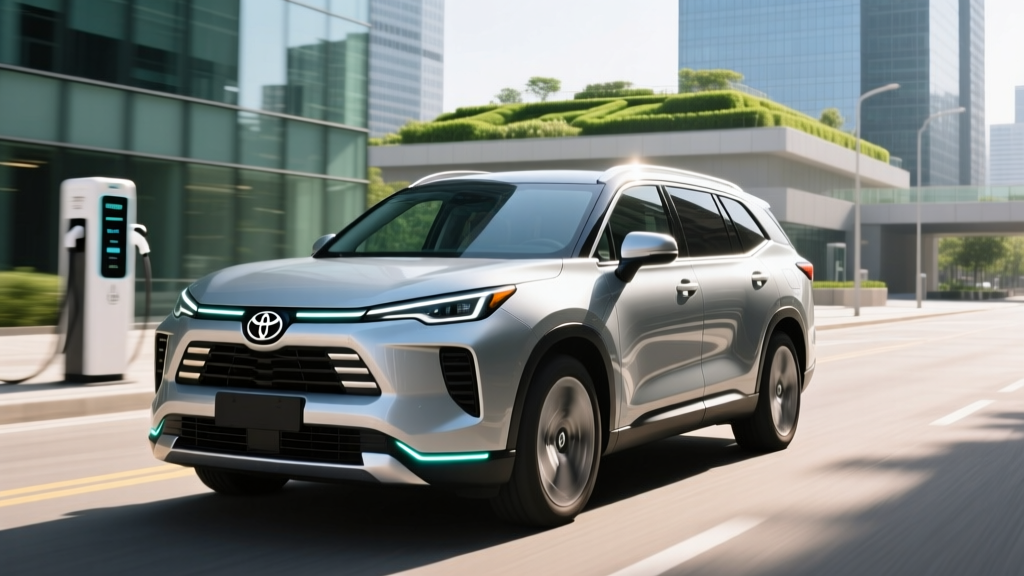
The Model Y Juniper refresh is the most consequential near-term future Tesla car because it's the vehicle most people will actually buy. Tesla applied the same treatment it gave the Model 3 Highland: updated exterior styling, a redesigned interior with ventilated seats, ambient lighting, a rear touchscreen for passengers, improved sound insulation, and a revised suspension tune. The powertrain and battery architecture carry over with efficiency improvements.
| Spec | Long Range AWD | Performance |
|---|---|---|
| EPA Range | 320 miles | 295 miles |
| Battery Capacity (usable) | ~75 kWh (NMC) | ~75 kWh (NMC) |
| Drivetrain | Dual-Motor AWD | Dual-Motor AWD |
| Horsepower | 384 hp | 456 hp |
| 0-60 mph | 4.8 sec | 3.5 sec |
| Max DC Fast Charge | 250 kW | 250 kW |
| 10-80% DC Charge Time | ~25 min | ~25 min |
| Level 2 Charge Rate | 11.5 kW (~44 mi/hr) | 11.5 kW (~44 mi/hr) |
| Efficiency | 27 kWh/100 mi (124 MPGe) | 29 kWh/100 mi (115 MPGe) |
| Cargo Volume (rear seats up) | 30.2 cu ft | 30.2 cu ft |
| Cargo Volume (rear seats folded) | 72.1 cu ft | 72.1 cu ft |
| Rear Legroom | 40.5 in | 40.5 in |
| Battery Warranty | 8 yr / 120,000 mi | 8 yr / 120,000 mi |
| Base MSRP | $48,990 | $53,990 |
Charging the Model Y Juniper: Speed, Curve, and Infrastructure
Charging speed remains one of the most practical concerns for any future Tesla car buyer. The Juniper Model Y retains a 250 kW peak DC fast-charging rate on Tesla's V3 Superchargers. The important nuance: that 250 kW is a peak, not a sustained rate. The charge curve tapers meaningfully above 50% state of charge (SoC), and drops sharply above 80%.
| Charge Level | Power (kW) | Miles Added per Hour | Notes |
|---|---|---|---|
| Level 1 (120V household) | ~1.4 kW | ~4-5 mi/hr | Emergency/trickle only |
| Level 2 (240V, 48A home charger) | 11.5 kW | ~44 mi/hr | Full overnight charge in ~7-8 hours |
| DC Fast (V3 Supercharger) | 250 kW peak | ~162 mi in 15 min | 10-80% in ~25 min; tapers above 50% |
| DC Fast (V4 Supercharger) | 250 kW peak | Similar to V3 | Newer cabinet design; same vehicle-side limit |
For home charging, the Tesla Wall Connector at 48 amps on a 60-amp circuit delivers the full 11.5 kW. Most owners who charge overnight at home never visit a Supercharger for daily driving. The 25-minute 10-80% Supercharger session is adequate for road trips — plan a 20-minute break every 2.5 to 3 hours of highway driving, and you'll arrive with more energy than you started.
The Next-Gen Compact ("Model 2" / Redwood): What We Know and Don't Know
The most anticipated of all future Tesla cars is the next-generation compact vehicle, internally referred to as "Redwood." Elon Musk confirmed during Tesla's 2024 earnings calls that a smaller, more affordable Tesla is in development, targeting a ~$25,000 starting price. Production was initially expected to begin in late 2025, but as of early 2026, the timeline has slipped — a familiar pattern for Tesla.
Here's what is announced but not yet confirmed for this platform:
- Target MSRP: ~$25,000 base (before any incentives)
- Estimated Range: 250-300 miles EPA (speculative, based on ~50-60 kWh battery)
- Battery Chemistry: Expected LFP (lithium iron phosphate) for cost reduction and durability, though NMC remains possible for longer-range trims
- Platform: Next-gen "unboxed" manufacturing process — Tesla claims it will cut production costs by up to 50%
- Production Start: Announced for 2026, but given Tesla's history of delays, a late-2026 or early-2027 start for US deliveries is more realistic
The LFP chemistry choice matters for buyers. LFP (lithium iron phosphate) batteries sacrifice some energy density (meaning slightly less range for a given pack size) but offer longer cycle life, lower cost, no cobalt, and can be charged to 100% daily without degradation concerns. Tesla already uses LFP in the base Model 3 RWD. If the compact uses LFP, expect excellent long-term battery health but a somewhat smaller usable pack.
The Second-Generation Roadster: Still Announced, Still Waiting
First unveiled in November 2017, the next-gen Tesla Roadster has become the most famously delayed vehicle in Tesla's history. As of 2026, it remains announced but not in production. Tesla has periodically updated its claimed specs, which have grown increasingly ambitious:
- Claimed 0-60 mph: 1.9 seconds (base), potentially sub-1-second with the SpaceX thruster package
- Claimed Range: 620 miles EPA (with a ~200 kWh battery pack)
- Claimed Top Speed: 250+ mph
- Drivetrain: Tri-motor AWD
- Estimated Price: $200,000 base; $250,000 for the Founders Series
Treat every one of these numbers as preliminary. Tesla has not submitted a Roadster for EPA testing, and the 200 kWh pack would be the largest ever installed in a production passenger car. The engineering challenges — thermal management, weight, charging infrastructure compatibility at that capacity — are substantial. If you've placed a reservation, consider it speculative. If you're comparison shopping, the Roadster is not a realistic option today.
How Future Tesla Cars Stack Up Against Competitors
The Model Y Juniper doesn't exist in a vacuum. Here's how it compares to key rivals in the premium electric compact SUV segment:
| Spec | Tesla Model Y LR AWD | Hyundai Ioniq 5 Limited AWD | Ford Mustang Mach-E Premium AWD |
|---|---|---|---|
| EPA Range | 320 mi | 290 mi | 300 mi |
| Battery | ~75 kWh NMC | 84 kWh NMC | 91 kWh NMC |
| Peak DC Charge | 250 kW | 350 kW | 150 kW |
| 10-80% Time | ~25 min | ~18 min | ~38 min |
| 0-60 mph | 4.8 sec | 5.1 sec | 5.2 sec |
| Base MSRP (AWD) | $48,990 | $54,500 | $49,995 |
| Cargo (seats up) | 30.2 cu ft | 27.2 cu ft | 29.7 cu ft |
| NACS Connector | Yes (native) | Yes (2025+) | Yes (2025+) |
The Ioniq 5's 800V architecture gives it a clear DC charging-speed advantage (18 minutes vs 25 minutes, 10-80%). The Model Y counters with superior range, Supercharger network access (still the most reliable US network by uptime), and more cargo volume. The Mach-E is competitive on price and range but charges significantly slower. Your priority — charging speed vs range vs cargo vs network — determines the winner.
Pricing, Trims, and Federal Tax Credit Eligibility
Tesla's pricing has fluctuated frequently, but as of early 2026, the Model Y Juniper lineup is positioned as follows:
| Trim | MSRP | §30D Credit Eligible? | Effective Price (if eligible) |
|---|---|---|---|
| Long Range AWD | $48,990 | Yes (subject to sourcing/income rules) | ~$41,490 |
| Performance | $53,990 | Yes (subject to sourcing/income rules) | ~$46,490 |
The federal EV tax credit under IRS §30D is worth up to $7,500, and as of 2024, it can be transferred to the dealer at the point of sale — meaning you get the discount upfront rather than waiting to claim it on your tax return. But eligibility is not automatic. You must meet all of these requirements:
- Income caps: Modified AGI must not exceed $150,000 (single), $225,000 (head of household), or $300,000 (joint filers)
- MSRP cap: The vehicle's MSRP must not exceed $80,000 for SUVs (both Model Y trims qualify)
- Battery sourcing: The battery's critical minerals and components must meet escalating domestic-sourcing thresholds. Tesla has largely shifted supply chains to comply, but the specific percentage of credit ($3,750 for minerals + $3,750 for components) can vary by production batch
- FEOC restriction: Vehicles with battery components from a "foreign entity of concern" (primarily Chinese suppliers) may lose part or all of the credit
Who Should Buy the Model Y Juniper — and Who Should Wait
The Model Y Juniper is the right choice if you need a practical, spacious electric SUV today with access to the most reliable DC fast-charging network in the US. It's particularly well-suited for:
- Families: 30.2 cu ft of cargo space (72.1 with seats folded) handles strollers, groceries, and road-trip luggage without compromise
- Commuters with home charging: 320 miles of EPA range means charging once or twice a week on a Level 2 home charger
- Road trippers: Tesla's Supercharger network — now with 20,000+ US stalls — makes long-distance travel the least stressful of any EV brand
- Tech-forward buyers: The Juniper adds the rear passenger screen, ventilated seats, and improved cabin quietness that the Highland brought to the Model 3
Consider waiting or looking elsewhere if:
- Budget is your top priority: At $48,990, the Model Y is not a budget EV. The next-gen compact, if it arrives at ~$25,000, will be a different story — but it's not here yet
- You need the fastest DC charging: The Hyundai Ioniq 5 and Kia EV6 (both 800V, 350 kW peak) charge meaningfully faster on compatible chargers
- You want physical controls: Tesla's minimalist interior — no turn signal stalk, no gear selector stalk in the Juniper — frustrates some drivers
Pros
- Class-leading 320-mile EPA range
- Supercharger network reliability
- Spacious 72.1 cu ft max cargo
- Strong efficiency (27 kWh/100 mi)
- Over-the-air updates improve the car over time
- Native NACS connector — no adapter needed
Cons
- 250 kW peak DC charge — slower than 800V rivals
- No turn signal or gear stalks (touchscreen/tap-to-shift)
- Ride quality still firm over rough pavement
- FSD (Supervised) remains a Level 2 system requiring full driver attention
- Premium price vs growing competition
- No Apple CarPlay or Android Auto
Tesla's Autopilot and FSD: What Level of Automation Are You Actually Getting?
Tesla's Autopilot and Full Self-Driving (Supervised) are Level 2 driver-assistance systems, not autonomous driving. The driver must remain fully engaged, keep hands on the wheel (or demonstrate attention via the cabin camera), and be prepared to take over at any moment. This is the same SAE level as GM Super Cruise, Ford BlueCruise, and Hyundai Highway Driving Assist. Only Level 4 robotaxi services like Waymo operate without a human driver — and those are geofenced to specific cities.
FSD (Supervised) costs $8,000 as a one-time purchase or $99/month as of 2026. It handles highway lane changes, on-ramps to off-ramps, and city-street navigation with traffic light and stop sign recognition. In practice, it's an impressive convenience feature that reduces fatigue on long drives, but it makes errors — particularly in construction zones, unusual intersections, and poor weather. It is not a substitute for an attentive driver, and NHTSA continues to monitor Tesla's Autopilot-related incident data.
Frequently Asked Questions About Future Tesla Cars
What is the real-world range of the 2026 Model Y Juniper?
The EPA rates it at 320 miles (Long Range AWD). Real-world highway driving at 70-75 mph yields roughly 270-290 miles. In cold weather below freezing, expect 220-250 miles. These numbers assume no preconditioning — if you precondition the battery while plugged in, you'll recover some of the cold-weather loss.
How fast does the Model Y Juniper charge at home and on the road?
On a 48-amp Level 2 home charger, it charges at 11.5 kW, adding about 44 miles of range per hour — a full charge takes roughly 7-8 hours. On a V3 Supercharger, it peaks at 250 kW and charges from 10-80% in about 25 minutes, though the rate tapers significantly above 50% SoC.
How much does the Model Y cost after the federal tax credit?
The Long Range AWD starts at $48,990. If you qualify for the full $7,500 §30D credit (meeting income, sourcing, and MSRP requirements), the effective price drops to approximately $41,490. The Performance trim at $53,990 would come to roughly $46,490. Always verify current eligibility on IRS.gov.
Is the Model Y Juniper worth buying vs the Ioniq 5 or Mach-E?
It depends on your priority. The Model Y wins on EPA range (320 vs 290-300 mi), cargo space (30.2 vs 27.2-29.7 cu ft), and Supercharger network access. The Ioniq 5 wins on DC charging speed (18 min vs 25 min, 10-80%). The Mach-E is competitive on price and range but charges significantly slower. If you road-trip frequently, the Supercharger advantage is substantial. If you mostly drive locally and want the fastest possible DC charging for occasional trips, the Ioniq 5 is compelling.
Will the Tesla "Model 2" (next-gen compact) actually happen?
Tesla has confirmed a smaller, more affordable vehicle is in development, targeting ~$25,000. However, Tesla has a history of significant production delays (Cybertruck, Roadster). A late-2026 or early-2027 US delivery window is plausible but not guaranteed. If you need an EV now, don't wait for it.
Does the Model Y qualify for the full $7,500 federal EV tax credit?
As of early 2026, the Model Y qualifies for up to $7,500 under §30D, provided you meet the income caps ($300,000 joint / $150,000 single), the MSRP is under $80,000 (it is), and the battery meets critical-mineral and component sourcing thresholds. The credit can be transferred at point of sale. Rules change — always check the IRS before purchasing.
What is Tesla's battery and powertrain warranty?
Tesla covers the Model Y's battery and drive unit for 8 years or 120,000 miles, whichever comes first, with a minimum 70% capacity retention threshold. In practice, Tesla's NMC packs have shown roughly 10-12% degradation at 100,000 miles based on fleet data — well within the warranty floor.
The landscape of future Tesla cars is a mix of tangible, buyable products (the Juniper Model Y is shipping now) and ambitious promises (the compact platform, the Roadster) that may or may not arrive on schedule. The smartest approach: evaluate what Tesla is selling today on its merits, treat announced vehicles as speculative, and cross-shop aggressively. The EV market in 2026 is the most competitive it has ever been, and that competition is the best thing that could happen to buyers — regardless of which badge ends up in the driveway.