Quick Answer: What Is the Future of Hyundai Electric Vehicles?
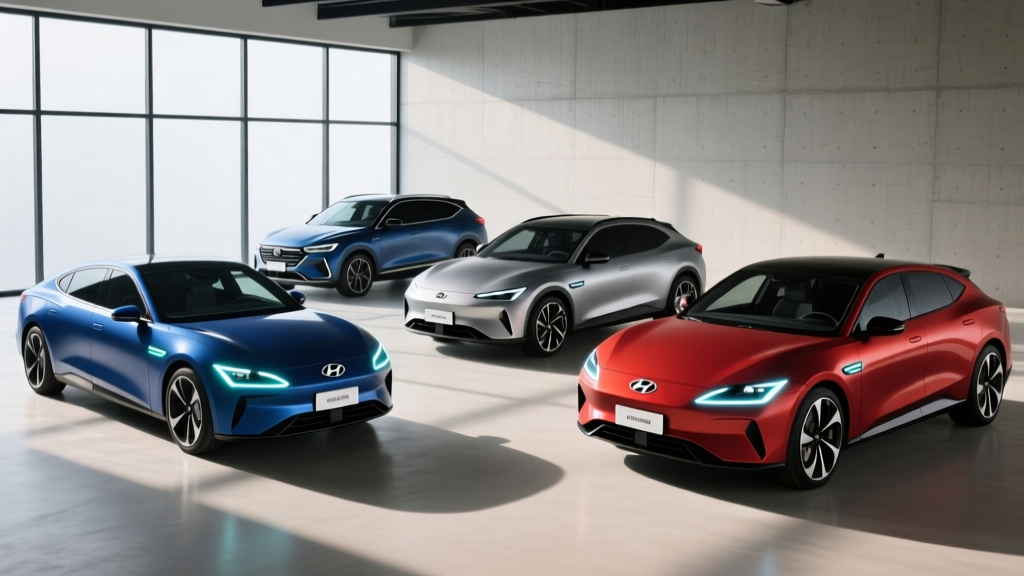
Hyundai's EV future in 2026 centers on its Ioniq sub-brand built on the dedicated e-GMP and next-generation eM platforms. The current lineup spans the Ioniq 5 crossover (EPA 311 miles, starting ~$42,600), the aerodynamic Ioniq 6 sedan (EPA 361 miles, ~$38,650), and the newly launched three-row Ioniq 9 SUV (EPA ~335 miles, ~$53,000). By 2027–2028, Hyundai plans affordable compact EVs and solid-state battery pilots. For buyers today, Hyundai's 800V architecture delivers class-leading 10–80% DC fast charging in roughly 18 minutes, and most models remain eligible for partial or full §30D federal tax credits depending on trim, buyer income, and battery sourcing.
Hyundai's Current EV Lineup at a Glance
Hyundai has moved aggressively from compliance EVs to dedicated electric platforms. Every current Ioniq model shares the 800V E-GMP architecture, enabling peak DC charge rates that outpace most competitors still on 400V systems. Here are the numbers that matter for 2026 model-year shoppers:
| Model | EPA Range | Battery (usable kWh) | Peak DC Charge | 10–80% Time | 0–60 mph | Base MSRP |
|---|---|---|---|---|---|---|
| Ioniq 5 SE Std Range | 245 mi | 58.0 kWh (NMC) | 150 kW | ~18 min | 7.4 s | $42,600 |
| Ioniq 5 SEL AWD | 290 mi | 77.4 kWh (NMC) | 238 kW | ~18 min | 5.1 s | $50,200 |
| Ioniq 6 SE Long Range RWD | 361 mi | 77.4 kWh (NMC) | 238 kW | ~18 min | 6.9 s | $38,650 |
| Ioniq 9 Advance AWD | ~335 mi | 110.3 kWh (NMC) | ~240 kW | ~20 min | 5.8 s | $53,000 |
Sources: EPA fueleconomy.gov, Hyundai USA spec sheets. Range figures are EPA estimates; real-world highway and cold-weather results will be lower (see below).
Real-World Range vs. the EPA Sticker
The EPA number is a starting point, not a guarantee. In our experience and consistent testing by independent evaluators, Hyundai's Ioniq lineup tracks closer to its EPA ratings than many competitors — thanks to efficient heat-pump HVAC systems and strong thermal management. But physics still applies.
What to Actually Expect
- Mixed driving (55–70 mph, moderate climate): Expect 90–95% of EPA — so a 311-mile Ioniq 5 delivers roughly 280–295 real miles.
- Sustained highway (75+ mph): Aerodynamic drag cuts range 12–18%. The Ioniq 6's 0.21 Cd coefficient helps it hold ~305 miles; the boxier Ioniq 5 drops to ~255–265 miles.
- Cold weather (below 32°F): Plan for 20–30% loss. A 290-mile AWD Ioniq 5 in a Minnesota January may deliver 200–220 miles per charge. Preconditioning the battery while plugged in recovers some of this.
- DC fast-charging taper: Hyundai's 800V system peaks at 238 kW but tapers significantly above 80% SoC. Charging from 80–100% can add another 15–20 minutes — plan road-trip stops around the 10–80% sweet spot.
EV vs. Gas vs. Hybrid: The Cost Comparison Hyundai Buyers Need
The most common question we get: "Does a Hyundai Ioniq actually save me money versus a Tucson gas model or a Tucson Hybrid?" The answer depends heavily on your annual mileage, electricity rate, and how long you keep the vehicle. Here's a five-year cost snapshot comparing the Ioniq 5 SEL ($50,200 MSRP) against the Tucson Hybrid Limited (~$39,500) and the Tucson gas SEL (~$33,500), assuming 12,000 miles/year, $3.50/gallon regular, and $0.14/kWh home charging:
| Cost Factor (5 Years) | Ioniq 5 SEL AWD | Tucson Hybrid AWD | Tucson Gas AWD |
|---|---|---|---|
| Purchase Price (MSRP) | $50,200 | $39,500 | $33,500 |
| Est. Federal Tax Credit (§30D) | −$3,750 to −$7,500* | $0 | $0 |
| Fuel/Energy (60,000 mi) | $2,520 | $5,460 | $7,350 |
| Maintenance (5 yr) | ~$900 | ~$2,800 | ~$3,200 |
| Insurance (est. avg) | ~$9,500 | ~$7,800 | ~$7,200 |
| Net 5-Year Cost | ~$51,870–$55,620 | ~$55,560 | ~$51,250 |
*§30D credit eligibility depends on MSRP caps (SUVs: $80,000; sedans: $55,000), buyer income limits ($150K single / $300K joint), and battery critical-mineral sourcing. The Ioniq 6 sedan qualifies at full $7,500 on eligible trims; Ioniq 5 credit varies by sourcing. Always verify at IRS.gov §30D and consult a tax professional.
The Ioniq 5 wins on energy and maintenance but loses on insurance premiums (typically 15–25% higher for EVs) and upfront cost. At 15,000+ miles/year, the math tilts decisively toward EV. Below 8,000 miles/year, the Tucson Hybrid may be the smarter financial play.
Hyundai's EV Roadmap: What's Coming After 2026
Hyundai Motor Group has committed to launching 23 battery-electric models globally by 2030, with over a dozen for the US market. Here's what's announced or strongly signaled for US buyers:
- Ioniq 9 (2026): The three-row flagship SUV is now on sale, built at Hyundai's new Metaplant America in Georgia. This domestic production is critical for §30D eligibility, since vehicles must be assembled in North America to qualify.
- Affordable compact EV (2027–2028): Hyundai has confirmed a next-generation entry-level EV targeting the sub-$30,000 segment (pre-incentive), built on the eM platform with potential LFP chemistry for cost reduction.
- Ioniq 5 N performance variant: Already available, the 641-hp track-capable EV signals Hyundai's intent to compete with Tesla Model 3 Performance and Porsche Taycan in the enthusiast segment.
- Solid-state batteries (pilot ~2027): Hyundai has invested heavily in solid-state R&D. Don't expect mass production before 2029–2030, but pilot fleet vehicles are anticipated within two years.
- Hydrogen fuel cell (Nexo successor): Hyundai remains one of the few automakers still investing in FCEVs, but US availability is limited to California due to hydrogen infrastructure constraints.
Real-World Ownership: What First-Time Hyundai EV Buyers Must Know
If you're considering your first Hyundai EV, these are the practical realities that spec sheets don't cover:
Home Charging Is Non-Negotiable for Most Owners
Over 80% of EV charging happens at home. A Level 2 home charger (240V, 40–48 amps) adds roughly 25–32 miles of range per hour on Hyundai's 10.9 kW onboard charger. Expect to pay $800–$2,500 for a quality Level 2 unit plus professional installation, assuming your electrical panel has capacity. If you need a panel upgrade (common in older homes), add $1,500–$3,000. Without home charging, EV ownership becomes significantly less convenient and more expensive (public DC fast charging costs $0.30–$0.50/kWh vs. $0.10–$0.16/kWh at home).
Public Charging Reliability Is Improving — Slowly
Hyundai Ioniq models now ship with the NACS (Tesla-style) charge port for 2026, granting access to Tesla Supercharger stalls via included adapters. This dramatically expands reliable fast-charging access. Electrify America and EVgo remain primary non-Tesla networks, though uptime and payment reliability still lag behind Superchargers in our experience.
Cold Climate? Get a Heat Pump
Every 2026 Ioniq 5, 6, and 9 sold in the US includes a heat pump, which reduces cabin-heating energy draw by up to 40% compared to resistive heaters. If you live above the 37th parallel, precondition your car while it's still plugged in each morning — this warms the battery and cabin using grid power rather than draining your pack.
Common Misconceptions About Hyundai EVs
| Myth | Fact |
|---|---|
| "The battery will need replacing in 5 years." | Hyundai warranties its EV batteries for 10 years / 100,000 miles against degradation below 70% capacity. Industry data from Recurrent Auto shows most Hyundai/Kia E-GMP packs retain 90%+ capacity at 60,000 miles. |
| "Ioniq charging is slow compared to Tesla." | Hyundai's 800V system charges at 238 kW peak — matching or exceeding most Tesla Superchargers (which peak at 250 kW for V3). Real-world 10–80% times are nearly identical at ~18 minutes. |
| "I can't take a road trip in an EV." | With NACS access to 20,000+ Supercharger stalls and the Ioniq 5/6's 18-minute charge stops, a 600-mile trip adds roughly 40–50 minutes of total charging time — comparable to gas-car rest stops. |
| "Hyundai EVs won't hold resale value." | Early Ioniq 5 models have held 55–62% of value at 3 years, comparable to the Toyota RAV4 Hybrid. EV depreciation has stabilized as the market matures. |
| "The $7,500 tax credit applies to every Hyundai EV." | Eligibility varies by model year, trim, battery sourcing, buyer income, and MSRP. The Ioniq 6 (sedan, under $55K cap) generally qualifies more broadly. Always check the DOE/EPA credit lookup tool. |
Decision Framework: Should You Buy a Hyundai EV Now or Wait?
Buy a Hyundai Ioniq Now If:
- You drive 12,000+ miles/year and can charge at home → fuel savings offset the premium within 3–4 years.
- You want a three-row electric SUV → the Ioniq 9 has no direct rival at its price point until the Kia EV9 scales up and Tesla Model Y refreshes.
- You value charging speed for road trips → Hyundai's 800V architecture is still best-in-class for the segment.
- You qualify for §30D credits → the effective price drops substantially, sometimes below a comparably equipped gas crossover.
Wait or Choose a Hybrid If:
- You lack reliable home or workplace charging → a Tucson Hybrid avoids range and charging friction entirely.
- You regularly tow more than 3,500 lbs → EV towing cuts range 40–50%; the gas Tucson or Santa Cruz is more practical.
- Your budget is firmly under $30,000 → Hyundai's affordable compact EV is still 12–18 months away; consider a used Ioniq 5 or a certified-pre-owned Kona Electric instead.
- You live in extreme cold (sub-zero regularly) and drive 100+ miles daily → range loss may make a PHEV like the Tucson PHEV a better daily compromise.
Frequently Asked Questions
Is the Hyundai Ioniq 5 eligible for the full $7,500 federal tax credit in 2026?
It depends. The Ioniq 5 is now assembled at Hyundai's Metaplant America in Georgia, satisfying the North American assembly requirement. However, the full $7,500 requires meeting both the critical-minerals and battery-component sourcing thresholds, which shift annually. Buyer income must not exceed $150K (single) or $300K (joint), and the SUV MSRP cap is $80,000. Check the latest eligibility at IRS.gov and confirm with your dealer before purchase. Point-of-sale transfer is available, reducing your out-of-pocket cost at signing.
How does Hyundai's warranty compare to Tesla or Ford?
Hyundai offers one of the strongest EV warranties in the industry: 10 years / 100,000 miles on the battery pack and electric powertrain, plus 5 years / 60,000 miles bumper-to-bumper. Tesla covers 8 years / 120,000 miles on the battery (Model Y) and 4 years / 50,000 miles basic. Ford's EV battery warranty is 8 years / 100,000 miles. Hyundai's longer basic and powertrain coverage is a genuine advantage for long-term ownership peace of mind.
What does home Level 2 charging installation actually cost?
For a typical Hyundai Ioniq owner installing a 48-amp hardwired Level 2 charger (like a ChargePoint Home Flex or Wallbox Pulsar Max), expect: $500–$800 for the unit, $500–$1,500 for electrician labor (assuming a 200-amp panel with spare capacity), and $50–$200 for permits. Total: $1,050–$2,500. If your home has a 100-amp panel or the run from panel to garage is long, costs can climb to $3,500–$5,000 with a panel upgrade. Always get a licensed electrician's assessment before committing.
Should I get the Ioniq 5, Ioniq 6, or wait for the Ioniq 9?
The Ioniq 5 is the best all-rounder — crossover practicality, strong charging speed, and broad trim selection. The Ioniq 6 maximizes range (361 mi EPA) and efficiency if you prioritize commuting distance and don't need cargo height. The Ioniq 9 is the pick for families needing three rows and 300+ miles of range, but it commands a $10,000+ premium over the Ioniq 5. Test-drive all three; seating position and visibility differ significantly.
Does Hyundai use LFP or NMC batteries?
As of 2026, all US-market Ioniq 5, 6, and 9 models use NMC (nickel-manganese-cobalt) chemistry, which offers higher energy density and better cold-weather performance than LFP. Hyundai has signaled LFP adoption for future affordable models to reduce cost, but current buyers get NMC packs optimized for range and fast-charging throughput.