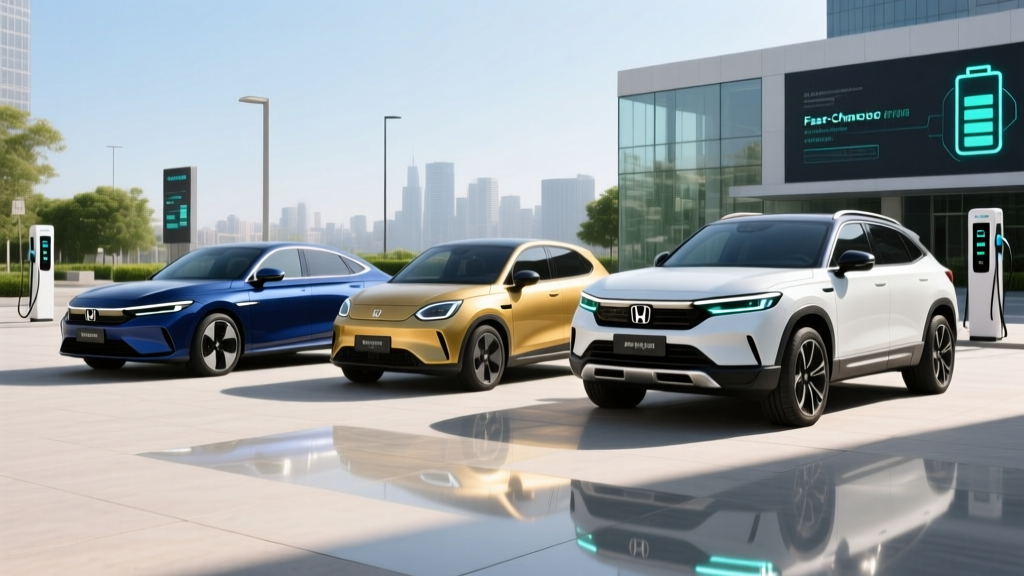
Looking for a full electric Honda? As of 2026, the Honda Prologue is Honda's only all-electric SUV available in the U.S. Built on GM's Ultium platform, it offers up to 308 miles of EPA range (FWD Elite trim), DC fast charging up to 155 kW, and a starting MSRP around $47,400. Federal §30D tax credit eligibility depends on your income, the vehicle's MSRP cap compliance, and battery-sourcing rules that shift yearly — always verify with the IRS or your tax professional before assuming the full $7,500. If you need a compact full electric Honda, none exists yet; Honda's next-gen global EV platform vehicles are still forthcoming.
Honda's EV Lineup: What's Actually Available
Honda's path to full electrification has been cautious compared to rivals like Hyundai or Tesla. The Prologue midsize SUV (introduced for 2024, refreshed for 2025-2026) remains the only battery-electric vehicle (BEV) you can buy from Honda today. Honda also sells the Clarity Plug-In Hybrid (discontinued after 2021 but still on the used market) and several conventional hybrids (Accord Hybrid, CR-V Hybrid), but if you want zero tailpipe emissions and no gas engine, the Prologue is your sole option.
Honda has announced future EVs on its own dedicated architecture, but as of early 2026, those models remain unreleased. Buyers shopping now are choosing between the Prologue, cross-shopping it against competitors, or considering a Honda hybrid as a bridge vehicle.
| Model | Type | EPA Range / MPG | Status |
|---|---|---|---|
| Prologue (FWD) | BEV | 308 mi range | On sale |
| Prologue (AWD) | BEV | 294 mi range | On sale |
| CR-V Hybrid | HEV | 40 MPG combined | On sale |
| Accord Hybrid | HEV | 48 MPG combined | On sale |
| Honda 0 Series (announced) | BEV | TBD | Expected late 2026+ |
Prologue Specs: Range, Battery, and Charging
The Prologue uses an 85 kWh usable Ultium battery pack (NMC chemistry) supplied by GM. Here's what that translates to in real-world terms:
| Spec | FWD Elite | AWD Touring |
|---|---|---|
| EPA Range | 308 miles | 294 miles |
| Battery (usable) | 85 kWh, NMC | 85 kWh, NMC |
| Horsepower | 220 hp | 288 hp |
| 0-60 mph | ~8.5 sec | ~6.0 sec |
| Max DC Fast Charge | 155 kW | 155 kW |
| 10-80% DC Charge | ~35 minutes | ~35 minutes |
| Level 2 (240V) Charge | ~7.7 kW (accepts 11.5 kW on Touring) | 11.5 kW |
| MPGe (combined) | 94 MPGe | 87 MPGe |
| Base MSRP | $47,400 | $57,400 |
Real-World Range Reality: The 308-mile EPA figure assumes mixed driving. On sustained highway trips at 70+ mph, expect roughly 250-270 miles. In cold weather (below 30°F), range can drop 15-25%, putting a real-world winter highway figure closer to 210-240 miles. The Prologue lacks a heat pump (resistive cabin heating), which amplifies cold-weather losses compared to competitors like the Hyundai Ioniq 5 or Tesla Model Y.
Charging curve note: The 155 kW peak rate is not sustained across the entire session. Like most EVs, the Prologue's charge rate tapers significantly above 80% state of charge (SoC). That 10-80% time of ~35 minutes is respectable but not class-leading — the Ioniq 5 with its 800V architecture can do 10-80% in roughly 18 minutes at a 350 kW charger. If you road-trip frequently, this difference matters.
Prologue vs. Gas CR-V: Cost and Ownership Breakdown
Many Prologue shoppers are current CR-V owners wondering if the switch saves money. Here's a concrete 5-year comparison, assuming 12,000 miles/year, $3.50/gallon gas, and $0.14/kWh home electricity (national average):
| Cost Category | Prologue FWD Elite | CR-V EX-L AWD (Gas) |
|---|---|---|
| MSRP (approx.) | $47,400 | $37,500 |
| Federal Tax Credit (§30D)* | Up to $7,500 (verify eligibility) | $0 |
| Effective Purchase Price | ~$39,900 | $37,500 |
| Fuel/Energy (5 yrs) | ~$3,360 (home charging) | ~$7,560 (gas) |
| Maintenance (5 yrs) | ~$1,200 | ~$3,000 |
| Insurance (5 yrs est.) | ~$9,000 | ~$7,500 |
| 5-Year Total (est.) | ~$53,460 | ~$55,560 |
*The §30D federal tax credit has income caps ($150K single / $300K joint), an MSRP cap ($80K for SUVs), and critical-mineral/battery-component sourcing requirements that change annually. The Prologue's GM-sourced battery has historically qualified, but always confirm on IRS.gov or with your tax professional before purchasing. The credit can now be transferred to the dealer as a point-of-sale discount.
Key takeaway: The Prologue breaks even or wins on 5-year total cost primarily through fuel and maintenance savings, but only if you can charge at home at residential electricity rates. Public DC fast charging at $0.40-$0.50/kWh erases most of the fuel-cost advantage.
EV vs. Gas vs. Hybrid: Which Honda Makes Sense for You?
| Factor | Prologue (BEV) | CR-V Hybrid (HEV) | CR-V Gas |
|---|---|---|---|
| Upfront Cost (after credit) | ~$39,900 | ~$36,000 | ~$33,000 |
| Annual Fuel Cost | ~$670 | ~$1,260 | ~$1,510 |
| Home Charging Needed? | Yes (strongly) | No | No |
| Road-Trip Convenience | Plan stops, 35-min charges | Gas stations everywhere | Gas stations everywhere |
| Cold-Weather Penalty | 15-25% range loss | Minimal MPG loss | Minimal MPG loss |
| Maintenance Burden | Very low (no oil, fewer fluids) | Moderate (oil, filters) | Moderate (oil, filters) |
| Best For | Home chargers, daily commuters | No home charging, mixed use | Lowest upfront budget |
Real-World Ownership: What First-Time EV Buyers Must Know
Buying the Prologue (or any full electric Honda) involves ownership realities that brochures gloss over:
Home Charging Access Is Non-Negotiable
Level 1 (120V) charging adds roughly 3-4 miles per hour — inadequate for a 308-mile battery from empty. A Level 2 home charger (240V, 40-amp circuit) adds 25-35 miles per hour and fully replenishes the Prologue overnight. Expect $500-$1,500 for a quality Level 2 unit and $800-$2,500 for electrician installation, depending on panel capacity and run length. If your panel needs a 200-amp upgrade, add $1,500-$3,000.
Without home charging, you'll rely on public DC fast chargers and Level 2 destination chargers. This is feasible but adds time, cost (public rates are 2-4x residential), and unpredictability — broken chargers and occupied stalls are common frustrations documented across networks like Electrify America and EVgo.
Climate and Driving Patterns Matter
If you live in northern climates with harsh winters, the Prologue's lack of a heat pump is a genuine disadvantage. Owners in Minnesota or Michigan should budget for 20%+ winter range loss and plan accordingly. Conversely, mild-climate owners in California or the Southeast will see range figures close to EPA estimates year-round.
For daily commutes under 60 miles round-trip, the Prologue is effortless — plug in at night, wake up full. For frequent 300+ mile road trips, the ~35-minute charge stops every 250 highway miles add up compared to a 5-minute gas fill-up.
Battery Warranty and Longevity
Honda provides an 8-year/100,000-mile battery warranty (10 years/150,000 miles in CARB states like California) covering defects and capacity loss below 70% of original capacity. NMC chemistry typically degrades 10-15% over the first 100,000 miles based on industry data, meaning most owners won't approach the warranty threshold under normal use. Still, this is a factor for 10-year ownership plans or high-mileage drivers.
Tax Credits and Incentives: What You Actually Qualify For
The §30D federal tax credit is the single biggest financial variable in the Prologue purchase. Here's the eligibility checklist for 2026:
- Income cap: Modified AGI ≤ $150,000 (single) or ≤ $300,000 (married filing jointly)
- MSRP cap: Vehicle MSRP ≤ $80,000 (SUVs, vans, pickups) — Prologue qualifies
- Battery sourcing: Critical minerals and battery components must meet escalating domestic-content thresholds. The Prologue's GM Ultium battery has historically qualified, but percentages change annually — verify on fueleconomy.gov
- Point-of-sale transfer: You can now transfer the credit to the dealer at purchase, reducing your out-of-pocket cost immediately rather than waiting for a tax refund
- One vehicle per 3 years: You can only claim the new EV credit once every three years per taxpayer
State and local incentives (California's CVRP, Colorado's tax credit, utility rebates for home charger installation) can stack on top but vary enormously by jurisdiction. Check your state energy office or utility provider for specifics — these can shave another $1,000-$5,000 off effective cost.
Decision Framework: Should You Buy the Full Electric Honda Prologue?
Buy the Prologue if:
- You have (or can install) Level 2 home charging
- Your daily driving is under 100 miles round-trip
- You qualify for the §30D tax credit (income and sourcing)
- You want a midsize SUV with Honda's reputation for reliability and dealer support
- You road-trip fewer than 5 times per year
- Cold-weather range loss is manageable in your climate
Consider a CR-V Hybrid instead if:
- You can't install home charging (apartment, street parking, older electrical panel)
- You regularly drive 300+ miles between stops
- You live in extreme cold climates and need consistent year-round range
- Upfront budget is tight and you don't qualify for the tax credit
- You want Honda's proven hybrid powertrain with no charging logistics
Wait for Honda's next-gen EVs if:
- You want a compact electric Honda (no current option exists)
- You want 800V architecture for faster charging (Prologue is 400V)
- You want a heat pump for cold-climate efficiency
- You're willing to wait until late 2026-2027 for Honda's 0 Series vehicles on their dedicated EV platform
Common Misconceptions About the Full Electric Honda
| Myth | Fact |
|---|---|
| "It's just a rebadged Chevy Blazer EV." | The Prologue shares the Ultium platform and battery with the Blazer EV, but Honda tunes the suspension, steering, interior materials, and software independently. The driving experience and cabin quality differ meaningfully. |
| "I'll get 308 miles no matter what." | EPA estimates assume mixed driving at moderate temperatures. Highway-only, cold-weather, or mountain driving will yield 210-270 real-world miles depending on conditions. |
| "The $7,500 tax credit applies to everyone." | Income caps, MSRP caps, battery-sourcing rules, and the once-every-3-years limit all apply. Verify your specific eligibility with IRS resources before committing. |
| "Charging at public stations is cheaper than gas." | DC fast charging at $0.40-$0.50/kWh costs roughly $0.12-$0.15/mile in the Prologue — comparable to a 30 MPG gas car at $3.75/gallon. Home charging at $0.14/kWh is where real savings appear (~$0.04/mile). |
| "The battery will need expensive replacement soon." | NMC batteries typically retain 85-90% capacity at 100,000 miles. The 8-year/100,000-mile warranty covers defects and degradation below 70%. Full replacement costs $15,000-$20,000 if out of warranty, but most batteries outlast the vehicle. |
Frequently Asked Questions
Is the Honda Prologue a good EV for first-time electric car buyers?
Yes, with caveats. The Prologue offers familiar Honda ergonomics, strong dealer support, and competitive range. But first-time buyers must realistically assess home charging access, understand that EPA range isn't guaranteed in all conditions, and verify tax credit eligibility. If you can charge at home and your commute is under 100 miles daily, the transition is seamless.
Does Honda make a small electric car or hatchback?
Not in the U.S. market as of 2026. The Honda e (a compact retro hatchback) was sold in Europe and Japan but never came to North America. Honda's announced 0 Series vehicles may include smaller models, but nothing compact is currently available. If you need a small EV, look at the Chevrolet Equinox EV, Hyundai Kona Electric, or Nissan Leaf.
How does the Prologue's charging speed compare to competitors?
The Prologue's 155 kW peak DC charge rate and ~35-minute 10-80% time is average for the segment. The Hyundai Ioniq 5 (800V architecture, up to 240 kW, ~18 minutes 10-80%) and Kia EV6 charge significantly faster. The Tesla Model Y charges at up to 250 kW on Superchargers (~25 minutes 10-80%). If fast road-trip charging is a priority, these competitors have an edge.
What's the Prologue's reliability and safety record?
The Prologue earned an IIHS Top Safety Pick rating in its debut year. Long-term reliability data is still limited (the model launched in 2024), but the Ultium platform is shared with GM vehicles that have accumulated significant real-world miles. Honda's 3-year/36,000-mile basic and 5-year/60,000-mile powertrain warranties apply, plus the 8-year/100,000-mile battery warranty.
Can I tow with the Honda Prologue?
The Prologue is not rated for towing. If you need towing capacity, consider the Ford Mustang Mach-E (up to 1,500 lbs with the right equipment) or a truck-based EV like the Ford F-150 Lightning.
Sources: fueleconomy.gov (EPA range and MPGe data), IRS.gov (§30D tax credit rules), Honda Prologue official specs.