The Frost Blue Tesla Model X has emerged as one of the most distinctive luxury electric SUVs on the market — a tri-motor, all-wheel-drive family hauler wrapped in a head-turning paint option that shifts between cool silver and deep azure depending on the light. But beyond the aesthetics, buyers need hard numbers: real-world range, charging speed, interior practicality, and whether a six-figure EV still makes financial sense under current IRS §30D tax credit rules.
This review covers the 2026 Tesla Model X Long Range and Plaid trims finished in Frost Blue Metallic — a premium multi-coat paint option — with exact EPA data, charging curves, and ownership economics you won't find on a showroom brochure.
Spec Table: 2026 Tesla Model X at a Glance
| Spec | Long Range AWD | Plaid (Tri-Motor AWD) |
|---|---|---|
| EPA Range | 335 miles | 326 miles |
| Battery (usable) | ~95 kWh (NMC) | ~95 kWh (NMC) |
| Drivetrain | Dual-Motor AWD | Tri-Motor AWD |
| Horsepower | 670 hp | 1,020 hp |
| 0–60 mph | 3.8 sec | 2.5 sec |
| Top Speed | 155 mph | 163 mph |
| Peak DC Fast Charge | 250 kW | 250 kW |
| 10–80% DC Time | ~32 min | ~32 min |
| Level 2 Home Rate | 11.5 kW (~34 mi/hr) | 11.5 kW (~34 mi/hr) |
| MPGe (combined) | 101 MPGe | 98 MPGe |
| Efficiency | 33 kWh/100 mi | 34 kWh/100 mi |
| Cargo (behind 3rd row) | 15.0 cu ft | 15.0 cu ft |
| Cargo (max, seats folded) | 85.1 cu ft | 85.1 cu ft |
| Towing Capacity | 5,000 lbs | 5,000 lbs |
| Base MSRP | $79,990 | $94,990 |
| Battery Warranty | 8 yr / 150,000 mi | 8 yr / 150,000 mi |
Range & Efficiency: EPA vs. Real-World
Real-World Expectation: 270–300 miles on mixed highway driving at 70+ mph; expect 220–250 miles in sustained cold weather (below 30°F) without preconditioning. City/regenerative driving can match or slightly exceed the EPA sticker.
The EPA's official fuel economy data rates the 2026 Model X Long Range at 101 MPGe combined (33 kWh per 100 miles). In practice, the Model X's large frontal area and falcon-wing door seals create meaningful aerodynamic drag at highway speeds. On a 250-mile Interstate loop at 75 mph in moderate temperatures, expect consumption closer to 36–38 kWh/100 mi, translating to roughly 270–285 miles of usable range before you'd want to stop.
Cold weather is the Model X's kryptonite, as it is for all NMC-based EVs. The heat pump (standard on 2026 models) mitigates cabin-heating energy draw, but battery chemistry itself loses efficiency below freezing. Plan for a 20–30% range reduction in deep winter — so a 335-mile sticker becomes roughly 235–265 miles on a 20°F morning commute. Preconditioning the battery while plugged in at home recovers some of this loss and is essential before DC fast charging in cold weather.
The Plaid trim sacrifices about 9 miles of EPA range due to stickier tires and slightly higher rolling resistance, but the difference is negligible in daily driving.
Charging Speed: DC Fast, Level 2, and the Charge Curve Reality
| Charge Level | Power / Rate | Miles Added per Hour | Notes |
|---|---|---|---|
| Level 1 (120V outlet) | ~1.4 kW | ~4 mi/hr | Emergency only; ~80+ hours for full charge |
| Level 2 (240V, 48A) | 11.5 kW | ~34 mi/hr | Full charge in ~9–10 hours; ideal for overnight |
| DC Fast (V3 Supercharger) | Peak 250 kW | ~175 mi in 15 min | 10–80% in ~32 min; tapers sharply above 80% |
| DC Fast (V4 Supercharger) | Peak 250 kW* | ~175 mi in 15 min | *Model X currently capped at 250 kW even on V4 posts |
Tesla's 250 kW peak charge rate is respectable, but the Model X does not sustain that peak for long. The charge curve ramps quickly from 10% to roughly 30% State of Charge (SoC) at or near 250 kW, then begins a progressive taper. By 50% SoC, you're typically seeing 150–170 kW; by 70%, around 100 kW; and above 85%, the rate drops below 50 kW. This is why the 10–80% metric matters more than peak kW — the Model X averages roughly 150–160 kW across that window, yielding a 32-minute session.
For road trips, this means planning 20–25 minute stops every 200–250 miles, which aligns well with rest-break cadence. The Tesla Supercharger network remains the most reliable DC fast-charging ecosystem in North America, with NACS (North American Charging Standard) native to the Model X — no adapter needed.
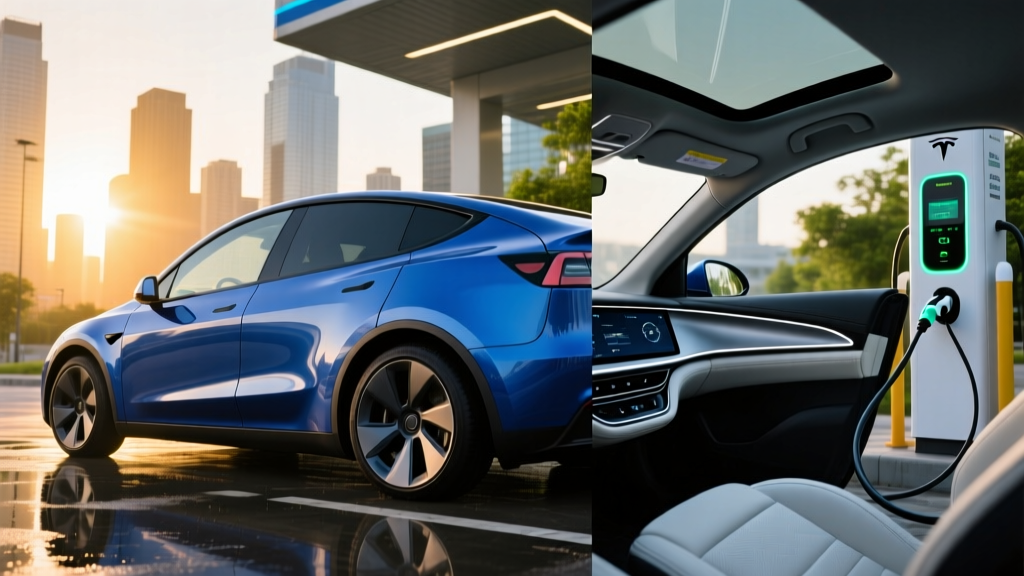
At home, a Tesla Wall Connector on a 60A circuit delivers the full 11.5 kW (48A continuous), adding roughly 34 miles of range per hour. Most owners charging overnight from a 20% residual to 80% will need about 6–7 hours — easily accomplished with a standard overnight window. Installation typically requires a 240V/60A circuit; expect $800–$2,000 for electrician labor depending on panel proximity.
Performance & Driving Dynamics
The Long Range Model X hits 60 mph in 3.8 seconds with 670 horsepower from its dual-motor AWD setup — quick enough to surprise most sports sedans at a stoplight. The Plaid's tri-motor arrangement (one front, two rear) produces 1,020 hp and a 2.5-second 0–60 time, making it one of the fastest production SUVs ever built.
But straight-line speed is only part of the story. The Model X's adaptive air suspension (standard) provides 6.5 inches of ground-adjustable ride height, from a low "Access" mode for easy entry to a high setting for rough driveways and light trail use. Ride quality is firm but controlled; the 5,100+ lb curb weight is well-managed by the low center of gravity inherent to the skateboard battery pack.
Steering is precise if somewhat numb — typical of electric power steering tuned for efficiency over feedback. The regenerative braking system offers strong one-pedal driving capability, though Tesla removed the user-adjustable regen strength toggle years ago; it's now fixed at a medium-strong setting that most drivers adapt to within a week.
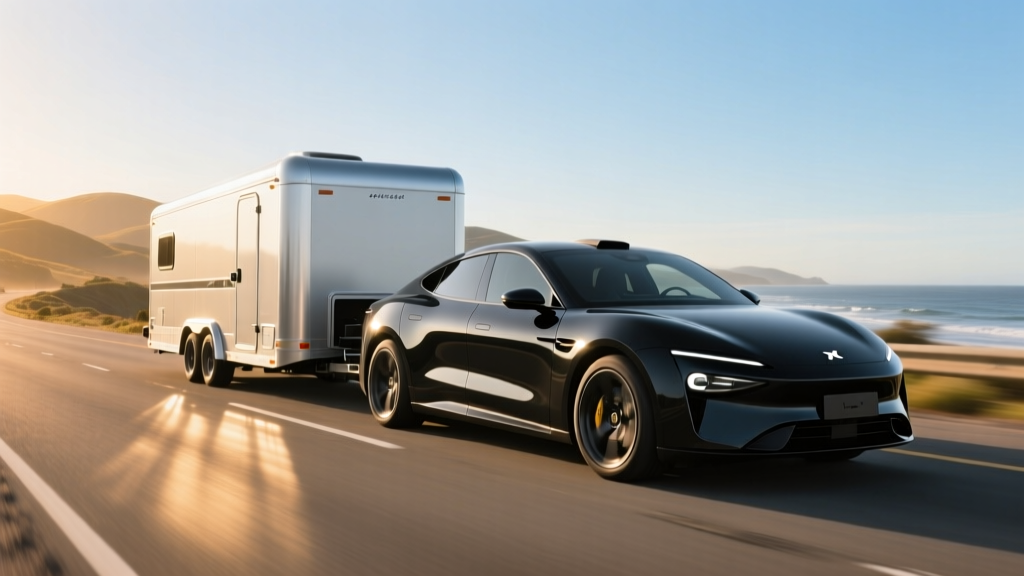
Towing is rated at 5,000 lbs across both trims. Expect range to drop by 35–50% when towing a loaded trailer at highway speeds — a critical planning factor for boat or camper owners.
Interior, Cargo & Technology
The Model X offers seating for up to seven in a 2-3-2 configuration, or six with optional second-row captain's chairs. Second-row legroom measures 41.1 inches; third-row legroom is a tight 32.3 inches — adequate for children on short trips but not competitive with body-on-frame SUVs for adult third-row passengers.
Cargo volume behind the third row is 15.0 cu ft (enough for a few grocery runs or two carry-on bags). Fold the third row and you get 43.9 cu ft; fold both rear rows for a van-like 85.1 cu ft. The front trunk (frunk) adds 6.5 cu ft — useful for charging cables and small bags.
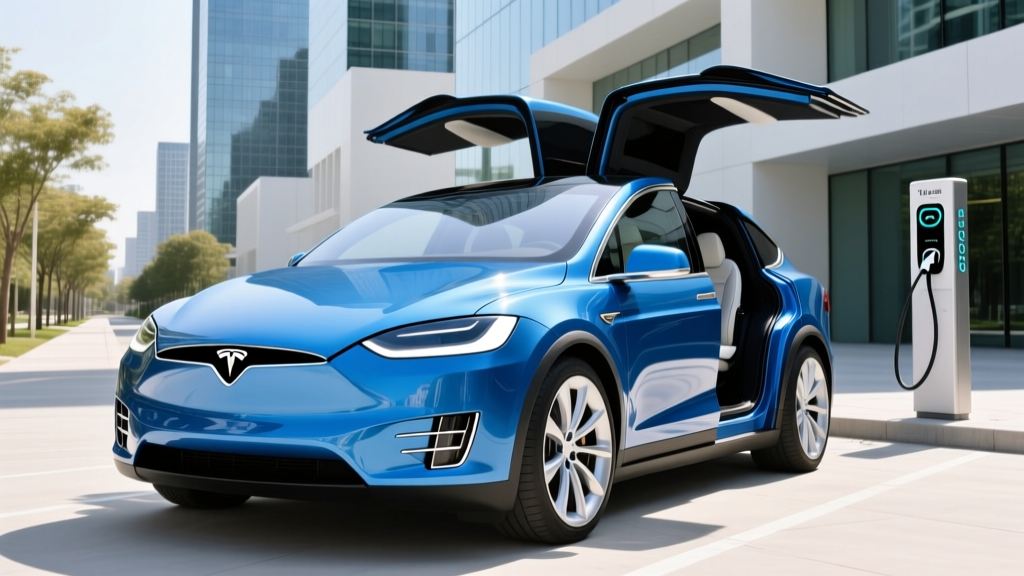
The signature falcon-wing rear doors are both the Model X's most distinctive feature and its most polarizing. They provide excellent overhead clearance for loading children into car seats and offer dramatic curb appeal. However, the ultrasonic sensors that govern door articulation can be slow in tight parking spaces, and replacement costs for the complex hinge mechanisms are significant out of warranty.
The 17-inch center touchscreen (landscape orientation, 2026 refresh) runs Tesla's latest software with a responsive interface, integrated navigation with Supercharger routing, and over-the-air updates. A secondary 8-inch rear touchscreen controls rear climate and entertainment. Apple CarPlay and Android Auto remain absent — Tesla's proprietary infotainment ecosystem is the only option, which includes a built-in web browser, streaming media apps, and Tesla's excellent navigation with real-time Supercharger availability.
Autopilot (basic) is standard, providing SAE Level 2 lane-centering and adaptive cruise control. Full Self-Driving (Supervised) is a $8,000 option (or $99/month subscription) that adds automatic lane changes, traffic light/stop sign recognition, and autosteer on city streets. Crucially, FSD remains a Level 2 system — the driver must maintain full attention and hands-on-wheel supervision at all times. It is not autonomous driving.
Pricing, Trims & Federal Tax Credit Eligibility
| Trim | Base MSRP | Frost Blue Paint | As-Tested (typical) | §30D Credit Eligible? |
|---|---|---|---|---|
| Long Range AWD | $79,990 | +$2,500 | $85,000–$92,000 | No (exceeds $80,000 SUV cap) |
| Plaid Tri-Motor AWD | $94,990 | +$2,500 | $100,000–$110,000 | No (exceeds $80,000 SUV cap) |
Here's the hard truth for tax-credit seekers: the 2026 Tesla Model X does not qualify for the IRS §30D federal clean vehicle credit. Under current law, SUVs must have an MSRP at or below $80,000 to be eligible, and even the base Long Range Model X starts at $79,990 — before the $2,500 Frost Blue Metallic paint option and the $1,990 destination fee push it well over the cap.
Additionally, §30D imposes buyer income limits ($300,000 joint / $225,000 head of household / $150,000 single filer modified AGI) and battery critical-mineral sourcing requirements that further restrict eligibility. Since the Model X fails the MSRP cap regardless of income, it is categorically ineligible for the new-vehicle credit.
Buyers can, however, explore the used EV tax credit (§25E) if purchasing a pre-owned Model X from a dealer — up to $4,000 or 30% of the sale price (whichever is lower) on vehicles priced at $25,000 or below. This effectively excludes most used Model X units given current resale values.
Some state and local incentives may still apply (California's CVRP, Colorado's state credit, utility rebates for home charger installation), but these vary by jurisdiction and are subject to funding availability. Consult your state energy office and a tax professional for personalized guidance.
Warranty & Long-Term Ownership
Tesla covers the Model X battery and drive unit for 8 years or 150,000 miles (whichever comes first), with a guaranteed minimum 70% capacity retention during that period. The vehicle limited warranty runs 4 years / 50,000 miles — shorter than competitors like BMW (4/50 but with included maintenance) and Rivian (5/60,000).
The NMC battery chemistry in the Model X offers higher energy density than LFP (lithium iron phosphate), enabling the 335-mile range in a manageable pack size. However, NMC cells are more sensitive to sustained high SoC and extreme temperatures. Tesla recommends daily charging to 80–90% for routine use and 100% only before long trips — a practice that meaningfully extends long-term battery health.
Battery replacement cost out of warranty remains a concern for high-mileage owners. A full Model X battery pack replacement at a Tesla Service Center currently ranges from $15,000–$22,000 depending on the specific pack revision, though most packs outlast the vehicle's practical lifespan when properly maintained.
Insurance premiums for the Model X are among the highest in the EV segment. Expect $3,000–$5,000 annually depending on your profile, driven by the vehicle's high repair costs (aluminum body panels, proprietary parts, falcon-wing complexity) and performance classification. Always get an insurance quote before purchasing.
Pros & Cons
- Class-leading Supercharger network access (NACS native)
- 335-mile EPA range covers most road trips with one stop
- Falcon-wing doors genuinely aid car-seat loading
- Air suspension with adjustable ride height
- Over-the-air updates continuously add features
- Tri-motor Plaid offers supercar-rivaling acceleration
- 5,000-lb towing capacity for a luxury EV SUV
- No federal tax credit eligibility (MSRP cap)
- Third-row space is tight for adults
- Falcon-wing doors slow in tight spaces; costly to repair
- No Apple CarPlay or Android Auto
- Insurance premiums significantly above segment average
- Build quality inconsistent vs. German luxury rivals
- 250 kW peak charge rate trails Hyundai/Kia 800V platforms
Who Should Buy the Frost Blue Model X?
The 2026 Model X in Frost Blue Metallic is best suited for:
- Tech-forward families who need 6–7 seats, value the Supercharger network for road trips, and want the car-seat loading convenience of falcon-wing doors.
- Performance SUV buyers who want supercar acceleration (Plaid) without sacrificing daily practicality or range.
- Tesla ecosystem loyalists already invested in Powerwall, Solar Roof, or Tesla's software suite who want seamless integration.
It's a harder recommendation for:
- Budget-conscious buyers who need the $7,500 federal credit to make the math work — look at the Model Y, Rivian R1S, or Cadillac Lyriq instead.
- Third-row-dependent families who regularly carry adults in the back — the Rivian R1S or Kia EV9 offer far more third-row space.
- Ultra-fast-charging road-trippers — Hyundai Ioniq 9 and Kia EV9 on 800V architectures charge 10–80% in ~18 minutes vs. the Model X's ~32.
Frequently Asked Questions
What is the real-world range of the Frost Blue Tesla Model X?
The EPA rates the 2026 Model X Long Range at 335 miles and the Plaid at 326 miles. In real-world highway driving at 70–75 mph, expect 270–300 miles in moderate weather and 220–260 miles in freezing temperatures. City driving with regenerative braking can approach or match the EPA number.
How fast does the Model X charge at home and on the road?
On a Tesla V3/V4 Supercharger, the Model X peaks at 250 kW and charges 10–80% in approximately 32 minutes, adding roughly 175 miles in 15 minutes. At home on a 240V/48A Wall Connector, it charges at 11.5 kW, adding about 34 miles per hour — a full overnight charge from 20% takes 6–7 hours.
Does the 2026 Tesla Model X qualify for the federal EV tax credit?
No. The IRS §30D clean vehicle credit caps SUV eligibility at $80,000 MSRP. The Model X Long Range starts at $79,990, and with the Frost Blue paint ($2,500), destination fee ($1,990), and any options, it exceeds the cap. The Plaid ($94,990 base) is well above it. Neither trim qualifies regardless of buyer income.
Is the Model X worth it vs. the Rivian R1S or BMW iX?
It depends on priorities. The Model X wins on Supercharger network reliability, falcon-wing practicality for families, and Tesla's software ecosystem. The Rivian R1S offers more third-row space and off-road capability, while the BMW iX delivers superior interior material quality and ride refinement. If road-trip charging infrastructure and acceleration are paramount, the Model X remains compelling. If interior luxury or family seating space matters more, test-drive all three.
What are the biggest drawbacks of owning a Model X?
The top concerns are: no federal tax credit, high insurance premiums ($3,000–$5,000/year), falcon-wing door complexity and repair cost, limited third-row adult space, absence of Apple CarPlay/Android Auto, and a 250 kW peak charge rate that now trails 800V competitors. Build quality has improved but still draws criticism versus German luxury benchmarks.
What battery chemistry does the Model X use, and how long will it last?
The 2026 Model X uses NMC (nickel manganese cobalt) chemistry with approximately 95 kWh of usable capacity. NMC offers higher energy density than LFP, enabling the 335-mile range. Tesla warrants the battery for 8 years / 150,000 miles with a minimum 70% capacity retention guarantee. With proper charging habits (daily limit of 80–90%, avoiding prolonged 100% SoC), most owners report 10–15% degradation over 100,000 miles.