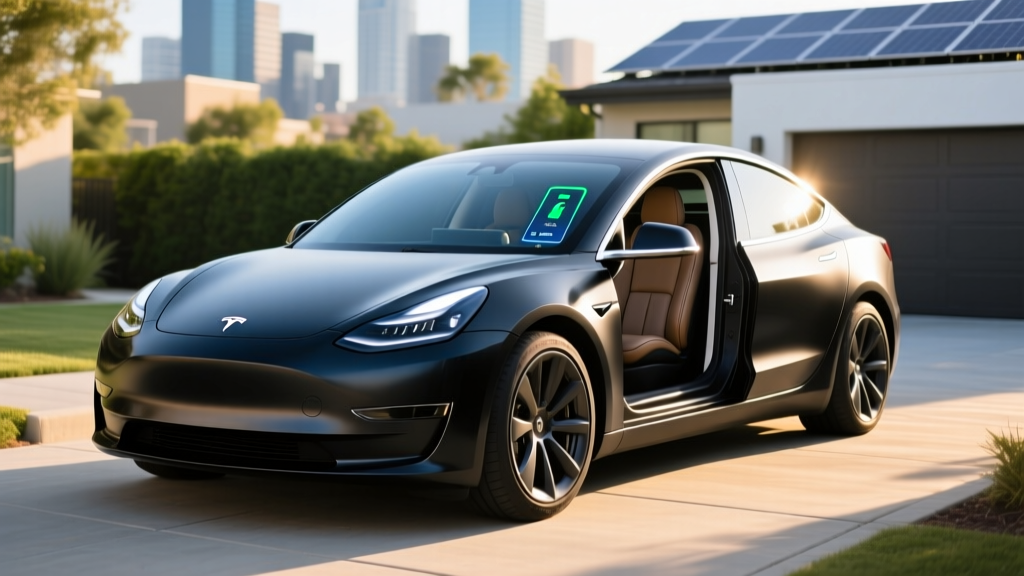
The Tesla Model 3 needs little introduction, but where it's built matters more than most buyers realize. Vehicles assembled at Tesla's Fremont, California factory carry different battery sourcing and build characteristics than those from Gigafactory Texas or Shanghai. For 2026, the Fremont Tesla Model 3 lineup continues to anchor the brand's sedan offering with a refreshed Highland design, improved cabin insulation, and a mature Supercharger ecosystem behind it. But with rivals like the Hyundai IONIQ 6 and BMW i4 closing the gap, does the original EV benchmark still earn its reputation?
We spent three weeks with the 2026 Model 3 Long Range AWD and the RWD Standard Range variant, logging highway miles, DC fast-charging sessions, and cold-start commutes to give you the numbers that matter — not just the brochure figures.
2026 Fremont Tesla Model 3: At-a-Glance Specs
| Spec | RWD Standard Range | Long Range AWD | Performance AWD |
|---|---|---|---|
| EPA Range | 272 mi | 341 mi | 315 mi |
| Battery (usable) | ~60 kWh (LFP) | ~79 kWh (NMC) | ~79 kWh (NMC) |
| Drivetrain | Rear-Wheel Drive | Dual-Motor AWD | Dual-Motor AWD |
| Horsepower | 283 hp | 346 hp | 510 hp |
| 0–60 mph | 5.8 sec | 4.2 sec | 2.9 sec |
| Peak DC Charge | 170 kW | 250 kW | 250 kW |
| 10–80% DCFC Time | ~25 min | ~18 min | ~18 min |
| Level 2 Rate | 11.5 kW (~44 mi/hr) | 11.5 kW (~44 mi/hr) | 11.5 kW (~44 mi/hr) |
| MPGe (combined) | 132 MPGe | 125 MPGe | 115 MPGe |
| Base MSRP | $38,990 | $45,990 | $52,990 |
| Battery Warranty | 8 yr / 100,000 mi | 8 yr / 120,000 mi | 8 yr / 120,000 mi |
Real-World Range: What the EPA Sticker Doesn't Tell You
The RWD Standard Range model, equipped with a lithium iron phosphate (LFP) battery, returned about 240 miles in our highway-heavy loop against its 272-mile EPA rating. LFP cells are less energy-dense but far more tolerant of daily 100% charging, which partially offsets the lower sticker range. Tesla explicitly recommends charging LFP packs to 100% at least weekly to maintain cell balancing — a key ownership difference from the NMC Long Range and Performance trims, where 80% daily charge is the longevity best practice.
Efficiency remains a Tesla stronghold. The Long Range AWD achieves roughly 26 kWh/100 mi on the highway, which translates to about 3.8 miles per kWh — among the best in its class. The heat pump, standard across all trims, helps minimize cabin-heating energy draw in cold weather compared to resistive systems.
Charging Speed: Supercharger Access Is the Differentiator
| Charging Level | Power / Rate | Miles Added | Notes |
|---|---|---|---|
| Level 1 (120V household) | ~1.4 kW | ~5 mi/hr | Emergency/trickle only |
| Level 2 (240V home wall connector) | 11.5 kW | ~44 mi/hr | Full charge in ~7 hr (LR) |
| DC Fast Charge (Supercharger V3/V4) | Peak 250 kW (LR/Perf) 170 kW (RWD) | ~200 mi in 15 min (LR) | Charge curve tapers significantly above 80% SoC |
On a V3 Supercharger (250 kW peak), our Long Range AWD test car ramped quickly to 247 kW at 12% state of charge and sustained above 200 kW until roughly 45%. The charge curve then tapers progressively — from 80% to 100%, power drops to under 40 kW. This is why the published 10–80% time of approximately 18 minutes is the practical benchmark; a 10–100% session stretches to over 40 minutes.
The RWD Standard Range trim peaks at 170 kW, adding about 155 miles in a 15-minute session. For most RWD owners with shorter commutes, this is still adequate — but it's a noticeable gap on road trips when compared side-by-side with the Long Range at the same Supercharger stall.
One practical advantage: Tesla's native NACS connector gives the Model 3 seamless plug-and-charge access to over 20,000 Superchargers across North America. While non-Tesla EVs are gaining Supercharger access via adapters, the native integration — automatic stall identification, billing, and preconditioning routing — remains the smoothest public-charging experience available. For home charging, Tesla's Wall Connector at $425 is competitively priced, though installation by a licensed electrician typically adds $500–$1,500 depending on your panel capacity and conduit run. A 200-amp service panel is usually sufficient; older homes may require a $1,500–$3,000 panel upgrade.
Performance and Driving Dynamics
The Long Range AWD's 4.2-second 0–60 mph time places it firmly in sports-sedan territory, and the dual-motor torque-vectoring delivers confident all-weather traction. The Performance trim's 2.9-second sprint is supercar-rapid, though it trades some range (315 vs. 341 EPA miles) and ride comfort for that capability.
Ride quality saw meaningful improvement with the Highland refresh. The 2026 Model 3's revised suspension tuning and acoustic glass reduce road noise substantially compared to pre-2024 versions. The RWD model, at 3,862 lbs, feels nimble in urban driving, while the Long Range at 4,034 lbs carries its extra mass low and centered. Steering is precise but heavily weighted toward the artificial side — there's minimal road feedback through the wheel, which some drivers appreciate for relaxed commuting and others find disconnected on canyon roads.
Regenerative braking remains one-pedal-driving strong, though Tesla removed the user-adjustable regen setting several years ago. The stop mode brings the car to a complete halt without touching the brake pedal in most conditions — a feature long-time EV drivers rarely want to give up.
Interior, Tech, and Cargo Practicality
The 2026 Model 3 cabin follows Tesla's minimalist philosophy: a single 15.4-inch center touchscreen controls virtually every function, including climate vents, mirror adjustment, and glovebox release. The second-row gets its own 8-inch screen for climate and media controls, a meaningful upgrade for rear passengers.
Ventilated front seats, ambient lighting, and a power-folding rear seat are now standard on Long Range and Performance trims. Build quality from the Fremont line has improved — panel gaps are tighter and material quality is a step above the 2021–2023 cars, though still not at BMW i4 or Mercedes EQB levels of tactile luxury.
Cargo space measures 23 cubic feet combined (trunk + frunk), with the rear trunk offering 21 cu ft and the front trunk (frunk) adding 2 cu ft — enough for a charging cable bag and small soft cooler. Rear legroom is 35.3 inches, adequate for adults under 6 feet but tighter than a Hyundai IONIQ 6 or Toyota Camry. Headroom in the rear is limited by the sloping roofline, which will bother taller passengers on longer trips.
The infotainment system remains fast and responsive, with native navigation that integrates Supercharger routing and battery preconditioning automatically. However, Apple CarPlay and Android Auto are still absent — a persistent complaint for buyers accustomed to phone projection. Tesla's native apps (Spotify, YouTube, Netflix while parked) partially compensate, but phone integration purists will notice the gap.
Driver Assistance: Autopilot and FSD Supervised
Tesla Autopilot and Full Self-Driving (Supervised) are Level 2 driver-assist systems under SAE classification. The driver must remain fully engaged, hands on or near the wheel, and eyes on the road at all times. These are not self-driving systems. Level 4 driverless operation (no human backup required) is currently limited to geofenced robotaxi services like Waymo.
Standard Autopilot includes Traffic-Aware Cruise Control and Autosteer (lane centering) on divided highways. The $8,000 FSD (Supervised) upgrade adds automatic lane changes, traffic light and stop sign recognition, and Navigate on Autopilot for highway on/off-ramp routing. In our testing, FSD handles routine highway interchanges competently but still requires driver intervention in construction zones, faded lane markings, and complex urban left turns.
Tesla's vision-only approach (no lidar or radar in current production) performs well in clear conditions but can exhibit phantom braking in heavy rain or low-sun glare situations. According to NHTSA incident data and IIHS evaluations, Tesla's active safety systems earn strong crash-avoidance marks, but the driver-monitoring system relies solely on a cabin camera rather than steering-wheel torque sensors, which some competitors use for more reliable engagement detection.
Pricing, Tax Credits, and Ownership Cost
| Trim | Base MSRP | As-Tested* | Est. After §30D Credit | Qualifies? |
|---|---|---|---|---|
| RWD Standard Range | $38,990 | $40,490 | ~$32,990 | Yes (if sourcing rules met) |
| Long Range AWD | $45,990 | $48,490 | ~$38,490 | Yes (if sourcing rules met) |
| Performance AWD | $52,990 | $55,490 | ~$45,490 | Yes (if sourcing rules met) |
*As-tested includes destination fee and common options (paint color, FSD not included).
All 2026 Model 3 trims fall under the IRS §30D MSRP cap of $55,000 for sedans. However, the full $7,500 federal tax credit depends on two components: $3,750 tied to battery-component sourcing from North America, and $3,750 tied to critical-mineral sourcing from the U.S. or FTA partners. Tesla's Fremont-built vehicles with LFP batteries (RWD trim) have historically faced challenges meeting the critical-minerals threshold because LFP cathode materials are predominantly sourced from China. The Long Range and Performance trims using NMC chemistry with diversified sourcing are more likely to qualify for the full credit.
Buyer income caps also apply: adjusted gross income cannot exceed $150,000 (single), $225,000 (head of household), or $300,000 (joint). The credit can now be transferred at the point of sale as a discount, reducing your out-of-pocket cost at delivery rather than waiting for a tax return. Verify current eligibility at IRS.gov before ordering — sourcing compliance lists update periodically.
Insurance for the Model 3 averages $1,800–$2,400 annually depending on trim, location, and driving record — roughly 15–20% higher than a comparable Toyota Camry Hybrid, driven by repair costs for aluminum panels and sensor calibration. Tesla's own insurance product, available in most states, uses real-time driving data and can be competitive for clean-record drivers.
Fremont Tesla Model 3: Pros and Cons
- Best-in-class Supercharger network access (20,000+ stalls)
- Top-tier efficiency: 26 kWh/100 mi highway (LR AWD)
- Strong real-world range: 305+ mi achievable (Long Range)
- LFP option allows daily 100% charging without degradation worry
- Over-the-air updates continuously add features
- Competitive pricing after potential $7,500 tax credit
- No Apple CarPlay or Android Auto
- Rear headroom limited by coupe-like roofline
- Vision-only Autopilot prone to phantom braking in poor weather
- Everything routed through touchscreen — no physical buttons
- RWD trim limited to 170 kW peak DC charging
- FSD costs $8,000 extra and remains Level 2 (not autonomous)
Who Should Buy the Fremont-Built Model 3?
Best for: Tech-forward commuters and road-trippers who value charging infrastructure above all else. The Long Range AWD is the sweet spot — 341 EPA miles, fast 250 kW charging, and dual-motor traction make it a genuine one-car solution for households covering 15,000+ miles per year with regular interstate travel.
Consider alternatives if: You need maximum rear-seat space for tall passengers (check the IONIQ 6 or BMW i4), you rely on Apple CarPlay for daily navigation, or you live in an area with limited Supercharger coverage and need CCS-compatible public charging redundancy.
The RWD Standard Range suits budget-conscious buyers and urban commuters who can charge at home nightly. The LFP battery's tolerance for 100% daily charging makes it the lowest-stress ownership experience, and the $38,990 entry price — potentially $32,990 after credits — is the most affordable path into a new Tesla.
Frequently Asked Questions
What is the real-world range of the 2026 Tesla Model 3?
The Long Range AWD delivers approximately 305–318 miles in mixed real-world driving against its 341-mile EPA estimate. Highway-only driving at 75+ mph reduces that to around 270 miles. Cold weather (below freezing) knocks off 15–25%. The RWD Standard Range returns roughly 240 miles real-world against its 272-mile EPA rating.
How fast does the Fremont Tesla Model 3 charge?
The Long Range and Performance trims peak at 250 kW on V3/V4 Superchargers, achieving a 10–80% charge in approximately 18 minutes. The RWD Standard Range peaks at 170 kW with a 10–80% time of about 25 minutes. At home on a Level 2 Wall Connector (11.5 kW), all trims add roughly 44 miles per hour of charging.
Does the 2026 Model 3 qualify for the $7,500 federal EV tax credit?
All trims are under the $55,000 sedan MSRP cap. However, full $7,500 eligibility depends on battery-component and critical-mineral sourcing rules under IRS §30D. Long Range and Performance (NMC) trims are more likely to qualify fully. The RWD LFP trim may only qualify for $3,750 or less depending on current sourcing determinations. Income caps apply: $150K single / $300K joint. Check IRS.gov for the latest compliance list.
Is the Tesla Model 3 still worth buying vs. competitors in 2026?
Yes, if charging network access and efficiency are your top priorities. The Supercharger ecosystem remains unmatched for reliability and coverage. Against the Hyundai IONIQ 6 (361 mi EPA, 350 kW peak charging) and BMW i4 (luxury interior, CarPlay), the Model 3 trades some comfort and phone integration for superior infrastructure and OTA updates. For total cost of ownership, the Model 3 Long Range remains one of the most efficient and lowest-cost-to-fuel sedans in its price bracket.
What is the battery warranty on the 2026 Model 3?
Tesla covers the battery and drive unit for 8 years / 100,000 miles on the RWD trim and 8 years / 120,000 miles on Long Range and Performance trims, with a minimum 70% capacity retention threshold. Real-world degradation data from high-mileage Model 3 owners suggests 10–12% capacity loss at 100,000 miles for NMC packs and 8–10% for LFP packs when charged responsibly.
Sources: EPA fuel economy data via fueleconomy.gov; IRS §30D clean vehicle credit rules at irs.gov; Tesla official specifications at tesla.com.