Franz von Holzhausen and the Tesla Design DNA
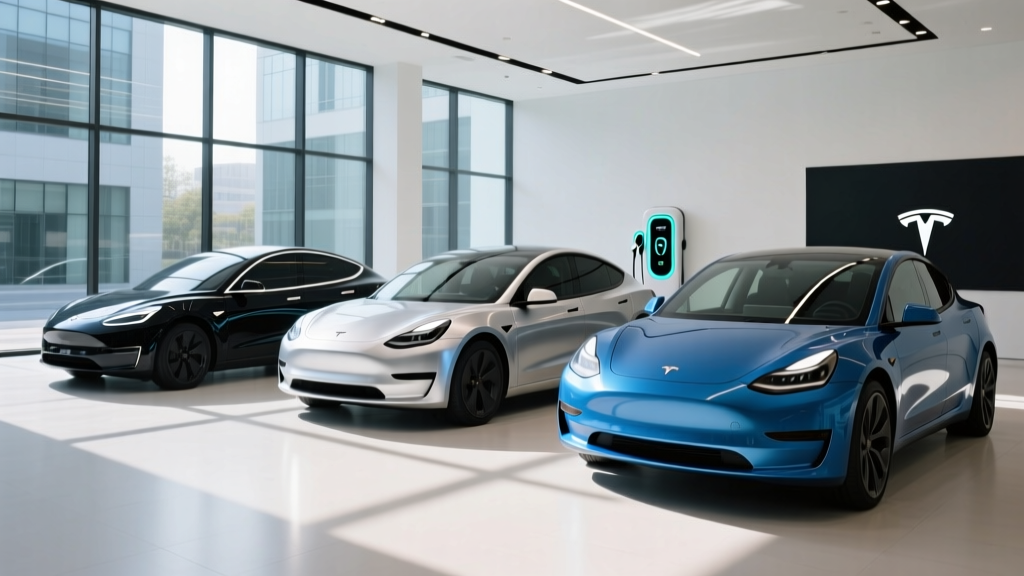
When people search for "Franz Tesla," they're usually looking for Franz von Holzhausen, the Chief Designer at Tesla since 2008 and the visionary behind every production Tesla vehicle's exterior and interior aesthetic. Before Tesla, Franz led design at Mazda (where he penned the iconic RX-8) and held senior roles at BMW and Volkswagen. His influence on Tesla's lineup is the single thread connecting the Model S sedan, Model 3 compact, Model X SUV, Model Y crossover, Cybertruck, and the refreshed 2026 models rolling off Fremont and Austin production lines today.
This guide reviews the full 2026 Tesla lineup through the lens of Franz's design philosophy — pairing aesthetic analysis with the hard specs EV buyers actually need: EPA range, charging speeds, real-world efficiency, pricing, and federal tax credit eligibility under current IRS §30D rules.
2026 Tesla Model Lineup: Core Specifications
| Model / Trim | EPA Range | Battery (kWh) | 0–60 mph | HP | Drivetrain | Base MSRP |
|---|---|---|---|---|---|---|
| Model 3 RWD | 341 mi | ~60 kWh (LFP) | 5.8 s | 283 | RWD | $38,990 |
| Model 3 Long Range AWD | 363 mi | ~79 kWh (NMC) | 4.2 s | 366 | Dual-Motor AWD | $45,990 |
| Model Y Long Range AWD | 320 mi | ~79 kWh (NMC) | 4.8 s | 384 | Dual-Motor AWD | $44,990 |
| Model Y Performance | 298 mi | ~79 kWh (NMC) | 3.5 s | 456 | Dual-Motor AWD | $51,490 |
| Model S Long Range | 402 mi | ~100 kWh (NMC) | 3.1 s | 670 | Dual-Motor AWD | $79,990 |
| Model X Long Range | 335 mi | ~100 kWh (NMC) | 3.8 s | 670 | Dual-Motor AWD | $84,990 |
Source: fueleconomy.gov and Tesla spec sheets. Figures reflect 2026 model-year EPA estimates and may vary by wheel option and configuration.
Real-World Range: What the EPA Sticker Doesn't Tell You
EPA estimates assume a mixed city/highway cycle under moderate conditions. In practice:
- Highway-only driving at 75 mph: Expect 10–15% below EPA (e.g., Model 3 LR delivers ~310–325 mi)
- Cold weather (below 32°F): Range drops 20–30% without preconditioning; LFP batteries (Model 3 RWD) are particularly sensitive to cold
- Mountain/elevation driving: Regenerative braking on descents partially offsets uphill losses
- Heat pump advantage: All 2026 Teslas include a heat pump, reducing cold-weather HVAC energy draw by ~30% vs. resistive heaters
The Model 3 RWD uses a lithium iron phosphate (LFP) battery — a chemistry that sacrifices some energy density for superior cycle life and lower cost. Tesla recommends charging LFP packs to 100% regularly to maintain cell balancing, unlike NMC packs where daily charging to 80% extends longevity. If you live in a cold climate and lack a garage, the LFP Model 3's cold-weather range loss is a genuine consideration: preconditioning while plugged in mitigates this, but unplugged cold-soaking will hurt.
Charging Speed: DC Fast, Level 2, and the Supercharger Advantage
| Charge Method | Model 3 (LFP) | Model 3 / Y (NMC) | Model S / X |
|---|---|---|---|
| Max DC Fast Charge | 170 kW | 250 kW | 250 kW |
| 10–80% DC Time | ~28 min | ~22 min | ~25 min |
| Level 2 (240V / 48A) | 11.5 kW (~37 mi/hr) | 11.5 kW (~44 mi/hr) | 11.5 kW (~40 mi/hr) |
| Level 1 (120V / 12A) | ~1.4 kW (~4 mi/hr) | ~1.4 kW (~5 mi/hr) | ~1.4 kW (~4 mi/hr) |
| Connector | NACS (native) | NACS (native) | NACS (native) |
Charging curve reality check: Tesla's "250 kW peak" is just that — a peak. On V3 Superchargers, the Model 3 Long Range hits ~250 kW between roughly 10–20% state of charge (SoC), then tapers to ~150 kW by 50%, and ~80 kW by 70%. The 10–80% time of ~22 minutes reflects this taper. The LFP Model 3 peaks lower (~170 kW) and holds a flatter curve, resulting in a slightly longer but more predictable session.
As native NACS vehicles, all Teslas access the Supercharger network directly — now the largest and most reliable DC fast-charging network in North America with over 25,000 stalls. With other automakers adopting NACS via adapters in 2025–2026, Supercharger congestion at popular corridors is worth monitoring, but Tesla's stall-to-vehicle ratio remains favorable.
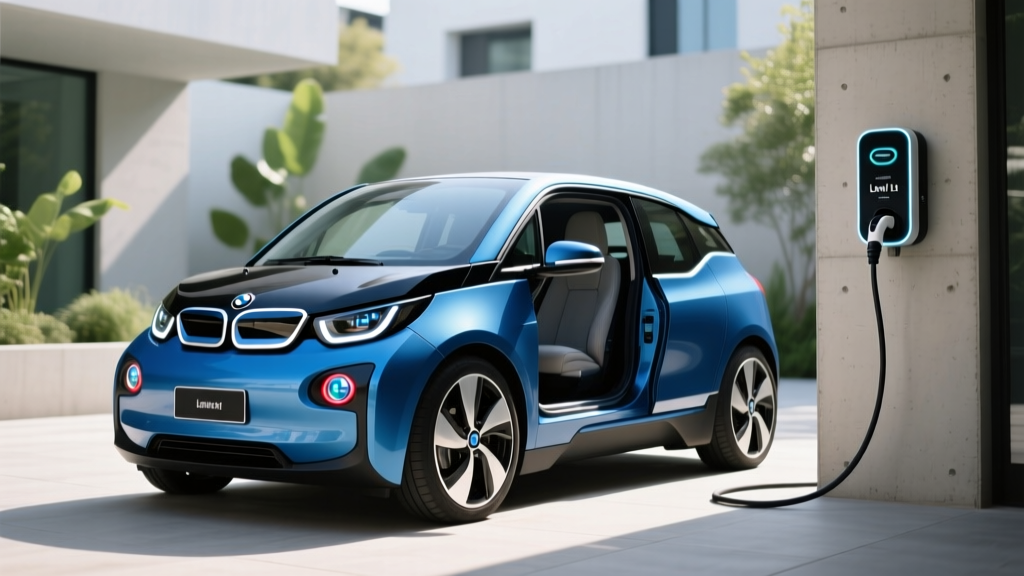
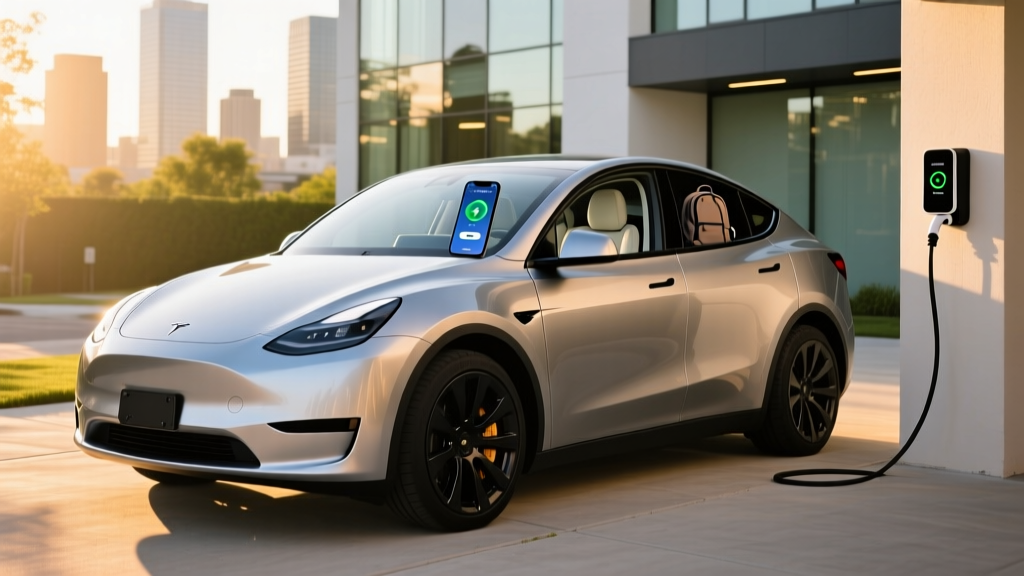
For home charging, Tesla's Wall Connector ($420) delivers up to 11.5 kW on a 60A circuit (48A continuous). Most owners find overnight Level 2 charging easily replenishes a full day's driving. Budget $500–$1,500 for professional installation depending on your panel capacity and run distance — a 200A panel upgrade may be needed in older homes, adding $1,500–$3,000.
Franz's Design Language: What Sets Tesla Apart
Franz von Holzhausen's design ethos centers on radical minimalism, aerodynamic efficiency, and proportion. Key signatures across the 2026 lineup:
- Model 3 "Highland" refresh: Slimmer LED lighting, revised front fascia with integrated light bar, ventilated front seats (finally), ambient lighting strips, and a rear touchscreen for passengers. The drag coefficient of 0.219 Cd remains among the lowest of any production sedan.
- Model Y "Juniper" refresh: Expected updates include a full-width front light bar, redesigned interior materials, and improved NVH (noise, vibration, harshness). The Model Y's crossover proportions — tall roofline, short overhangs — maximize interior volume within a compact footprint.
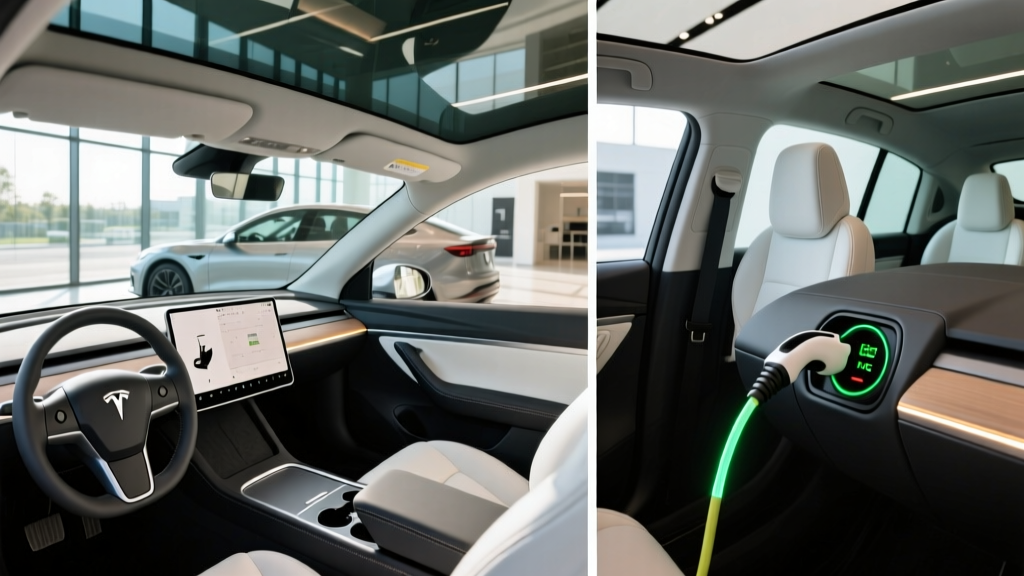
- Model S/X: Despite their age (platform dating to 2012/2015), Franz's team has kept them relevant with the 2021+ interior refresh: yoke or conventional wheel, 17" cinematic touchscreen, rear passenger screen, and 22-speaker audio. The Model S's 0.208 Cd still leads the sedan segment.
- Cybertruck: Franz's most polarizing work — angular stainless steel exoskeleton with no curved body panels. Love it or not, it's unlike anything else on the road, and its 11,000-lb towing capacity (when equipped) targets a truck buyer Tesla never previously reached.
Interior and Cargo Space
| Model | Rear Legroom | Cargo (rear seats up) | Cargo (seats folded) | Frunk |
|---|---|---|---|---|
| Model 3 | 35.2 in | 23 cu ft | N/A (sedan) | 3.1 cu ft |
| Model Y | 36.5 in | 30 cu ft | 72 cu ft | 4.1 cu ft |
| Model S | 35.4 in | 28 cu ft | N/A (sedan) | 5.3 cu ft |
| Model X | 37.1 in (2nd row) | 15 cu ft (6-seat) | 82 cu ft | 6.6 cu ft |
The Model Y's cargo volume rivals midsize SUVs despite its compact exterior footprint — a direct result of Franz's "cab-forward, wheels-at-the-corners" packaging philosophy enabled by the skateboard battery platform.
Pricing, Tax Credits, and Total Cost of Ownership
| Model / Trim | Base MSRP | MSRP Cap (§30D) | Est. Credit | Effective Price |
|---|---|---|---|---|
| Model 3 RWD | $38,990 | $55,000 (sedan) | Up to $7,500* | ~$31,490* |
| Model 3 Long Range | $45,990 | $55,000 (sedan) | Up to $7,500* | ~$38,490* |
| Model Y LR AWD | $44,990 | $80,000 (SUV) | Up to $7,500* | ~$37,490* |
| Model Y Performance | $51,490 | $80,000 (SUV) | Up to $7,500* | ~$43,990* |
| Model S LR | $79,990 | $55,000 (sedan) | Not eligible | $79,990 |
| Model X LR | $84,990 | $80,000 (SUV) | Not eligible | $84,990 |
*Critical §30D eligibility requirements (2026 tax year):
- Income caps: Modified AGI ≤ $150,000 (single), $225,000 (head of household), $300,000 (joint)
- MSRP caps: $55,000 for sedans; $80,000 for SUVs, vans, and trucks
- Battery sourcing: Increasing percentages of critical minerals and battery components must be sourced from the US or FTA-partner nations — this requirement tightens annually and can reduce the credit to $3,750 or eliminate it entirely for certain build weeks
- Point-of-sale transfer: Eligible buyers can apply the credit as an instant rebate at purchase rather than waiting for tax filing
The Model S and Model X exceed their respective MSRP caps and do not qualify for the federal credit. State-level incentives (California's CVRP, Colorado's $5,000 credit, etc.) may still apply — check your state's energy office for current programs.
Efficiency and Driving Dynamics
Tesla remains the efficiency benchmark in the EV segment. Franz's obsessive focus on aerodynamics pairs with Tesla's industry-leading powertrain efficiency:
| Model | Combined MPGe | kWh / 100 mi | Est. Cost per Mile (US avg $0.16/kWh) |
|---|---|---|---|
| Model 3 RWD | 132 MPGe | 25 | $0.040 |
| Model 3 LR AWD | 125 MPGe | 27 | $0.043 |
| Model Y LR AWD | 117 MPGe | 29 | $0.046 |
| Model S LR | 116 MPGe | 29 | $0.046 |
Compare these figures to the average gas sedan at ~30 MPG and $3.50/gallon — that's ~$0.117/mile. The Model 3 RWD costs roughly one-third per mile to "fuel" on home electricity. Even on pricier public DC fast charging ($0.35–$0.50/kWh), you're paying $0.088–$0.125/mile — still competitive with gas.
Tech, Autopilot, and Software
Every 2026 Tesla includes:
- 15.4" (Model 3/Y) or 17" (Model S/X) touchscreen with OTA updates, streaming, and gaming
- Basic Autopilot: Traffic-aware cruise control + autosteer (SAE Level 2 — driver must remain engaged at all times)
- Over-the-air updates: Tesla's software pipeline continuously adds features — from UI refinements to suspension tuning to new entertainment apps
- Sentry Mode / Dashcam: 360-degree recording using the vehicle's camera array
- Phone-as-key: Bluetooth-based passive entry with no fob required
Tesla Autopilot and FSD (Supervised) are SAE Level 2 driver-assistance systems. They do not make the vehicle self-driving. The driver must keep hands on the wheel (or demonstrate attention via cabin camera) and is fully responsible for all driving decisions. Only Level 4 robotaxi services like Waymo operate without a driver in defined service areas.
FSD (Supervised) remains a $8,000 add-on (or $99/month subscription) and adds automatic lane changes, traffic light/stop sign recognition, and more assertive city-street navigation. Despite impressive capability, it requires constant supervision and can make unexpected routing decisions. It is not a Level 3 or Level 4 system.
Warranty Coverage
| Coverage | Model 3 / Y | Model S / X |
|---|---|---|
| Basic Vehicle | 4 yr / 50,000 mi | 4 yr / 50,000 mi |
| Battery & Drive Unit | 8 yr / 120,000 mi (RWD) 8 yr / 120,000 mi (LR/AWD) |
8 yr / 150,000 mi |
| Battery Capacity Retention | ≥70% during warranty | ≥70% during warranty |
Tesla's 70% retention threshold is standard for the industry. Real-world degradation data from fleet analyses suggests most Tesla NMC packs retain ~88–92% capacity at 100,000 miles. LFP packs in the Model 3 RWD show even slower degradation in moderate climates, though cold-climate LFP data is still maturing.
Pros and Cons
✅ Pros
- Best-in-class Supercharger network access (native NACS)
- Class-leading efficiency (kWh/100mi)
- Strong OTA update pipeline keeps vehicles current
- Model 3/Y qualify for up to $7,500 federal credit
- Excellent real-world charging speeds with V3/V4 Superchargers
- Strong resale value relative to most EV competitors
- Minimalist interior appeals to tech-forward buyers
❌ Cons
- No Apple CarPlay / Android Auto — Tesla-only infotainment
- FSD (Supervised) is expensive and still requires full attention
- Model S/X priced out of federal tax credit eligibility
- LFP Model 3 RWD: cold-weather range loss is significant
- Minimalist interior lacks physical buttons (climate, mirrors adjusted via screen)
- Service center wait times remain long in some metro areas
- Supercharger congestion increasing as other brands gain NACS access
Who Should Buy a Tesla in 2026?
Decision Framework
Choose the Model 3 RWD if: You're a commuter with home charging, drive under 200 miles daily, and want the lowest entry price (~$31,490 after credit). Best value in the lineup.
Choose the Model 3 Long Range AWD if: You take regular road trips, live in a cold climate (NMC handles cold better than LFP), or want dual-motor traction.
Choose the Model Y Long Range if: You need cargo space, have a family, or prefer a higher seating position. The Model Y is Tesla's best-selling vehicle globally for good reason — it's the most versatile in the lineup.
Choose the Model S if: You want 400+ mile range, premium sedan comfort, and don't need the tax credit. Best for high-mileage luxury sedan buyers.
Choose the Model X if: You need three rows, falcon-wing doors appeal to you, and budget is secondary. Note that the Rivian R1S and Kia EV9 offer compelling 3-row alternatives at lower prices.
Look elsewhere if: You need Apple CarPlay, prefer physical controls, want a traditional dealer service experience, or your budget is under $35,000 (consider the Chevy Equinox EV or used Model 3 market).
Frequently Asked Questions
What is the real-world range of the Tesla Model 3?
The 2026 Model 3 Long Range carries an EPA rating of 363 miles. In real-world highway driving at 70–75 mph, expect 310–330 miles. In cold weather (below freezing), that drops to 250–280 miles without preconditioning. The RWD (LFP) model rates at 341 miles EPA but suffers more cold-weather loss — budget 20–30% reduction in winter.
How fast does a Tesla charge at home and on the road?
On a Level 2 home charger (11.5 kW / 48A), a Model 3 Long Range adds roughly 44 miles of range per hour — a full overnight charge easily covers daily driving. On a V3 Supercharger (250 kW DC), the 10–80% session takes approximately 22 minutes. Remember: peak kW is not sustained kW — the charge curve tapers significantly above 50% SoC.
Does the Tesla Model Y qualify for the $7,500 federal tax credit?
Yes, the Model Y qualifies — its MSRP falls under the $80,000 SUV cap. However, eligibility depends on your income (≤$300,000 joint / $150,000 single), battery sourcing requirements (which change periodically), and purchasing new from Tesla. The credit can be applied at point of sale as an instant rebate. Always verify current sourcing compliance on fueleconomy.gov before purchasing.
Is a Tesla worth buying vs. competitors like Hyundai Ioniq 5 or BMW i4?
Tesla's advantages remain the Supercharger network, efficiency, and software ecosystem. The Ioniq 5 offers faster 800V charging architecture (~18 min 10–80%), CarPlay support, and a more conventional interior. The BMW i4 delivers superior build quality and driving dynamics but less range per dollar. If Supercharger access and software matter most, Tesla wins. If interior quality and CarPlay are priorities, cross-shop aggressively.
What are the biggest drawbacks of owning a Tesla?
No Apple CarPlay/Android Auto is the most-cited frustration for smartphone-dependent drivers. FSD's $8,000 price (or $99/mo) delivers impressive but imperfect Level 2 assist — not autonomy. Service center availability varies widely by region, and mobile ranger visits can have multi-week wait times for non-urgent issues. Supercharger congestion is growing as Ford, GM, Rivian, and other NACS adopters gain network access.
How long will a Tesla battery last?
Tesla warranties the battery for 8 years / 120,000 miles (Model 3/Y) or 8 years / 150,000 miles (Model S/X) with a minimum 70% capacity retention guarantee. Fleet data from sources like Recurrent Auto shows most Tesla NMC packs retain ~90% at 100,000 miles. LFP packs show even slower degradation. A full battery replacement outside warranty runs $12,000–$20,000 depending on the model — rare but not impossible.