The Short Answer on Ford Trucks EV
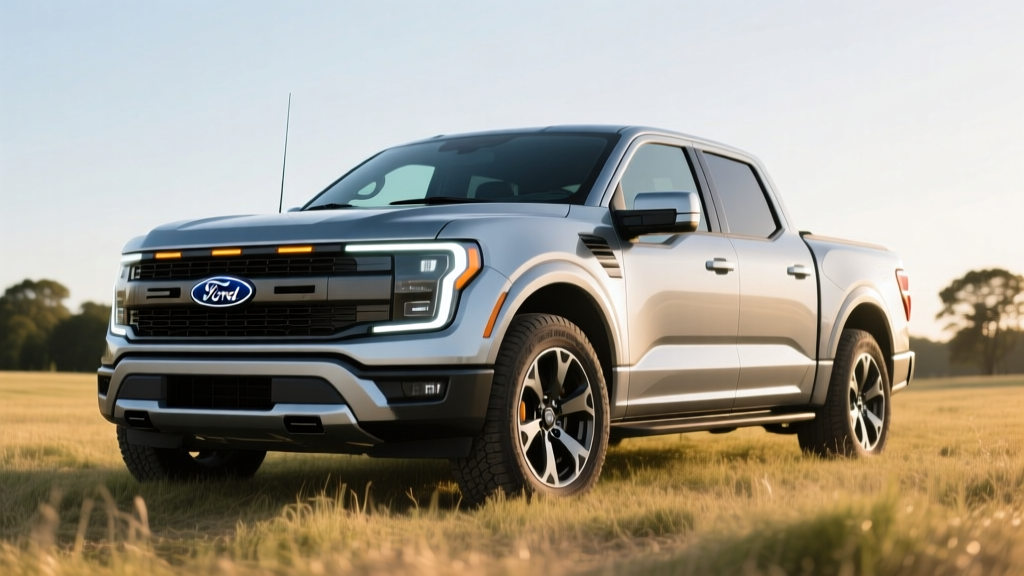
If you're researching Ford trucks EV options in 2026, the F-150 Lightning remains Ford's only fully electric pickup, offered in Standard Range (230 miles EPA) and Extended Range (320 miles EPA) battery packs, starting around $54,995 before incentives. It tows up to 10,000 lbs, charges from 10-80% in roughly 44 minutes on a 150 kW DC fast charger, and qualifies for partial or full §30D federal tax credits depending on your income, MSRP cap compliance, and battery sourcing. Real-world highway range drops to 190-260 miles depending on battery, speed, and temperature. The F-150 Lightning makes financial sense if you can charge at home and drive under 200 miles daily, but gas and hybrid F-150 variants still win for heavy towing and remote-area work.
Ford's Electric Truck Lineup: What's Available Now
As of the 2026 model year, Ford's electrified truck portfolio centers on the F-150 Lightning (battery electric) and the F-150 PowerBoost Full Hybrid (a 3.5L V6 paired with a 1.5 kWh battery delivering ~25 MPG combined). The Ranger and Maverick currently offer hybrid powertrains but no fully electric variants. Ford has announced future EV platforms, but no additional electric pickups are on sale today.
The Lightning slots into the full-size truck segment competing against the Rivian R1T (smaller, more expensive), the Chevrolet Silverado EV (larger battery options), and the Tesla Cybertruck (stainless steel, polarizing). For traditional truck buyers, the Lightning's closest cross-shop is the gas F-150 and the F-150 PowerBoost hybrid.
| Spec | Standard Range | Extended Range |
|---|---|---|
| EPA Range | 230 miles | 320 miles |
| Battery Capacity (usable) | ~98 kWh (LFP) | ~131 kWh (NMC) |
| Peak DC Fast Charge Rate | 120 kW | 150 kW |
| 10-80% DC Charge Time | ~44 min | ~44 min |
| Level 2 Home Charging (max) | 11.3 kW (32A) / 19.2 kW (80A) | 11.3 kW / 19.2 kW |
| Horsepower | 452 hp | 580 hp |
| Torque | 775 lb-ft | 775 lb-ft |
| 0-60 mph | ~5.0 sec | ~3.8 sec |
| Max Towing Capacity | 7,700 lbs | 10,000 lbs |
| Max Payload | 2,235 lbs | 1,952 lbs |
| Starting MSRP (Pro trim) | $54,995 | ~$69,995 |
| Battery Warranty | 8 years / 100,000 miles (≥70% capacity) | |
Real-World Range vs. EPA Sticker
EPA estimates assume a mix of city and highway driving at moderate temperatures. In real-world use:
- Highway (70-75 mph, mild weather): Expect ~190 miles (Standard) or ~260 miles (Extended) — roughly 15-20% below EPA.
- Cold weather (below 32°F): Range drops an additional 20-30% due to battery chemistry and cabin heating demands. Extended Range may fall to ~180-210 miles.
- Towing a 5,000 lb trailer: Range can halve to 110-160 miles depending on aerodynamics and terrain.
If your daily drive exceeds 150 miles round-trip in cold climates, or you tow frequently, the Extended Range pack or a gas/hybrid F-150 is the more practical choice.
F-150 Lightning vs. Gas F-150 vs. PowerBoost Hybrid: The Numbers
The decision between Ford's three F-150 powertrains hinges on your driving pattern, fuel costs, and whether you can install a Level 2 home charger. Here's how they stack up on paper and in practice.
| Metric | Lightning Ext. Range | Gas F-150 (3.5L EcoBoost) | F-150 PowerBoost Hybrid |
|---|---|---|---|
| EPA Combined | 70 MPGe / 48 kWh/100mi | 20 MPG combined | 25 MPG combined |
| Fuel/Energy Cost per Mile | ~$0.045 (home) / ~$0.14 (DC fast) | ~$0.175 (@ $3.50/gal) | ~$0.14 (@ $3.50/gal) |
| 5-Year Fuel Cost (75k mi) | ~$3,375 (home) / ~$10,500 (DC) | ~$13,125 | ~$10,500 |
| Base MSRP | ~$69,995 | ~$44,995 | ~$55,995 |
| Estimated §30D Tax Credit | Up to $7,500 (see rules) | $0 | $0 |
| Annual Maintenance (est.) | ~$300 | ~$600 | ~$550 |
| Max Towing | 10,000 lbs | 14,000 lbs | 12,700 lbs |
The Lightning's per-mile energy cost is dramatically lower when charging at home on a Level 2 setup. At the national average residential electricity rate of ~$0.16/kWh and the Lightning's consumption of ~48 kWh per 100 miles, that's roughly $0.077 per mile — still cheaper than gas, though public DC fast charging at $0.35-$0.50/kWh can match or exceed gasoline costs. This is why home charging access is the single biggest ownership variable.
Total Cost of Ownership: 5-Year Breakdown
Sticker price tells only part of the story. Here's a 5-year / 75,000-mile ownership projection comparing the Lightning Extended Range (Pro trim, ~$69,995) against the gas F-150 XLT EcoBoost (~$52,000 equipped) with home charging assumed for the EV.
| Category | F-150 Lightning Ext. Range | Gas F-150 EcoBoost |
|---|---|---|
| Purchase Price (MSRP) | $69,995 | $52,000 |
| Federal Tax Credit (§30D) | -$7,500 (if eligible) | $0 |
| Home Charger Install (Level 2) | $1,200-$2,500 | $0 |
| Fuel / Electricity (5 yrs) | $3,375 (home charging) | $13,125 |
| Maintenance (5 yrs) | $1,500 | $3,000 |
| Insurance (5 yrs, est.) | $9,500 | $7,000 |
| Estimated Depreciation | $28,000 | $20,000 |
| Total 5-Year Cost | ~$78,070 | ~$75,125 |
Key takeaways from this breakdown:
- The Lightning costs roughly $3,000 more over 5 years in this scenario, primarily due to higher depreciation and insurance premiums.
- Fuel savings are substantial (~$9,750 over 5 years with home charging), but they don't fully offset the price premium.
- Insurance runs 25-40% higher for the Lightning due to repair costs and battery replacement risk.
- Depreciation is steeper for EVs in the current market, though this is normalizing as the segment matures.
If electricity rates are lower in your state (e.g., $0.10/kWh in the Pacific Northwest or parts of the South) or gas prices spike above $4.00/gal, the Lightning can break even or save money. The math flips dramatically if you rely entirely on public DC fast charging.
Charging the F-150 Lightning: What You Need to Know
Charging infrastructure is the make-or-break factor for Lightning ownership. Here's what each charging level delivers:
| Level | Power (kW) | Miles Added per Hour | Use Case |
|---|---|---|---|
| Level 1 (120V outlet) | ~1.4 kW | ~3 mi/hr | Emergency / overnight trickle |
| Level 2 (240V, 32A) | 7.7 kW | ~16 mi/hr | Daily home charging |
| Level 2 (240V, 80A) | 19.2 kW | ~40 mi/hr | Heavy daily use / fleet |
| DC Fast (150 kW peak) | 150 kW (tapers above 80%) | ~150 mi in 30 min (10-80%) | Road trips |
Home charging installation typically costs $1,200-$2,500 for a 32A Level 2 charger (like the Ford Charge Station Pro) if your electrical panel has spare capacity. A panel upgrade from 100A to 200A adds $1,500-$3,000. The 80A Charge Station Pro requires a 100A dedicated circuit and costs more to install — most residential buyers opt for 32A or 48A units.
Charging curve reality: The Lightning's 150 kW peak rate applies only between roughly 15-55% State of Charge. Above 80%, charging slows to under 40 kW to protect battery health. On a road trip, plan stops around the 15-80% window for the fastest sessions. Preconditioning the battery (via the truck's navigation-routed charging) is essential to hit peak rates in cold weather.
The Lightning uses the NACS (Tesla-style) connector on 2025+ models, with CCS adapters available for earlier model years. This gives access to the Tesla Supercharger network — a significant advantage for road-trip charging reliability.
Federal Tax Credit: §30D Eligibility for the Lightning
The F-150 Lightning may qualify for up to $7,500 under the IRS §30D Clean Vehicle Credit, but eligibility depends on several factors that change yearly:
- MSRP cap: Pickup trucks must be under $80,000 MSRP. Most Lightning trims qualify; the Platinum trim may exceed the cap depending on options.
- Buyer income limits: AGI must not exceed $150,000 (single), $225,000 (head of household), or $300,000 (joint filing).
- Battery sourcing: The $7,500 credit splits into $3,750 for critical minerals and $3,750 for battery component sourcing. The Lightning's sourcing compliance varies by model year — check fueleconomy.gov for the specific trim's current qualification status.
- Point-of-sale transfer: You can transfer the credit to the dealer at purchase, reducing your out-of-pocket cost immediately rather than waiting for tax filing.
- Foreign Entity of Concern (FEOC) restrictions: Battery components or minerals from certain foreign entities can disqualify the credit. These rules tighten annually.
Always verify current-year eligibility on the IRS website and consult a tax professional before relying on the credit in your purchase decision. State incentives (California, Colorado, and others) may stack on top but vary by jurisdiction.
Common Misconceptions About Ford's Electric Trucks
| Myth | Fact |
|---|---|
| "Electric trucks can't tow." | The Lightning tows up to 10,000 lbs — competitive with many gas V6 F-150 configs. However, towing cuts range by 40-50%, making long-distance towing impractical without frequent charging stops. |
| "The battery will need replacing in a few years." | Ford warranties the battery for 8 years/100,000 miles at ≥70% capacity. Real-world data from high-mileage Lightnings shows ~10-12% degradation at 100,000 miles. Replacement costs $15,000-$25,000 out of warranty, but most owners will sell before needing one. |
| "Charging takes too long." | At home on Level 2, you wake up to a full battery every morning — zero time spent "fueling." On road trips, 10-80% takes ~44 minutes at a DC fast charger, comparable to a sit-down meal break every 200-250 miles. |
| "EVs don't work in cold climates." | Range drops 20-30% in sub-freezing temps, which is significant but manageable with the Extended Range pack. The Lightning's heat pump (standard on most trims) helps reduce cabin-heating energy draw. Preconditioning while plugged in mitigates much of the loss. |
| "It's cheaper than gas in every scenario." | Not true. If you rely on public DC fast charging, tow frequently, drive 300+ miles daily, or live in a state with high electricity rates and cheap gas, the gas or hybrid F-150 may cost less over 5 years. |
Decision Framework: Should You Buy the Lightning, the Hybrid, or Gas?
Choose the F-150 Lightning if:
- You have access to home Level 2 charging (garage or driveway with 240V circuit capability).
- Your daily driving is under 200 miles round-trip (covers ~90% of American commutes).
- You value instant torque, quiet operation, and the frunk (front trunk) for secure storage.
- You qualify for the §30D tax credit and/or state incentives.
- You rarely tow over long distances (short tows are fine; 400-mile trailer hauls are not practical).
- You want Pro Power Onboard (up to 9.6 kW of onboard AC power for job sites or tailgating).
Choose the F-150 PowerBoost Hybrid if:
- You can't install a home charger (apartment, street parking, HOA restrictions).
- You tow frequently and need consistent range regardless of load.
- You drive in remote areas with sparse charging infrastructure.
- You want better fuel economy than gas without range compromises (~25 MPG combined).
- Your budget is tighter and the $10,000-$15,000 price gap matters.
Choose the Gas F-150 EcoBoost if:
- You need maximum towing (up to 14,000 lbs with the right configuration).
- You drive 300+ miles daily in rural areas with no charging access.
- Upfront purchase price is the primary constraint.
- You operate in extreme cold (-20°F or below) regularly where EV range loss is most severe.
First-Time EV Buyer Essentials
If the Lightning is your first electric vehicle, these practical considerations go beyond the spec sheet:
Electrical panel capacity: Before purchasing, have a licensed electrician assess your home's panel. A 200A panel with spare breaker slots handles a 32A-48A Level 2 charger easily. Older homes with 100A service may need an upgrade ($1,500-$3,000) or a smart charger that dynamically limits draw.
Utility rates and time-of-use plans: Many utilities offer off-peak rates as low as $0.06-$0.10/kHz overnight. Setting your Lightning to charge between 10 PM and 6 AM can cut fuel costs by 40-60% compared to daytime rates.
Insurance: Get quotes before purchasing. Lightning insurance runs $1,800-$2,800/year depending on your profile — 25-40% above a comparable gas F-150. Shop multiple carriers; some specialize in EV coverage.
Tire costs: The Lightning's weight (~6,500 lbs) and instant torque wear tires faster than gas trucks. Budget $1,200-$1,800 for a set of replacement tires every 30,000-40,000 miles.
Depreciation reality: EVs currently depreciate faster than gas trucks in the first 3 years. If you plan to sell within 36 months, factor in a steeper loss. If you'll keep the truck 7+ years, depreciation matters less and fuel savings compound.
Frequently Asked Questions
Can the F-150 Lightning power my home during an outage?
Yes, with Ford's Intelligent Backup Power system and the 80A Charge Station Pro, the Lightning can supply up to 9.6 kW to your home through a transfer switch. An Extended Range battery (131 kWh) could power an average home for roughly 3 days. The transfer switch and installation add $3,000-$5,000 to your setup cost.
How does the Lightning handle off-road or in snow?
The Lightning's low center of gravity (battery pack under the floor) and standard AWD give it solid traction in snow and light off-road conditions. Ground clearance is 8.9 inches — less than the gas F-150 Tremor or Raptor. It's capable for fire roads and snowy driveways, but not a dedicated rock crawler.
What happens if the battery degrades significantly?
Ford's battery warranty covers capacity below 70% for 8 years or 100,000 miles. Real-world data suggests most Lightning batteries retain 85-90% capacity at 100,000 miles with normal use. Avoid routinely charging to 100% or letting the battery sit at 0% for extended periods to maximize longevity. LFP batteries (Standard Range) tolerate 100% charges better than NMC (Extended Range).
Is the Lightning eligible for the full $7,500 tax credit in 2026?
Eligibility depends on the specific trim's battery sourcing compliance, your income, and the MSRP cap. Some Lightning configurations qualify for the full $7,500; others may qualify for $3,750 or none at all. Check the current status on fueleconomy.gov and confirm with your tax advisor before purchase.
How does charging cost compare to gas for the Lightning?
At home on a Level 2 charger using the national average rate of $0.16/kWh, the Lightning costs roughly $0.077 per mile (48 kWh/100mi × $0.16). A gas F-150 at 20 MPG and $3.50/gal costs $0.175 per mile — more than double. However, DC fast charging at $0.40/kWh pushes the Lightning to $0.192 per mile, exceeding gas costs. Home charging is the key to savings.
Does Ford offer any other electric trucks besides the Lightning?
Not as of 2026. The Maverick and Ranger offer hybrid powertrains but no fully electric versions. Ford has announced broader EV plans, but no additional electric pickups are confirmed for sale. If you need a smaller electric truck, the Rivian R1T is the closest alternative in a different price bracket.