The Quick Answer on the Ford Truck EV
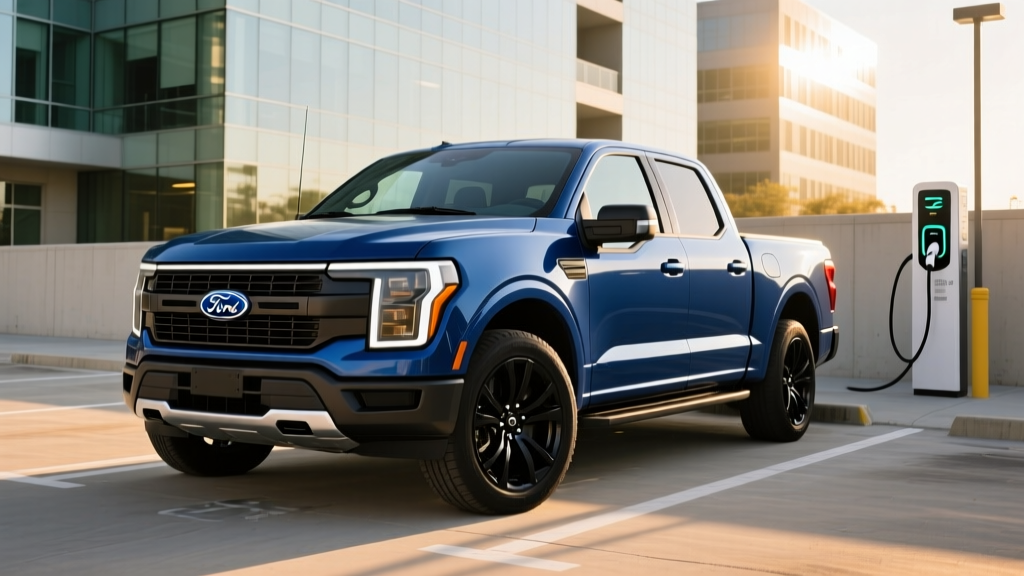
If you're researching a Ford truck EV, the F-150 Lightning is the only current-production option, and here's what matters most: the 2026 F-150 Lightning with the Extended Range pack delivers an EPA-estimated 320 miles of range, starts around $54,995 for the Pro trim, and can peak at 150 kW on a DC fast charger (10–80% in roughly 41 minutes). Compared to a gas F-150 4x4 averaging 20 MPG combined, you'll save approximately $1,200–$1,800 per year on fuel if you charge primarily at home on a Level 2 setup — but only if you have reliable home charging access. If you tow frequently, expect real-world range to drop to 100–150 miles. The Lightning makes the most sense as a daily-driver work truck with home charging; it's a tougher call for long-distance towing or apartment dwellers without charging options.
2026 F-150 Lightning: Range, Battery, and Real-World Expectations
The F-150 Lightning offers two battery configurations. The Standard Range pack provides an EPA-estimated 240 miles, while the Extended Range pack pushes that to 320 miles (on XLT and higher trims). Both use NMC (nickel manganese cobalt) lithium-ion chemistry, which offers higher energy density than LFP but requires more careful thermal management and benefits from keeping state of charge between 20–80% for daily driving to maximize longevity.
EPA Range vs. Real-World Range
EPA sticker: 320 miles (Extended Range, 2WD)
Real-world highway (70 mph): Expect 260–280 miles in mild weather
Cold weather (below freezing): Plan for 200–230 miles — NMC packs lose 20–30% range in sustained cold, and cabin heating draws significant energy
Towing a 5,000-lb trailer: 100–150 miles depending on aerodynamics, terrain, and speed
Bottom line: The 320-mile EPA figure assumes mixed driving at moderate speeds in 65–75°F weather. If you regularly drive highway speeds in winter or tow, budget your trips around 60–70% of the sticker range.
| Specification | Standard Range | Extended Range |
|---|---|---|
| Battery Capacity (usable) | 98 kWh | 131 kWh |
| Chemistry | NMC | NMC |
| EPA Range | 240 mi | 320 mi |
| MPGe (combined) | 76 MPGe | 70 MPGe |
| Horsepower | 452 hp | 580 hp |
| Torque | 775 lb-ft | 775 lb-ft |
| 0–60 mph | ~4.5 sec | ~3.8 sec |
| Max Towing | 7,700 lbs | 10,000 lbs |
| Max Payload | 2,235 lbs | 1,800 lbs |
| Peak DC Fast Charge | 120 kW | 150 kW |
| 10–80% DC Fast Charge | ~36 min | ~41 min |
| Level 2 Charge Rate | 11.3 kW (32A) / 19.2 kW (80A option) | 11.3 kW (32A) / 19.2 kW (80A option) |
| Base MSRP (Pro trim) | $54,995 | $69,995 (XLT+) |
| Battery/Powertrain Warranty | 8 yr / 100,000 mi (70% capacity retention) | 8 yr / 100,000 mi (70% capacity retention) |
Charging the Ford Truck EV: Home, Public, and What You'll Actually Spend
Charging a full-size electric truck at home is where the economics work — and where most Lightning owners do 85–95% of their charging. The Lightning uses the NACS (North American Charging Standard) connector as of the 2025 model year, meaning native access to Tesla Supercharger stations (with V3 stalls delivering up to 250 kW, though the Lightning peaks at 150 kW and won't pull the full rate).
| Charging Level | Power (kW) | Miles of Range Added per Hour | Typical Use Case |
|---|---|---|---|
| Level 1 (120V household) | 1.4 kW | ~3 mi/hr | Emergency/overnight top-up only |
| Level 2 (240V, 32A) | 7.7 kW | ~18 mi/hr | Standard home charging (overnight full charge) |
| Level 2 (240V, 48A) | 11.5 kW | ~27 mi/hr | Faster home charging (Ford Mobile Power Cord or wall unit) |
| Level 2 (240V, 80A) | 19.2 kW | ~45 mi/hr | Ford Charge Station Pro — full overnight charge in ~7 hrs (Extended Range) |
| DC Fast Charge | 150 kW peak | ~180 mi in 30 min (peak) | Road trips; tapers significantly above 80% SoC |
Charging curve reality: The Lightning's 150 kW peak only holds briefly between roughly 15–40% state of charge. By 60% SoC, you're closer to 100 kW, and above 80%, the rate drops to under 40 kW. This is normal for NMC packs protecting battery health, but it means a "10–80% in 41 minutes" spec doesn't mean you can charge 0–100% in 55 minutes — the last 20% can take nearly as long as the first 60%.
Home Charging Installation Costs
For the 80A Ford Charge Station Pro (the optimal home setup for Extended Range models), you'll need a 100-amp dedicated circuit. Many homes with 200-amp electrical panels can accommodate this, but older homes or those with 100-amp service may require a panel upgrade.
| Component | Estimated Cost Range |
|---|---|
| Ford Charge Station Pro (80A unit) | $1,100–$1,300 |
| Electrician labor (standard install, panel nearby) | $800–$2,000 |
| Electrical panel upgrade (if needed: 100A → 200A) | $2,500–$5,000 |
| Permit and inspection | $150–$500 |
| Total (no panel upgrade) | $2,050–$3,800 |
| Total (with panel upgrade) | $4,550–$8,800 |
Note: Final electrical specifications should be confirmed by a licensed electrician. Some utility companies offer rebates of $250–$1,000 for Level 2 installation — check with your local provider.
Cost of Ownership: Ford Truck EV vs. Gas F-150
The headline question for any truck buyer: does the Lightning save money over five years compared to a gas F-150? The answer depends heavily on your driving patterns, electricity rates, and whether you qualify for federal tax incentives.
| Cost Category | F-150 Lightning Extended Range (XLT) | Gas F-150 XLT 4x4 (3.5L EcoBoost) |
|---|---|---|
| Base MSRP | $69,995 | $52,000 |
| Federal Tax Credit (§30D) | Up to $7,500 (if eligible) | $0 |
| Effective Purchase Price | ~$62,495 | $52,000 |
| Fuel/Energy (15,000 mi/yr × 5 yrs) | $3,750–$5,250 (home charging, $0.12–$0.17/kWh avg) | $11,250–$13,500 ($3.50–$4.20/gal, 20 MPG combined) |
| Maintenance (5 yrs) | $1,200–$1,800 (tire rotation, cabin filter, wiper fluid) | $3,500–$5,000 (oil changes, filters, brakes, transmission fluid) |
| Insurance (5 yrs, avg) | $9,000–$12,000 | $7,000–$9,500 |
| Estimated Depreciation (5 yrs) | $28,000–$35,000 | $20,000–$26,000 |
| 5-Year Total (approx.) | $104,000–$116,000 | $93,000–$106,000 |
Key takeaways from the numbers:
- Fuel savings are real: $6,000–$9,000 less on energy over 5 years if you charge at home.
- Maintenance savings are real: $2,000–$3,000 less over 5 years (no oil changes, far less brake wear due to regenerative braking).
- Insurance is higher: EV insurance premiums run 15–25% higher on average due to repair costs and battery replacement risk.
- Depreciation is steeper: EVs, particularly trucks, have depreciated faster than gas counterparts in recent years, though this may stabilize as the market matures.
- Tax credit is not guaranteed: Under current IRS §30D rules, the F-150 Lightning may qualify for the full $7,500 credit, but eligibility depends on your income, the vehicle's MSRP (must be under $80,000 for trucks — Extended Range XLT qualifies), battery component and critical mineral sourcing requirements, and point-of-sale transfer elections. Always verify current eligibility at IRS.gov before purchase.
Ford Truck EV Tax Credit: What You Actually Qualify For
The federal §30D Clean Vehicle Credit offers up to $7,500 for qualifying new EVs, but the rules are complex and subject to change. Here's the 2026 framework for the F-150 Lightning:
- MSRP cap: Trucks must be under $80,000 — Lightning Pro and XLT trims qualify; Platinum and top-spec trims may exceed the cap
- Buyer income limits: Modified adjusted gross income must not exceed $300,000 (joint), $225,000 (head of household), or $150,000 (single)
- Battery sourcing: The $7,500 credit splits into two halves — $3,750 for battery components manufactured in North America, and $3,750 for critical minerals sourced from the U.S. or free-trade-agreement countries. Ford has been working to increase domestic sourcing, but eligibility for the full credit varies by model year and production batch
- Point-of-sale transfer: You can elect to transfer the credit to the dealer at purchase, reducing your out-of-pocket cost immediately rather than waiting for tax filing
- Foreign entity of concern (FEOC): Battery components or critical minerals from certain restricted foreign entities can disqualify a vehicle entirely
Critical: Tax credit rules have changed multiple times since 2023. Always confirm eligibility for the specific VIN you're purchasing with your tax professional and the fueleconomy.gov tax credit lookup tool.
Who Should Buy the Ford Truck EV (and Who Shouldn't)
Decision Framework: Is the Lightning the Right Truck for You?
Choose the F-150 Lightning if:
- You have home charging access (garage or driveway with 240V outlet capability)
- Your daily driving is under 200 miles round-trip
- You value instant torque, quiet operation, and the frunk (front trunk — 14.1 cu ft of lockable storage)
- You want a worksite power source (Pro Power Onboard offers up to 9.6 kW of 240V outlet power from the truck)
- You live in an area with moderate winters or can tolerate 20–30% range loss in cold months
- You qualify for the federal tax credit and/or state incentives
Reconsider or look at alternatives if:
- You tow heavy trailers over long distances regularly (range drops to 100–150 miles; DC fast charging a 131 kWh pack takes time)
- You live in an apartment or lack home charging access (reliance on public DC fast charging is expensive and time-consuming — expect $0.30–$0.48/kWh at Electrify America or similar networks)
- You regularly drive in sub-zero temperatures where range loss compounds with battery preconditioning energy demands
- Your budget is tight and the higher upfront cost (even after tax credits) plus potential panel upgrade creates financial strain
- You plan to keep the truck 10+ years and worry about out-of-warranty battery replacement (estimated $15,000–$25,000+ for the Extended Range pack)
Common Ford Truck EV Misconceptions — Corrected
| Myth | Fact |
|---|---|
| "The Lightning can't tow anything real." | Max towing is 10,000 lbs (Extended Range, Max Trailer Tow Package). It tows capably — the limitation is range, not capability. Expect 100–150 miles per charge while towing 5,000+ lbs. |
| "It charges as fast as a Tesla." | The Lightning peaks at 150 kW. A Cybertruck on V4 Superchargers can accept over 250 kW. The Lightning's large 131 kWh pack also means more total energy to move — real-world charge stops take longer than smaller-battery EVs. |
| "You'll never spend money on maintenance." | Tires wear faster on heavy EVs (the Lightning weighs 6,000–6,500 lbs). Expect tire replacement every 25,000–35,000 miles at $1,200–$1,800 for a set of truck-rated tires. Cabin air filters, wiper fluid, and brake fluid checks still apply. |
| "The battery will need replacing in 5 years." | Ford warranties the battery for 8 years/100,000 miles at 70% capacity retention. Real-world data from earlier EVs suggests NMC packs lose roughly 10–15% capacity over 150,000–200,000 miles with proper care. Most owners will never need a full replacement. |
| "The tax credit is $7,500, guaranteed." | Eligibility depends on income caps, MSRP limits, battery sourcing rules, and FEOC restrictions. Some buyers will qualify for $3,750, some for $7,500, and some for $0. Verify before purchasing. |
First-Time EV Truck Buyer: What You Need to Know Before Signing
If the Lightning is your first electric vehicle, here are the ownership realities that don't show up in spec sheets:
- Preconditioning matters: Use the FordPass app to precondition the battery while plugged in before a DC fast charge session. A cold battery charges dramatically slower — preconditioning warms it to optimal temperature and can cut your 10–80% charge time by 10–15 minutes.
- Regenerative braking changes how you drive: The Lightning offers one-pedal driving mode where lifting off the accelerator provides significant deceleration. Most owners adapt within a week and rarely touch the brake pedal in city driving.
- Plan road trips around charging, not just range: Use tools like A Better Route Planner (ABRP) to map routes with charging stops. The Lightning's NACS connector opens up Tesla Supercharger locations, but verify the stall can deliver sufficient power (V3 stalls at 250 kW are ideal; older V2 stalls at 150 kW won't push the Lightning to its peak anyway).
- Your electrical panel is the real bottleneck: Before ordering the truck, have an electrician assess your panel. A 200-amp panel with available breaker slots makes the 80A Charge Station Pro straightforward. A 100-amp panel means either upgrading or settling for a 32A or 48A charger (slower overnight charging, but workable for most daily needs).
- Insurance quotes vary wildly: Get quotes from 3–4 insurers before purchasing. Some carriers price EVs aggressively; others don't. The difference can be $500–$1,500/year.
Frequently Asked Questions
Can the F-150 Lightning power my house during an outage?
Yes, with the Ford Charge Station Pro and the Home Integration System (a separate transfer switch installation, approximately $3,000–$5,000 installed). The Lightning's Pro Power Onboard and bi-directional charging capability can provide up to 9.6 kW to your home, potentially powering essential circuits for 3–5 days depending on usage. This is a genuine differentiator over gas trucks, though it requires significant upfront investment in the transfer switch and compatible equipment.
How does the Lightning compare to the Chevy Silverado EV or Rivian R1T?
The F-150 Lightning prioritizes value and familiarity — it looks and feels like a conventional F-150. The Silverado EV (starting around $57,000, up to 400 miles EPA on select trims) offers more range but is larger and less conventional in design. The Rivian R1T (starting ~$75,000) is more premium and off-road capable but costs significantly more. For fleet buyers and budget-conscious owners, the Lightning Pro at ~$55K remains the most accessible electric full-size truck.
What happens to the Lightning's range in extreme cold?
In sustained temperatures below 20°F, expect 20–30% range reduction from the EPA sticker. A 320-mile Extended Range pack may deliver 210–250 miles. The heat pump (standard on 2025+ models) helps reduce cabin heating energy draw, but battery chemistry simply performs worse in cold. Preconditioning while plugged in mitigates this — always warm the battery before departure in winter.
Is the F-150 Lightning eligible for the $7,500 federal tax credit in 2026?
It may be, but eligibility is not universal. The Lightning qualifies on MSRP (under $80,000 for trucks on Pro and XLT trims), but the buyer must meet income limits, and the vehicle must satisfy battery component and critical mineral sourcing requirements under IRS §30D. The credit can be transferred to the dealer at point of sale. Confirm the specific VIN's eligibility at purchase — don't assume.
How much does it cost to charge a Lightning at home vs. public DC fast chargers?
Home charging at the national average of $0.14/kWh costs roughly $18 to fully charge the Extended Range pack (131 kWh) — about $0.05–$0.06 per mile. Public DC fast charging at $0.35–$0.48/kWh costs $46–$63 for the same full charge — about $0.14–$0.19 per mile. The Lightning's economics depend heavily on home charging; frequent public fast charging erases most of the fuel-cost advantage over gas.