Quick Answer: Is the Ford Transit City Electric Right for Your Fleet?
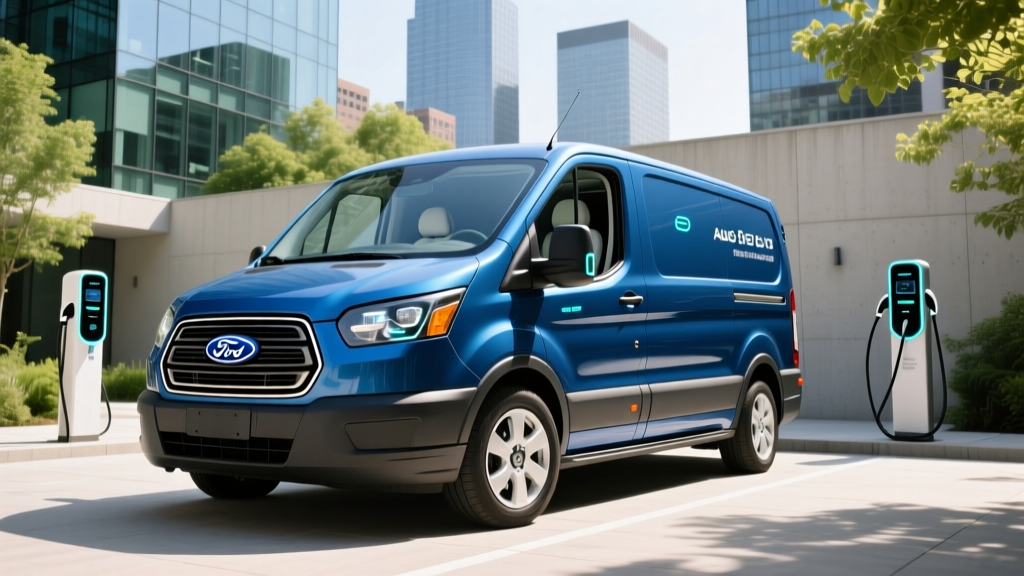
The 2026 Ford Transit City Electric is a purpose-built light commercial van with an EPA-estimated 190 miles of range, an 89 kWh usable NMC battery, and DC fast charging up to 115 kW (10–80% in roughly 41 minutes). Starting at $58,495 MSRP before incentives, it targets urban delivery routes, tradespeople, and small fleets covering 80–150 miles daily. It qualifies for the up-to-$7,500 federal commercial clean vehicle credit (§45W) for businesses, while individual buyers may qualify for the §30D credit depending on income, sourcing, and MSRP rules. If your routes stay within city limits and you can install depot Level 2 charging overnight, the Transit City Electric delivers roughly $0.09–$0.14 per mile in electricity versus $0.18–$0.24 per mile in gasoline for the equivalent gas Transit — saving $2,500–$4,000 annually on fuel alone at 25,000 miles/year.
Range, Battery & Efficiency: The Numbers That Matter
The 2026 Transit City Electric uses an 89 kWh usable lithium-ion NMC (nickel manganese cobalt) battery pack mounted under the load floor. Ford quotes an EPA-estimated 190 miles for the standard low-roof cargo van configuration. Efficiency lands at approximately 2.1 kWh/mile (47 MPGe combined) per fueleconomy.gov data for the cargo variant.
Real-World Range Expectations
EPA Sticker: 190 miles
City delivery route (stop-and-go, 25 mph avg): ~180–200 miles (regenerative braking recovers energy)
Highway (65–70 mph, loaded): ~145–160 miles
Cold weather (below 32°F, cabin heat on): ~130–155 miles
Fully loaded to GVWR (9,500 lbs): Subtract 10–15% from all figures above
For fleet managers: plan routes around 70% of EPA range as your daily usable envelope — that's roughly 133 miles with a safety buffer for detours, HVAC load, and payload.
| Spec | Value |
|---|---|
| Battery (usable) | 89 kWh, NMC chemistry |
| EPA Range | 190 miles (cargo van, low roof) |
| Efficiency | ~2.1 kWh/mile / 47 MPGe combined |
| Motor Output | 266 hp (198 kW) / 317 lb-ft torque |
| 0–60 mph | ~8.5 seconds (unloaded) |
| Max Payload | ~2,800 lbs (cargo van) |
| Cargo Volume | 246.7 cu ft (low-roof, long wheelbase) |
| DC Fast Charge (peak) | 115 kW (CCS) |
| 10–80% DC Charge | ~41 minutes |
| Level 2 AC Charge | 11.5 kW (~8.5 hours, 0–100%) |
| Battery Warranty | 8 years / 100,000 miles (≥70% retention) |
| Base MSRP (Cargo Van) | $58,495 |
Charging: Depot, Public & the Reality of Fleet Operations
The Transit City Electric charges via a CCS1 connector (NACS adapter availability is pending for the 2026 model year — check with your dealer for updates). Here's what charging looks like across the three levels fleet operators actually use:
| Level | Power (kW) | Miles Added/Hour | Use Case |
|---|---|---|---|
| Level 1 (120V) | 1.4 kW | ~3 mi/hr | Emergency/top-up only — not practical for fleets |
| Level 2 (240V, 48A) | 11.5 kW | ~24 mi/hr | Overnight depot charging — primary fleet strategy |
| DC Fast (CCS) | Up to 115 kW | ~120 mi/hr (peak) | Mid-day top-ups on longer routes; tapers above 80% |
Depot charging cost: A single Level 2 commercial station (e.g., ChargePoint CT4000 or similar) runs $3,500–$6,500 installed per port, depending on electrical panel proximity, trenching, and local permit fees. For a 5-van fleet, budget $18,000–$35,000 for charging infrastructure — plus potential utility demand-charge upgrades.
Charging curve reality: The Transit City Electric peaks at 115 kW only between roughly 15–55% state of charge. Above 80%, charging drops to ~25–35 kW to protect the battery. For fleet planning, a 30-minute DC fast session at lunch adds approximately 55–65 miles — enough to extend a route but not a full recharge.
EV vs. Gas Transit: 5-Year Total Cost of Ownership
The gas-powered 2026 Ford Transit T-150 Cargo Van (3.5L V6, 275 hp) starts around $48,995 MSRP and averages 16 MPG combined (per EPA). Let's compare a realistic 5-year, 125,000-mile ownership cycle for a single vehicle in a delivery fleet:
| Cost Category | Transit City Electric | Gas Transit T-150 |
|---|---|---|
| Purchase Price (MSRP) | $58,495 | $48,995 |
| Federal Tax Credit (§45W commercial) | −$7,500 | $0 |
| Net Purchase | $50,995 | $48,995 |
| Fuel / Electricity (125k mi) | $14,375 ($0.115/mi avg) | $27,344 ($3.50/gal, 16 MPG) |
| Maintenance (5 yr) | $2,800 | $7,500 |
| Insurance (5 yr avg) | $11,250 | $9,750 |
| Depot Charging Install (per vehicle share) | $4,500 | $0 |
| Total 5-Year Cost | $83,920 | $93,589 |
| Cost Per Mile | $0.67 | $0.75 |
The electric Transit breaks even on purchase price after the commercial credit and pulls ahead through fuel and maintenance savings — no oil changes, no transmission fluid, fewer brake replacements thanks to regenerative braking. The gap widens further if your local utility offers off-peak commercial EV rates (as low as $0.07–$0.09/kWh in some markets) or if your state offers additional fleet electrification incentives. Check IRS.gov §45W guidelines for current commercial credit eligibility, and consult a tax professional for your specific business situation.
Real-World Ownership: What Fleet Managers & Tradespeople Need to Know
Home Charging Access Isn't Universal
If you're an independent contractor or tradesperson operating a single Transit City Electric from home, you'll need a 240V / 60A circuit for optimal Level 2 charging. Many residential panels (especially older 100A service) require a $1,500–$3,500 panel upgrade before an electrician can install the charger. Budget $1,200–$2,500 total for a home Level 2 install (equipment + labor + permit) if your panel has capacity.
Cold Climate Operations
The Transit City Electric uses a liquid-cooled battery thermal management system with a heat pump for cabin heating — better than resistive heating for range preservation, but cold still bites. Expect 20–30% range loss below 20°F, particularly with frequent door openings (common in delivery). Preconditioning the battery while plugged in at the depot mitigates this: schedule your vans to warm up 30 minutes before departure via Ford Pro's telematics platform.
Payload and Route Planning
At max payload (~2,800 lbs), energy consumption rises to roughly 2.4–2.6 kWh/mile, dropping effective range to ~145 miles EPA-equivalent. Fleets running heavy loads should spec routes at 100–110 miles maximum before requiring a mid-day charge.
Common Misconceptions About Electric Commercial Vans
| Myth | Fact |
|---|---|
| "Electric vans can't handle real payloads." | The Transit City Electric carries up to 2,800 lbs with 317 lb-ft of instant torque — it pulls away from stops more confidently than the gas V6 when loaded. |
| "Charging takes too long for commercial use." | Overnight Level 2 depot charging fully replenishes the battery in ~8.5 hours — vans leave fully charged every morning. DC fast charging adds ~60 miles in 30 minutes for mid-day needs. |
| "Batteries will need replacing every few years." | Ford warranties the battery for 8 years/100,000 miles at ≥70% capacity retention. Industry degradation data for NMC packs shows ~10–15% loss over 150,000 miles under normal use. |
| "The tax credit covers everyone." | The §45W commercial credit applies to business entities; individual buyers must meet §30D income caps ($150k single/$300k joint), MSRP limits, and battery sourcing requirements. Always verify with the IRS or a tax professional. |
| "Electric vans cost more to insure." | Typically 10–20% higher premiums due to repair costs and battery replacement risk, though this gap is narrowing. Get fleet quotes before purchasing. |
Maintenance, Warranty & Long-Term Durability
The Transit City Electric eliminates the most common commercial van maintenance items: no engine oil, no spark plugs, no transmission fluid, no exhaust system. Brake pad life extends significantly because regenerative braking handles most deceleration — expect 80,000–120,000 miles before pad replacement versus 30,000–50,000 miles on the gas model.
Ford's warranty coverage includes:
- Battery: 8 years / 100,000 miles (retains ≥70% capacity)
- Electric powertrain components: 5 years / 60,000 miles
- Bumper-to-bumper: 3 years / 36,000 miles
- Corrosion perforation: 5 years / unlimited miles
Replacement battery pricing has not been published by Ford for the 2026 model year. Industry estimates for an 89 kWh NMC pack in the 2026 timeframe range from $12,000–$18,000 (parts only), though most fleets will never need a full replacement within the vehicle's service life.
Decision Framework: Should You Buy the Transit City Electric?
Choose the Ford Transit City Electric if:
- Your daily routes are under 130 miles (including payload and weather buffers)
- You have depot or home charging access — or can install Level 2 chargers
- You operate in a city or suburban environment where regenerative braking maximizes efficiency
- Your business qualifies for the §45W commercial clean vehicle credit
- You drive 20,000+ miles/year — the fuel savings justify the upfront premium
- Local utility rates are below $0.14/kWh or off-peak commercial EV rates are available
Stick with the Gas Transit (or Wait) if:
- Your routes regularly exceed 180 miles/day without reliable mid-day charging
- You operate in extreme cold climates (sustained sub-zero temps) with no garage parking
- You cannot install charging infrastructure and public DC fast chargers are sparse in your area
- Your annual mileage is under 12,000 miles — the fuel savings won't offset the purchase premium
- You frequently tow near the max rating — towing range loss is severe (35–50%)
Frequently Asked Questions
What is the real-world range of the Ford Transit City Electric?
The EPA rates it at 190 miles, but real-world delivery use with payload, HVAC, and stop-and-go driving typically yields 150–185 miles in moderate weather. Cold weather (below 32°F) drops that to 130–155 miles. Plan routes around 130 miles as a safe daily maximum.
How long does it take to charge the Transit City Electric at home or at a depot?
On a Level 2 charger (11.5 kW), a full charge from empty takes roughly 8.5 hours — ideal for overnight depot charging. On a DC fast charger, 10–80% takes about 41 minutes, though the rate tapers significantly above 80% SoC.
Does the Ford Transit City Electric qualify for a federal tax credit?
Businesses purchasing it for commercial use may qualify for the §45W Commercial Clean Vehicle Credit (up to $7,500 for vehicles under 14,000 lbs GVWR). Individual buyers may qualify under §30D, subject to income caps ($150,000 single / $300,000 joint for new vehicles), MSRP limits, and battery critical-mineral sourcing requirements. Rules change — always verify on IRS.gov or with a tax professional before purchasing.
How does the electric Transit compare to the gas Transit for towing?
The Transit City Electric has a maximum towing capacity of approximately 3,700 lbs (vs. ~5,100 lbs for the gas T-150). More critically, towing reduces EV range by 35–50% — a 190-mile van becomes a 95–120-mile van with a loaded trailer. For regular towing duty, the gas Transit remains more practical.
What happens if the battery degrades over time?
Ford warranties the battery at ≥70% capacity retention for 8 years or 100,000 miles. Based on NMC chemistry degradation curves, expect roughly 85–90% capacity at 100,000 miles under normal use. If the battery drops below the 70% threshold within warranty, Ford will repair or replace it at no cost.
Can I use the Transit City Electric for last-mile delivery in a major metro area?
This is the van's ideal use case. Stop-and-go urban driving maximizes regenerative braking, extending effective range. Amazon, FedEx, and other logistics operators have already validated similar electric vans on routes averaging 80–120 miles/day. The 246.7 cu ft cargo volume (long wheelbase) handles standard parcel volumes, and the instant torque makes merging in city traffic easier than the gas model.