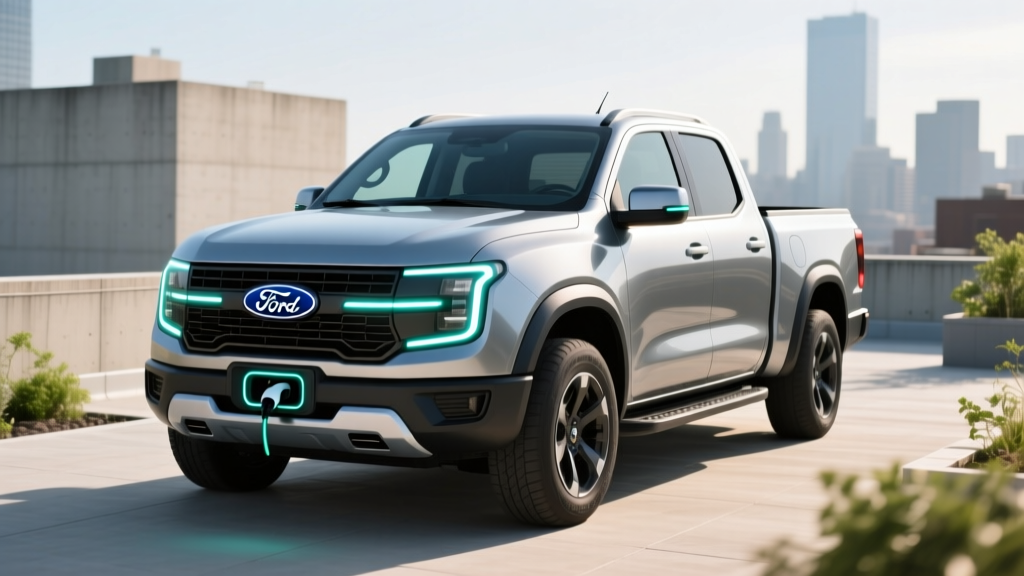
The bottom line on the Ford T3 electric truck: Ford's compact electric pickup—internally called the T3 and officially referred to as the "Next-Gen PUV" (Personal Utility Vehicle)—is an upcoming, smaller EV truck positioned below the F-150 Lightning and the canceled Project T3 cab-forward truck. Based on Ford's latest statements, production is targeted for the 2027 model year at the company's Louisville, Kentucky assembly plant, following a retooled production line. Expect a starting MSRP in the low-to-mid $30,000s, an EPA-estimated range around 230–280 miles, and a battery in the 65–80 kWh range. This is not yet available for purchase—specs below are preliminary based on Ford's public disclosures and industry analysis.
What Is the Ford T3 Electric Truck, Exactly?
The naming around this vehicle has caused genuine confusion, so let's untangle it. Ford originally announced a vehicle called "Project T3" in early 2023—a radically styled, cab-forward electric truck developed in partnership with SK On at the BlueOval City mega-campus in Tennessee. That specific vehicle was canceled in late 2023 when Ford pivoted its EV strategy.
However, the "T3" name has persisted in industry coverage to describe Ford's next compact electric pickup—a smaller, more affordable truck that slots below the F-150 Lightning in size and price. Ford CEO Jim Farley has confirmed this smaller truck is in development, targeting the compact pickup segment currently dominated by the Ford Maverick (hybrid and EcoBoost), Hyundai Santa Cruz, and the upcoming electric entries from rivals.
This is the vehicle we're analyzing here: Ford's compact electric truck, which we'll refer to as the T3 for clarity, understanding that Ford's official marketing name has not been finalized.
Preliminary Specs: Range, Battery, and Charging
Because the T3 is not yet in production, the figures below are based on Ford's platform disclosures, supply-chain reporting, and segment benchmarking. Treat these as educated estimates, not confirmed specifications.
| Specification | Estimated / Target |
|---|---|
| EPA Range (est.) | 230–280 miles |
| Battery Capacity (est.) | 65–80 kWh usable (LFP chemistry likely) |
| Peak DC Fast Charge Rate | ~150 kW (est.) |
| 10–80% DC Charge Time | ~25–32 minutes (est.) |
| Level 2 AC Charging | ~11.5 kW (est.) |
| Drivetrain | RWD standard, AWD available (est.) |
| 0–60 mph | ~6.5–8.0 seconds (est.) |
| Towing Capacity | ~2,000 lbs (est., compact segment typical) |
| Starting MSRP (est.) | $30,000–$38,000 |
| Production Target | 2027 model year, Louisville KY plant |
Chemistry note: Ford has signaled a shift toward LFP (lithium iron phosphate) batteries for its more affordable EV models. LFP offers lower energy density than NMC (nickel manganese cobalt) but provides longer cycle life, better thermal stability, and lower cost. If the T3 uses LFP, expect slightly heavier weight but the ability to regularly charge to 100% without accelerating degradation—a practical advantage for daily drivers. Read more about Ford's battery strategy on their official site.
Real-world range reality check: An EPA estimate of 250 miles (midpoint of our range) typically translates to ~200–220 miles at sustained highway speeds (70–75 mph), and potentially ~170–190 miles in freezing temperatures (below 32°F) due to cabin heating demand and battery chemistry limitations. If your daily round-trip commute exceeds 100 miles and you lack home charging, this truck's range may feel tight in winter.
Cost Breakdown: T3 vs. a Gas Compact Truck
The most common question from compact truck shoppers is whether going electric actually saves money. Let's run the numbers comparing the estimated T3 against the Ford Maverick Hybrid (the segment's efficiency benchmark at 42 MPG city / 33 MPG highway / 37 MPG combined per fueleconomy.gov).
| Cost Factor | Ford T3 Electric (est.) | Ford Maverick Hybrid (2025) |
|---|---|---|
| Base MSRP | ~$32,000 | ~$28,000 (XLT Hybrid) |
| Federal Tax Credit (§30D) | Up to $7,500 (if eligible—see caveats below) | $0 (not a plug-in) |
| Effective Purchase Price | ~$24,500 (with full credit) | ~$28,000 |
| Fuel/Energy Cost (15,000 mi/yr) | ~$540/yr (home charging at $0.13/kWh, 3.5 mi/kWh) | ~$1,216/yr (gas at $3.20/gal, 37 MPG combined) |
| Annual Maintenance | ~$300 (no oil changes, fewer moving parts) | ~$600 (oil, filters, spark plugs over time) |
| 5-Year Fuel + Maintenance | ~$4,200 | ~$9,080 |
| Insurance (avg. annual) | ~$1,800 (EVs typically 15–25% higher) | ~$1,500 |
| 5-Year Total Operating Cost | ~$13,200 | ~$16,580 |
The takeaway: If you qualify for the full §30D federal tax credit and charge primarily at home, the T3 could deliver a lower 5-year total operating cost than the Maverick Hybrid—despite a higher sticker price. The savings widen further if your local electricity rates are below the national average or if you have access to workplace or solar charging.
Tax credit caveats (2026 rules): The §30D credit under the IRS clean vehicle credit guidelines requires meeting battery component and critical mineral sourcing thresholds, buyer income caps ($150K single / $300K joint), and an MSRP cap of $80,000 for trucks. The T3's expected price clears the MSRP cap easily, but battery sourcing compliance is uncertain for a 2027 model. The credit may also be available as a point-of-sale transfer to the dealer, reducing your out-of-pocket at purchase. Consult a tax professional before relying on credit eligibility.
How Does It Compare to the Gas and Hybrid Compact Truck Market?
The compact truck segment is fiercely competitive. Here's how the T3 stacks up against current benchmarks on key buyer metrics:
| Metric | Ford T3 (est.) | Ford Maverick Hybrid | Hyundai Santa Cruz (2.5T AWD) |
|---|---|---|---|
| Powertrain | BEV (electric) | 2.5L Hybrid (HEV) | 2.5L Turbo Gas |
| EPA Range / MPG | ~250 mi | 37 MPG combined | 22 MPG combined |
| Energy Cost per Mile | ~$0.036 | ~$0.087 | ~$0.145 |
| 0–60 mph | ~7.0 sec (est.) | ~7.8 sec | ~6.5 sec |
| Towing | ~2,000 lbs (est.) | 2,000 lbs (hybrid) | 5,000 lbs (turbo AWD) |
| Starting Price | ~$32,000 | ~$28,000 | ~$33,000 |
| Home Refuel | Yes (Level 2, ~8 hrs) | No (gas station) | No (gas station) |
Where the T3 wins: Per-mile energy cost, home "refueling" convenience, lower maintenance, and potential tax-credit-adjusted pricing that undercuts gas rivals.
Where the T3 loses: Towing capacity (gas turbo trucks still dominate here), refueling speed on road trips (10 minutes for gas vs. 25–30+ minutes for DC fast charging), and cold-weather range predictability.
Real-World Ownership: What First-Time EV Buyers Must Know
Buying your first electric truck involves considerations that don't exist with a Maverick or Santa Cruz. Here's the honest rundown:
Home Charging Is the Make-or-Break Factor
If you can install a Level 2 (240V) home charger, the T3 becomes remarkably convenient—you plug in at night and wake up with a full "tank" every morning. A Level 2 installation typically costs $800–$2,500 (charger hardware + electrician labor + permit), though costs climb to $3,000–$5,000+ if your electrical panel needs an upgrade to 200 amps.
If you cannot charge at home (apartment living, street parking, no garage), ownership becomes significantly more challenging. Public DC fast charging costs roughly $0.30–$0.50/kWh, which erases much of the fuel-cost advantage over gas and adds 25–35 minutes of wait time per session. Plan your charging access before committing to a purchase.
Cold Weather Cuts Range—Plan Accordingly
LFP batteries (likely in the T3) are more susceptible to cold-weather range loss than NMC chemistries. Expect 25–40% range reduction in sustained sub-freezing temperatures, depending on whether the truck includes a heat pump for cabin heating. If you live in the upper Midwest or Northeast and have a 150-mile daily commute, a 250-mile EPA range could feel uncomfortably tight in January.
Charging Deserts Still Exist
While the DC fast-charging network has expanded considerably—Tesla Superchargers are now open to non-Tesla vehicles via NACS adapters, and Electrify America, EVgo, and ChargePoint continue building out—rural corridors in the Mountain West, Great Plains, and parts of the South still have sparse coverage. If your regular routes include these areas, a gas or hybrid truck remains the pragmatic choice for now.
Common Misconceptions About the T3 and Compact Electric Trucks
| Myth | Fact |
|---|---|
| "The T3 is available to order now." | False. The T3 is an announced/upcoming vehicle targeting 2027 production. No orders are currently open. |
| "Electric trucks can't tow anything useful." | Compact electric trucks will likely tow ~2,000 lbs—matching the Maverick Hybrid. That's sufficient for small trailers, jet skis, and light utility work. It won't match a full-size F-150 Lightning (7,700–10,000 lbs), but the compact segment was never designed for heavy towing. |
| "The battery will need replacing in 5 years." | Ford's EV battery warranty covers 8 years/100,000 miles with a capacity retention threshold (typically 70%). Real-world degradation data from similar platforms suggests 10–15% capacity loss over 8 years with normal use. LFP chemistry may degrade even less. |
| "I'll get the full $7,500 tax credit automatically." | Not guaranteed. Eligibility depends on your adjusted gross income, the truck's MSRP, and battery sourcing compliance at time of purchase. Rules may also change between now and 2027 production. |
| "It charges as fast as a gas truck refuels." | No EV matches a 5-minute gas fill-up. Expect 25–32 minutes for a 10–80% DC fast charge at peak rates, with charging speed tapering significantly above 80% to protect battery health. |
Decision Framework: Should You Wait for the T3 or Buy Now?
Wait for the Ford T3 if:
- You have reliable home charging access (garage or driveway with 240V outlet potential)
- Your daily driving is under 120 miles round-trip, even accounting for cold-weather range loss
- You want the lowest per-mile operating cost and can absorb a potentially higher upfront price (offset by tax credits)
- You don't need to tow more than ~2,000 lbs regularly
- You're comfortable with a 2027 delivery timeline and preliminary (not final) specifications
- You want to support domestic EV production (Louisville, KY assembly)
Buy a gas or hybrid compact truck now if:
- You cannot install home charging and your area has limited public DC fast-charging infrastructure
- You regularly drive in extreme cold with long daily distances
- You need 4,000+ lbs of towing capacity (look at the Santa Cruz 2.5T or a mid-size truck)
- You need a vehicle in the next 6 months—the T3 is still 12–18+ months from likely production
- Your budget is strictly under $28,000 and you're uncertain about tax credit eligibility
What to Watch Next
Ford is expected to reveal official specifications, pricing, and the production name for the T3 compact electric truck closer to its production start date. Key milestones to monitor:
- Official name reveal and design preview — likely 6–12 months before production
- EPA certification filings — these will confirm real range and efficiency numbers
- §30D tax credit battery sourcing compliance — critical for the effective purchase price
- Charging connector confirmation — Ford has committed to NACS (Tesla-style) for its EVs, meaning native Supercharger access, but this should be confirmed for the T3 specifically
For official updates, monitor Ford's media site and the EPA's fueleconomy.gov database once the vehicle is certified.
Frequently Asked Questions
Is the Ford T3 electric truck the same as the canceled Project T3?
No. The original Project T3 was a cab-forward, radically styled electric truck planned for BlueOval City in Tennessee. That specific vehicle was canceled in late 2023. The current "T3" referenced in industry coverage is Ford's upcoming compact electric pickup targeting the Maverick-sized segment, planned for Louisville, KY production around the 2027 model year. The naming overlap is confusing, but these are different vehicle programs.
Will the Ford T3 qualify for the $7,500 federal tax credit?
It's too early to confirm. The §30D credit requires meeting battery component sourcing and critical mineral thresholds that are evaluated at the time of purchase. Ford's shift toward LFP chemistry and efforts to localize battery supply improve the odds, but 2027 rules may differ from today's. The MSRP cap for trucks ($80,000) won't be an issue, and buyer income limits ($150K single / $300K joint for 2026) apply regardless. Check IRS.gov for the latest rules when the truck launches.
How long will it take to charge the T3 at home?
With a Level 2 (240V) charger delivering ~11.5 kW, a full charge from empty on a ~75 kWh battery would take approximately 6.5–7 hours—overnight for most owners. On a standard 120V household outlet (Level 1, ~1.4 kW), a full charge would take 50+ hours, which is impractical for anything beyond emergency trickle charging. Budget $500–$1,500 for a quality Level 2 charger and professional installation.
Can the T3 handle road trips?
Yes, with planning. At an estimated 150 kW peak DC fast-charge rate, you'd add roughly 150–180 miles of range in a 25–30 minute stop. That's viable for highway road trips if you plan stops around DC fast-charging stations. Apps like PlugShare and the FordPass app (with charging network integration) make route planning straightforward. The main trade-off vs. gas is time: a 600-mile trip might take 10.5 hours in the T3 vs. 9.5 hours in a Maverick, due to 2–3 charging stops.
Will the T3 have a frunk (front trunk)?
Ford has not confirmed cargo details, but the compact electric truck platform should enable some front-trunk storage given the absence of an engine. The Maverick offers 33.5 cubic feet of bed space; expect the T3 to offer a comparable bed with bonus enclosed frunk storage for weather-sensitive items.