Quick Answer: Did Ford Stop the Electric F-150?
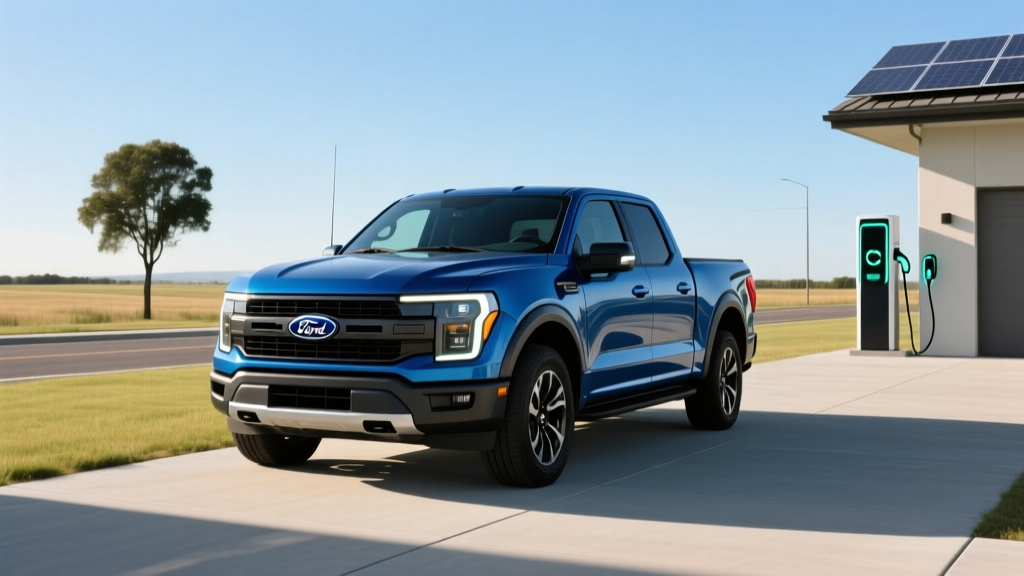
No. As of 2026, Ford has not discontinued the F-150 Lightning. The electric pickup remains in production at Ford's Rouge Electric Vehicle Center in Dearborn, Michigan. However, Ford has significantly scaled back Lightning production volumes since the 2024 model year, shifted factory shifts, and delayed next-generation EV truck plans — which sparked widespread "Ford stops electric F-150" headlines. The Lightning is still available new, but with reduced trim availability and longer lead times compared to the gas F-150. Ford has also redirected billions in EV investment toward hybrids and smaller, more affordable electric vehicles, signaling that the Lightning's future beyond the current generation is uncertain.
What Sparked the "Ford Stops Electric F-150" Rumors?
The confusion traces back to a series of very real business decisions Ford made between late 2023 and 2025. Here's the timeline that generated the headlines:
- January 2024: Ford cut F-150 Lightning production from three shifts to one at the Rouge Electric Vehicle Center, idling roughly 1,400 workers temporarily.
- February 2024: Ford announced it was pulling back on $12 billion in planned EV investments, citing slower-than-expected consumer adoption and sustained losses on its Model e division (which lost $4.7 billion in 2023 alone).
- Mid-2024: Ford pivoted marketing emphasis toward its hybrid F-150 PowerBoost lineup, which saw surging demand.
- 2025: Ford delayed its next-generation electric truck platform (previously slated for 2025-2026) and confirmed it would prioritize a universal, lower-cost EV platform for smaller vehicles first.
- 2026: The F-150 Lightning continues in carryover form, but Ford has not committed publicly to a next-generation Lightning on a dedicated EV truck architecture.
None of these moves constitute a cancellation. The Lightning is still on sale, still being built, and still eligible for federal incentives. But the production cuts and strategic pivot created legitimate uncertainty — and plenty of misleading social media posts claiming the truck was dead.
2026 Ford F-150 Lightning: Current Specs at a Glance
If you're shopping for a Lightning today, here's what the 2026 lineup looks like. Ford has streamlined offerings to focus on the most popular configurations:
| Specification | Standard Range | Extended Range |
|---|---|---|
| EPA Range | 240 miles | 320 miles |
| Battery Capacity (usable) | 98 kWh (LFP/NMC blend) | 131 kWh (NMC) |
| Battery Chemistry | LFP (Standard Range trims) | NMC (Extended Range) |
| Horsepower | 563 hp | 563 hp |
| Torque | 775 lb-ft | 775 lb-ft |
| 0-60 mph | ~4.0 seconds | ~3.8 seconds |
| Max DC Fast Charge Rate | 120 kW peak | 150 kW peak |
| 10-80% DC Fast Charge | ~44 minutes | ~41 minutes |
| Level 2 Home Charge (Max) | 11.3 kW (30 mi/hr) | 19.2 kW (with 80A charger, 52 mi/hr) |
| Max Towing | 7,700 lbs | 10,000 lbs (w/ Max Trailer Tow) |
| Max Payload | 2,235 lbs | 1,800 lbs |
| MPGe (Combined) | 68 MPGe | 66 MPGe |
| Base MSRP (Pro trim) | ~$55,000 | ~$65,000 |
| Battery Warranty | 8 years / 100,000 miles (≥70% capacity retention) | |
Real-World Range Reality Check
The EPA rates the Extended Range Lightning at 320 miles, but plan for less in practice. In highway driving at 70-75 mph, expect roughly 260-280 miles. In cold weather (below 30°F), that can drop to 210-240 miles due to battery chemistry limitations and cabin heating demand. Towing a 6,000-lb trailer? Expect range to roughly halve — approximately 140-170 miles depending on terrain and speed. The Lightning's large frontal area and weight (over 6,500 lbs) make it inherently less efficient than a sedan or crossover at highway speeds.
F-150 Lightning vs. Gas F-150 vs. F-150 PowerBoost Hybrid
The strongest argument for the Lightning has always been operating cost, not sticker price. Here's how the three F-150 powertrains compare for a driver covering 15,000 miles per year:
| Metric | F-150 Lightning (Ext. Range) | F-150 PowerBoost Hybrid | F-150 Gas (3.5L EcoBoost) |
|---|---|---|---|
| Starting MSRP (2026) | ~$55,000 | ~$52,000 | ~$40,000 |
| Fuel/Energy Cost (15k mi/yr) | ~$750-$1,100 (home charging) | ~$1,800 (22 MPG avg, $3.50/gal) | ~$2,625 (18 MPG avg, $3.50/gal) |
| Annual Maintenance | ~$300-$400 | ~$700-$900 | ~$800-$1,000 |
| Federal Tax Credit (§30D) | Up to $7,500 (see eligibility) | $0 | $0 |
| 5-Year Fuel + Maintenance | ~$5,250-$7,500 | ~$12,500-$16,500 | ~$17,125-$21,125 |
| Driving Feel | Instant torque, silent, one-pedal capable | Strong V6 + electric assist | Conventional turbo V6 |
The Lightning's operating-cost advantage is substantial — roughly $1,500-$2,000 per year in fuel and maintenance savings over the gas F-150 when charging at home. However, the upfront price premium means the break-even point typically arrives around year 4-6, depending on your local electricity rates and annual mileage. The PowerBoost hybrid occupies a practical middle ground: lower upfront cost than the Lightning, roughly 22 MPG combined, and no charging infrastructure requirement.
Federal Tax Credit Eligibility for the Lightning in 2026
The F-150 Lightning can qualify for up to $7,500 under the IRS §30D Clean Vehicle Credit, but eligibility is not automatic. You must satisfy all of the following requirements:
- Income caps: Modified AGI ≤ $150,000 (single), $225,000 (head of household), or $300,000 (married filing jointly).
- MSRP cap: The vehicle's manufacturer's suggested retail price must not exceed $80,000 for trucks (the Lightning qualifies under this threshold on most trims, but high-end Platinum trims with options may exceed it).
- Battery sourcing: A percentage of critical minerals and battery components must be sourced from the U.S. or free-trade-agreement partners. These percentages increase annually. Check the latest requirements at IRS.gov's qualified vehicle list, as eligibility can change mid-year.
- Point-of-sale transfer: As of 2024, you can transfer the credit to the dealer at purchase, reducing your out-of-pocket cost immediately rather than waiting to claim it on your tax return.
- Final assembly: Must occur in North America (the Lightning is assembled in Dearborn, MI — qualifies).
Critical caveat: Battery-sourcing rules tighten each year. A trim that qualifies in January may lose partial eligibility later if supply chains shift. Always verify the specific VIN's eligibility on the IRS qualified vehicles page before signing a purchase agreement. Consult a tax professional for your specific situation.
Real-World Ownership: What Lightning Buyers Must Consider
The Lightning is an outstanding truck for the right owner. But "the right owner" has specific characteristics. Here's the decision framework:
Choose the F-150 Lightning If:
- You have access to Level 2 home charging (240V, ideally a 48A-80A circuit). This is non-negotiable for a satisfying ownership experience — public DC fast charging a 131 kWh battery regularly is expensive and time-consuming.
- Your daily driving is under 200 miles round-trip, with occasional longer trips you can plan around DC fast-charging stops.
- You value the frunk (front trunk, 14.1 cu ft), Pro Power Onboard (up to 9.6 kW of mobile power output for job sites or camping), and instant torque for towing or merging.
- You live in a region with moderate winters or have a garage for preconditioning.
- You drive enough miles per year (12,000+) to recapture the upfront premium through fuel savings within 5-6 years.
Choose the F-150 PowerBoost Hybrid Instead If:
- You lack reliable home charging access (apartment, street parking, landlord restrictions).
- You frequently tow heavy loads over long distances (the gas/hybrid F-150 has far greater range under tow — 400+ miles vs. the Lightning's 140-170).
- You regularly drive in extreme cold (below 10°F) where range loss of 30-40% is typical for any BEV.
- Your budget is under $50,000 and you need a truck now without waiting for Lightning allocation.
- You want to keep the truck 10+ years and are concerned about long-term battery replacement cost (estimated at $15,000-$25,000 out of warranty for the Extended Range pack).
Charging the Lightning: Speeds, Costs, and Infrastructure
The Lightning's massive battery is both its greatest asset and its biggest charging challenge. Here's what to expect at each charging level:
| Charging Level | Power (kW) | Miles Added per Hour | Full Charge Time (10-100%) | Cost per Full Charge (Ext. Range) |
|---|---|---|---|---|
| Level 1 (120V standard outlet) | ~1.2 kW | ~2-3 miles/hr | ~5+ days | $13-$18 (residential electricity) |
| Level 2 (240V, 32A home charger) | ~7.7 kW | ~20 miles/hr | ~15-17 hours | $13-$18 |
| Level 2 (240V, 48A charger) | ~11.5 kW | ~30 miles/hr | ~10-12 hours | $13-$18 |
| Level 2 (240V, 80A w/ Ford Charge Station Pro) | ~19.2 kW | ~52 miles/hr (Ext. Range) | ~6-7 hours | $13-$18 |
| DC Fast Charge (150 kW peak) | 150 kW → ~90 kW avg | N/A | 10-80% in ~41 min | $25-$45 (public network rates) |
kW vs. kWh reminder: kW (kilowatts) measures the rate of power delivery — like water pressure from a hose. kWh (kilowatt-hours) measures total energy stored — like the size of the bucket. The Lightning's Extended Range battery holds 131 kWh of energy. Charging it at 11.5 kW means it takes roughly 131 ÷ 11.5 = ~11.4 hours from empty to full.
Charging-curve reality: The Lightning's peak DC charge rate of 150 kW is only sustained between roughly 10-40% state of charge. Above 60%, the rate tapers significantly to protect the battery. Expect an average rate closer to 90 kW over a full 10-80% session. This is noticeably slower than competitors like the Hyundai Ioniq 5 (peak 240 kW) or the Rivian R1T (peak 220 kW), making the Lightning less ideal for frequent long-distance road tripping.
Home charging installation cost: Budget $800-$2,500 for a professional Level 2 installation (240V, 48A-60A circuit with NEMA 14-50 outlet or hardwired charger). If your home's electrical panel needs an upgrade to 200A service, add $1,500-$3,500. The Ford Charge Station Pro (80A) requires a dedicated 100A circuit and professional installation — typically $1,500-$3,000 for the electrician work alone. Always hire a licensed electrician and pull permits.
Common Misconceptions About the Lightning — and the Facts
| Myth | Fact |
|---|---|
| "Ford killed the F-150 Lightning." | The Lightning is still in production and on sale for 2026. Ford reduced production volumes and delayed next-gen plans but did not cancel it. |
| "Electric trucks can't tow." | The Lightning tows up to 10,000 lbs. However, towing cuts range roughly in half — a real limitation for long-distance towing, not a capability problem. |
| "The battery will need replacing in 5 years." | Ford warrants the battery for 8 years/100,000 miles at ≥70% capacity retention. Real-world data from 2022-2024 Lightnings shows typical degradation of 5-8% over the first 50,000 miles. Many owners will trade in before significant degradation occurs. |
| "You'll save $7,500 no matter what." | The §30D credit has income caps, MSRP caps, and battery-sourcing requirements. Not all buyers or all trims qualify. Verify before purchasing. |
| "Charging is free." | Home charging costs $0.09-$0.22/kWh depending on your utility (roughly $12-$29 for a full Extended Range charge). Public DC fast charging often costs $0.30-$0.50/kWh ($39-$65 per session), sometimes more than gas for equivalent miles. |
Should You Buy a Lightning Now or Wait?
This is where the "Ford stops electric F-150" anxiety meets a practical purchase decision. Here's an honest assessment:
Buy now if: You find a Lightning in stock at or near MSRP, you qualify for the $7,500 tax credit, and your use case aligns with the decision framework above. The current-generation Lightning is a proven, capable truck with strong real-world owner satisfaction. Ford's official Lightning page lists current configurations and availability.
Wait if: You want a next-generation Lightning on Ford's upcoming universal EV platform (expected no earlier than 2027-2028, potentially with improved efficiency, faster charging, and lower pricing). Be aware that waiting means forgoing the current §30D credit structure, which is legislated to phase down over time, and that next-gen specs remain unconfirmed.
Consider the hybrid F-150 PowerBoost if: You need a truck today, want strong fuel economy without charging logistics, and prefer the certainty of established refueling infrastructure. The PowerBoost achieves roughly 22 MPG combined with 430 hp and 7,700 lbs of towing — a compelling no-compromise alternative for many truck buyers.
Frequently Asked Questions
Is the Ford F-150 Lightning being discontinued in 2026?
No. The F-150 Lightning remains in production and on sale for the 2026 model year. Ford has reduced production volumes and delayed future EV truck investment, but the current-generation Lightning is still available through Ford dealers. Check fueleconomy.gov for official EPA ratings on specific trims.
How much does it cost to charge an F-150 Lightning at home?
A full charge of the Extended Range (131 kWh) battery costs approximately $13-$29 depending on your local electricity rate ($0.10-$0.22/kWh). For daily driving of 40 miles, you'd use roughly 18-22 kWh per day, costing about $1.80-$4.80 — far less than the equivalent gasoline.
Does the F-150 Lightning qualify for the $7,500 federal tax credit?
It can, but eligibility depends on your income (≤$150K single / $300K joint), the specific trim's MSRP (must be ≤$80,000 for trucks), and battery-sourcing compliance, which changes annually. Always verify your specific vehicle's eligibility on the IRS qualified vehicles list before purchasing.
What is the real-world range of the F-150 Lightning?
The Extended Range is EPA-rated at 320 miles, but expect 260-280 miles in real-world highway driving, 210-240 miles in cold weather (below 30°F), and roughly 140-170 miles when towing a 6,000-lb trailer. The Standard Range model (EPA 240 miles) delivers roughly 190-210 miles on the highway.
Is the Lightning good for towing?
The Lightning tows up to 10,000 lbs (Extended Range with Max Trailer Tow package) and offers excellent towing manners thanks to its low center of gravity and instant torque. The limitation is range under tow: expect roughly 140-170 miles per charge with a heavy trailer, which requires careful route planning for trips over 200 miles.
Should I buy the Lightning or the F-150 PowerBoost hybrid?
If you have home charging, drive under 200 miles daily, and want the lowest operating costs, the Lightning saves $1,500-$2,000/year in fuel and maintenance. If you lack home charging, tow long distances frequently, or live in extreme cold, the PowerBoost hybrid (22 MPG combined, no charging needed) is the more practical choice.