Quick Answer: What Is Ford's New EV Platform?
Ford's next-generation universal EV platform, announced in 2024 and expected to underpin production vehicles starting in late 2026 or model-year 2027, is a ground-up, skunkworks-style architecture designed to deliver 300+ miles of EPA range, NACS native charging, and a starting MSRP in the $25,000–$30,000 range before incentives. The platform will debut as a midsize electric pickup in Louisville, Kentucky, followed by additional models. As of early 2026, no production vehicles on this platform are yet on sale — specs remain preliminary.
Why Ford Built an Entirely New EV Platform
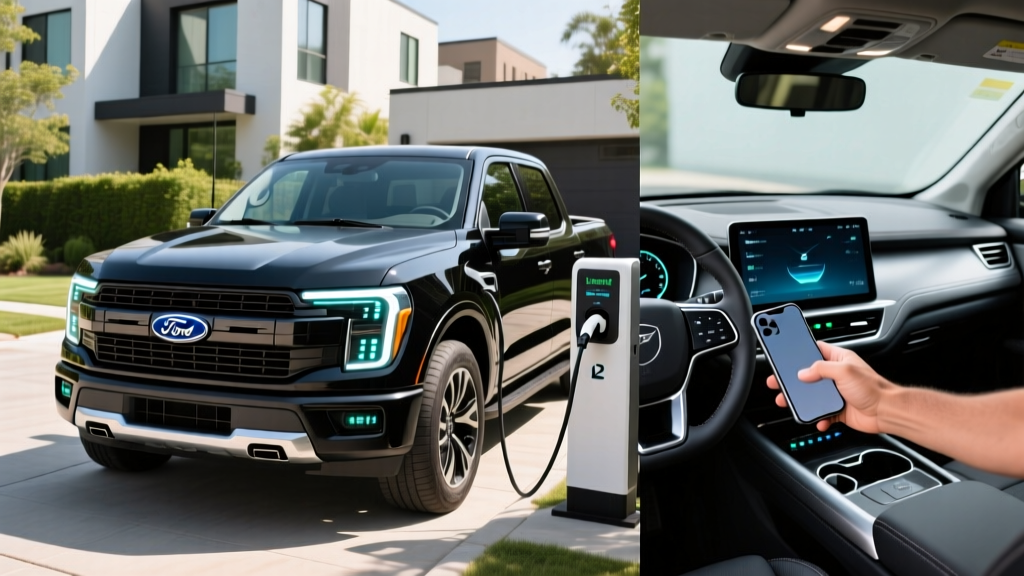
Ford's current electric vehicles — the Mustang Mach-E and F-150 Lightning — ride on architectures adapted from internal-combustion underpinnings or heavily modified existing chassis. That approach got Ford to market quickly but came with compromises: packaging inefficiencies, higher weight, and cost structures that made sub-$40,000 pricing nearly impossible without severe margin erosion.
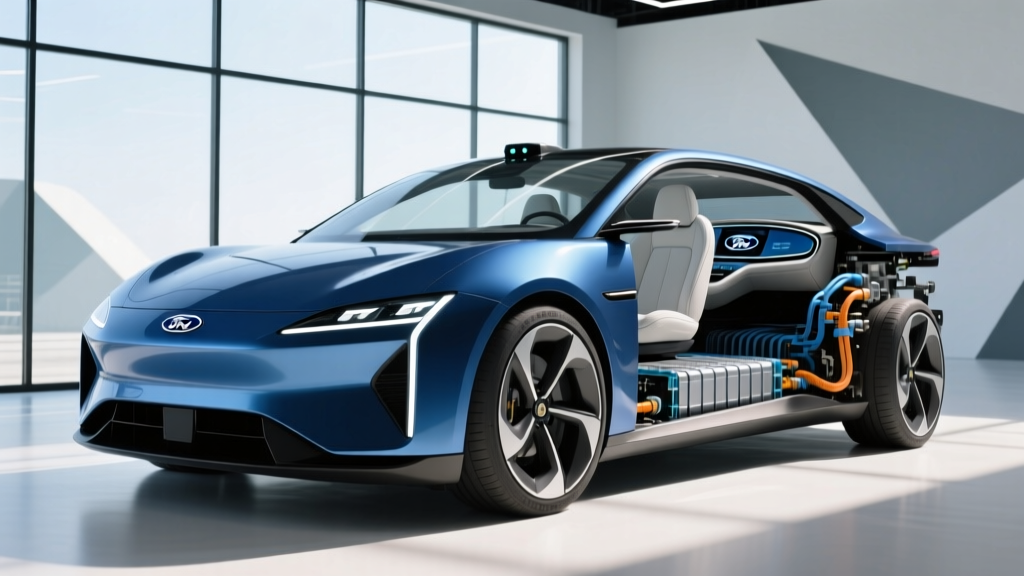
The new platform changes the calculus. Developed under the internal "skunkworks" team led by former Tesla executive Alan Clarke, it uses a unibody design optimized exclusively for electric propulsion, with the battery pack serving as a structural member. This approach — similar to Tesla's structural pack concept and Hyundai's E-GMP — reduces part count, lowers the center of gravity, and frees up cabin and cargo space that adapted platforms sacrifice.
The strategic goal is clear: compete directly with the Tesla Model Y, upcoming next-generation Tesla vehicles, and Chinese-market EVs on cost efficiency, not just on features. Ford CEO Jim Farley has publicly stated the company needs to cut EV production costs by roughly $5,000 per vehicle to achieve profitability at mainstream price points.
What We Know About Specs and Performance Targets
Because production vehicles haven't launched, the following figures are based on Ford's official statements, supplier reports, and industry analysis. Treat them as targets, not guarantees.
| Specification | Target / Estimate |
|---|---|
| Platform type | Dedicated unibody EV (structural battery pack) |
| Battery chemistry | LFP (lithium iron phosphate) for base trims; NMC possible for extended-range |
| Battery capacity (est.) | ~60–80 kWh usable |
| EPA range target | 300+ miles (midsize pickup variant) |
| Charging connector | Native NACS (Tesla Supercharger compatible) |
| DC fast charge rate (est.) | ~150–200 kW peak |
| 10–80% charge time (est.) | ~25–30 minutes |
| Starting MSRP target | $25,000–$30,000 (entry-level model) |
| First production | Late 2026 (Louisville, KY plant) |
| Federal tax credit (§30D) | Eligibility TBD — depends on battery sourcing and MSRP caps at launch |
A few details stand out. The choice of LFP chemistry for base trims is significant: LFP batteries are cheaper to produce, contain no cobalt or nickel, tolerate daily 100% charging without accelerated degradation, and have longer cycle life. The trade-off is lower energy density, meaning Ford must compensate with efficient packaging to hit range targets. If the midsize pickup variant achieves 300+ miles on LFP, it would represent a notable engineering achievement in cost-per-mile-of-range.
Native NACS adoption means these vehicles will charge on Tesla's Supercharger network — over 20,000 stations in North America — without adapters. For buyers in charging-desert regions, this is a meaningful practical advantage over CCS-only vehicles.
How It Compares: Ford's New Platform vs. Today's Options
To put Ford's platform targets in context, here's how they stack up against current competitors in the $30,000–$50,000 EV space:
| Attribute | Ford New Platform (Est.) | Tesla Model Y (2025) | Hyundai Ioniq 5 (2025) | Chevy Equinox EV (2025) |
|---|---|---|---|---|
| Starting MSRP | $25,000–$30,000 | ~$44,990 | ~$42,600 | ~$33,600 |
| EPA range | 300+ mi | 320 mi (LR) | 318 mi (LR) | 319 mi |
| Connector | NACS (native) | NACS (native) | NACS (2025+) | CCS (NACS adapter) |
| DC fast charge peak | ~150–200 kW | 250 kW | 240 kW | 150 kW |
| Battery chemistry | LFP (base) | NMC / LFP | NMC | NMC |
| Availability | Late 2026+ | Now | Now | Now |
The headline advantage for Ford's platform is price. If the $25,000–$30,000 target holds, it undercuts every competitor listed above by $4,000 to $15,000. The trade-off: you can't buy it yet, and final specs may shift before production begins.
For buyers who need a vehicle now, the Chevy Equinox EV at ~$33,600 with 319 miles of range is the closest current match on value. The Hyundai Ioniq 5 and Tesla Model Y offer faster DC charging but at significantly higher price points.
Real Costs: Purchase, Charging, and Ownership
Let's model what ownership could look like if Ford hits its pricing targets. This comparison assumes a base MSRP of $30,000 for the Ford new-platform EV versus a comparably equipped gas-powered compact truck (e.g., Ford Maverick hybrid at ~$28,000 MSRP).
| Cost Category | Ford New EV (Est.) | Gas Hybrid Truck (Maverick) |
|---|---|---|
| Purchase price (MSRP) | $30,000 | $28,000 |
| Estimated federal tax credit (§30D) | $0–$7,500 (TBD) | $0 |
| Home charger installation (Level 2) | $800–$2,000 | $0 |
| Fuel/energy cost (5 yr, 75,000 mi) | $2,500–$4,500 | $6,000–$8,500 |
| Maintenance (5 yr) | $1,200–$1,800 | $3,000–$4,500 |
| Insurance (5 yr avg.) | $9,000–$12,000 | $7,500–$10,000 |
| Estimated 5-yr total | $43,500–$50,800 | $44,500–$51,000 |
Key takeaways from this model:
- Energy savings are substantial. At the national average electricity rate of ~$0.17/kWh and an assumed efficiency of 3.0 miles/kWh, charging costs roughly $0.057/mile versus $0.08–$0.11/mile for gasoline at $3.20/gallon and 30–40 MPG. Over 75,000 miles, that's $2,000–$4,000 in fuel savings.
- Maintenance is lower but not zero. EVs skip oil changes, spark plugs, and transmission fluid, but tires wear faster (heavier vehicle, instant torque), and cabin air filters, brake fluid, and wiper items still need attention.
- Insurance runs higher for EVs. Industry data shows EV insurance premiums average 15–25% above comparable gas vehicles due to higher repair costs and battery replacement risk.
- The tax credit is the wild card. Under current IRS §30D rules, eligibility depends on MSRP caps ($80,000 for trucks, $55,000 for cars), buyer income limits ($150,000 single / $300,000 joint), and battery-component/critical-mineral sourcing requirements. Ford's domestic production in Louisville is a positive signal, but battery sourcing details haven't been confirmed.
What First-Time EV Buyers Must Know Before Committing
If Ford's new platform is your entry point into electric ownership, here are the realities that spec sheets don't convey:
Home Charging Access Is the Make-or-Break Factor
Public charging works for road trips, but daily EV ownership lives or dies on home charging. If you have a garage or driveway with access to a 240V circuit (NEMA 14-50 or hardwired Level 2), you'll wake up every morning with a full battery. Installation costs typically range from $800 to $2,000 for a straightforward setup, but can reach $3,000–$5,000 if your electrical panel needs an upgrade to 200A service.
If you live in an apartment, rely on street parking, or lack electrical access at home, EV ownership becomes significantly harder. Public Level 2 chargers cost $0.20–$0.40/kWh and DC fast chargers $0.30–$0.55/kWh — eroding much of the fuel-cost advantage.
Real-World Range vs. EPA Stickers
Ford's 300+ mile target is an EPA estimate. In practice, expect:
- Highway driving (70–80 mph): ~10–15% reduction, so roughly 255–270 miles
- Cold weather (below 30°F): ~20–30% reduction depending on cabin heating demands and whether the vehicle has a heat pump
- Combined real-world average: ~260–280 miles in moderate conditions
This is typical for all EVs, not specific to Ford. The EPA test cycle includes low-speed and stop-and-go driving that favors EV efficiency. If your commute is mostly highway or you live in a cold climate, budget accordingly.
Charging Speeds Aren't Constant
A "200 kW peak" DC fast charge rate applies only in a narrow State of Charge (SoC) window — typically 10–40%. Above 60%, the charge curve tapers significantly to protect battery health. A realistic 10–80% session at a 250 kW Supercharger might average 120–140 kW sustained, adding roughly 200 miles in 25 minutes. Plan road-trip stops around this reality, not the peak number.
Common Misconceptions About Ford's New EV Platform
| Myth | Fact |
|---|---|
| "It will be available to buy in 2026." | Production is expected to begin late 2026 at the earliest, with customer deliveries likely in early-to-mid 2027. Pre-orders may open before then, but no one can buy one today. |
| "The $25,000 price is confirmed." | Ford has signaled a target in the $25,000–$30,000 range for entry-level models, but final MSRP by trim won't be set until closer to launch. Destination charges, dealer markups, and option packages will push real transaction prices higher. |
| "It will definitely qualify for the $7,500 tax credit." | Eligibility under §30D depends on battery component sourcing, critical mineral sourcing, MSRP caps, and buyer income — all subject to change. Ford's US production helps, but battery cell origin is the key unknown. |
| "LFP batteries are inferior." | LFP has lower energy density than NMC, but offers longer cycle life (2,000+ full cycles vs. ~1,000–1,500 for NMC), better thermal stability, no cobalt, and can be charged to 100% daily without accelerated degradation. For a budget-focused platform, LFP is the rational choice. |
| "I won't need home charging." | Public-only charging is feasible but expensive, inconvenient, and time-consuming. Budget $100–$200/month more in energy costs if relying exclusively on public DC fast charging, and expect weekly 30–45 minute charging sessions. |
Decision Framework: Should You Wait or Buy Now?
Wait for Ford's new EV platform if:
- Your budget is firm at $25,000–$35,000 and no current EV meets your range needs at that price
- You need a truck bed or utility-focused body style at an EV price point
- You can comfortably drive your current vehicle for another 12–18 months
- Native NACS / Supercharger access is a priority and you don't want to rely on adapters
- You want LFP chemistry for longevity and daily 100% charging flexibility
Buy a current EV now if:
- You need a vehicle within the next 3–6 months
- You can take advantage of current §30D tax credit rules before sourcing requirements potentially tighten
- Your budget extends to $35,000–$50,000, where current models (Equinox EV, Ioniq 5, Model Y) offer proven reliability records and immediate availability
- You've already test-driven and validated a current model for your commute, climate, and charging setup
- You want established service infrastructure — Ford's new platform will need time to build parts availability and technician training for its novel architecture
Frequently Asked Questions
When will Ford's new EV platform vehicles actually be available?
Ford has targeted production start at its Louisville, Kentucky assembly plant in late 2026, with the first vehicle being a midsize electric pickup. Customer deliveries would likely follow in early-to-mid 2027. Additional models on the same platform are expected afterward, but no firm timeline has been announced. These dates are preliminary and subject to production delays.
Will Ford's new EVs qualify for the federal tax credit?
It's too early to confirm. Under current IRS §30D rules, eligibility requires meeting battery component and critical mineral sourcing thresholds, staying under MSRP caps ($80,000 for trucks, $55,000 for sedans/SUVs), and the buyer must fall under income limits ($150,000 single, $300,000 joint filing). Ford's domestic assembly is a positive, but battery cell and mineral sourcing details haven't been disclosed. Rules may also change between now and launch. Consult a tax professional before relying on credit eligibility.
What's the difference between LFP and NMC batteries?
LFP (lithium iron phosphate) offers lower energy density but longer lifespan, better thermal safety, no cobalt or nickel, and the ability to charge to 100% regularly without harm. NMC (nickel manganese cobalt) packs more energy per kilogram, enabling longer range in a smaller pack, but degrades faster at high states of charge and carries higher material costs. For a budget platform prioritizing longevity and cost, LFP is the logical choice.
How does this compare to buying a hybrid instead?
A PHEV like the Ford Escape PHEV (~$34,000 MSRP, 37 miles electric-only, 40 MPG combined on gas) offers a bridge for buyers without reliable home charging. You get short electric commutes with gas flexibility for longer trips. The trade-off: higher maintenance (two powertrains), lower fuel savings overall, and no eligibility for the full $7,500 EV credit on most PHEVs. If you have home charging and a commute under 300 miles, the new Ford EV platform would likely save more over five years.
Will this platform support V2L or vehicle-to-home capabilities?
Ford has not confirmed V2L (vehicle-to-load) or V2H (vehicle-to-home) for the new platform. The F-150 Lightning currently offers Pro Power Onboard (V2L) and Ford Intelligent Backup Power (V2H with a compatible home inverter). Given Ford's investment in these features, it's reasonable to expect some form of bidirectional capability, but nothing is confirmed for the new architecture.
Should I be concerned about Ford's EV reliability track record?
Ford's first-generation EVs (Mach-E, Lightning) have had typical early-production issues — recall campaigns for battery contactor issues on the Mach-E and software-related service bulletins on the Lightning. A new platform introduces new unknowns. If reliability is your top priority, waiting 12–18 months after launch for early production issues to be resolved is a prudent strategy — or choosing a platform with several years of field data behind it.