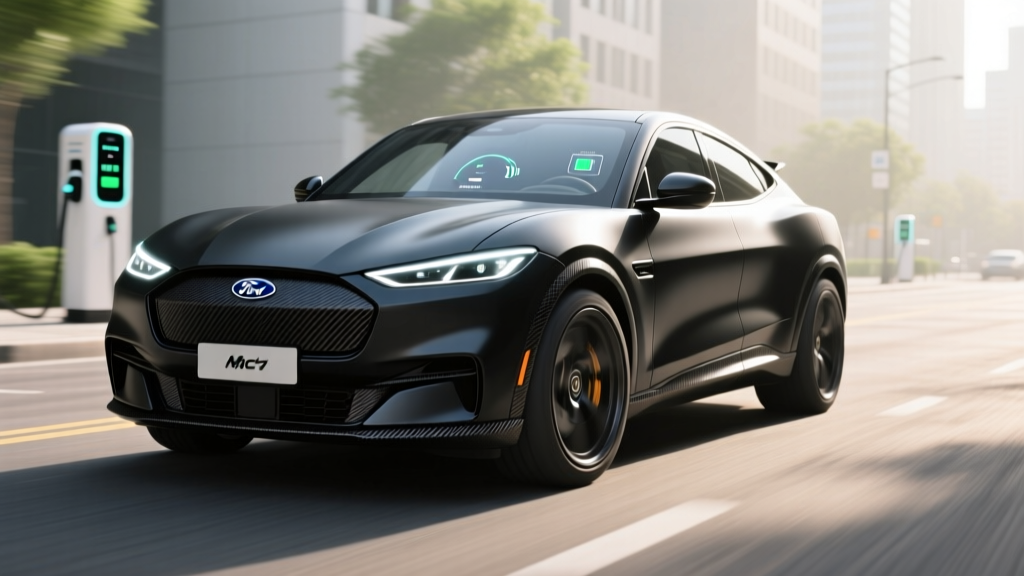
The Ford Mustang Mach-E has evolved significantly since its launch, but one question persists among EV shoppers: how does the Mach-E's weight affect its real-world range, efficiency, and driving dynamics? At 4,371 to 4,920 pounds depending on trim, the Mach-E is heavier than some competitors, and that mass shows up in its energy consumption, tire wear, and braking feel. This review breaks down the 2026 Mustang Mach-E lineup with exact specs, honest real-world range expectations, and the ownership economics that matter before you sign.
2026 Mustang Mach-E Quick Specs
| Spec | Select (RWD) | Premium (AWD) | GT (AWD) |
|---|---|---|---|
| EPA Range | 250 mi | 290 mi | 280 mi |
| Battery (usable) | 70 kWh (LFP) | 91 kWh (NMC) | 91 kWh (NMC) |
| Horsepower | 266 hp | 346 hp | 480 hp |
| 0-60 mph | 6.1 sec | 5.1 sec | 3.5 sec |
| Curb Weight | 4,371 lb | 4,692 lb | 4,920 lb |
| Max DC Charge | 115 kW | 150 kW | 150 kW |
| 10-80% DC Time | ~38 min | ~45 min | ~45 min |
| Base MSRP | $39,995 | $46,995 | $55,995 |
How Mach-E Weight Impacts Range and Efficiency
The Mach-E's curb weight ranges from 4,371 pounds on the base Select RWD to 4,920 pounds on the GT with its larger 91 kWh NMC battery. That half-ton spread explains much of the efficiency variation across trims. The Select RWD achieves 101 MPGe combined (33 kWh/100mi), while the GT drops to 84 MPGe (40 kWh/100mi), according to EPA data.
Weight matters most in stop-and-go city driving where regenerative braking can recapture some energy, but the penalty shows up clearly on highway runs. Heavier vehicles require more energy to maintain speed against rolling resistance, and the GT's 4,920 pounds plus standard 20-inch wheels push consumption higher at 70+ mph.
Real-World Range vs. EPA Sticker
EPA 290 miles (Premium AWD Extended Range) — Expect 240-260 miles on a mixed highway trip at 70 mph, and 200-220 miles in freezing weather with cabin heat. The Select RWD's 250-mile EPA rating typically delivers 210-230 miles in real-world mixed driving.
Battery Chemistry: LFP vs NMC in the Mach-E Lineup
The 2026 Mach-E Select uses a 70 kWh (usable) lithium iron phosphate (LFP) battery, while Premium and GT trims get a 91 kWh nickel-manganese-cobalt (NMC) pack. The chemistry choice directly ties to weight and longevity:
| Factor | LFP (Select) | NMC (Premium/GT) |
|---|---|---|
| Energy Density | Lower — heavier per kWh | Higher — lighter per kWh |
| Cycle Life | 3,000+ cycles to 80% SoH | 1,500-2,000 cycles to 80% SoH |
| Charging to 100% | Recommended regularly | Limit to 80-90% daily |
| Cold Performance | Weaker in freezing temps | Better low-temp output |
| Weight Impact | Lighter total pack (smaller kWh) | Heavier pack, more range |
LFP's lower energy density means Ford would need a physically larger, heavier pack to match the NMC's 290-mile range. The trade-off: LFP lasts longer and tolerates daily 100% charging, making the Select ideal for commuters who can charge at home every night. NMC owners should set their charge limit to 90% for daily use and reserve 100% for road trips.
Charging Speed: DC Fast and Home Level 2
The Mach-E's charging performance reflects its weight and battery size. The Select's 115 kW peak DC rate adds about 30 miles in 10 minutes on a 150 kW charger, while the Premium and GT at 150 kW peak can add roughly 40 miles in the same window. Both taper significantly above 80% state of charge — a 10-90% session takes nearly an hour.
| Charge Level | Select (70 kWh) | Premium/GT (91 kWh) |
|---|---|---|
| Level 1 (120V, 1.4 kW) | 3 mi/hr | 3 mi/hr |
| Level 2 (240V, 11.5 kW) | 26 mi/hr | 26 mi/hr |
| DC Fast (peak) | 115 kW | 150 kW |
| 10-80% DC Time | ~38 min | ~45 min |
| Full 0-100% Level 2 | ~7 hours | ~9 hours |
At home on a 48-amp Level 2 charger (the Ford Connected Charge Station or a hardwired equivalent), you'll fully recharge overnight. For road trips, the Mach-E's charging speed trails the Hyundai Ioniq 5's 240 kW capability, meaning 15-20 extra minutes per stop on a long drive. If you regularly take 300+ mile trips, factor in the slower DC sessions.
Performance and Driving Dynamics
The GT's 480 hp and 3.5-second 0-60 time make it genuinely quick, but the 4,920-pound mass is noticeable in corners and under hard braking. The Select RWD, at 4,371 pounds, feels more balanced and tossable — closer to the sporty intent of the Mustang badge. All trims use a single-speed reduction gear; there's no multi-speed transmission to manage.
The GT's MagneRide adaptive dampers help control body roll, but physics wins: heavier EVs eat through tires faster. Expect 25,000-35,000 miles from the GT's performance rubber versus 40,000+ on the Select's all-season tires. Factor tire replacement into your five-year ownership budget.
Pricing, Tax Credits, and Ownership Cost
The 2026 Mach-E starts at $39,995 for the Select RWD and climbs to $55,995 for the GT. Under current IRS §30D rules, the Mach-E may qualify for up to $7,500 in federal tax credits, but eligibility depends on:
- MSRP Cap: SUVs must be under $80,000 (all Mach-E trims qualify)
- Buyer Income: AGI under $150K single / $300K joint
- Battery Sourcing: Critical minerals and battery components must meet phased-in percentages — verify current-year compliance on the IRS qualified vehicles list
- Point-of-Sale Transfer: You can transfer the credit to the dealer at purchase for an immediate price reduction
| Trim | MSRP | After Potential $7,500 Credit | Est. 5-Yr Fuel Cost* |
|---|---|---|---|
| Select RWD | $39,995 | $32,495 | $3,200 |
| Premium AWD ER | $46,995 | $39,495 | $3,900 |
| GT AWD | $55,995 | $48,495 | $4,500 |
*Based on $0.14/kWh national average, 12,000 mi/yr. Your electricity rate changes this significantly.
Ford's battery warranty covers 8 years or 100,000 miles with a 70% capacity retention threshold — competitive with the industry standard. The powertrain gets 5 years/60,000 miles.
Cargo, Passenger Space, and Daily Practicality
The Mach-E offers 29.7 cubic feet behind the rear seats and 59.7 cu ft with the 60/40 split folded. The front trunk (frunk) adds 4.7 cu ft with a drain plug — useful for ice and beverages on tailgates. Rear legroom measures 38.1 inches, adequate for adults on longer trips.
Compared to the Tesla Model Y (30.2 cu ft rear, 76.2 cu ft total), the Mach-E gives up some cargo volume but compensates with a more traditional crossover interior layout that some buyers prefer. The panoramic glass roof on Premium and GT creates an airy cabin but adds weight high in the chassis.
Tech, Driver Assists, and Notable Drawbacks
Ford's 15.5-inch portrait touchscreen runs SYNC 4A with wireless Apple CarPlay and Android Auto. The BlueCruise hands-free driving system (SAE Level 2 — driver must remain attentive) works on 130,000+ miles of divided highways. Unlike Tesla's FSD, BlueCruise uses a driver-facing camera to verify eye attention before allowing hands-off operation.
SAE Level 2 Reminder: BlueCruise is a driver-assist system, not autonomous driving. You must remain engaged, monitor traffic, and be ready to take over immediately. Eyes-off does not mean attention-off.
Notable drawbacks: The Mach-E's charging speed lags 800V competitors, the GT's weight shows in tire wear and handling limits, and the LFP Select loses more range in freezing weather than NMC trims. The absence of a traditional gear selector (rotary dial instead) and firm regenerative braking in one-pedal mode also divide owners.
Who Should Buy the 2026 Mustang Mach-E?
Choose the Select RWD if: You commute under 50 miles daily, charge at home, want LFP longevity, and don't need AWD. Best value after the tax credit.
Choose the Premium AWD Extended Range if: You need 250+ real-world miles for road trips, live in a cold climate, and want the NMC battery's better winter performance.
Choose the GT if: Straight-line speed matters more than efficiency, you accept higher tire and electricity costs, and you rarely drive 200+ miles in a single day.
Look elsewhere if: You need 300+ miles of real-world range (consider Lucid Air or Chevy Silverado EV), fastest possible DC charging (Hyundai Ioniq 5/6 at 240 kW), or three-row seating (Kia EV9).
Frequently Asked Questions
What is the real-world range of the Mustang Mach-E?
The Premium AWD Extended Range's 290-mile EPA rating delivers 240-260 miles in mixed highway driving at 70 mph, and 200-220 miles in sub-freezing temperatures. The Select RWD's 250-mile EPA figure typically yields 210-230 miles in real-world use.
How fast does the Mach-E charge at home and on the road?
At home on a 240V Level 2 charger (11.5 kW), the Mach-E adds about 26 miles per hour, fully recharging in 7-9 hours overnight. On DC fast chargers, the Select peaks at 115 kW (10-80% in ~38 minutes) while Premium/GT peak at 150 kW (10-80% in ~45 minutes).
Does the 2026 Mustang Mach-E qualify for the $7,500 federal tax credit?
The Mach-E may qualify for up to $7,500 under IRS §30D, subject to buyer income limits ($150K single/$300K joint), battery sourcing requirements that change annually, and the $80K MSRP cap for SUVs. Check the IRS qualified vehicles list before purchasing, as eligibility updates throughout the year.
Is the Mach-E worth buying versus the Tesla Model Y or Hyundai Ioniq 5?
The Mach-E offers a more conventional crossover feel, BlueCruise hands-free highway driving, and LFP battery longevity on the Select trim. The Model Y has more cargo space and Supercharger network access; the Ioniq 5 charges faster (240 kW) and has a more distinctive design. Test-drive all three — the choice often comes down to styling preference and which charging network serves your routes.
How does the Mach-E's weight affect tire wear and maintenance?
The GT's 4,920-pound curb weight accelerates tire wear to 25,000-35,000 miles on performance tires, versus 40,000+ on lighter trims. EV-specific tires with higher load ratings cost $250-350 per corner. Budget $1,200-1,500 for a tire set replacement every 3-4 years on the GT.
Can the Mach-E tow, and does towing kill range?
The Mach-E is rated for 1,500 pounds (Select) to 2,300 pounds (GT with tow package). Towing at max capacity reduces range by 40-50%, making it impractical for long-distance trailer hauling. For regular towing, consider a truck-platform EV like the F-150 Lightning or Rivian R1T.