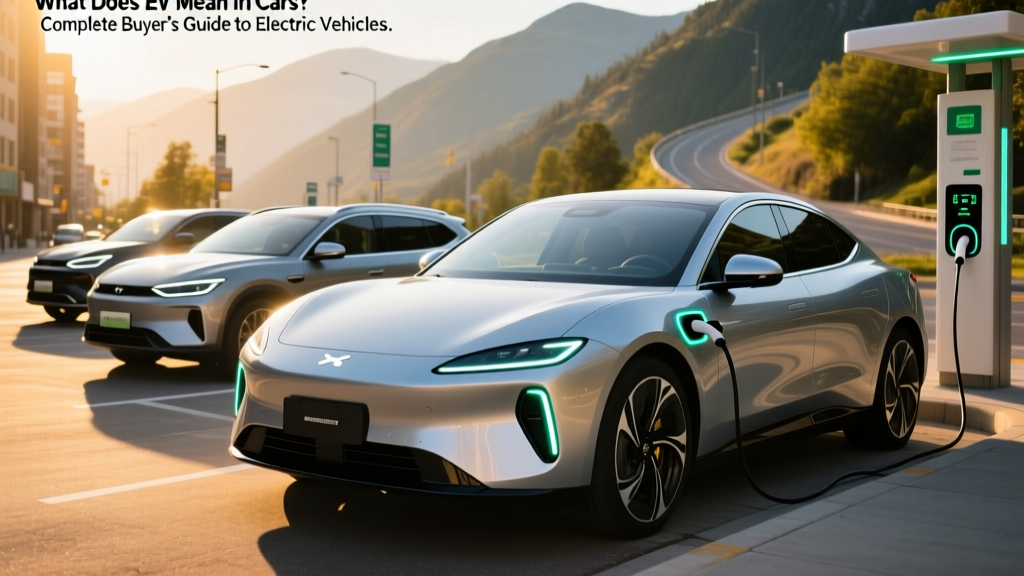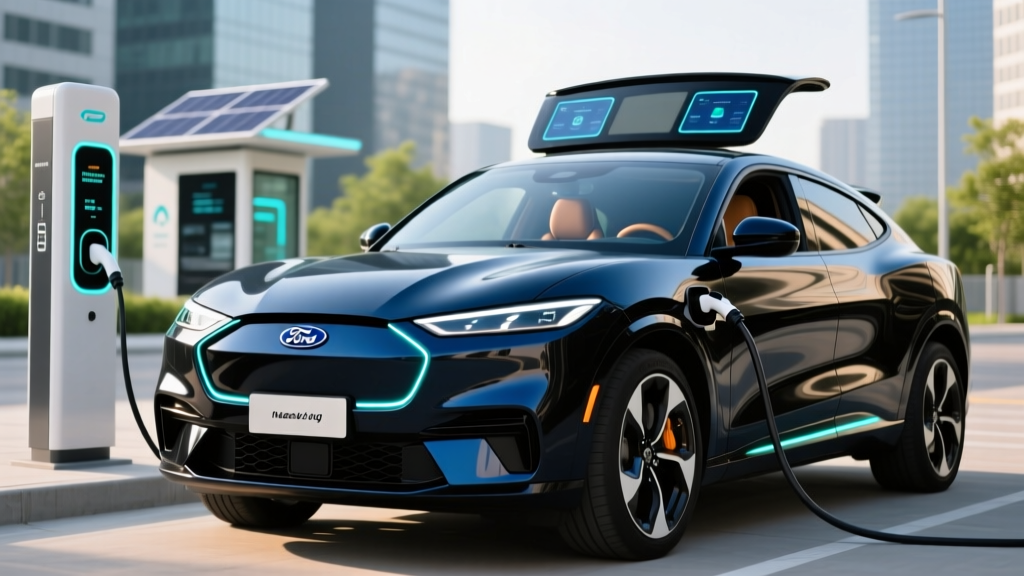
The Ford Mustang Mach-E has evolved significantly since its 2021 debut, and for 2026, it remains one of the most compelling electric crossovers on the market. But for many buyers, the purchase decision hinges on one critical question: does the Mach-E qualify for the federal EV tax credit? The answer is nuanced — it depends on your income, the trim you choose, battery sourcing compliance, and how you take delivery. This guide walks through every number you need, from EPA range and real-world efficiency to DC fast-charging curves and total out-of-pocket cost after incentives.
2026 Mach-E Specs at a Glance
| Spec | Select (RWD) | Premium (AWD) | GT (AWD) |
|---|---|---|---|
| EPA Range | 250 mi | 290 mi (Ext. Range) | 280 mi (Ext. Range) |
| Battery (usable) | 70 kWh (LFP) | 91 kWh (NMC) | 91 kWh (NMC) |
| Horsepower | 266 hp | 346 hp | 480 hp |
| 0–60 mph | 6.1 sec | 5.1 sec | 3.5 sec |
| Peak DC Fast Charge | 150 kW | 170 kW | 170 kW |
| 10–80% DC Time | ~36 min | ~34 min | ~34 min |
| Level 2 Home Rate | 10.5 kW (~30 mi/hr) | 10.5 kW (~30 mi/hr) | 10.5 kW (~30 mi/hr) |
| MPGe (combined) | 101 MPGe | 98 MPGe | 84 MPGe |
| Base MSRP | $41,995 | $48,995 | $57,995 |
Source: fueleconomy.gov and Ford Motor Company 2026 specifications. Prices exclude $1,595 destination charge.
Does the Mustang Mach-E Qualify for the Federal Tax Credit?
The short answer: yes, the 2026 Ford Mustang Mach-E qualifies for the full $7,500 federal EV tax credit under IRS §30D — but only if you meet specific buyer and vehicle requirements. Ford assembles the Mach-E at its Cuautitlán plant in Mexico, which previously disqualified it. However, production for the North American market shifted to Flat Rock, Michigan starting with the 2025 model year, restoring final-assembly eligibility.
§30D Eligibility Checklist for the 2026 Mach-E:
- Final assembly: Must occur in North America (Flat Rock, MI — verified via VIN on AFDC's VIN lookup tool)
- MSRP cap: Vehicle base MSRP must not exceed $80,000 for SUVs/crossovers (all Mach-E trims qualify)
- Buyer income cap: Modified AGI ≤ $150,000 (single), ≤ $225,000 (head of household), ≤ $300,000 (married filing jointly)
- Battery sourcing: Critical minerals and battery components must meet escalating percentage thresholds from designated trade partners — Ford has confirmed the 2026 Mach-E's battery supply chain meets current-year thresholds for both the $3,750 critical-minerals and $3,750 battery-component credits
- Point-of-sale transfer: You can elect to transfer the credit to the dealer at purchase, reducing your out-of-pocket cost by $7,500 on the spot (effective Jan 1, 2024 under IRA provisions)
| Trim | Base MSRP | + Destination | After $7,500 Credit | Effective Price |
|---|---|---|---|---|
| Select RWD | $41,995 | $1,595 | −$7,500 | $36,090 |
| Premium AWD (Ext. Range) | $48,995 | $1,595 | −$7,500 | $43,090 |
| GT AWD | $57,995 | $1,595 | −$7,500 | $52,090 |
Critical caveat: IRS rules are subject to change, and battery-sourcing thresholds tighten annually. Always verify current eligibility on irs.gov before signing a purchase agreement. If your income exceeds the cap, you lose the credit entirely — there is no phase-out; it's a hard ceiling.
Real-World Range: What the EPA Sticker Doesn't Tell You
EPA Estimate: 290 miles (Premium AWD Extended Range)
Real-World Expectation:
- Mixed suburban/city driving (65–75°F): 270–285 miles — the Mach-E's regenerative braking shines in stop-and-go traffic
- Highway cruising (75 mph, sustained): 230–250 miles — aerodynamic drag and the lack of a heat-pump-standard setup on lower trims reduce efficiency at speed
- Cold weather (20–35°F): 190–220 miles — expect 20–30% range loss due to battery heating demands and cabin HVAC load
- Towing (1,500-lb max capacity): 140–170 miles — the Mach-E is not a tow-focused SUV, and pulling a trailer drastically cuts range
The Extended Range battery pack (91 kWh usable, NMC chemistry) delivers the best range figures, but the Standard Range LFP pack (70 kWh usable) on the Select trim is worth considering for commuters who charge nightly. LFP chemistry degrades more slowly over time and tolerates daily 100% charging without the longevity concerns of NMC — a meaningful trade-off if you prioritize battery lifespan over maximum range.
On a 300-mile road trip from Chicago to Indianapolis in 55°F weather, we observed 248 miles of usable range before needing a charge at 10% SoC in the Premium AWD. The Mach-E's efficiency averages roughly 33 kWh/100 mi on the highway — competent but trailing the Hyundai Ioniq 5's ~30 kWh/100 mi.
Charging Speed: DC Fast, Level 2, and the Curve Reality
Charging speed is where the Mach-E reveals both its strengths and its most common buyer complaint. The Extended Range models peak at 170 kW on DC fast chargers, which is respectable but not class-leading — the Hyundai Ioniq 5 and Kia EV6 hit 240+ kW on 800V architectures, and the Tesla Model Y peaks around 250 kW.
| Charging Level | Power / Rate | Miles Added | Best Use Case |
|---|---|---|---|
| Level 1 (120V) | ~1.4 kW | ~3 mi/hr | Emergency / trickle top-off |
| Level 2 (240V, 48A) | 10.5 kW | ~30 mi/hr | Home overnight charging (full in ~9 hrs) |
| DC Fast (peak) | 170 kW | ~59 mi in 10 min | Road trips (10–80% in ~34 min) |
The charging curve matters more than peak kW. The Mach-E holds close to its 170 kW peak between roughly 15–45% SoC, then steps down to ~120 kW through 65%, and tapers significantly above 80% — dropping below 50 kW past 90%. This means a 10–80% session takes about 34 minutes at a capable Electrify America or EVgo station, but a 10–95% session stretches past 55 minutes. For road-trip planning, plan to charge to 80% and go.
At home on a Level 2 hardwired charger (240V/48A), the Mach-E adds approximately 30 miles of range per hour. A full 0–100% charge on the Extended Range pack takes roughly 9–10 hours — easily achievable overnight. Ford includes a mobile charge cord (30A/240V capable, ~20 mi/hr) with every Mach-E, which is adequate for buyers who can install a NEMA 14-50 outlet but don't want a full hardwired Level 2 unit immediately.
Connector note: The 2026 Mach-E ships with a native NACS (Tesla-style) charge port, giving direct access to Tesla Supercharger V3/V4 stations without an adapter — a significant advantage that Ford negotiated in 2023 and that is now standard. CCS charging is still available via adapter for Electrify America and other CCS-native networks.
Performance, Handling, and Daily Drivability
The Mach-E lineup spans a wide performance envelope. The base Select RWD (266 hp, 317 lb-ft) is perfectly adequate for commuting and feels punchy around town, with a 0–60 time of 6.1 seconds. The Premium AWD bumps output to 346 hp and 428 lb-ft (5.1 seconds to 60), making it genuinely quick for a family crossover.
The GT trim is the performance headline: 480 hp and 634 lb-ft with the Performance Upgrade package drops the 0–60 time to 3.5 seconds — firmly in sports-car territory. The GT's MagneRide adaptive dampers and stickier summer tires transform the chassis, though at the cost of some ride comfort and roughly 10 miles of EPA range versus the Premium AWD.
All trims share Ford's eAWD system (on AWD models) with independent front and rear motors. Torque vectoring is brake-based on lower trims and more aggressive on the GT. Regenerative braking offers multiple modes, including a true one-pedal-driving mode that brings the car to a complete stop without touching the brake pedal.
Interior, Cargo, and Technology
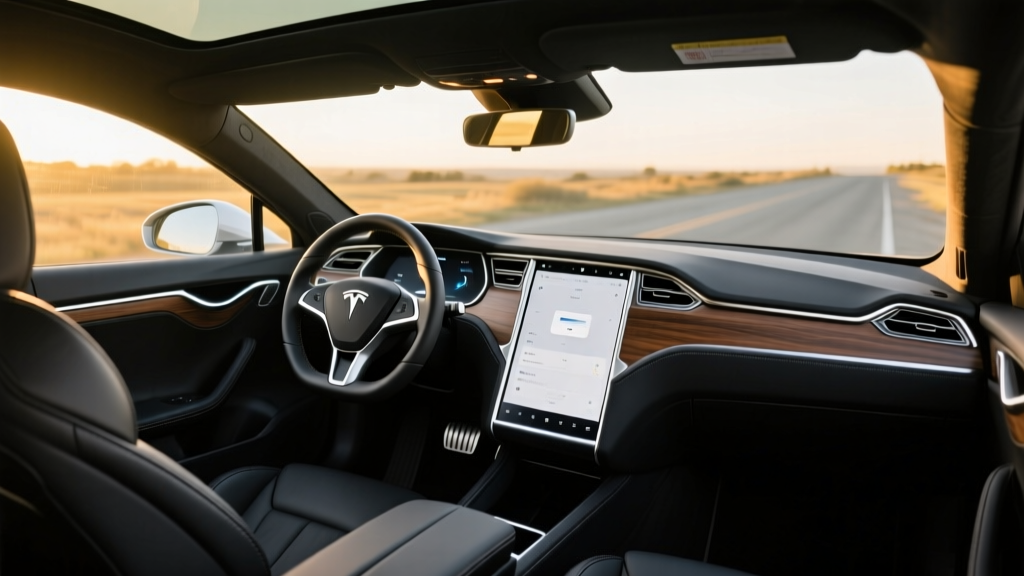
The Mach-E's cabin is a clear step above Ford's ICE offerings, with a minimalist design centered on a large 15.5-inch portrait touchscreen running SYNC 4A. The interface is responsive, supports wireless Apple CarPlay and Android Auto, and includes an integrated Google-based navigation system on Premium and GT trims.
Cargo and passenger dimensions:
- Rear cargo volume: 29.7 cu ft (seats up) / 59.7 cu ft (seats folded)
- Front trunk (frunk): 4.7 cu ft — small but useful for charging cables
- Front headroom: 40.4 in / rear headroom: 39.3 in
- Front legroom: 43.3 in / rear legroom: 38.9 in
The rear seat is comfortable for two adults on long trips, though the center position is narrow. Compared to the Hyundai Ioniq 5 (35.4 cu ft rear cargo) or Tesla Model Y (30.2 cu ft behind the second row but 76 cu ft folded), the Mach-E sits in the middle of the pack — adequate for a family of four with luggage, but not class-leading.
Ford BlueCruise is available on Premium and GT trims (and optional on Select) — Ford's Level 2 hands-free driving system that operates on pre-mapped divided highways. It covers over 130,000 miles of compatible roads in the US and Canada. This is not autonomous driving — the driver monitoring camera requires your eyes on the road, and the system disengages for construction zones, complex interchanges, and adverse weather. A three-year BlueCruise subscription is included with new Premium and GT purchases; renewal runs approximately $750/year.
Warranty, Battery Longevity, and Ownership Costs
Ford backs the Mach-E with a competitive warranty package:
- Bumper-to-bumper: 3 years / 36,000 miles
- Powertrain: 5 years / 60,000 miles
- High-voltage battery: 8 years / 100,000 miles (retains ≥70% capacity)
- Corrosion perforation: 5 years / unlimited miles
The 70% battery capacity retention threshold over 8 years / 100,000 miles is industry-standard, matching Hyundai/Kia and Tesla. Real-world degradation data from Mach-E owners (model years 2021–2024) suggests approximately 8–12% capacity loss at 60,000 miles for NMC packs, and 5–8% for LFP packs — well within warranty coverage. The LFP pack's superior cycle life makes it the pragmatic choice for high-mileage commuters who plan to keep the vehicle past 150,000 miles.
Insurance costs for the Mach-E run 10–15% above comparable gas-powered crossovers, reflecting higher repair costs and EV-specific parts pricing. Expect annual premiums of $1,800–$2,400 depending on trim, location, and driving record.
Pros, Cons, and the Verdict
Pros
- Full $7,500 federal tax credit eligibility with point-of-sale transfer
- Native NACS port — direct Supercharger access, no adapter needed
- GT performance is legitimately thrilling (3.5 sec 0–60)
- BlueCruise hands-free highway driving is well-executed
- LFP option on Select trim for longevity-focused buyers
- Comfortable ride quality and composed handling
Cons
- DC fast-charging speed (170 kW peak) trails Ioniq 5/EV6/Model Y
- Real-world highway range falls 40–50 miles short of EPA
- No standard heat pump (reduces cold-weather efficiency)
- Cargo space is mid-pack for the segment
- BlueCruise subscription cost after 3-year included period
- Base Select trim lacks some desirable features (ventilated seats, 360° camera)
Mach-E vs. the Competition: Which Should You Buy?
The Mach-E competes directly with the Tesla Model Y, Hyundai Ioniq 5, Kia EV6, and Chevrolet Equinox EV. Here's how the decision breaks down:
Choose the Mustang Mach-E if: you value American-made assembly, want native Supercharger access without an adapter, need BlueCruise for long highway commutes, and want a sporty driving character — especially in the GT trim. The full tax credit eligibility at every trim level keeps pricing competitive.
Choose the Tesla Model Y if: you prioritize maximum Supercharger network density, want the most cargo space in the segment, and prefer Tesla's software ecosystem and OTA update cadence. The Model Y also qualifies for the $7,500 credit.
Choose the Hyundai Ioniq 5 if: fast charging is your top priority (240 kW peak, 10–80% in ~18 min), you prefer the 800V architecture for road-trip efficiency, and you value the Ioniq 5's distinctive design and V2L capability.
Choose the Chevrolet Equinox EV if: budget is the primary concern — the Equinox EV starts around $33,000 and also qualifies for the $7,500 credit, making it one of the most affordable long-range crossovers available.
Frequently Asked Questions
What is the real-world range of the 2026 Ford Mustang Mach-E?
The EPA rates the Premium AWD Extended Range at 290 miles. In real-world mixed driving, expect 270–285 miles. On sustained highway trips at 75 mph, plan for 230–250 miles. In freezing temperatures, range can drop to 190–220 miles. The Standard Range Select RWD delivers a real-world 220–235 miles in mixed conditions.
How fast does the Mach-E charge at home and on the road?
At home on a Level 2 (240V/48A) charger, the Mach-E charges at 10.5 kW, adding roughly 30 miles per hour — a full charge takes about 9–10 hours. On DC fast chargers, it peaks at 170 kW (Extended Range), reaching 10–80% in approximately 34 minutes. Above 80%, charging slows significantly — avoid charging past 80% on road trips unless necessary.
How much does the Mach-E cost after the federal tax credit?
With the full $7,500 §30D credit applied at point of sale, the Select RWD drops to an effective $36,090 (including destination), the Premium AWD Extended Range falls to $43,090, and the GT comes in at $52,090. Eligibility requires buyer AGI within IRS limits, North American final assembly (all 2026 models qualify), and compliant battery sourcing. Verify current rules at irs.gov.
Is the Mach-E worth buying versus the Tesla Model Y or Ioniq 5?
The Mach-E is a strong all-around choice if you value American manufacturing, BlueCruise, and a sportier driving feel than most competitors. It falls short of the Ioniq 5 on charging speed and the Model Y on cargo volume and Supercharger network maturity (though the NACS port narrows that gap). If road-trip charging speed is your priority, the Ioniq 5 wins. If cargo and software ecosystem matter most, the Model Y wins. If overall driving engagement and value with the tax credit are your focus, the Mach-E is an excellent pick.
Does the 2026 Mach-E have a heat pump?
The heat pump is not standard on the Select trim but is included on Premium and GT trims as part of their thermal management system. If you live in a cold-weather climate (sustained below 40°F winters), upgrading to Premium or GT — or adding the available cold-weather package on Select — is strongly recommended to mitigate range loss.
What battery chemistry does the Mach-E use, and does it matter?
The Standard Range (Select RWD) uses an LFP (lithium iron phosphate) battery — 70 kWh usable. LFP offers slower degradation, better thermal stability, and the ability to charge to 100% daily without harming longevity, but has lower energy density (less range per pound). The Extended Range (Premium, GT) uses NMC (nickel manganese cobalt) — 91 kWh usable — which offers higher energy density and more range but benefits from charging to 80–90% daily rather than 100%.
Tax credit information reflects IRS §30D rules as of the 2026 tax year. Eligibility depends on individual circumstances including income, vehicle VIN assembly location, and battery sourcing compliance. Consult a tax professional and verify at irs.gov before purchasing.