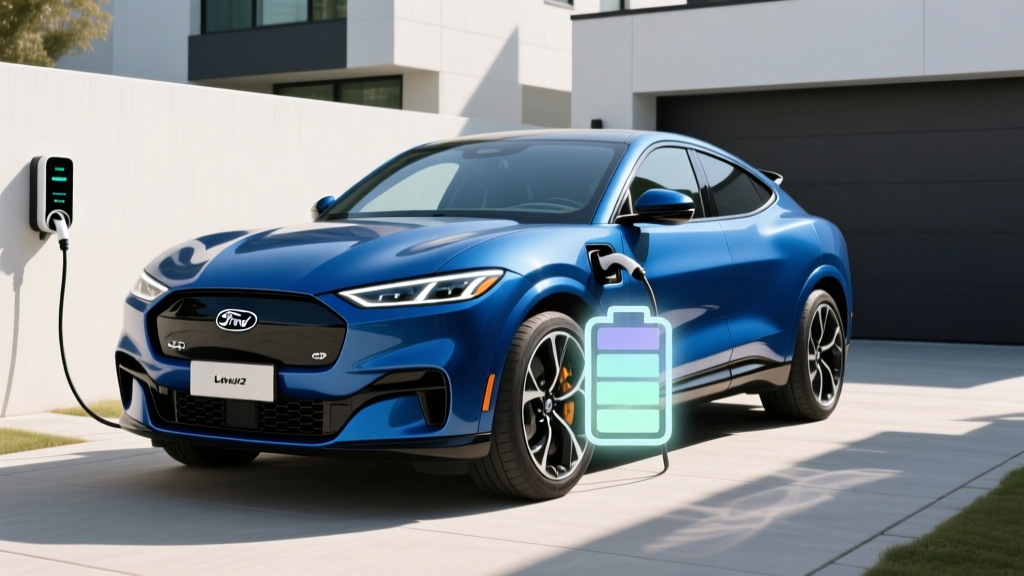
The Ford Mustang Mach-E has been a cornerstone of the mainstream electric SUV segment since its launch, but for 2026, the buying calculus hinges heavily on one question: does it still qualify for the federal EV tax credit? With shifting battery-sourcing rules under IRS §30D, the answer isn't a simple yes or no — it depends on the trim, your income, and where Ford sources its battery materials this model year.
In this review, we put the 2026 Mustang Mach-E under the microscope: EPA range versus what you'll actually see on the highway, DC fast-charging reality (including the curve taper most reviewers gloss over), and exactly how much you'll pay after incentives. If you're cross-shopping the Tesla Model Y, Hyundai Ioniq 5, or Chevrolet Equinox EV, this is the data-driven breakdown you need.
2026 Mustang Mach-E Specs at a Glance
| Spec | Select (RWD) | Premium (AWD) | GT (AWD) |
|---|---|---|---|
| EPA Range | ~250 mi | ~290 mi | ~280 mi |
| Battery (usable) | 75.7 kWh (LFP) | 91 kWh (NMC) | 91 kWh (NMC) |
| Horsepower | 266 hp | 346 hp | 480 hp |
| 0-60 mph | 6.1 sec | 5.1 sec | 3.5 sec |
| Peak DC Fast Charge | 150 kW | 150 kW | 150 kW |
| 10-80% DCFC Time | ~36 min | ~38 min | ~38 min |
| Level 2 Home Charge | 10.5 kW (~32 mi/hr) | 10.5 kW (~32 mi/hr) | 10.5 kW (~32 mi/hr) |
| MPGe (combined) | 105 MPGe | 101 MPGe | 84 MPGe |
| Base MSRP | $42,995 | $48,995 | $59,995 |
Note: Specs reflect 2026 model-year data as published by Ford and the EPA. Always confirm with your dealer, as mid-year running changes can shift figures.
Real-World Range: What the EPA Sticker Doesn't Tell You
EPA Estimate (Premium AWD Extended Range): ~290 miles
Real-World Highway (70-75 mph, mild weather): ~245-260 miles
Real-World Cold Weather (below 30°F, mixed driving): ~200-220 miles
Best-Case City/Commuter (moderate temps, regen-heavy): ~280-300 miles
The Mach-E Premium with the Extended Range battery delivers an EPA-estimated 290 miles — a competitive figure in the mid-size electric SUV class. But as any experienced EV owner knows, the EPA cycle includes generous city and low-speed driving. On a sustained 75-mph highway run in 65°F weather, expect to lose roughly 10-15% versus the sticker, landing around 245-260 miles of usable range before you'd want to find a charger.
Cold weather hits harder. In sub-30°F conditions, battery chemistry becomes less efficient, cabin heating draws significant power (the Mach-E uses a resistance heater on some trims rather than a heat pump), and regenerative braking is limited until the pack warms. Plan for 25-30% range reduction in deep winter — roughly 200-220 real-world miles. If your commute is under 50 miles round-trip, this won't matter. For road trippers in northern states, it's a real planning factor.
The Select trim's Standard Range LFP battery nets about 250 EPA miles. LFP chemistry is more tolerant of regular 100% charging, so you can charge to full daily without the degradation guilt you'd feel with NMC. Real-world highway range sits around 210-225 miles — fine for commuters, tight for road trips without frequent stops.
Charging Speed: DC Fast Charge and Home Level 2
| Charging Level | Power | Speed | Notes |
|---|---|---|---|
| Level 1 (120V outlet) | ~1.4 kW | ~4 mi/hr | Emergency/trickle only |
| Level 2 (240V home) | 10.5 kW | ~32 mi/hr | Full charge in ~9-10 hrs |
| DC Fast Charge | Peak 150 kW | ~65 mi in 10 min | 10-80% in ~36-38 min |
The Mach-E's DC fast-charging peak of 150 kW is its most debated spec. Compared to the Hyundai Ioniq 5's 240 kW or the Tesla Model Y's ~250 kW on V3 Superchargers, 150 kW looks dated. Here's the nuance: peak rate isn't sustained rate. The Mach-E holds close to 150 kW from roughly 10-50% state of charge, then tapers progressively. The 10-80% time of approximately 36-38 minutes is acceptable but not class-leading.
On a road trip, that means you'll spend roughly 35-40 minutes at a fast charger every 200-220 highway miles. If you're a planner who pairs charging with meal breaks, it's manageable. If you're chasing minimal stop time on a 600-mile drive, the Ioniq 5 or a Tesla on the Supercharger network will get you rolling again faster.
At home, the onboard 10.5 kW charger is solid. On a 48-amp Level 2 circuit (the most common home installation), a full charge from 10% takes about 9 hours for the Extended Range pack. That's overnight-ready for any daily commute. The Ford Mobile Power Cord is included and works on both 120V and 240V outlets, though a dedicated wall connector like the Ford Connected Charge Station is recommended for daily use.
Preconditioning tip: The Mach-E allows you to precondition the battery when navigating to a DC fast charger, warming it for optimal charge acceptance. Always use this in cold weather — skipping preconditioning can cut your peak charge rate by 30-50% in freezing temps.
Ford Mustang Mach-E Tax Credit: Do You Qualify?
This is where 2026 buyers need to pay close attention. The federal EV tax credit under IRS §30D offers up to $7,500, but eligibility depends on a matrix of requirements that shift annually as battery-sourcing rules tighten.
- MSRP Cap: SUVs/wagons must have an MSRP ≤ $80,000. All Mach-E trims qualify.
- Buyer Income Cap: Modified AGI ≤ $150,000 (single) / $225,000 (head of household) / $300,000 (joint).
- Battery Component Sourcing: Increasing % of battery components must be manufactured or assembled in North America (phased threshold for 2026).
- Critical Minerals Sourcing: Increasing % of critical minerals must be sourced from the US or FTA partners.
- FEOC Restriction: Battery components and critical minerals cannot be sourced from a Foreign Entity of Concern (e.g., certain Chinese suppliers).
- Point-of-Sale Transfer: Eligible buyers can transfer the credit to the dealer for an immediate price reduction at purchase.
Rules are complex and change annually. Verify current-year requirements at IRS.gov and confirm with a tax professional before purchasing.
For 2026, the Mach-E's battery-sourcing status is the key variable. Ford has worked to localize its supply chain, but the Extended Range NMC packs and Standard Range LFP packs may have different sourcing profiles. The LFP cells, often sourced from CATL or similar suppliers, face heightened scrutiny under FEOC rules. This means the Select trim (LFP) and Premium/GT trims (NMC) could have different credit eligibility — a critical detail most generic reviews miss.
| Trim | Base MSRP | Est. Federal Credit | Effective Price (if eligible) |
|---|---|---|---|
| Select (Std Range RWD) | $42,995 | $3,750 - $7,500* | $35,495 - $39,245 |
| Premium (Ext Range AWD) | $48,995 | $3,750 - $7,500* | $41,495 - $45,245 |
| GT (Ext Range AWD) | $59,995 | $3,750 - $7,500* | $52,495 - $56,245 |
*Credit amount depends on whether the vehicle meets both the battery component ($3,750) and critical minerals ($3,750) thresholds for 2026. Confirm eligibility on the IRS qualified vehicle list before purchase.
Performance, Efficiency, and Daily Drivability
The Mach-E's driving character is where the Mustang badge earns some credibility. The GT trim's 480 horsepower and 3.5-second 0-60 time put it firmly in sports-car territory, with instant electric torque that makes it genuinely thrilling off the line. The Premium AWD's 346 hp and 5.1-second sprint are more than adequate for any real-world scenario.
Efficiency varies meaningfully by trim. The Select RWD achieves 105 MPGe combined (about 32 kWh/100 mi), making it one of the more efficient electric SUVs its size. The GT drops to 84 MPGe (40 kWh/100 mi) — you're paying a noticeable efficiency tax for that performance. For context, the Hyundai Ioniq 5 RWD hits 114 MPGe, and the Tesla Model Y Long Range achieves 122 MPGe.
Ride quality is a Mach-E strength. Ford tuned the suspension for compliance over sportiness, so it absorbs potholes and highway seams better than the firmer-riding Model Y. Steering is precise if not communicative, and the one-pedal driving mode with aggressive regen makes city traffic manageable. Brake feel — often a weak point in EVs with blended regen — is surprisingly linear.
Interior, Cargo, and Tech
The cabin centers on a 15.5-inch portrait touchscreen running Ford's SYNC 4A system. It's responsive, supports wireless Apple CarPlay and Android Auto, and handles over-the-air updates. The interface is cleaner than Tesla's minimalist approach (physical buttons for climate would still be nice), and the digital gauge cluster behind the wheel provides range and navigation info without forcing you to look at the center screen.
Cargo space: 29.7 cubic feet behind the rear seats, expanding to 59.7 cu ft with the rear seats folded. The front trunk (frunk) adds 4.7 cu ft — a drainable compartment Ford cleverly markets as a cooler for tailgating. Compared to the Model Y's 30.2/76.2 cu ft, the Mach-E gives up some maximum volume but remains competitive for a family SUV.
Passenger space: Front legroom is 43.3 inches; rear legroom is 38.9 inches. Two adults in the rear will be comfortable on long trips. The flat floor (no transmission tunnel hump) helps the middle-seat passenger.
Driver assistance: Ford Co-Pilot360 2.0 is standard, including automatic emergency braking, lane-keeping, and blind-spot monitoring. BlueCruise — Ford's Level 2 hands-free highway driving system — is available on mapped divided highways. It's a strong system that genuinely reduces fatigue on long trips, but it is not self-driving. You must remain attentive, and the driver-monitoring camera will flag you if your eyes leave the road. This is SAE Level 2 automation — the same tier as Tesla Autopilot and GM Super Cruise.
Warranty and Long-Term Ownership
Ford backs the Mach-E's high-voltage battery and electric powertrain components with an 8-year/100,000-mile warranty, covering defects and capacity loss below 70% of original capacity. The base vehicle carries a 3-year/36,000-mile bumper-to-bumper warranty.
Battery degradation data for the Mach-E is encouraging. Owner-reported data from early 2021-2022 models shows roughly 3-5% capacity loss over the first 60,000 miles, which is typical for modern liquid-cooled NMC packs. LFP packs in the Select trim are expected to degrade even more slowly, with a flatter degradation curve — one of the chemistry's key advantages.
If you ever need an out-of-warranty battery replacement, expect a quote in the $15,000-$22,000 range depending on pack size. That's a worst-case scenario; most packs outlast the vehicle's useful life.
Mach-E vs. The Competition: Which Should You Buy?
- Comfortable, compliant ride quality
- Strong real-world efficiency (Select RWD)
- BlueCruise hands-free driving on highways
- Drainable frunk is genuinely useful
- LFP option for daily 100% charging
- Eligible for §30D credit (verify trim)
- 150 kW DCFC peak is below class leaders
- No heat pump on all trims (cold-weather range hit)
- Tax credit eligibility varies by battery trim
- GT trim efficiency is poor for the segment
- Rear visibility is compromised by styling
- Some SYNC 4A UI quirks remain
- Choose the Mach-E if: You want a comfortable daily-driver SUV with hands-free highway assist, value ride quality over outright charging speed, and your home charging setup makes overnight top-ups easy.
- Choose the Tesla Model Y if: Supercharger network access is critical for your road trips, you want the fastest DC charging, and you prefer the most mature OTA update ecosystem.
- Choose the Hyundai Ioniq 5 if: Fastest possible DC charging (10-80% in ~18 min) is a priority, you want 800V architecture, and the retro-futuristic design appeals to you.
- Choose the Chevrolet Equinox EV if: Budget is the top priority and you want the lowest entry price in the electric SUV segment with solid range.
Who Is the 2026 Mustang Mach-E For?
The Mach-E is best suited for commuters and small families who charge at home and take occasional road trips. The Select RWD with its LFP battery is an ideal daily commuter car — charge to 100% every night, enjoy ~210 real-world miles, and benefit from lower long-term degradation. The Premium AWD Extended Range hits the sweet spot for families who need all-weather capability and enough range for weekend trips without constant charging stops.
The GT is a performance enthusiast's EV — thrilling acceleration, but you'll visit chargers more often and pay a premium for the privilege. It's a fun car, not a rational one.
If your driving involves frequent 400+ mile road trips through areas with sparse charging infrastructure, the Mach-E's 150 kW charge rate and ~250 real-world highway miles will demand more patience than a Tesla on Superchargers or an Ioniq 5 on 350 kW chargers. Plan accordingly.
Frequently Asked Questions
Does the 2026 Ford Mustang Mach-E qualify for the full $7,500 federal tax credit?
It depends on the specific trim and your income. The MSRP is well under the $80,000 SUV cap, and most buyers fall under the income limits. However, the battery-sourcing and critical-minerals requirements under §30D determine whether you get the full $7,500, a partial $3,750, or nothing. The LFP battery in the Select trim and the NMC battery in the Premium/GT may have different eligibility. Check the IRS qualified vehicles list for the specific VIN before purchasing.
What is the real-world range of the Mach-E on a road trip?
Expect 245-260 highway miles from the Premium Extended Range AWD (EPA 290 mi) at 70-75 mph in moderate temperatures. In winter or at 80+ mph, plan for 200-220 miles between stops. The Standard Range Select delivers about 210-225 highway miles.
How fast does the Mach-E charge at home?
On a 48-amp Level 2 home charger (240V), the onboard 10.5 kW charger adds roughly 32 miles of range per hour. A full charge from 10% takes about 9 hours for the Extended Range battery — easily accomplished overnight.
Is the Mach-E's 150 kW charging speed a dealbreaker?
For daily home-charging owners, no — you'll rarely use DC fast chargers. For frequent road trippers, it means ~36-38 minute stops for 10-80%, versus ~18-20 minutes in an Ioniq 5 or ~15 minutes in a Model Y on a V3 Supercharger. It's a meaningful difference on long drives but manageable with planning.
Does the Mach-E have a heat pump?
Ford has not equipped all Mach-E trims with a heat pump. Without one, cabin heating in cold weather draws directly from the traction battery, contributing to the 25-30% winter range loss. This is a notable disadvantage versus competitors like the Ioniq 5 and Model Y, which use heat pumps as standard.
How long will the Mach-E battery last?
Ford warranties the battery for 8 years/100,000 miles against capacity loss below 70%. Real-world data from early models shows 3-5% degradation over 60,000 miles for NMC packs. LFP packs are expected to last longer with less degradation. With proper care (avoiding frequent 100% charges on NMC, using preconditioning), the battery should outlast 150,000+ miles with acceptable capacity.