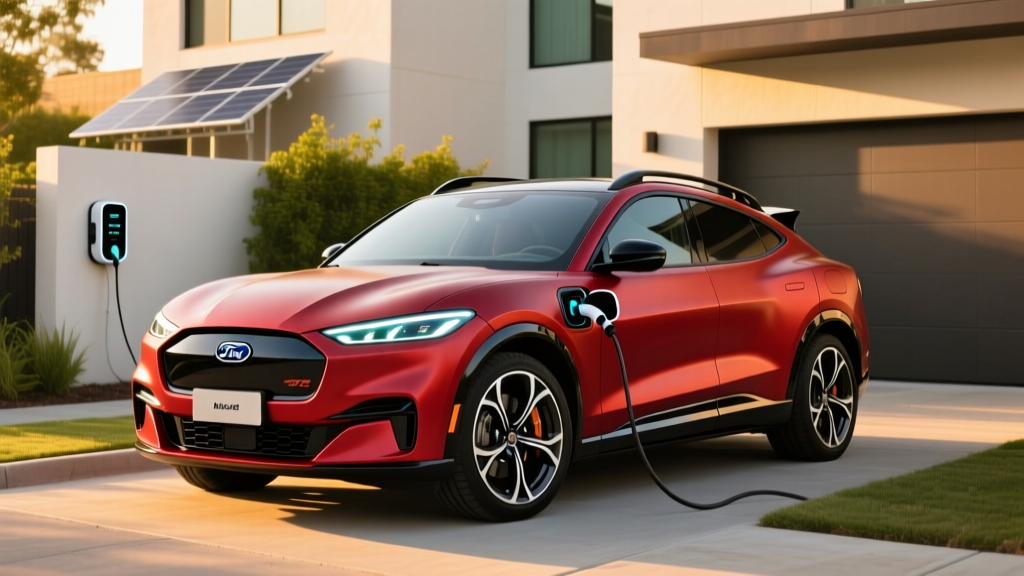
If you are hunting for Ford Mustang Mach-E specials in 2026, timing and trim choice matter more than ever. Ford has reshuffled the lineup, updated pricing, and the federal tax credit landscape under IRS §30D has specific MSRP, income, and battery-sourcing requirements that can swing the effective price by thousands. This review breaks down every current trim, real-world range expectations, charging speeds, and what the Mach-E actually costs after incentives.
2026 Ford Mustang Mach-E: Quick Verdict
The 2026 Mach-E remains one of the most well-rounded electric crossovers in the $40K–$65K segment. It offers NACS-native charging (no adapter needed at Tesla Superchargers), competitive highway efficiency, and a usable 250–320 miles of EPA range depending on battery and drivetrain. The GT trim delivers sports-car acceleration, while the Select trim undercuts most rivals on price. The biggest trade-off: rear-seat legroom is tighter than the Hyundai Ioniq 5 or Tesla Model Y, and DC fast-charge speeds peak at 150 kW rather than the 250+ kW some competitors offer.
Range, Battery, and Real-World Efficiency
The 2026 Mach-E is offered with two battery packs and two drivetrain configurations. Here is the full breakdown:
| Trim / Config | Battery (usable kWh) | Chemistry | Drivetrain | EPA Range (mi) | MPGe (combined) | kWh/100 mi |
|---|---|---|---|---|---|---|
| Select RWD | 75.7 | NMC | RWD | 250 | 103 | 33 |
| Premium RWD (Ext. Range) | 91.0 | NMC | RWD | 320 | 111 | 30 |
| Premium AWD (Ext. Range) | 91.0 | NMC | Dual-motor AWD | 290 | 101 | 33 |
| GT AWD | 91.0 | NMC | Dual-motor AWD | 280 | 98 | 34 |
All trims use nickel-manganese-cobalt (NMC) lithium-ion chemistry. Ford has not introduced LFP (lithium iron phosphate) packs for the Mach-E as of the 2026 model year. NMC offers higher energy density, which is why the Mach-E achieves competitive range without a massive pack, but it requires more careful state-of-charge management — Ford recommends daily charging to 80–90% for NMC longevity, saving 100% for road trips.
Charging Speed: DC Fast, Level 2, and NACS Access
The 2026 Mach-E comes with a native NACS (North American Charging Standard) port, meaning it can charge at Tesla Superchargers without an adapter — a significant infrastructure advantage. Here is the full charging picture:
| Charging Level | Max Power (kW) | Rate / Speed | Notes |
|---|---|---|---|
| Level 1 (120V household) | ~1.4 kW | ~3–4 miles/hour | Emergency/trickle only |
| Level 2 (240V home/public) | 10.5 kW (48A) | ~28–32 miles/hour | Full charge in ~8–9 hrs (91 kWh pack) |
| DC Fast Charge | 150 kW peak | 10–80% in ~36 min | Tapers significantly above 80%; expect ~45 min to 90% |
The 150 kW peak DC fast-charge rate is adequate but not class-leading. Competitors like the Hyundai Ioniq 5 (240 kW peak, 10–80% in ~18 minutes) and the Kia EV6 (235 kW) charge considerably faster on compatible 350 kW stations. The Mach-E's charge curve is relatively flat through 60% state of charge, then tapers hard past 80% — plan to charge to 80% on road trips and move on rather than waiting for a full top-up.
For home charging, the onboard 10.5 kW charger is solid. A typical 240V / 48A Level 2 home station (like a ChargePoint Home Flex or Tesla Wall Connector) will add roughly 30 miles per hour of charging, meaning an overnight session easily replenishes a full day's driving. Installation costs vary widely: expect $500–$2,000 for the electrician work if your panel has capacity, or $2,000–$5,000+ if you need a panel upgrade. Always get a quote from a licensed electrician before purchasing equipment.
Performance: 0–60, Horsepower, and Drivetrain
| Trim | Horsepower | Torque (lb-ft) | 0–60 mph | Drivetrain |
|---|---|---|---|---|
| Select RWD | 266 hp | 317 | 6.3 sec | Rear-wheel drive |
| Premium RWD (ER) | 290 hp | 317 | 5.8 sec | Rear-wheel drive |
| Premium AWD (ER) | 346 hp | 428 | 5.1 sec | Dual-motor AWD |
| GT AWD | 480 hp | 600 | 3.5 sec | Dual-motor AWD |
The GT trim is genuinely quick — 3.5 seconds to 60 mph puts it in sports-car territory. The AWD Premium offers a compelling balance of power and range. The Select RWD is perfectly adequate for commuting and city driving, with more than enough torque for confident highway merging. All trims feature regenerative braking with a one-pedal driving mode that is among the smoothest in the segment.
Pricing, Trims, and Federal Tax Credit Eligibility
| Trim | Base MSRP | Federal §30D Credit | Effective Price (if eligible) |
|---|---|---|---|
| Select RWD | $42,995 | Up to $3,750* | ~$39,245 |
| Premium RWD (ER) | $48,995 | Up to $3,750* | ~$45,245 |
| Premium AWD (ER) | $52,495 | Up to $3,750* | ~$48,745 |
| GT AWD | $62,995 | Up to $3,750* | ~$59,245 |
*All prices include destination. Federal tax credit amounts reflect 2026 IRS §30D rules and are subject to change. Credit amount depends on battery component and critical mineral sourcing requirements. The Mach-E qualifies for a partial credit (up to $3,750) based on current sourcing compliance. Full $7,500 credit requires meeting both battery component AND critical mineral thresholds. (Source: IRS §30D)
Key eligibility requirements for the §30D credit:
- MSRP cap: SUVs/crossovers must be under $80,000 — all Mach-E trims qualify.
- Buyer income cap: Modified AGI must not exceed $150,000 (single), $225,000 (head of household), or $300,000 (joint). If your income exceeds these limits, you do not qualify.
- Battery sourcing: The credit is split into two halves — $3,750 for battery components manufactured/assembled in North America, and $3,750 for critical minerals sourced from the US or free-trade-agreement partners. The Mach-E's battery sourcing currently qualifies for one half, yielding up to $3,750.
- Point-of-sale transfer: You can transfer the credit to the dealer at purchase for an immediate price reduction, or claim it on your tax return.
Always verify eligibility with a tax professional before purchasing. State and local incentives may stack on top — check afdc.energy.gov for your area.
Interior, Cargo, and Technology
The Mach-E's cabin blends Ford familiarity with EV-specific tech:
- Infotainment: 15.5-inch vertical touchscreen running SYNC 4A with wireless Apple CarPlay and Android Auto, over-the-air updates, and Ford Power-Up software enhancements.
- Driver assistance: Ford Co-Pilot360 2.0 is standard (automatic emergency braking, lane-keeping, blind-spot monitoring). BlueCruise hands-free highway driving (SAE Level 2 — driver must remain attentive) is available on Premium and GT trims with a subscription after the initial trial period.
- Cargo space: 29.7 cu ft behind the rear seats; 59.7 cu ft with rear seats folded. The front trunk (frunk) adds 4.7 cu ft with a drain plug — useful for ice and beverages at tailgates.
- Passenger room: Front legroom is generous at 43.3 inches. Rear legroom is 38.1 inches — adequate for adults but tighter than the Hyundai Ioniq 5 (39.4 in) or Tesla Model Y (41.6 in).
- Towing: Up to 2,300 lbs with the available tow package (Premium and GT AWD only). Not a heavy-duty hauler, but sufficient for a small utility trailer or a pair of dirt bikes.
Warranty and Long-Term Ownership
| Component | Coverage |
|---|---|
| Bumper-to-bumper | 3 years / 36,000 miles |
| Powertrain | 5 years / 60,000 miles |
| Battery (high-voltage) | 8 years / 100,000 miles (retains ≥70% capacity) |
| Corrosion perforation | 5 years / unlimited miles |
The 8-year/100,000-mile battery warranty with a 70% capacity retention threshold is industry-standard and matches most competitors. NMC batteries in the Mach-E have shown moderate degradation in real-world fleet data — expect roughly 5–8% capacity loss over the first 100,000 miles under normal use. Avoid frequent DC fast charging and routinely sitting at 100% state of charge to maximize longevity.
Mach-E vs. Key Competitors: Is It Worth It?
| Metric | Ford Mach-E Premium AWD ER | Tesla Model Y LR AWD | Hyundai Ioniq 5 AWD |
|---|---|---|---|
| EPA Range | 290 mi | 310 mi | 260 mi |
| DC Fast Charge (peak kW) | 150 kW | 250 kW | 240 kW |
| 10–80% DCFC time | ~36 min | ~25 min | ~18 min |
| 0–60 mph | 5.1 sec | 4.8 sec | 5.0 sec |
| Cargo (rear seats up) | 29.7 cu ft | 30.2 cu ft | 27.2 cu ft |
| Base MSRP (AWD) | $52,495 | $49,990 | $50,900 |
| NACS native | Yes | Yes | No (CCS, adapter avail.) |
Choose the Mach-E if: You value NACS-native Supercharger access, prefer Ford's dealer network and service infrastructure, want BlueCruise for hands-free highway driving, and appreciate the sporty driving dynamics — especially in GT trim. The Mach-E also tends to have more dealer-level negotiation room, which can mean better specials and incentives than Tesla's fixed pricing.
Choose the Model Y if: Maximum range and fastest DC charging are your top priorities, you need more rear-seat space, and you prefer Tesla's software ecosystem and Supercharger reliability.
Choose the Ioniq 5 if: Ultra-fast 800V DC charging (18-minute 10–80%) is critical for your road-trip habits, and you want a distinctive design with competitive pricing.
Pros and Cons
- NACS-native — no adapter for Tesla Superchargers
- GT trim offers 3.5-sec 0–60 sports-car performance
- BlueCruise hands-free highway driving (Level 2)
- Competitive pricing with dealer negotiation potential
- Usable frunk with drain plug
- Smooth regenerative braking and one-pedal mode
- 150 kW peak DC charge rate lags 800V rivals
- Rear legroom tighter than Model Y and Ioniq 5
- Partial federal tax credit ($3,750 vs. full $7,500)
- No LFP battery option for lower-cost, longer-life chemistry
- BlueCruise requires paid subscription after trial
- 15.5-inch screen dominates dash — not everyone likes the tablet look
Frequently Asked Questions
What is the real-world range of the 2026 Ford Mustang Mach-E?
The EPA rates the Mach-E from 250 miles (Select RWD) to 320 miles (Premium RWD Extended Range). In real-world highway driving at 70 mph, expect roughly 10–15% less than the EPA sticker — so around 215–230 miles for the Select and 265–280 miles for the Premium ER RWD. Cold weather (below freezing) can reduce range an additional 15–25%.
How fast does the Mach-E charge at home and on the road?
At home on a 240V Level 2 charger (10.5 kW), the Mach-E adds about 30 miles of range per hour, with a full charge of the 91 kWh Extended Range pack taking roughly 8–9 hours. On DC fast chargers, it peaks at 150 kW and charges from 10–80% in approximately 36 minutes. Expect the charge rate to taper significantly above 80% SoC.
How much does the Mach-E cost after tax credits?
The 2026 Mach-E starts at $42,995 (Select RWD) and tops out at $62,995 (GT AWD). With the current partial federal §30D credit of up to $3,750, effective prices start around $39,245. Eligibility depends on buyer income (under $150K single / $300K joint), and the credit can be applied at point of sale. State incentives may reduce the price further.
Does the 2026 Mach-E qualify for the full $7,500 federal EV tax credit?
As of 2026, the Mach-E qualifies for a partial credit of up to $3,750 under IRS §30D. It meets the battery component sourcing requirement but does not currently satisfy the critical minerals threshold required for the full $7,500. All trims fall under the $80,000 SUV MSRP cap. Always verify current eligibility on irs.gov before purchasing.
Is the Mach-E worth buying vs. the Tesla Model Y or Hyundai Ioniq 5?
The Mach-E is worth serious consideration if you prioritize NACS-native Supercharger access, enjoy sporty driving dynamics, and prefer Ford's dealer service network. It falls short of the Model Y on range and rear-seat space, and behind the Ioniq 5 on DC charging speed. For buyers who value a balance of performance, infrastructure access, and dealer support, the Mach-E — especially with dealer specials — is a strong pick.
What are the best Ford Mustang Mach-E specials to look for?
Dealer incentives on the Mach-E vary by region and month. In 2026, watch for Ford's retail customer cash offers (often $1,000–$3,000 on Premium and GT trims), lease specials through Ford Credit, and stackable loyalty or conquest bonuses. Combining dealer discounts with the $3,750 federal credit and any state incentives can bring a Premium AWD Extended Range below $47,000 — strong value for a 290-mile AWD crossover. Always negotiate the vehicle price before discussing the tax credit transfer to ensure you capture both savings.