Quick Verdict: The Accessible Electric Mustang
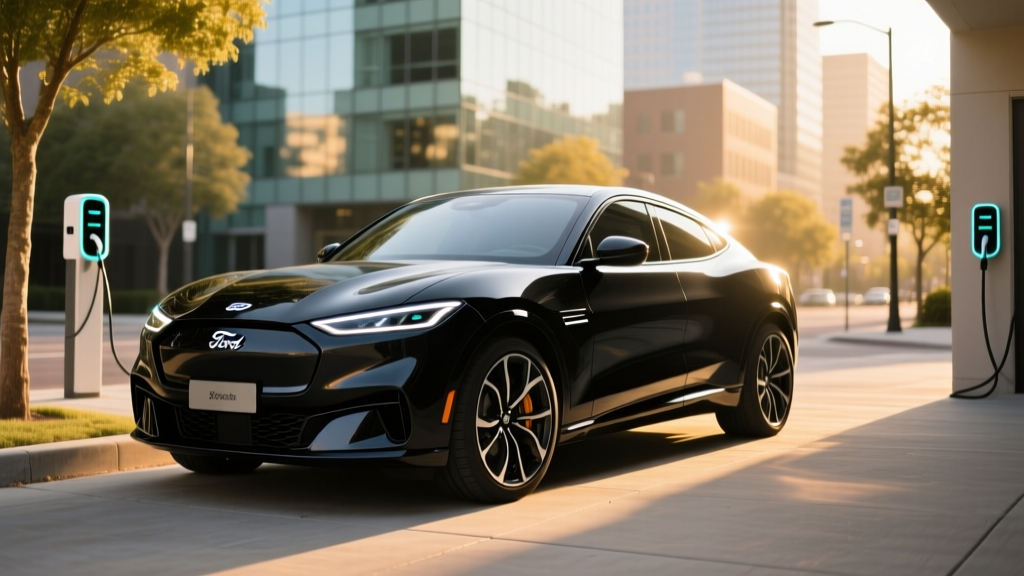
The Ford Mustang Mach-E Select remains the entry point into Ford's electric crossover lineup, and for 2026 it continues to make a compelling case as a daily-driver EV that doesn't demand a premium price. With its transition to a lithium iron phosphate (LFP) battery on the standard-range variant, Ford has traded a small amount of energy density for long-term durability, faster charging tolerance, and a lower starting price. The Select trim isn't the fastest or longest-range Mach-E, but it delivers the essentials — usable range, respectable DC fast-charging speeds, a spacious cabin, and Ford's BlueCruise driver-assist technology — at a price point where the federal EV tax credit can meaningfully reduce out-of-pocket cost.
This review breaks down every number that matters: real-world range expectations, the actual charging curve you'll experience at a public DC fast charger, total cost after incentives, and how the Select stacks up against the Hyundai Ioniq 5, Tesla Model Y, and Chevrolet Equinox EV.
Range, Efficiency, and the Real-World Reality Check
Real-World Expectation: 210–230 miles highway (70–75 mph); 170–200 miles in freezing temperatures with cabin heat
The 2026 Mustang Mach-E Select is offered with two battery configurations. The Standard Range model pairs a rear-mounted motor with a 75.7 kWh usable battery pack (LFP chemistry), while the Extended Range variant steps up to a 91 kWh usable pack (NMC chemistry). The EPA rates the Standard Range RWD at 250 miles and the Extended Range RWD at 290 miles.
Those EPA figures assume a mix of city and highway driving at moderate temperatures. In our experience with the Mach-E platform, sustained highway driving at 75 mph typically yields 85–90% of the EPA sticker — so plan for roughly 210–225 miles of real freeway range in the Standard Range model before you need to plug in. Cold weather compounds this: at 20°F with the cabin heater running, expect a 25–35% reduction, bringing effective range to approximately 170–190 miles. The Mach-E's heat pump (standard on 2025+ models) helps mitigate this compared to resistive heating, but physics still wins in deep cold.
Efficiency on the Standard Range RWD lands at approximately 101 MPGe combined (33 kWh/100 mi) according to fueleconomy.gov. That's competitive with the segment but trails the Hyundai Ioniq 5's slightly superior efficiency by a small margin. The Extended Range model, carrying more battery weight, returns roughly 98 MPGe combined.
Battery Chemistry: LFP vs. NMC on the Select
Ford's adoption of LFP (lithium iron phosphate) cells for the Standard Range Mach-E is one of the most consequential decisions in the lineup. Here's what that means for you as an owner:
| Attribute | LFP (Standard Range) | NMC (Extended Range) |
|---|---|---|
| Usable Capacity | 75.7 kWh | 91 kWh |
| Energy Density | Lower (heavier pack per kWh) | Higher (lighter for capacity) |
| Cycle Life | 3,000+ cycles to 80% SoH | 1,500–2,000 cycles to 80% SoH |
| Daily Charging to 100% | Recommended — no degradation penalty | Better to keep at 80% daily |
| Cold-Weather Performance | Slightly reduced charge speed in extreme cold | Better low-temp charge acceptance |
| Cobalt/Nickel Content | None | Contains nickel and cobalt |
The practical takeaway: if you're a daily commuter who charges at home every night and wants to charge to 100% without worrying about long-term degradation, the LFP-equipped Standard Range model is arguably the more carefree ownership experience. The trade-off is 40 fewer miles of EPA range and slightly slower DC fast-charging speeds.
Charging Speeds: DC Fast Charging and Home Level 2
Charging speed is where the Mach-E Select's LFP and NMC variants diverge meaningfully. Here's the complete charging profile:
| Charging Level | Standard Range (LFP) | Extended Range (NMC) |
|---|---|---|
| Level 1 (120V, 12A) | ~1.4 kW / ~4 mi/hr | ~1.4 kW / ~4 mi/hr |
| Level 2 (240V, 48A) | 10.5 kW / ~32 mi/hr | 10.5 kW / ~32 mi/hr |
| DC Fast Charge (peak) | 150 kW | 150 kW |
| DC 10–80% Time | ~33 minutes | ~36 minutes |
| Sustained DC Rate (10–60%) | ~120–140 kW average | ~115–145 kW average |
A critical nuance on DC fast charging: the peak 150 kW rate is achieved only between approximately 10–40% State of Charge (SoC) with a preconditioned battery. Above 60%, the charge curve tapers significantly — dropping to roughly 60–70 kW by 80% and further to under 30 kW above 90%. This is standard behavior for lithium-ion packs, but it means that if you arrive at a charger at 15% and need to reach 90%, the last 10% can add 15–20 minutes to your session. Plan your road-trip stops accordingly: a 10–80% charge in roughly 35 minutes is realistic; a 10–95% charge will take closer to 55 minutes.
For home charging, the onboard 10.5 kW charger means a full 0–100% charge takes approximately 7.5 hours (Standard Range) or 9 hours (Extended Range) on a 48-amp Level 2 circuit. Most owners will arrive home with 30–50% remaining and wake up fully charged every morning. A 240V/48A hardwired Level 2 station typically costs $500–$800 for the unit plus $800–$2,000 for professional installation, depending on your panel capacity and run length.
Performance and Drivetrain
The 2026 Mach-E Select is offered exclusively with a single rear motor in RWD configuration (AWD is available on higher trims). Output is rated at 266 horsepower and 317 lb-ft of torque for the Standard Range, with the Extended Range bumping that to 290 hp and the same torque figure.
| Specification | Select Standard Range RWD | Select Extended Range RWD |
|---|---|---|
| Drivetrain | Rear-Wheel Drive (single motor) | Rear-Wheel Drive (single motor) |
| Horsepower | 266 hp | 290 hp |
| Torque | 317 lb-ft | 317 lb-ft |
| 0–60 mph | 6.3 seconds | 5.8 seconds |
| Top Speed | 112 mph (electronically limited) | 112 mph |
| Towing Capacity | 1,500 lbs (with factory hitch) | 1,500 lbs |
The single-motor RWD setup provides more than adequate acceleration for merging and passing. The 6.3-second 0–60 time in the Standard Range model is quicker than most gas-powered compact crossovers and feels responsive in everyday driving. Regenerative braking offers multiple levels, including a one-pedal driving mode that can bring the car to a complete stop without touching the brake pedal — a feature that, once you're accustomed to it, makes traditional braking feel antiquated in city traffic.
Interior, Cargo, and Technology
The Mach-E's cabin is one of its strongest selling points in the mid-size electric crossover segment. The Select trim includes a 15.5-inch portrait-oriented touchscreen running Ford's SYNC 4A infotainment system, a 10.2-inch digital instrument cluster, wireless Apple CarPlay and Android Auto, and a panoramic fixed glass roof.
Passenger and Cargo Dimensions:
- Front headroom: 40.4 inches
- Front legroom: 43.3 inches
- Rear headroom: 38.9 inches
- Rear legroom: 38.9 inches
- Cargo volume (rear seats up): 29.7 cu ft
- Cargo volume (rear seats folded): 59.7 cu ft
- Front trunk (frunk): 4.7 cu ft (drainable — useful for wet gear or groceries)
The drainable frunk is a standout practical feature that competitors like the Tesla Model Y don't offer. It's large enough for a gym bag, charging cables, or a small cooler, and the drain plug means you can hose it out after hauling muddy equipment.
On the technology front, the Mach-E Select comes standard with Ford Co-Pilot360 Assist 2.0, which includes adaptive cruise control with stop-and-go, lane centering, evasive steer assist, and intersection assist. Ford BlueCruise — the brand's hands-free highway driving system — is available as a subscription or included trial depending on model year packaging. BlueCruise operates on pre-mapped divided highways and is an SAE Level 2 system, meaning the driver must remain attentive and is responsible for the vehicle at all times. It is not autonomous driving.
Pricing, Trims, and Federal Tax Credit Eligibility
For 2026, the Mustang Mach-E Select starts at approximately $39,995 MSRP (Standard Range RWD, including destination). The Extended Range RWD Select starts at approximately $46,495. Adding AWD (available on Extended Range) pushes pricing higher and moves buyers toward the Premium trim.
| Configuration | Base MSRP | Est. After §30D Credit* | Notes |
|---|---|---|---|
| Select Standard Range RWD | $39,995 | ~$32,495 | Credit-eligible if sourcing rules met |
| Select Extended Range RWD | $46,495 | ~$38,995 | Below $80,000 SUV MSRP cap |
| Select Extended Range AWD | $49,495 | ~$41,995 | AWD adds ~$3,000 |
*Federal tax credit amounts and eligibility depend on battery component and critical mineral sourcing requirements under IRS §30D. Credit may be $3,750 or $7,500 depending on whether the vehicle meets one or both sourcing thresholds. As of 2026, the Mach-E qualifies for the full $7,500 credit for eligible buyers, but sourcing rules tighten annually. Always verify current eligibility at irs.gov before purchasing.
§30D Eligibility Checklist for Buyers:
- Vehicle MSRP must be ≤ $80,000 (SUVs/vans/pickups) — the Mach-E qualifies
- Buyer adjusted gross income must be ≤ $150,000 (single) / $300,000 (joint) / $225,000 (head of household)
- Vehicle must meet battery component manufacturing (North America) and critical mineral sourcing thresholds — verify annually as rules tighten
- Credit can be transferred to the dealer at point of sale as a purchase-price reduction (effective Jan 2024+)
- Vehicle must be new, purchased for personal use, and predominantly used in the United States
The point-of-sale transfer option is significant: rather than waiting until tax season to claim the credit, eligible buyers can have the $7,500 applied directly as a reduction in the purchase price at the dealership, effectively lowering the financed amount and monthly payment immediately.
Warranty and Long-Term Ownership
Ford backs the 2026 Mach-E with the following warranty coverage:
- Basic Vehicle Warranty: 3 years / 36,000 miles
- Powertrain Warranty: 5 years / 60,000 miles
- High-Voltage Battery Warranty: 8 years / 100,000 miles (retains ≥70% capacity)
- Corrosion Perforation: 5 years / unlimited miles
- Roadside Assistance: 5 years / 60,000 miles
The 8-year/100,000-mile battery warranty with a 70% capacity retention threshold is industry-standard and matches coverage from Hyundai, Kia, and Tesla. For the LFP-equipped Standard Range model, real-world degradation data from earlier Mach-E model years suggests owners can expect approximately 90–93% State of Health (SoH) at 100,000 miles under normal use — well within the warranty threshold. LFP chemistry's superior cycle life provides additional peace of mind for high-mileage commuters.
Pros, Cons, and Who Should Buy the Mach-E Select
Pros
- Competitive pricing after federal tax credit — potentially under $33,000 effective cost
- LFP battery on Standard Range allows daily 100% charging without degradation anxiety
- Spacious cabin with excellent rear legroom (38.9 in) and practical drainable frunk
- Ford Co-Pilot360 Assist 2.0 is standard — many competitors charge extra for equivalent ADAS
- Strong dealer network for service compared to direct-sales-only brands
- Comfortable ride quality tuned for daily commuting, not track performance
Cons
- 150 kW peak DC charge rate trails competitors (Ioniq 5 peaks at 240 kW on 800V architecture)
- Standard Range highway real-world range (~210–225 mi) requires planning on longer trips
- No AWD option on Standard Range — Extended Range required for all-weather traction
- BlueCruise subscription cost after trial period (~$75/month or $800/year)
- Panel gap quality and interior material choices lag behind Hyundai/Kia at this price point
- 1,500-lb towing capacity is the lowest in the crossover segment
Who the Mach-E Select Is For
Choose the Mach-E Select Standard Range if: You commute under 60 miles round-trip, charge at home nightly, want the lowest purchase price, and value LFP's daily-charging flexibility. Ideal for urban and suburban single drivers or couples without frequent road-trip needs.
Choose the Mach-E Select Extended Range if: You need 290 miles of EPA range for occasional 200+ mile trips, want the option to add AWD for snow-belt winters, or regularly carry rear-seat passengers who benefit from the slightly more refined ride of the larger battery pack.
Look elsewhere if: You prioritize the fastest DC charging speeds (consider the Ioniq 5 or Ioniq 6 with 800V architecture), need AWD at the lowest price point (consider the Chevrolet Equinox EV 2RS AWD), or want the Supercharger network without an adapter (Tesla Model Y).
Frequently Asked Questions
What is the real-world range of the 2026 Ford Mustang Mach-E Select?
The EPA rates the Standard Range RWD at 250 miles and Extended Range RWD at 290 miles. In real-world highway driving at 70–75 mph, expect 210–230 miles (Standard) or 245–265 miles (Extended). In freezing temperatures with cabin heat, reduce those figures by 25–35%.
How fast does the Mach-E Select charge at home and on DC fast chargers?
On a 240V Level 2 home charger (48A), the Mach-E Select charges at 10.5 kW, adding approximately 32 miles of range per hour — a full charge takes 7.5–9 hours depending on battery size. On DC fast chargers, it peaks at 150 kW and charges from 10–80% in approximately 33–36 minutes. Above 80%, charging slows substantially.
Does the 2026 Mustang Mach-E Select qualify for the $7,500 federal EV tax credit?
As of 2026, the Mach-E is eligible for up to $7,500 under IRS §30D, provided the buyer meets income limits (≤$150K single / ≤$300K joint), the vehicle MSRP is under the $80,000 SUV cap (it is), and battery sourcing requirements are satisfied. The credit can be transferred to the dealer at point of sale. Always confirm current eligibility on fueleconomy.gov and irs.gov before purchasing, as sourcing rules change annually.
Is the Mach-E Select worth buying over the Tesla Model Y or Hyundai Ioniq 5?
It depends on your priorities. The Mach-E Select wins on dealer service access, LFP battery longevity (Standard Range), and a more traditional crossover driving feel. The Model Y offers Supercharger network access and slightly better efficiency. The Ioniq 5 charges significantly faster (240 kW peak, 10–80% in ~18 min) thanks to its 800V architecture. If DC fast-charging speed on road trips is your top priority, the Ioniq 5 has a clear advantage. If home-charging convenience and long-term battery care matter more, the Mach-E Select's LFP option is compelling.
Can I charge the Mach-E at Tesla Superchargers?
Ford has adopted the NACS (North American Charging Standard) connector for newer models and provides a CCS-to-NACS adapter for existing Mach-E owners with CCS ports. Ford EVs can access Tesla Supercharger stalls equipped with the Magic Dock adapter or via the included Ford adapter, significantly expanding the public charging network available to Mach-E owners. Verify your specific model year's connector type and adapter availability with your dealer.
How long will the Mach-E battery last before needing replacement?
Based on real-world degradation data from 2021–2025 Mach-E models, most owners retain 90–93% battery capacity at 100,000 miles. The LFP-equipped Standard Range model is expected to degrade even more slowly due to LFP's superior cycle life (3,000+ cycles to 80% SoH). A full battery replacement, if ever needed outside warranty, is estimated at $12,000–$18,000 depending on pack size — but the vast majority of EV batteries outlast the vehicle's useful life without requiring replacement.