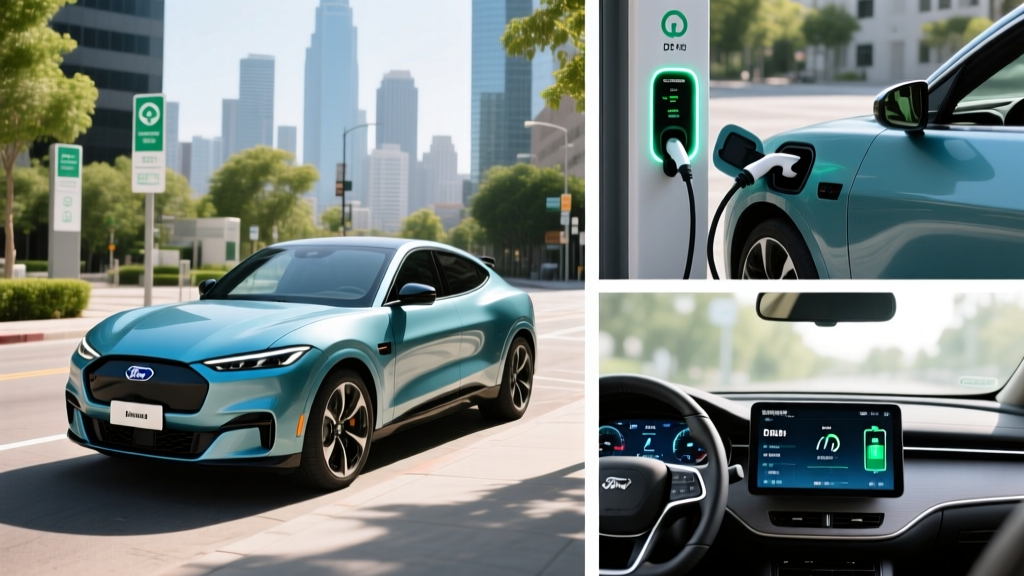
The Ford Mustang Mach-E has been on sale since late 2020, which means we now have multiple model years of real-world ownership data to evaluate. For buyers researching Mach-E reliability, the picture in 2026 is far clearer than it was at launch: the battery pack is holding up well, the NACS charge port is now standard, and Ford's software maturity has improved dramatically after early stumbles. But the Mach-E isn't without its quirks, and understanding where it stands against rivals like the Tesla Model Y, Hyundai IONIQ 5, and Chevrolet Equinox EV requires a hard look at the numbers.
This review breaks down the 2026 Mustang Mach-E across every metric that matters to an EV buyer — range, charging, battery longevity, ownership cost, and the reliability track record that early adopters have established over five years of real-world driving.
2026 Mustang Mach-E Core Specifications
| Spec | Select (RWD) | Premium (AWD) | GT (AWD) |
|---|---|---|---|
| EPA Range | 250 mi | 320 mi (Ext. Range) | 280 mi |
| Battery (usable) | 72 kWh (LFP) | 91 kWh (NMC) | 91 kWh (NMC) |
| Horsepower | 266 hp | 365 hp | 480 hp |
| 0–60 mph | 6.1 sec | 4.8 sec | 3.5 sec |
| Max DC Fast Charge | 115 kW | 150 kW | 150 kW |
| 10–80% DC Time | ~38 min | ~41 min | ~41 min |
| Level 2 Home Rate | 10.5 kW (~30 mi/hr) | 10.5 kW (~30 mi/hr) | 10.5 kW (~30 mi/hr) |
| MPGe (combined) | 103 MPGe | 98 MPGe | 84 MPGe |
| Base MSRP | $39,995 | $48,995 | $57,995 |
Source: fueleconomy.gov and Ford Motor Company. Specs reflect 2026 model year.
Battery Longevity and Mach-E Reliability Data
The most critical question for any used or long-term EV buyer is battery degradation. The Mach-E's track record here is reassuring. Ford uses two battery chemistries depending on trim:
- LFP (Lithium Iron Phosphate) on the Select (standard-range) trims — LFP cells tolerate repeated 100% charges and have longer cycle life, though they are heavier and less energy-dense. Ford recommends you can charge LFP to 100% daily without concern.
- NMC (Nickel Manganese Cobalt) on Premium, GT, and Rally trims with the Extended Range pack — higher energy density for longer range, but best kept between 20–80% for daily use to minimize degradation.
Based on owner-reported data and fleet analyses through 2025, Mach-E Extended Range (NMC) packs are showing approximately 4–6% degradation at 75,000 miles, which is in line with or slightly better than the industry average for liquid-cooled NMC packs. The liquid thermal management system has proven effective at keeping cell temperatures stable in both hot and cold climates.
Ford backs the battery with an 8-year/100,000-mile warranty covering defects and capacity loss below 70% of original. This is the industry-standard threshold and matches competitors like Hyundai and Tesla.
Real-World Range: What the EPA Sticker Doesn't Tell You
- EPA sticker: 320 miles
- Real-world highway (70–75 mph, moderate temps): ~260–280 miles
- Real-world mixed city/highway (55–65 mph avg): ~285–305 miles
- Cold weather (below 30°F, highway): ~210–240 miles
The Mach-E's heat pump (standard on 2025+ models) reduces cold-weather range loss compared to earlier model years, but expect a 20–30% reduction in freezing conditions on highway trips.
The 320-mile EPA figure for the Premium AWD Extended Range is competitive, but efficiency drops noticeably at sustained highway speeds. On a 250-mile interstate trip at 75 mph in summer conditions, expect to arrive with roughly 15–20% State of Charge remaining — comfortable, but not the buffer you'd want in winter. The GT trim's 280-mile EPA rating drops more sharply under aggressive driving; owners who use the GT's performance modes regularly report effective ranges closer to 220–240 miles in mixed use.
Charging Speed: NACS, Tesla Supercharger Access, and Home Setup
For the 2026 model year, Ford has fully transitioned the Mach-E to the NACS (North American Charging Standard) port — the Tesla connector. This means native access to the Tesla Supercharger network (over 25,000 stalls in North America as of 2026) without an adapter, which is arguably the Mach-E's single biggest charging advantage over CCS-equipped rivals.
| Charging Level | Power | Speed (mi/hr added) | Notes |
|---|---|---|---|
| Level 1 (120V) | ~1.4 kW | ~3 mi/hr | Emergency/top-up only |
| Level 2 (240V, 48A) | 10.5 kW | ~30 mi/hr | Full charge overnight (~10 hr for 91 kWh) |
| DC Fast (Std. Range) | 115 kW peak | ~250 mi/hr at peak | 10–80% in ~38 min |
| DC Fast (Ext. Range/GT) | 150 kW peak | ~310 mi/hr at peak | 10–80% in ~41 min; tapers above 80% |
The Mach-E's DC fast-charging speed is its most common criticism. At 150 kW peak, the Extended Range pack charges slower than the Hyundai IONIQ 5 (which peaks at 240 kW on its 800V architecture and does 10–80% in ~18 minutes). The Mach-E's 400V architecture limits peak charge rate, and the charge curve tapers significantly above 80% SoC. For road-trippers who charge frequently, this adds 10–15 minutes per stop compared to the fastest-charging competitors.
At home on a 48-amp Level 2 circuit (requiring a 60-amp breaker), the Mach-E adds roughly 30 miles of range per hour — enough to fully replenish even the 91 kWh pack overnight. Home installation for a Level 2 charger typically costs $800–$2,500 depending on panel proximity and whether your electrical panel needs an upgrade. Always get a quote from a licensed electrician before purchasing equipment.
Pricing, Trims, and Federal Tax Credit Eligibility
The 2026 Mach-E lineup starts at $39,995 for the Select RWD with the standard-range LFP battery and climbs to $57,995 for the GT. A well-equipped Premium AWD Extended Range — the volume seller — typically lands around $51,000–$54,000 with options like Ford's BlueCruise hands-free driving system and panoramic roof.
| Trim | Base MSRP | Federal Credit (§30D) | Effective Price |
|---|---|---|---|
| Select RWD | $39,995 | Up to $7,500* | ~$32,495 |
| Premium AWD (Ext.) | $48,995 | Up to $7,500* | ~$41,495 |
| GT AWD | $57,995 | Up to $7,500* | ~$50,495 |
*IRS §30D eligibility requirements (2026):
- MSRP cap: SUVs/vans/pickups must be under $80,000 — the Mach-E qualifies on all trims.
- Buyer income cap: AGI must not exceed $150,000 (single), $225,000 (head of household), or $300,000 (joint).
- Battery sourcing: Critical minerals and battery components must meet phased-in domestic/free-trade sourcing thresholds. The Mach-E's eligibility has been confirmed by Ford for most trims, but always verify on the IRS qualified vehicle list before purchase, as sourcing rules tighten annually.
- Point-of-sale transfer: You can transfer the credit to the dealer at purchase, reducing the purchase price directly rather than waiting to claim it on your tax return.
Interior, Cargo, and Technology
The Mach-E's cabin is one of its strongest selling points in the midsize electric SUV segment. Ford prioritized practicality:
- Cargo volume: 29.7 cu ft behind the rear seats; 59.7 cu ft with rear seats folded.
- Front trunk (frunk): 4.7 cu ft with a drain plug — useful for tailgating or storing wet gear.
- Rear legroom: 38.9 inches — competitive with the Model Y and IONIQ 5.
- Infotainment: 15.5-inch vertical touchscreen running SYNC 4A. Wireless Apple CarPlay and Android Auto are standard. The interface has improved markedly since 2021, with faster response times and better navigation integration.
The Ford BlueCruise hands-free driving system (available on mapped divided highways) is a standout. It's an SAE Level 2 system — you must remain attentive and keep your eyes on the road, which the cabin camera monitors. BlueCruise covers over 130,000 miles of qualified highways in North America. It does not handle city streets, construction zones, or unmapped roads. Think of it as an advanced cruise control that reduces fatigue on long trips, not a self-driving system.
Mach-E vs. Key Competitors: Which EV Should You Choose?
| Attribute | Mach-E Premium AWD | Tesla Model Y LR AWD | Hyundai IONIQ 5 Limited AWD |
|---|---|---|---|
| EPA Range | 320 mi | 320 mi | 290 mi |
| DC Fast Charge (10–80%) | ~41 min (150 kW) | ~30 min (250 kW) | ~18 min (240 kW, 800V) |
| Starting MSRP | $48,995 | $47,990 | $52,600 |
| Charge Port | NACS (native Supercharger) | NACS (native Supercharger) | NACS (2025+) |
| Battery Warranty | 8 yr / 100,000 mi | 8 yr / 120,000 mi | 10 yr / 100,000 mi |
| 0–60 mph | 4.8 sec | 4.8 sec | 4.5 sec |
| Cargo (rear seats up) | 29.7 cu ft | 30.2 cu ft | 27.2 cu ft |
The Mach-E holds its own in range and cargo space, but the IONIQ 5's 800V architecture delivers dramatically faster charging — a meaningful advantage on road trips. The Model Y benefits from Tesla's vertically integrated Supercharger reliability and over-the-air update cadence. The Mach-E's advantages are its more traditional dealership service network, BlueCruise highway comfort, and a cabin that many reviewers find more refined than the Tesla's minimalist interior.
Pros, Cons, and Who the Mach-E Suits Best
- Native NACS / Supercharger access
- Strong real-world battery longevity data
- Comfortable, well-built interior with good cargo space
- BlueCruise is one of the best Level 2 highway systems
- Competitive range (320 mi EPA on Ext. Range)
- LFP option on base trim for daily 100% charging
- DC fast charging is slow vs. 800V rivals (41 min vs. 18 min)
- Real-world highway range drops to ~260–280 mi
- GT trim's performance modes cut range significantly
- No 800V architecture planned for this generation
- Some early-model-year software bugs lingered (improved by 2025)
The Mach-E is best for: Buyers who want a comfortable, practical electric SUV with access to Tesla's Supercharger network, don't frequently take road trips over 300 miles, and value a traditional dealer service experience. The Premium AWD Extended Range is the sweet spot — 320 miles of EPA range, adequate performance, and strong tax-credit-adjusted value.
Look elsewhere if: You prioritize the fastest possible DC charging (get the IONIQ 5), want maximum range (consider the Tesla Model Y or the upcoming extended-range options), or need a third row (the Mach-E is strictly a two-row SUV).
Frequently Asked Questions
Is the Ford Mustang Mach-E reliable after 5 years on the market?
Yes, by most available metrics. Battery degradation on 2021–2024 models is tracking at 4–6% at 75,000 miles, which is normal for liquid-cooled NMC packs. Early software issues (phantom braking, SYNC glitches) have been largely resolved through over-the-air updates. Ford's dealer network provides wider service access than Tesla's, though EV-specific service training varies by location.
What does the Mach-E cost after the federal tax credit?
The Premium AWD Extended Range drops from $48,995 to approximately $41,495 after the maximum $7,500 §30D credit — assuming you meet income caps and the vehicle's battery sourcing qualifies. Verify current eligibility on the IRS qualified vehicles page before purchasing, as rules update periodically.
How does cold weather affect Mach-E range?
Expect a 20–30% range reduction in sustained freezing temperatures, particularly on highway trips. The standard heat pump (2025+) helps mitigate this compared to earlier models. Preconditioning the battery while plugged in before departure preserves range and improves regenerative braking performance in cold conditions.
Can I charge the Mach-E at Tesla Superchargers?
Yes. The 2026 Mach-E has a native NACS port and can use Tesla Superchargers directly without an adapter. Ford's FordPass app integrates Supercharger routing and payment.
How long does a home Level 2 charge take?
On a 48-amp, 240V Level 2 circuit (10.5 kW), the Extended Range 91 kWh pack charges from empty to full in approximately 10 hours. Most owners who plug in nightly never deplete below 30–40%, meaning a typical overnight session takes 5–6 hours. Installation costs range from $800 to $2,500 depending on your electrical panel's capacity and proximity to the parking location.