The Ford Mustang Mach-E enters its sixth model year in 2026 with a track record long enough to answer the question most EV shoppers are actually asking: how reliable is the Mustang Mach-E over time? Unlike first-year EVs that trade on promises, the Mach-E now has hundreds of thousands of cumulative fleet miles, multiple software overhauls, and a growing body of owner-reported data. This review pairs Ford's official specifications with real-world ownership signals to help you evaluate whether the Mach-E earns a spot on your shortlist — or whether a competitor does it better.
Reliability Track Record: What the Data Shows
The Mach-E's reliability story is mixed but improving. Early 2021–2022 models drew complaints around the 12V auxiliary battery system, phantom drain during extended parking, and occasional build-quality issues (panel gaps, water ingress near the panoramic roof). Ford addressed many of these through OTA (over-the-air) software updates and running production changes. The high-voltage traction battery and electric drive motors have proven durable, with no widespread reports of catastrophic failure or significant capacity loss beyond normal degradation curves.
According to NHTSA complaint data, the Mach-E's complaint volume per units sold is moderate for the segment — lower than some legacy-brand EVs but higher than the Tesla Model Y. Consumer Reports' most recent reliability surveys place the Mach-E in the average-to-above-average range for electric SUVs, with deductions mainly for in-car electronics and minor climate-system quirks rather than powertrain issues.
The critical takeaway: the Mach-E's electric drivetrain is solid. The weak points are ancillary — software, infotainment, and 12V systems — which are largely fixable through updates and dealer visits. If you're buying new in 2026, Ford's latest SYNC 4A software revisions and improved quality control have resolved most early-model headaches.
Range, Battery, and Real-World Efficiency
The 2026 Mach-E Premium Extended Range AWD carries an EPA-estimated 312 miles of range. In real-world highway driving at 70–75 mph, expect 260–280 miles in mild weather. Cold-weather testing (below 32°F) reduces range by approximately 20–30%, bringing the practical winter highway range to roughly 220–250 miles without preconditioning.
| Spec | Select SR RWD | Premium ER RWD | Premium ER AWD | GT ER AWD |
|---|---|---|---|---|
| EPA Range | 250 mi | 320 mi | 312 mi | 290 mi |
| Battery (usable) | 70 kWh (LFP) | 91 kWh (NMC) | 91 kWh (NMC) | 91 kWh (NMC) |
| MPGe (combined) | 105 MPGe | 101 MPGe | 98 MPGe | 89 MPGe |
| kWh/100 mi | 32 kWh | 33 kWh | 34 kWh | 38 kWh |
| Horsepower | 266 hp | 290 hp | 346 hp | 480 hp |
| 0–60 mph | 5.8 sec | 5.5 sec | 4.8 sec | 3.5 sec |
| Drivetrain | RWD | RWD | AWD (dual-motor) | AWD (dual-motor) |
Ford offers the Select trim with a lithium iron phosphate (LFP) battery, which trades energy density for longevity and lower degradation risk. LFP cells tolerate frequent charging to 100% without accelerating wear — a practical advantage for daily commuters who want maximum range without babying the battery. The Extended Range and GT trims use nickel-manganese-cobalt (NMC) chemistry, which packs more energy into the same volume but benefits from daily charge limits around 80–90% for optimal lifespan.
Charging Speed: DC Fast Charge and Home Level 2
Charging speed remains one of the Mach-E's strongest competitive attributes. The Extended Range models support a peak DC fast-charge rate of 150 kW, reaching 10–80% State of Charge in approximately 45 minutes. However, the charge curve is relatively flat — Ford sustains close to peak rate through about 60% SoC before tapering, which means real highway stops are efficient up to 80% but slow considerably above that threshold.
| Charging Level | Power / Rate | Miles Added per Hour | Typical Use Case |
|---|---|---|---|
| Level 1 (120V) | ~1.4 kW | ~3–4 mi/hr | Overnight trickle, emergencies |
| Level 2 (240V, 48A) | 10.5 kW | ~28–32 mi/hr | Home daily charging |
| DC Fast Charge | 150 kW peak | ~200+ mi in 20 min | Road-trip stops |
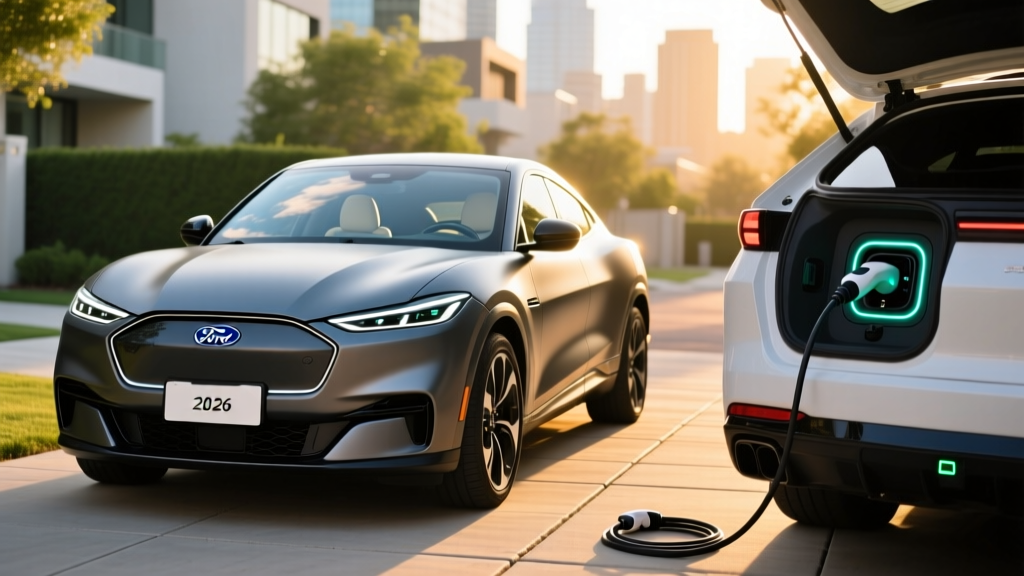
The Mach-E uses the NACS (North American Charging Standard) connector as of the 2025 model year, granting native access to Tesla's Supercharger network — currently the most reliable and expansive DC fast-charging infrastructure in North America. This was a major strategic shift from CCS1 and removes one of the biggest historical objections to non-Tesla EVs.
For home charging, the Ford Mobile Power Cord (included) handles Level 1 and, with a 240V adapter, Level 2 at up to 32A (~7.7 kW). For the full 48A/10.5 kW Level 2 rate, you'll want a dedicated wall connector like the Ford Charge Station Pro or a quality third-party unit (Emporia, ChargePoint, Wallbox) installed on a 60A circuit. A full overnight charge from 20% to 100% at 10.5 kW takes roughly 7–8 hours for the Extended Range battery.
Pricing, Trims, and Federal Tax Credit Eligibility
The 2026 Mach-E lineup starts at $39,995 for the Select Standard Range RWD and climbs to $59,995 for the GT Extended Range AWD before destination charges. Ford has streamlined the trim structure, making the Premium Extended Range AWD the volume seller at approximately $48,995.
| Trim | MSRP | Est. Tax Credit | Effective Price |
|---|---|---|---|
| Select SR RWD | $39,995 | Up to $7,500* | ~$32,495 |
| Premium ER RWD | $45,995 | Up to $7,500* | ~$38,495 |
| Premium ER AWD | $48,995 | Up to $7,500* | ~$41,495 |
| GT ER AWD | $59,995 | Up to $7,500* | ~$52,495 |
*Federal §30D tax credit eligibility depends on multiple factors. The Mach-E qualifies for up to $7,500 under current IRS rules, subject to:
- MSRP cap: SUVs/vans/pickups must be under $80,000 — all Mach-E trims qualify.
- Buyer income cap: AGI must not exceed $150,000 (single), $225,000 (head of household), or $300,000 (joint).
- Battery sourcing: At least a percentage of critical minerals and battery components must be sourced from the U.S. or free-trade-agreement countries. Ford has worked to localize supply chains, but exact qualification at the full $7,500 ($3,750 minerals + $3,750 components) should be verified at the point of sale with your dealer using the VIN-specific IRS lookup tool.
- Point-of-sale transfer: Eligible buyers can apply the credit as an immediate discount at the dealership rather than waiting for a tax refund.
Always confirm your specific eligibility with a tax professional before relying on the credit in your purchase budget.
Cargo Space, Interior, and Daily Livability
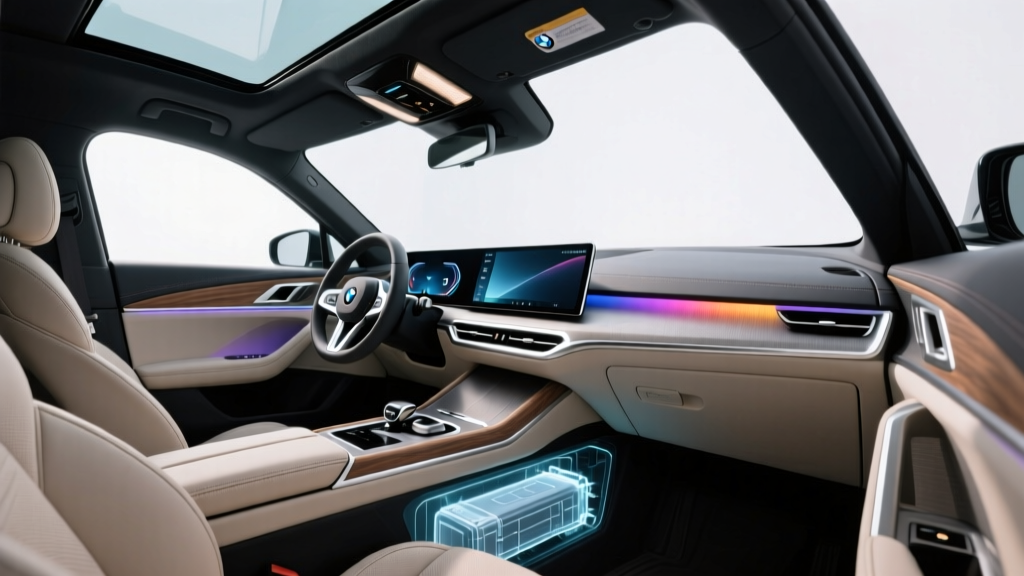
The Mach-E's cabin is one of its strongest selling points versus the more spartan Tesla Model Y. The interior uses quality soft-touch materials, real stitching on the dash and door panels, and a panoramic glass roof that opens up the cabin. The massive 15.5-inch vertical touchscreen dominates the center stack, running SYNC 4A with wireless Apple CarPlay and Android Auto.
Practical dimensions matter for family buyers:
- Cargo volume (rear seats up): 29.7 cu ft
- Cargo volume (rear seats folded): 59.7 cu ft
- Front trunk (frunk): 4.7 cu ft (drainable — useful for ice and beverages or wet gear)
- Rear legroom: 38.9 inches
- Front headroom: 40.4 inches
Two adults in the rear seat will find ample legroom and headroom. A third passenger in the middle position is less comfortable due to the floor hump and narrow seat cushion. For families with two children in car seats, the Mach-E works well, though the sloping roofline limits rear-facing seat installation compared to boxier SUVs like the Hyundai Ioniq 5 or Kia EV6.
Driver Assistance and Technology
The Mach-E comes standard with Ford Co-Pilot360 Assist 2.0, which includes adaptive cruise control with stop-and-go, lane centering, evasive steer assist, and intersection assist. The available BlueCruise system enables hands-free driving on over 130,000 miles of pre-mapped divided highways — Ford's system monitors driver attention through an infrared camera and allows you to take your hands off the wheel while maintaining eyes-on engagement.
BlueCruise is a Level 2 driver-assistance system under the SAE automation scale. The driver must remain alert, keep eyes on the road, and be ready to take over immediately. It does not navigate complex urban environments, construction zones, or unmapped roads autonomously. Only Level 4 robotaxi services (Waymo, Zoox) operate without a human driver.
The infotainment system supports OTA updates, and Ford has progressively improved the interface since the Mach-E's 2021 launch. The 10.2-inch digital instrument cluster is clear and configurable, though some owners note the absence of physical HVAC controls requires more screen interaction than ideal while driving.
Pros, Cons, and Competitive Verdict
Pros
- Proven reliability on high-voltage battery and drive motors with minimal degradation reports
- NACS connector provides native Tesla Supercharger access
- Spacious, well-finished interior with quality materials and panoramic roof
- Strong real-world range: 312 EPA miles, ~270 highway miles achievable
- Competitive pricing with full $7,500 tax credit potential
- BlueCruise hands-free highway driving on mapped routes
- Drainable frunk adds practical versatility
Cons
- DC fast charging peaks at 150 kW — slower than Hyundai/Kia's 800V architecture (~235 kW)
- No physical HVAC buttons — climate controls are touchscreen-only
- Early-model 12V battery and software issues may linger in used examples
- GT trim's 89 MPGe is less efficient than rivals at similar power levels
- Rear middle seat is cramped for adult passengers
Is the Mach-E Worth Buying vs. Competitors?
Choose the Mach-E if: You prioritize interior quality and comfort over maximum charging speed, want NACS Supercharger access without an adapter, prefer a traditional dealership service experience, and value Ford's proven LFP battery option for worry-free daily charging to 100%.
Choose the Hyundai Ioniq 5 if: Ultra-fast 800V DC charging (10–80% in ~18 minutes) is your priority, or you need a more spacious rear seat for three-across car seats.
Choose the Tesla Model Y if: You want the lowest price per mile of range, the most mature Supercharger/OTA ecosystem, and don't mind a minimalist interior with minimal physical controls.
Warranty Coverage
Ford backs the Mach-E with competitive warranty terms:
- Basic vehicle warranty: 3 years / 36,000 miles
- Powertrain warranty: 5 years / 60,000 miles
- High-voltage battery: 8 years / 100,000 miles (capacity retention threshold: 70% of original capacity)
- Electric drive components: 8 years / 100,000 miles
The 70% battery capacity retention threshold is standard across the industry. Based on current degradation data from high-mileage Mach-E owners, most batteries retain 90%+ capacity at 60,000 miles — well above the warranty threshold. Replacement cost, should you ever need it outside warranty, is estimated between $18,000 and $24,000 depending on the battery pack, though full replacements remain rare.
Frequently Asked Questions
What is the real-world range of the Mustang Mach-E?
The EPA rates the Premium Extended Range AWD at 312 miles. In real-world highway driving at 70–75 mph in moderate temperatures, expect 260–280 miles. In freezing weather, range drops to roughly 220–250 miles unless you precondition the battery while plugged in, which warms the pack and recovers some lost efficiency.
How fast does the Mach-E charge at home and on the road?
On a 48A Level 2 home charger, the Mach-E adds roughly 30 miles of range per hour, fully replenishing the Extended Range battery in 7–8 hours. On a DC fast charger, it peaks at 150 kW and charges from 10–80% in about 45 minutes. The NACS connector gives you native access to Tesla Superchargers without an adapter.
Does the 2026 Mach-E qualify for the $7,500 federal EV tax credit?
The Mach-E is eligible for up to $7,500 under IRS §30D rules, but your personal eligibility depends on your adjusted gross income (must be under $150K single / $300K joint), the vehicle's MSRP (under $80K for SUVs — all trims qualify), and the battery's critical-mineral and component sourcing. Verify VIN-specific eligibility at the dealership using the IRS lookup tool and consult a tax professional.
Is the Mach-E more reliable than the Tesla Model Y?
Reliability data from Consumer Reports and owner forums suggests the two are competitive, with different weak spots. The Mach-E has had fewer reports of suspension and build-quality issues but more complaints around infotainment software. The Model Y benefits from Tesla's vertically integrated software and OTA update cadence but has drawn criticism for panel gaps and interior trim durability. Both vehicles' high-voltage batteries have proven reliable over 100,000+ miles.
Who is the Mustang Mach-E best suited for?
The Mach-E is ideal for daily commuters and small families who want a comfortable, well-built electric crossover with strong range and access to the Supercharger network for road trips. The LFP Select trim is especially appealing for high-mileage commuters who want to charge to 100% daily without battery degradation concerns. The GT variant suits enthusiasts who want sports-car acceleration in a practical package, though efficiency takes a hit. It's less ideal for buyers who need three-wide rear seating or the fastest possible DC charging speeds.