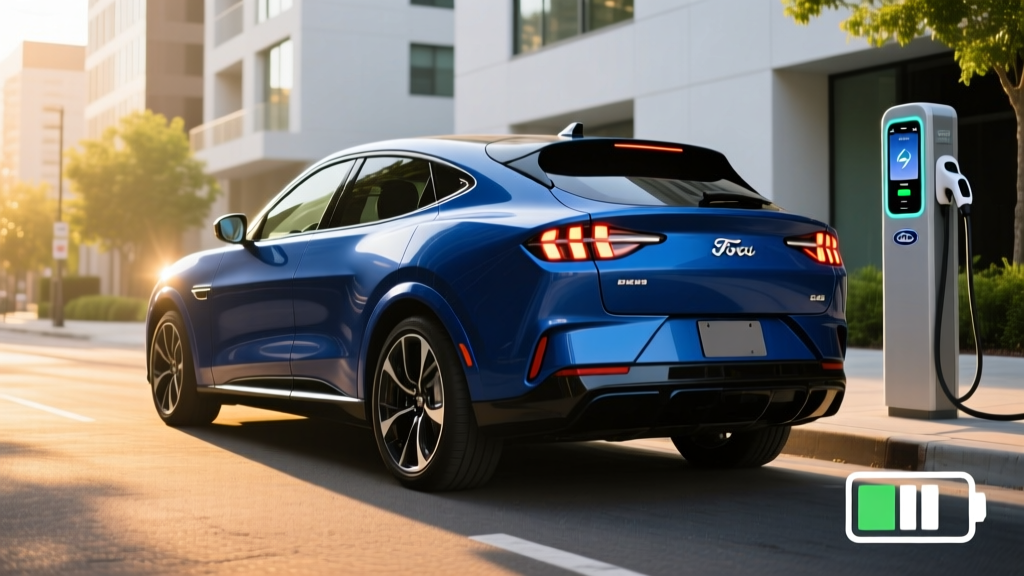
Ford's electric pony car doesn't sip gasoline, so searching for the Ford Mustang Mach-E MPG is really a search for efficiency expressed as MPGe and kWh/100 miles. The 2026 Mach-E carries over the updated battery pack introduced for the 2025 model year, delivering up to an EPA-estimated 320 miles of range in its most efficient configuration and a combined efficiency rating that makes it one of the more economical electric SUVs in its class. Here's every number that matters — from real-world range to charging curves to the tax-credit math that determines what you actually pay.
2026 Mustang Mach-E Efficiency: MPGe and kWh/100 Miles Explained
Because the Mach-E is a battery-electric vehicle (BEV), it has no miles-per-gallon rating. The EPA uses MPGe (miles per gallon equivalent) to translate electrical energy into a gasoline-comparable figure: 33.7 kWh of electricity equals one gallon of gas. For the 2026 Mach-E, here's how the lineup breaks down by drivetrain and battery size:
| Configuration | Battery (usable kWh) | MPGe City | MPGe Hwy | MPGe Combined | kWh/100 mi |
|---|---|---|---|---|---|
| Select RWD (Standard Range) | 72 kWh (LFP) | 111 | 94 | 103 | 33 |
| Premium RWD (Extended Range) | 91 kWh (NMC) | 111 | 96 | 105 | 32 |
| Premium AWD (Extended Range) | 91 kWh (NMC) | 103 | 89 | 96 | 35 |
| GT AWD | 91 kWh (NMC) | 94 | 80 | 87 | 39 |
| GT Performance Upgrade | 91 kWh (NMC) | 90 | 77 | 84 | 40 |
The efficiency spread matters for your wallet. At the US average electricity rate of ~$0.17/kWh, the RWD Extended Range model costs roughly $5.44 to drive 100 miles. The GT with the Performance Upgrade bumps that to about $6.80/100 mi. Compare that to a gas SUV averaging 25 MPG at $3.40/gallon — $13.60 per 100 miles — and the Mach-E's efficiency advantage is clear, even on grid power alone.
EPA Range vs. Real-World Range: What You'll Actually Get
Premium RWD Extended Range: EPA 320 mi → Expect ~270–290 mi on highway trips at 70 mph; ~225–250 mi in sub-30°F winter conditions.
Select RWD Standard Range: EPA 250 mi → Expect ~215–230 mi highway; ~180–200 mi in deep cold.
GT AWD: EPA 280 mi → Expect ~240–255 mi highway; ~200–220 mi in cold weather.
Real-world figures based on sustained highway driving at 70–75 mph, moderate climate control use, and typical battery preconditioning. Cold-weather estimates assume temperatures below 30°F without garage preconditioning.
The Mach-E's EPA numbers are achievable in mixed suburban driving at moderate speeds. However, highway driving at 75+ mph pushes aerodynamic drag higher, and the Mach-E's crossover profile isn't as slippery as a sedan. Cold weather compounds the loss: LFP chemistry in the Standard Range pack is somewhat more resistant to cold-induced degradation during driving but still loses range due to cabin heating demands and reduced regen effectiveness.
One practical note: the Mach-E's heat pump (standard on Extended Range trims) mitigates winter range loss compared to resistive heating systems. If you live in a cold climate, prioritizing an Extended Range model with a heat pump is the single best efficiency decision you can make.
Battery Specs: Chemistry, Capacity, and What It Means for You
The 2026 Mach-E uses two distinct battery chemistries depending on trim, and this choice affects everything from daily charging habits to long-term longevity:
| Attribute | Standard Range (LFP) | Extended Range (NMC) |
|---|---|---|
| Chemistry | Lithium Iron Phosphate (LFP) | Nickel Manganese Cobalt (NMC) |
| Usable Capacity | 72 kWh | 91 kWh |
| Daily Charging to 100% | Recommended — LFP tolerates full SoC | 80% daily; 100% for trips only |
| Energy Density | Lower (heavier pack) | Higher (more range per lb) |
| Cycle Life | 3,000+ cycles typical | 1,500–2,000 cycles typical |
| Cold-Weather Performance | Slightly reduced charge acceptance | Better cold-charge performance |
| Trims Available | Select | Premium, GT, California Route 1 |
The LFP pack in the Select trim is a standout for commuters who can charge at home nightly. Ford explicitly recommends charging LFP packs to 100% at least once a week for accurate state-of-charge calibration. The NMC packs in higher trims offer more range but benefit from an 80% daily charge limit to maximize longevity — something the Mach-E's infotainment system lets you set easily.
Charging Speed: DC Fast, Level 2, and Level 1 Breakdown
Charging speed is where the Mach-E has improved meaningfully since its 2021 launch. The 2026 model with the Extended Range battery peaks at 150 kW on DC fast charging, while the Standard Range LFP pack peaks at approximately 115 kW. Here's the full picture:
| Charging Level | Standard Range (72 kWh LFP) | Extended Range (91 kWh NMC) |
|---|---|---|
| DC Fast Charge (peak) | 115 kW | 150 kW |
| DC 10–80% Time | ~38 min | ~32 min |
| Level 2 (240V, 48A) | 11.5 kW (~32 mi/hr) | 11.5 kW (~32 mi/hr) |
| Level 2 Full Charge (0–100%) | ~7.5 hours | ~9.5 hours |
| Level 1 (120V, 12A) | ~1.4 kW (~4 mi/hr) | ~1.4 kW (~4 mi/hr) |
| Connector (DC) | CCS1 (NACS adapter available) | CCS1 (NACS adapter available) |
Charging curve reality check: The 150 kW peak on the Extended Range model is not sustained across the entire session. In real-world DC fast charging, the Mach-E holds approximately 140–150 kW from roughly 10% to 45% SoC, then tapers progressively — dropping to ~90 kW by 65% and ~45 kW by 80%. This taper is normal and protects battery health, but it means the advertised 10–80% time of ~32 minutes assumes optimal battery temperature (preconditioning engaged via navigation to a charger).
For home charging, the included Ford Mobile Charger provides Level 1 (120V) out of the box. For Level 2, Ford's Connected Charge Station (48A, hardwired) delivers the full 11.5 kW. Budget $500–$1,500 for professional Level 2 installation depending on your electrical panel's capacity and the run distance from panel to garage — a 200A panel upgrade can add $1,500–$3,000 if your home needs one.
Ford provides a complimentary NACS adapter for 2026 Mach-E owners, unlocking access to Tesla's Supercharger network — the largest and most reliable DC fast-charging network in the US. This is a significant practical advantage for road-trippers.
Performance, Drivetrain, and Specs at a Glance
| Spec | Select RWD | Premium AWD ER | GT | GT Perf. Upgrade |
|---|---|---|---|---|
| Horsepower | 266 hp | 365 hp | 480 hp | 480 hp |
| Torque (lb-ft) | 317 | 428 | 600 | 634 |
| 0–60 mph | 6.3 sec | 5.1 sec | 3.8 sec | 3.5 sec |
| Drivetrain | RWD (single motor) | AWD (dual motor) | AWD (dual motor) | AWD (dual motor) |
| EPA Range | 250 mi | 300 mi | 280 mi | 265 mi |
| Towing Capacity | 1,500 lb | 2,300 lb | 2,300 lb | 2,300 lb |
| Cargo (rear seats up) | 29.7 cu ft | 29.7 cu ft | 29.7 cu ft | 29.7 cu ft |
| Cargo (seats folded) | 59.7 cu ft | 59.7 cu ft | 59.7 cu ft | 59.7 cu ft |
| Frunk | 4.7 cu ft | 4.7 cu ft | 4.7 cu ft | 4.7 cu ft |
| Rear Legroom | 38.9 in | 38.9 in | 38.9 in | 38.9 in |
The Mach-E GT with the Performance Upgrade is genuinely quick — 3.5 seconds to 60 mph rivals a Porsche Cayenne Turbo for a fraction of the price. But the sweet spot for most buyers is the Premium AWD Extended Range: 365 hp, 5.1-second 0–60, 300 miles of EPA range, and a price that stays within the federal tax credit MSRP cap.
Pricing, Trim Levels, and Federal Tax Credit Eligibility
Ford restructured Mach-E pricing for 2026 to stay competitive against the Tesla Model Y, Hyundai Ioniq 5, and Chevrolet Equinox EV. Here's where each trim lands and whether the §30D federal EV tax credit applies:
| Trim | Base MSRP | Est. As-Tested* | §30D Credit Eligible? | Effective Price (with credit) |
|---|---|---|---|---|
| Select RWD SR | $39,995 | $41,500 | Yes (if sourcing reqs met) | ~$32,495 |
| Premium RWD ER | $45,495 | $48,000 | Yes (if sourcing reqs met) | ~$37,995 |
| Premium AWD ER | $48,495 | $51,000 | Yes (if sourcing reqs met) | ~$40,995 |
| GT AWD | $55,995 | $59,500 | Yes (SUV MSRP cap: $80,000) | ~$48,495 |
*As-tested includes typical options and destination charge.
The Mach-E qualifies as an SUV under IRS rules, which sets the MSRP cap at $80,000 — every trim clears this threshold. However, full §30D credit eligibility depends on three additional factors that change periodically:
- Buyer income caps: Modified AGI must not exceed $300,000 (joint), $225,000 (head of household), or $150,000 (single). See IRS §30D guidelines for current-year thresholds.
- Battery component manufacturing: A percentage of battery components must be manufactured or assembled in North America (threshold increases annually).
- Critical minerals sourcing: A percentage of critical minerals must be sourced from the US or free-trade-agreement partners (threshold increases annually).
The credit can now be transferred at the point of sale, meaning you can apply the up-to-$7,500 credit as an immediate price reduction at the dealership rather than waiting for tax filing. Confirm eligibility with your dealer and a tax professional at time of purchase — sourcing rules are subject to annual adjustments.
Tech, Driver Assists, and Ownership Experience
The 2026 Mach-E continues with Ford's SYNC 4A infotainment on a 15.5-inch vertical touchscreen. Wireless Apple CarPlay and Android Auto are standard, and the system supports over-the-air (OTA) updates for powertrain calibration, infotainment features, and BlueCruise improvements.
Ford BlueCruise 1.4 (hands-free driving on pre-qualified divided highways) is available on Premium and GT trims. BlueCruise is an SAE Level 2 driver-assistance system — you must remain attentive and ready to take over at all times. It is not self-driving. In practice, BlueCruise handles lane centering and adaptive cruise competently on mapped highways, but construction zones and faded lane markings still require immediate driver intervention.
Other tech highlights include the Phone-as-a-Key feature (unlock and drive with your smartphone), a panoramic fixed glass roof, and the available B&O sound system with 10 speakers. The frunk (front trunk) includes a drain plug, making it useful as a tailgate cooler — a genuinely clever touch competitors lack.
Warranty Coverage
Ford provides an 8-year/100,000-mile warranty on the high-voltage battery and electric powertrain components. The battery warranty guarantees the pack will retain at least 70% of its original capacity during the coverage period. The basic vehicle warranty is 3 years/36,000 miles. This coverage is competitive with Hyundai's 10-year/100,000-mile battery warranty but shorter than Tesla's 8-year/120,000-mile (Model Y AWD) coverage.
Pros, Cons, and Who Should Buy the Mach-E
- Up to 320 mi EPA range (RWD ER) — competitive for the class
- NACS adapter included — Tesla Supercharger access
- LFP battery option for daily 100% charging without degradation worry
- GT Performance Upgrade: 3.5-sec 0–60 at under $60K
- All trims under $80K MSRP cap for §30D tax credit
- Spacious rear seat (38.9" legroom) and usable frunk
- BlueCruise hands-free highway driving available
- OTA updates continue to improve the vehicle post-purchase
- DC fast charge peak of 150 kW trails Hyundai Ioniq 5's ~240 kW
- No rear wiper — visibility issue in rain/snow
- 10–80% DC charge time (~32 min) is mid-pack, not class-leading
- Ride quality firm on GT trims with 20" wheels
- Cargo space (29.7 cu ft) trails Model Y (~30.2 cu ft behind rear seats, more with under-floor)
- Phone-as-a-Key can be unreliable with certain phone models
- BlueCruise requires a subscription after the trial period
Who the Mach-E Suits Best
Daily commuters (20–60 mi round trip): The Select RWD with LFP battery is ideal — charge to 100% nightly, never think about degradation, and enjoy low running costs. With a home Level 2 charger, you'll rarely visit a public station.
Families needing space and AWD: Premium AWD Extended Range delivers 300 miles of range, 365 hp for confident merging, and enough cargo room for strollers and groceries. The rear seat fits two car seats with room for a middle passenger.
Performance seekers: GT with Performance Upgrade delivers sports-car acceleration in a practical crossover. Just accept the range and efficiency trade-off — 265 miles EPA and 84 MPGe combined.
Road trippers: The NACS adapter and Supercharger access make the Mach-E viable for long-distance travel, though the ~32-minute 10–80% charge time means slightly longer stops than an Ioniq 5 or Tesla Model Y.
How the Mach-E Stacks Up Against Key Competitors
The Mach-E competes in the most crowded EV crossover segment. Here's how it compares on the metrics buyers care about most:
| Spec | Mach-E Premium AWD ER | Tesla Model Y LR AWD | Hyundai Ioniq 5 AWD | Kia EV6 GT-Line AWD |
|---|---|---|---|---|
| EPA Range | 300 mi | 320 mi | 290 mi | 282 mi |
| MPGe Combined | 96 | 109 | 98 | 100 |
| Peak DC kW | 150 kW | ~170 kW | ~240 kW | ~240 kW |
| 10–80% DC Time | ~32 min | ~30 min | ~18 min | ~18 min |
| 0–60 mph | 5.1 sec | 4.8 sec | 5.1 sec | 4.5 sec |
| Base MSRP (AWD) | $48,495 | $48,990 | $50,200 | $51,200 |
| NACS Native/Adapter | Adapter included | Native NACS | Adapter avail. | Adapter avail. |
The Mach-E doesn't win any single category outright — the Ioniq 5 charges faster, the Model Y goes farther, and the EV6 is quicker. But the Mach-E's combination of competitive pricing, included NACS adapter, LFP battery option for lower trims, and strong dealership support network makes it a well-rounded choice that doesn't force compromises.
Frequently Asked Questions
What is the real-world highway range of the Mustang Mach-E?
For the Premium RWD Extended Range (EPA 320 mi), expect approximately 270–290 miles on a flat highway at 70 mph in mild weather. AWD models drop to roughly 250–270 miles. In sub-freezing temperatures, reduce those figures by 15–25% depending on how aggressively you use cabin heat. Preconditioning the battery and cabin while plugged in before departure recovers a meaningful portion of cold-weather range.
How fast does the Mach-E charge at home and on the road?
On a Level 2 home charger (240V, 48A), the Mach-E adds roughly 32 miles of range per hour, with a full charge taking 7.5–9.5 hours depending on battery size. On DC fast chargers, the Extended Range model peaks at 150 kW and charges from 10–80% in about 32 minutes under optimal conditions. The Standard Range LFP model peaks at 115 kW with a 10–80% time of approximately 38 minutes.
Does the 2026 Mach-E qualify for the $7,500 federal EV tax credit?
All 2026 Mach-E trims fall under the $80,000 SUV MSRP cap. Eligibility for the full credit depends on your income (AGI limits apply), and the vehicle's battery must meet the current-year critical-mineral and component-sourcing thresholds defined by the IRS. Check the latest rules at irs.gov and confirm with your dealer and tax professional before purchase. The credit can be applied at point of sale as an immediate price reduction.
Is the Mach-E worth buying over a Tesla Model Y?
It depends on your priorities. The Model Y offers slightly more range, native NACS charging, and a more mature Supercharger experience. The Mach-E counters with a more traditional dealership purchase and service experience, an included NACS adapter, a physical instrument cluster (some drivers prefer this over Tesla's screen-only approach), and the LFP battery option on lower trims. If you value service accessibility and don't want to rely on Tesla's ecosystem, the Mach-E is a strong alternative.
What's the biggest drawback of the Mach-E?
The most common owner complaint is DC fast-charge speed. At 150 kW peak, the Mach-E charges noticeably slower than the Hyundai Ioniq 5 and Kia EV6 (both ~240 kW) on road trips. If you regularly take 300+ mile highway trips and want minimal charging stops, this is a meaningful difference — roughly 14 extra minutes per 10–80% session compared to the Korean platforms.
How much does it cost to charge a Mach-E vs. filling a gas SUV?
At the US average electricity rate of $0.17/kWh, charging the 91 kWh Extended Range battery from empty to full costs roughly $15.47 — yielding up to 320 miles of range. A comparable gas SUV getting 25 MPG at $3.40/gallon would cost $43.52 for the same distance. Home charging saves approximately $28 per full "tank," or roughly $1,400 per year at 12,000 annual miles. Public DC fast charging at $0.35–$0.50/kWh narrows the gap but still beats gasoline.