Electric Ford Mustang Mach-E Malfunctions: What Buyers Need to Know
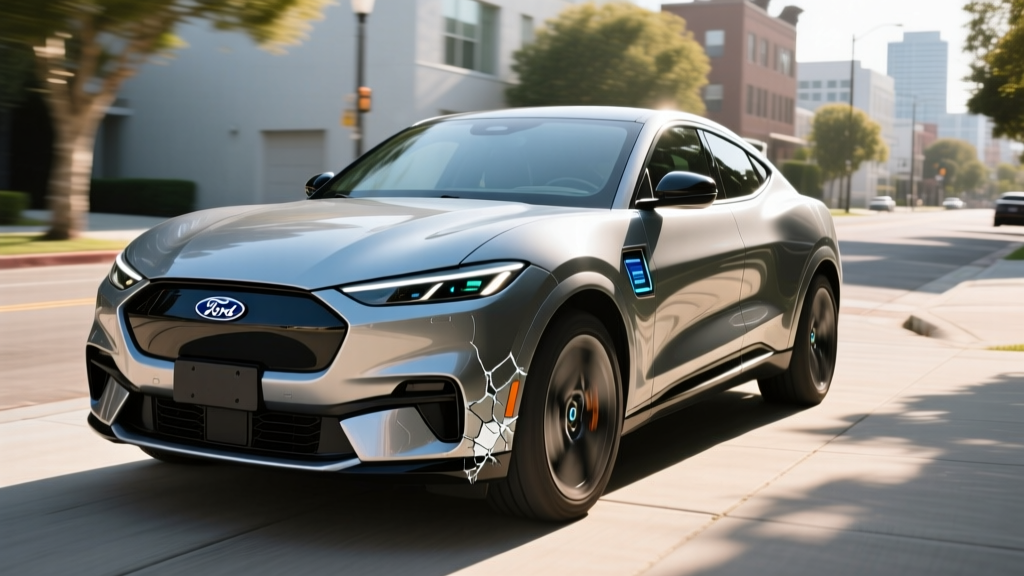
If you're researching electric Ford Mustang Mach-E malfunctions, here's the direct answer: The Mach-E (2021–2026) has faced documented issues including high-voltage battery contactor failures leading to sudden power loss, 12V battery drain, software glitches in the SYNC 4A infotainment system, and occasional brake caliper stiction. Ford issued recalls for the battery contactor issue (NHTSA Recall 22V-412) and a driveshaft fracture on GT models. While these are real concerns, the Mach-E's overall reliability has improved with software updates and manufacturing revisions for 2024–2026 models. Most reported issues are covered under Ford's 8-year/100,000-mile high-voltage battery warranty or the 3-year/36,000-mile bumper-to-bumper warranty.
Quick Verdict: The Mach-E's malfunction profile is comparable to other early-adopter EVs. The serious battery contactor recall has been addressed via software and hardware updates. For 2026 model-year buyers, most legacy issues have been resolved, but pre-purchase inspection on used 2021–2023 models is essential.
Documented Mach-E Malfunctions: NHTSA Data and Recalls
Let's look at the hard data. According to NHTSA records, the Mach-E has accumulated several recalls and technical service bulletins (TSBs) across its production run:
| Issue | Affected Model Years | NHTSA Recall/TSB | Status |
|---|---|---|---|
| High-voltage battery contactor welding (sudden power loss) | 2021–2022 | 22V-412 | Software update + contactor replacement completed |
| Driveshaft fracture (GT AWD models) | 2022 | 22V-775 | Driveshaft replacement under recall |
| Rear brake caliper stiction | 2021–2023 | TSB 23-2156 | Caliper service/replacement |
| 12V battery premature drain | 2021–2024 | Multiple TSBs | Software patches; improved 12V management in 2025+ models |
| SYNC 4A infotainment freezing/rebooting | 2021–2024 | OTA updates | Largely resolved via over-the-air updates |
The battery contactor issue deserves context. Under sustained full-throttle acceleration (drag strip or repeated hard launches), the DC fast-charge contactors in the high-voltage battery could overheat and weld open or closed. If welded open, the vehicle loses motive power — a serious safety concern. Ford's fix included a software update that monitors contactor temperature and limits power delivery preemptively, plus physical contactor replacement for affected vehicles. As of 2024–2026 production, revised contactor hardware is standard.
Real-World Reliability: Owner Reports and Forum Data
Beyond official recalls, Mach-E owner communities (Mach-E Forum, Reddit r/MachE) consistently surface these patterns:
- Phantom 12V drain: The Mach-E's 12V auxiliary battery can die if the vehicle sits unplugged for 2–3 weeks, especially in cold weather. Ford's OTA updates improved the DC-DC converter's willingness to top up the 12V from the traction battery, but owners of 2021–2023 models still report occasional dead 12V batteries. A $200–$300 AGM 12V replacement typically resolves this.
- Charge port door latch failures: The motorized charge port door on 2021–2022 models occasionally fails to latch or open. Replacement runs $350–$500 out of warranty.
- Tire wear: The Mach-E's instant torque and heavy curb weight (4,700–5,000 lbs depending on trim) accelerates tire wear. Owners report needing new tires at 25,000–30,000 miles — roughly 30% sooner than comparable ICE SUVs. Budget $800–$1,200 for a set of EV-rated touring tires.
- BlueCruise quirks: Ford's Level 2 driver-assistance system occasionally disengages on poorly marked highways or in heavy rain. This is normal Level 2 behavior — the driver must remain engaged at all times — but some owners report overly sensitive driver-monitoring camera alerts.
2026 Mach-E: What's Changed and Current Specs
The 2026 Ford Mustang Mach-E carries forward significant improvements from the 2025 refresh. Here are the current specs by trim:
| Spec | Select (RWD) | Premium (eAWD) | GT (eAWD) |
|---|---|---|---|
| Battery (usable) | 72 kWh (LFP) | 91 kWh (NMC) | 91 kWh (NMC) |
| EPA Range | 250 mi | 310 mi | 280 mi |
| Real-World Highway Range* | ~210 mi | ~260 mi | ~235 mi |
| Peak DC Fast Charge | 150 kW | 170 kW | 170 kW |
| 10–80% DC Charge Time | ~32 min | ~36 min | ~36 min |
| Level 2 Charge Rate | 10.5 kW | 10.5 kW | 10.5 kW |
| Horsepower | 266 hp | 346 hp | 480 hp |
| 0–60 mph | 6.3 sec | 5.1 sec | 3.5 sec |
| Base MSRP | $42,995 | $49,995 | $59,995 |
*Real-world highway range estimated at 70 mph in moderate temperatures (60–75°F). Expect 15–25% range reduction in sub-30°F cold weather due to battery heating load and cabin HVAC draw.
The shift to LFP (lithium iron phosphate) chemistry on the Select trim is notable. LFP batteries trade some energy density for superior cycle life, thermal stability, and the ability to charge routinely to 100% without degradation concerns. For daily commuters who charge at home nightly, LFP is arguably the better choice. The Premium and GT trims retain NMC chemistry for maximum range and power.
Mach-E vs. Gas SUV: 5-Year Ownership Cost Breakdown
Here's where the EV math gets concrete. We're comparing a 2026 Mach-E Premium eAWD against a 2026 Ford Edge ST-Line (a similarly sized gas SUV) over 5 years and 75,000 miles:
| Cost Category | 2026 Mach-E Premium eAWD | 2026 Ford Edge ST-Line (Gas) |
|---|---|---|
| Purchase Price (MSRP) | $49,995 | $42,500 |
| Federal Tax Credit (§30D)* | –$7,500 (if eligible) | $0 |
| Effective Purchase Price | $42,495 | $42,500 |
| Fuel/Energy (75k mi) | $3,900 (home L2 avg $0.14/kWh) | $8,400 (24 MPG combined, $3.60/gal) |
| Maintenance (5 yr) | $1,200 (cabin filter, brake fluid, wipers, tires) | $4,800 (oil, filters, brakes, transmission fluid, spark plugs) |
| Insurance (5 yr avg) | $9,500 | $7,200 |
| Tire Replacement (1 set) | $1,100 | $800 |
| 5-Year Total Cost | $58,195 | $63,700 |
*Federal §30D tax credit eligibility requires: buyer AGI under $150k (single) / $300k (joint), vehicle MSRP under $80,000 (SUVs), and compliance with battery critical-mineral and component sourcing rules. Credit can be applied at point of sale as of 2024+. Verify current-year eligibility at IRS.gov. The Mach-E currently qualifies for the full $7,500 when all sourcing requirements are met.
The Mach-E wins on energy and maintenance costs by a combined $8,100 over five years, but loses roughly $2,300 on higher insurance premiums (EVs typically cost 15–25% more to insure due to specialized repair requirements and higher parts costs). Net savings: approximately $5,500 over five years, assuming you qualify for the full tax credit and charge primarily at home.
Common Misconceptions About Mach-E Reliability
| Myth | Fact |
|---|---|
| "The battery will need replacing at 100k miles." | Ford's high-voltage battery warranty guarantees 70% capacity retention for 8 years/100,000 miles. Real-world degradation data from 2021 Mach-E owners shows ~8–12% capacity loss at 80,000 miles. Full battery replacement (if ever needed) costs $15,000–$20,000, but catastrophic failure outside of recalled contactor issues is extremely rare. |
| "EVs break down more than gas cars." | EVs have far fewer moving parts — no engine, transmission, exhaust, or fuel system. The Mach-E's powertrain-related failures are largely software and contactor issues that don't strand drivers the way a blown head gasket or failed transmission does in an ICE vehicle. Regenerative braking also extends brake pad life significantly. |
| "You can't drive a Mach-E in cold weather." | Cold weather reduces range by 15–25% (verified in EPA testing). A Mach-E Premium with 310 miles EPA range drops to roughly 230–260 miles in sub-freezing conditions. Preconditioning the battery while plugged in mitigates this and preserves fast-charging speed. |
| "If the 12V dies, the whole car is bricked." | A dead 12V battery prevents the vehicle from "starting" (closing the high-voltage contactors), but it does not damage the traction battery. A jump-start or portable 12V booster pack restores normal operation. Ford's 2025+ software updates significantly improved 12V maintenance charging from the main battery. |
Decision Framework: Is the Mach-E Right for You?
Choose the Mach-E if:
- You have access to Level 2 home charging (a 240V/48A circuit adds ~32 miles of range per hour of charging — essential for daily convenience)
- Your daily commute is under 100 miles round-trip (covers 90%+ of Mach-E owners without mid-day charging)
- You qualify for the §30D federal tax credit (income and sourcing requirements met)
- You value low maintenance costs and smooth, quiet acceleration
- You want a mid-size electric crossover with competitive tech (SYNC 4A, BlueCruise, OTA updates)
Look elsewhere (or consider a PHEV) if:
- You lack reliable home or workplace charging and depend entirely on public DC fast chargers (adds time, cost, and unpredictability)
- You regularly tow over 2,500 lbs (the Mach-E's max tow rating is 2,200–3,300 lbs depending on trim; an F-150 Lightning or Rivian R1S is better for heavy towing)
- You live in a region with extreme cold (below 0°F regularly) and need consistent 300+ mile range without planning — consider the Hyundai Ioniq 5 (320 mi EPA) or Tesla Model Y (330 mi EPA) which have stronger heat pump systems
- You plan to keep the vehicle 10+ years and want maximum long-term battery certainty — the Toyota RAV4 Prime PHEV offers 42 miles of electric range with Toyota's legendary hybrid reliability as a fallback
What First-Time EV Buyers Should Know About the Mach-E
If the Mach-E is your first EV, here are the ownership realities that spec sheets don't highlight:
Home charging is non-negotiable for convenience. A Level 2 home charger installation typically costs $800–$2,500 total (charger hardware: $400–$700; electrician labor and permit: $400–$1,800). If your electrical panel needs a 200A upgrade, add $1,500–$3,000. Without home charging, you'll rely on public DC fast chargers that cost $0.30–$0.50/kWh (vs. $0.10–$0.18/kWh for residential electricity) and require 25–40 minutes per session.
Plan for charging curve taper. The Mach-E's peak 170 kW DC fast-charge rate is sustained only between roughly 10–55% state of charge. Above 80%, the charge rate drops to 30–50 kW to protect battery health. A "36-minute 10–80% charge" is accurate, but charging from 80–100% can take an additional 45+ minutes. Road-trip strategy: charge to 80%, then drive.
Maintenance is minimal but not zero. Budget for cabin air filter replacement ($50–$80 annually), brake fluid flush every 3 years (~$120), windshield washer fluid, wiper blades, and tire rotation every 7,500 miles. The regenerative braking system means brake pads often last 80,000–120,000 miles.
Insurance will be higher. Get a quote before purchasing. Mach-E insurance premiums average 18–22% above a comparably priced gas SUV, driven by higher repair costs for collision damage (specialized high-voltage safety protocols, aluminum body panels) and the vehicle's strong acceleration profile.
Frequently Asked Questions
Has Ford fixed the battery contactor problem on newer Mach-E models?
Yes. The 2024–2026 Mach-E uses revised contactor hardware and updated thermal management software that prevents the overheating scenario that triggered the original recall. The fix was validated through extensive testing, and no new contactor-related incidents have been reported on updated vehicles.
How much does a Mach-E battery replacement cost?
A full high-voltage battery replacement runs $15,000–$20,000 at a Ford dealer. However, wholesale battery failure is extremely uncommon. Ford's 8-year/100,000-mile warranty covers capacity loss below 70%, and real-world data shows most Mach-E batteries retain 88–92% capacity at 80,000 miles.
Does the Mach-E qualify for the $7,500 federal tax credit in 2026?
The Mach-E qualifies for the full $7,500 §30D credit when the buyer meets income limits (under $150k single / $300k joint AGI), the vehicle MSRP is under $80,000, and the battery meets critical-mineral and component sourcing thresholds. Ford has worked to comply with sourcing requirements. The credit can be transferred to the dealer at point of sale, effectively reducing your purchase price. Always verify current eligibility on IRS.gov before purchasing, as rules are subject to change.
Is the Mach-E more reliable than a Tesla Model Y?
Reliability comparisons are mixed. The Model Y benefits from Tesla's more mature manufacturing (Fremont and Austin) and over-the-air update infrastructure, but has its own documented issues (panel gaps, suspension component wear, phantom braking on Autopilot). The Mach-E's build quality has improved significantly since 2023. Both vehicles are broadly comparable in overall owner satisfaction, with the Mach-E offering a more traditional dealer service network and the Model Y offering a more integrated charging ecosystem via the Supercharger network (now accessible to Ford vehicles via NACS adapter).
What's the real-world range of the Mach-E in winter?
Expect a 15–25% range reduction in freezing temperatures (32°F and below). The Premium eAWD's 310-mile EPA rating drops to approximately 230–260 miles in cold weather, depending on driving speed, terrain, and HVAC use. Preconditioning the battery while plugged in at home recovers some of this loss and ensures faster DC charging speeds in cold conditions.