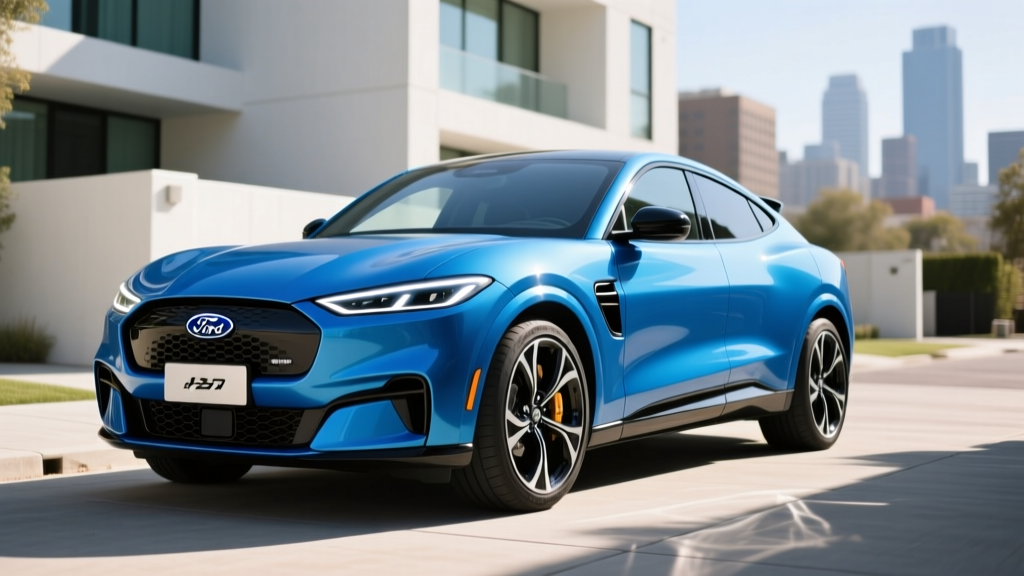
The Ford Mustang Mach-E has been one of the most compelling mainstream electric SUVs since its debut, and as 2026 lease deals continue to shift, it remains a top target for EV shoppers who want performance, practicality, and a recognizable badge — without committing to a full purchase. But before you sign a 36-month lease agreement, you need to understand what you're actually getting in terms of range, charging infrastructure, and total cost.
This guide dissects the 2026 Ford Mustang Mach-E lineup with a specific lens on leasing: which trims offer the best value, how federal tax credits interact with lease structures, what your real-world range will look like outside the EPA sticker, and whether the Mach-E outperforms rivals like the Tesla Model Y, Hyundai Ioniq 5, and Kia EV6 for your specific driving needs.
2026 Mach-E Lineup: Trims, Pricing, and Lease Positioning
Ford offers the 2026 Mustang Mach-E across four primary trims, each with distinct battery and drivetrain configurations. Lease incentives often vary dramatically by trim, and Ford Credit frequently targets specific configurations with subsidized money factors or bonus cash.
| Trim | Drivetrain | Battery | EPA Range | 0-60 mph | MSRP |
|---|---|---|---|---|---|
| Select (RWD) | RWD, single motor | 72 kWh usable (LFP) | 250 mi | 6.3 sec | $39,995 |
| Premium (RWD) | RWD, single motor | 91 kWh usable (NMC) | 320 mi | 6.1 sec | $46,995 |
| Premium (AWD) | Dual-motor AWD | 91 kWh usable (NMC) | 290 mi | 5.1 sec | $49,995 |
| GT | Dual-motor AWD | 91 kWh usable (NMC) | 280 mi | 3.5 sec | $57,995 |
Leasing insight: The Select RWD trim at ~$39,995 sits under the IRS §30D MSRP cap of $80,000 for SUVs, making it a prime candidate for tax-credit-optimized leases. However, Ford Credit often structures its most aggressive lease deals on the Premium and GT trims to move higher-margin inventory. Always ask the dealer for the current money factor and residual percentage — a 58-60% residual on a 36-month lease is typical for the Mach-E in 2026.
Real-World Range: What the EPA Sticker Doesn't Tell You
The EPA estimates are a useful baseline, but anyone who has driven an EV in varied conditions knows the real number depends heavily on speed, temperature, and terrain. Here's what to expect from the 2026 Mach-E in actual driving:
- City / mixed suburban driving (65°F): ~300-320 mi — regenerative braking recovers energy in stop-and-go traffic
- Highway cruising (70-75 mph, 65°F): ~255-275 mi — aerodynamic drag dominates at sustained speed
- Cold weather highway (30°F or below): ~210-240 mi — battery heating and cabin HVAC draw significant energy
- Worst-case (cold + highway + hills): ~190-210 mi — plan charging stops accordingly
The Select RWD with its 72 kWh LFP battery will see roughly 18-22% less range across all scenarios. The GT's performance-oriented tuning and stickier tires reduce efficiency to approximately 230-250 mi highway in mild conditions.
For context, the EPA's fueleconomy.gov lists the Mach-E Premium Extended Range RWD at 101 MPGe combined, translating to roughly 33 kWh per 100 miles driven. In real-world highway driving, expect closer to 36-39 kWh/100mi.
Charging Speed: DC Fast Charging and Home Level 2
Charging speed is the single most important spec for road-trip viability. The 2026 Mach-E supports the North American Charging Standard (NACS) connector natively, giving it access to Tesla's Supercharger network — a significant practical advantage over CCS-only competitors.
| Charge Level | Power / Rate | Time / Miles Added | Notes |
|---|---|---|---|
| Level 1 (120V household) | ~1.4 kW | ~3-4 mi/hr | Emergency/trickle only; full charge in 3+ days |
| Level 2 (240V home, 48A) | 11.5 kW | ~30-35 mi/hr | Full overnight charge in ~8-9 hrs (91 kWh pack) |
| DC Fast Charge (peak) | 150 kW peak | 10-80% in ~38 min | Peak only; tapers significantly above 80% |
| DC Fast Charge (sustained avg) | ~95-110 kW avg | ~150-180 mi in 20 min | Realistic expectation for road-trip stops |
Charging curve reality check: The Mach-E's peak of 150 kW is reached only between roughly 15-40% state of charge. From 40-60%, expect ~120 kW; from 60-80%, it drops to ~80-90 kW; and above 80%, it falls to under 40 kW. This taper is normal for NMC lithium-ion packs but means your actual highway rest stop will take 35-45 minutes for a meaningful charge, not the 15 minutes some marketing implies.
For home charging, a 48-amp Level 2 wallbox on a 60-amp circuit is the sweet spot. Expect installation costs of $800-$2,000 depending on your electrical panel's capacity and the run distance from panel to garage. If your home has a 200-amp panel with available capacity, you're likely looking at the lower end. A panel upgrade to 200A can add $1,500-$3,000.
The Leasing Math: Tax Credits, Monthly Payments, and Total Cost
Here's where Ford Mustang Mach-E leasing gets interesting — and where many buyers leave money on the table. The federal §30D tax credit of up to $7,500 interacts with leases in a specific way that favors the lessee.
Under IRS rules, when you lease an EV, the tax credit technically goes to the lessor (Ford Credit). However, most manufacturers — Ford included — pass this credit through as a capitalized cost reduction, effectively lowering your monthly payment. This is sometimes called a "lease cash" or "lease bonus cash" incentive.
Key advantage: Because the credit goes to the lessor, the MSRP cap ($80,000 for SUVs) and buyer income limits ($300K joint / $150K single for new purchases) that apply to §30D purchases do not apply to the lessor entity. This means even high-income earners can benefit from the full credit pass-through on a Mach-E lease — a loophole that has made leasing the preferred acquisition method for many EV buyers.
Always verify with the dealer that the $7,500 is being applied as a cap cost reduction on your specific lease quote. Some dealers attempt to pocket the difference.
Sample lease math (2026 Mach-E Premium RWD, illustrative):
- MSRP: $46,995
- Lease cash / cap cost reduction (§30D pass-through): -$7,500
- Adjusted cap cost: ~$39,495
- 36-month residual at 58%: $27,257
- Depreciation over 36 months: ~$12,238
- Monthly depreciation: ~$340
- Finance charge (money factor ~0.0025): ~$167
- Estimated pre-tax monthly payment: ~$507
Actual payments vary by region, dealer markup, credit tier, and current Ford Credit programs. Always negotiate the sale price first, then apply lease incentives — never negotiate from the monthly payment.
For the latest IRS rules on §30D eligibility including battery sourcing and critical mineral requirements, consult irs.gov's clean vehicle credit page.
Performance, Tech, and Daily Livability
The Mach-E's driving dynamics remain one of its strongest selling points. Even the base Select RWD delivers 266 horsepower and responsive acceleration, while the GT's 480 hp and 3.5-second 0-60 time puts it in genuine sports-car territory. The steering is communicative, the ride quality is firm but compliant, and the low center of gravity (thanks to the floor-mounted battery pack) keeps body roll well-controlled through corners.
Interior and cargo:
- Cargo (behind rear seats): 29.7 cu ft — competitive with the Model Y (30.2 cu ft) and significantly more than the Ioniq 5 (27.2 cu ft)
- Cargo (rear seats folded): 59.7 cu ft
- Front trunk (frunk): 4.7 cu ft with a drain plug — useful for wet gear or tailgate ice storage
- Rear legroom: 38.1 inches — adequate for adults, though the Model Y offers slightly more
- Infotainment: 15.5-inch vertical touchscreen running SYNC 4A with wireless Apple CarPlay and Android Auto
Driver assistance: The Mach-E comes standard with Ford Co-Pilot360 2.0, including automatic emergency braking, lane-keeping assist, blind-spot monitoring, and adaptive cruise control. Available BlueCruise (Ford's hands-on-wheel-capable Level 2 highway driving assist) works on over 130,000 miles of pre-mapped divided highways. Note: BlueCruise is SAE Level 2 — you must remain attentive and cannot disengage from driving. It is not a self-driving system.
Notable drawbacks:
- The 150 kW peak DC charge rate trails competitors like the Ioniq 5 and EV6 (which peak at 233+ kW on 800V architecture)
- No heat pump is standard on all trims — cold-weather range suffers more than some rivals
- The touchscreen-heavy interface lacks physical climate knobs, frustrating some drivers
- Rear visibility is compromised by the sloping roofline; the 360-degree camera helps but isn't standard on Select
Mach-E vs. Key Competitors: Is It Worth Leasing Over the Alternatives?
| Spec | Ford Mach-E Premium RWD | Tesla Model Y LR | Hyundai Ioniq 5 SEL |
|---|---|---|---|
| EPA Range | 320 mi | 330 mi | 303 mi |
| Battery | 91 kWh NMC | ~78 kWh NMC | 77.4 kWh NMC |
| Peak DC Charge | 150 kW | 250 kW | 233 kW (800V) |
| 10-80% DC Time | ~38 min | ~25 min | ~18 min |
| 0-60 mph | 6.1 sec | 5.0 sec (AWD) | 5.1 sec (AWD) |
| Cargo (rear up) | 29.7 cu ft | 30.2 cu ft | 27.2 cu ft |
| Base MSRP | $46,995 | $46,630 | $46,650 |
| Charging Network | NACS (Supercharger access) | NACS (Supercharger native) | CCS + NACS adapter |
- You value traditional dealership service and a physical service network over Tesla's mobile-ranger model
- You prefer Ford's interior design and driving dynamics over Tesla's minimalist approach
- Lease cash incentives on the Mach-E bring the effective monthly payment below a Model Y or Ioniq 5 in your region
- You want NACS Supercharger access without needing an adapter
- Maximum charging speed (250 kW) and Supercharger network seamlessness are your top priorities
- You need the most cargo space and the best range per dollar
- Fastest possible DC charging (18-minute 10-80%) is critical for your road-trip habits
- You prefer Hyundai's 10-year/100,000-mile powertrain warranty over Ford's 8-year coverage
Battery Warranty, Longevity, and Lease-End Considerations
Ford covers the Mach-E's high-voltage battery with an 8-year / 100,000-mile warranty against defects and excessive capacity loss (defined as dropping below 70% of original capacity). The powertrain components carry the same 8-year/100,000-mile coverage.
For a 36-month lease putting on 10,000-15,000 miles per year, battery degradation is essentially a non-issue. NMC chemistry typically loses 3-5% capacity in the first year and then stabilizes, meaning you'll return the vehicle with 92-96% of original capacity. LFP batteries (in the Select RWD) show even slower initial degradation but start from a lower total capacity.
Lease-end tips:
- Ford Credit's excess wear-and-tear guidelines are generally reasonable, but document the vehicle's condition with timestamped photos at return
- Mileage overage charges typically run $0.20-$0.25 per mile — if you're close to the limit, consider purchasing additional miles in advance at a lower rate
- You typically have a purchase option at lease end at the stated residual value; if used EV prices are high, this can be a bargain
Pros, Cons, and Final Verdict
- Strong lease incentive programs with §30D credit pass-through
- NACS connector provides native Tesla Supercharger access
- Engaging driving dynamics, especially in GT trim (3.5-sec 0-60)
- Practical cargo space (29.7 cu ft) with useful drainable frunk
- BlueCruise highway assist is among the better Level 2 systems available
- Competitive real-world range on Extended Range trims (255-275 mi highway)
- 150 kW peak DC charging is slower than Ioniq 5, EV6, and Model Y
- No standard heat pump reduces cold-weather efficiency
- Touchscreen-only climate controls frustrate during driving
- LFP battery in Select trim limits range to ~250 mi EPA
- Rear visibility hindered by coupe-like roofline
- Insurance costs can run 15-25% higher than comparable gas SUVs
Verdict: The 2026 Ford Mustang Mach-E is one of the strongest lease values in the electric SUV segment when Ford Credit's incentive programs are active. The §30D pass-through on leases makes it accessible regardless of income, and the combination of Supercharger access, solid range, and engaging performance makes it a daily-driver you won't resent. If fast-charging speed is your absolute top priority, the Ioniq 5 or Model Y edge it out. But for most lessees who charge at home 90% of the time and need a practical, fun, well-built electric SUV, the Mach-E deserves a serious test drive and a lease quote comparison.
Frequently Asked Questions
Does the Ford Mustang Mach-E qualify for the federal EV tax credit when leasing?
Yes, but indirectly. When you lease, the §30D credit goes to the lessor (Ford Credit), and Ford typically passes it through as a capitalized cost reduction — lowering your monthly payment. Because the credit goes to the leasing company rather than you personally, the buyer income caps and MSRP caps that apply to purchases do not restrict you as the lessee. Always confirm the pass-through is reflected in your lease quote.
What is the real-world range of the 2026 Mach-E?
The EPA rates the Premium RWD at 320 miles, but expect 255-275 miles in real-world highway driving at 70-75 mph in mild weather. In cold conditions (below 30°F), highway range drops to roughly 210-240 miles. The Select RWD with the smaller LFP battery delivers approximately 195-210 miles highway. City and suburban driving with regenerative braking recovers more energy, often matching or approaching the EPA sticker.
How fast does the Mach-E charge at home and on the road?
On a 48-amp Level 2 home charger (11.5 kW), the Extended Range pack adds roughly 30-35 miles of range per hour, reaching a full charge in about 8-9 hours. On DC fast chargers, the Mach-E peaks at 150 kW but sustains an average of ~95-110 kW during a typical session, meaning a 10-80% charge takes approximately 38 minutes. This is slower than the Ioniq 5's 18-minute 10-80% on 800V architecture.
Is it better to lease or buy the Mach-E in 2026?
Leasing is currently the preferred method for most buyers because: (1) the §30D credit pass-through bypasses income and MSRP caps, (2) EV depreciation remains uncertain and a lease transfers that risk to the lessor, (3) you avoid long-term battery replacement risk, and (4) Ford Credit's subsidized lease programs often produce lower monthly payments than financing. Buying makes more sense if you drive very high annual mileage (over 15,000 mi/yr), plan to keep the vehicle 7+ years, or want to avoid lease-end fees.
What happens if I exceed the mileage on my Mach-E lease?
Ford Credit typically charges $0.20-$0.25 per excess mile at lease return. On a 36-month lease with a 10,500 mi/yr allowance (31,500 total miles), driving 40,000 miles would cost you $1,700-$2,125. If you anticipate higher mileage, negotiate a 12,000 or 15,000 mi/yr lease upfront — the per-mile cost is lower when purchased in advance.
Can I install a home charger in my garage for the Mach-E?
Yes, and it's strongly recommended for any EV lease. A 48-amp Level 2 wallbox (like the ChargePoint Home Flex or Ford Connected Charge Station) on a dedicated 60-amp circuit will fully recharge the Mach-E overnight. Installation costs range from $800-$2,000 if your electrical panel has capacity. Consult a licensed electrician to assess your panel — a 200-amp service with available breaker slots is ideal.